


Liming is a key method for correcting soil acidity, as discussed in the previous article. Lime is a soil amendment primarily composed of calcium carbonate, used to neutralize soil acidity.
Beyond neutralizing acidity, it supplies calcium and magnesium essential for plant growth. Research indicates that using lime alone can depress plant growth and yield compared to combining lime with manure and essential micronutrients.
The poor performance of lime alone is attributed to inducing micronutrient deficiencies, particularly zinc (Zn), due to excessive liming.
Care must be taken when applying lime, considering the exchangeable Al3+ level rather than solely the pH value, and the use of acid-tolerant crops should also be considered.
Read Also: Pests of Stored Products and Damages Caused
Definition of Lime and Liming in Soil Management
Lime is a soil amendment consisting mainly of calcium carbonate (CaCO3) and magnesium carbonate, while liming is the process of applying lime to the soil.
Types of Liming Materials for Soil Amendment
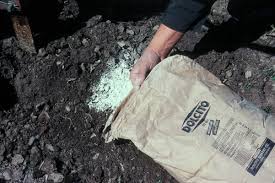
Commonly used liming materials include oxides, hydroxides, carbonates, and silicates of calcium (Ca) and/or magnesium (Mg). An example of a liming reaction is:
CaCO3 + H2O → Ca2+ + HCO3- + OH-.
The H+ in the soil solution is removed, increasing soil pH and precipitating Al3+ and Fe3+ as Al(OH)3 and Fe(OH)3, which are replaced by Ca2+ and Mg2+ on the cation exchange capacity (CEC), as shown below:
Al3+ K+
Ca2+ Ca2+
Clay Mg2+ + 3CaCO3 + 3H2O → Ca2+ + 2Al(OH)3 + 3CO2.
Soil K+
Mg2+
Al3+ Ca2+
Ca2+.
This reaction demonstrates that as pH increases, the percentage base saturation rises. Liming materials must neutralize H+ to be classified as liming agents. Some liming materials include:
1. Calcium Oxide (CaO) in Soil Correction
Also called lime, unslaked lime, burned lime, or quicklime, it is potent and has caustic properties, requiring shipment in bags. It is the most effective liming material with a calcium carbonate equivalent (CCE) of 179%.
2. Calcium Hydroxide (Ca(OH)2) for pH Adjustment
Known as slaked lime, hydrated lime, or builders’ lime, it is a white powder, difficult to handle, and provides rapid results with a CCE value of 136%.
3. Calcium and Calcium-Magnesium Carbonate in Agriculture
Calcium carbonate (CaCO3), or calcite, and calcium-magnesium carbonate (CaMg(CO3)2), or dolomite, have CCE values ranging from 65 to slightly above 100%. Pure CaCO3 has a CCE of 100%, while dolomite’s is 109%. Most agricultural limestones have CCE values between 90 and 98% due to impurities.
Marl as a Liming Material
Marl consists of soft, unconsolidated deposits of CaCO3 mixed with earth, often wet. Low in Mg, it has a CCE value between 70 and 90%, depending on clay content.
Slags for Soil Acidity Management
These include:
1.Blast Furnace Slag (CaSiO3), a byproduct from pig iron manufacture, with a CCE of 75–90% and a good proportion of magnesium.
- Basic Slag, a byproduct from pig iron produced from high-phosphorus Fe ores, with impurities (Fe, Si, P) removed with lime. Its CCE is 60–70%, valued for its P content on low-P acid soils.
- Electric Furnace Slag, produced from phosphate rock reduction for elemental P in pig iron and steel manufacture, with a CCE of 65–80%.
Less common materials include fly ash from coal-burning power plants, sludge from water treatment plants, Cotrell lime or flue dust from cement manufacturing, sugar lime, pulp mill lime, carbide lime, acetylene lime, and packing house lime.
Importance of Lime in Soil Fertility
Soil acidity can be corrected by applying the liming materials mentioned above. The benefits of lime include:
- Supplying essential nutrients for plants, animals, and fish.
- Neutralizing soil acidity.
- Maintaining soil in good condition for plant growth.
- Controlling plant diseases in acid soils.
- Loosening heavy soils, easing cultivation.
- Enhancing crop yields for cereals, vegetables, tubers (e.g., yam, cassava), banana, plantain, soybean, and fruits (e.g., grapes, oranges).
Read Also: Collection, Handling, Storage and Pre-Treatment of Seeds
Applications of Lime in Agricultural Systems

Lime is rarely used in low-rainfall areas with minimal leaching, such as semi-arid, arid, saline soils under irrigation, or saline-alkali (saline-sodic) soils.
Response to lime application results from reduced Al3+ toxicity and benefits from Ca and Mg nutrients. Lime use in agriculture has two aspects:
Direct Benefits of Liming in Crop Production
Lime corrects soil acidity caused by Al toxicity, which inhibits nodule initiation, affects plant growth, absorbs P, making it unavailable, and interferes with water use.
Lime removes excess H+, which is toxic to plants and microorganisms, particularly beneficial bacteria like Nitrosomonas and Nitrobacter sp. Liming reduces Al3+ and Mn activity in acid soils, increasing Ca and Mg uptake and soil pH.
Indirect Benefits of Liming for Soil Health
1. Effect on Phosphorus Availability: In acid soils, Al and Fe form insoluble Al-P and Fe-P compounds, but liming precipitates Al and Fe as Al(OH)3 and Fe(OH)3, increasing P availability. Care must be taken, as liming above pH 6.8–7.0 may precipitate Ca-P and Mg-P, reducing P availability.
2. Effect on Micronutrient Availability: Except for molybdenum (Mo), micronutrient levels increase in acid soils, causing toxicity. Liming reduces this effect, providing sufficient micronutrient levels, including molybdenum, for plant use.
3. Nitrification: Nitrifying bacteria require Ca, and liming to pH 5.5–6.5 enhances nitrification.
4. Organic Matter Decomposition: Liming acid soils accelerates plant residue and organic matter decomposition, especially before the process starts.
5. Nitrogen Fixation: Liming enhances symbiotic and non-symbiotic nitrogen fixation by reducing soil acidity, which suppresses nodule bacteria (Rhizobium) activity, improving legume growth.
6. Physical Soil Condition: Liming improves soil structure by increasing organic matter and Ca-saturated clay flocculation. Over-liming, however, degrades soil structure by impeding water percolation. Calcium improves the physical condition of sodic soils.
7. Effect on Plant Diseases: Liming controls pathogens like club root, increasing yield, but above pH 7.0, club root spores are inhibited. In some root crops, diseases like scab increase, while in wheat, infection is controlled but yield may decrease at pH 7.0.
Determination of Liming Requirement (LR) for Soil Correction

Liming requirement (LR) is the amount of liming material needed to raise soil pH to a specified value under field conditions, determined by soil test methods.
Alternatively, LR is the quantity of lime (CaCO3) needed to neutralize exchangeable aluminium, raising pH to 6.5, expressed as CaCO3 equivalent in cmol kg-1 or meq/100g. Factors affecting LR include:
- Weathering intensity (degree of weathering)
- Type of parent materials
- Clay content
- Organic matter content
Two methods determine LR:
1. Soil-Lime Incubation: Incubating soil with varying lime quantities to determine the amount needed for a specific pH.
2. Soil-Base Titration: Titrating acidic soil cations with a base, equilibrating soil aliquots with Ca(OH)2 to measure the base needed to reach a predetermined pH.
Lime requirement calculation:
Every 1 meq of base consumed per 100g of soil equals 2.23 tons of pure CaCO3 per hectare of 30cm soil depth. Thus:
1.0 meq CaCO3 = 45.5 x 10⁶ kg Soil = 50 mg CaCO3
100g Soil Meq 100g Soil
(1) (2) (3)
Where:
1 = Measured value
2 = Equivalent weight of CaCO3 = 100 ÷ 2 = 50
3 = Weight of hectare furrow slice of 30cm
Note that (1) has a denominator of 100, which must not be ignored.
Neutralizing value or CCE calculation:
Molecular weight of CaCO3 is 100; MgCO3 is 84. Thus, 84g of MgCO3 neutralizes the same acid as 100g of CaCO3. CCE is calculated as:
84/100 = 100/x, where x = 10,000/84 = 119% (% CCE).
MgCO3 neutralizes 1.19 times as much acid as CaCO3, so its CCE is 119%.
Neutralizing value or CCE is the acid-neutralizing ability of a liming material, expressed as a weight percentage of CaCO3, with pure CaCO3 as the standard at 100%.
Factors Determining Liming Programme in Agriculture
The liming programme depends on:
1. Type of Crop: Different crops respond uniquely to soil acidity and liming, a critical consideration.
2. Soil Organic Matter Content and Texture: Coarse-textured, low-organic-matter soils require less lime compared to fine-textured or high-organic-matter soils.
3. Application Time and Frequency of Liming: Lime should be applied 3–6 times before planting in crop rotations with legumes, ideally with wheat. CaO and Ca(OH)2 (caustic forms) need time to spread to avoid affecting seed germination.
Frequency depends on soil texture, nitrogen source, application rate, crop removal, precipitation, and lime rate. Sandy soils require more frequent applications than fine-textured soils, and powdered lime reacts faster than granular or coarse forms.
4. Tillage Depth: Lime recommendations are based on a 5–10 cm furrow slice. For 10–20 cm tillage depth, lime requirements should be doubled.
Do you have any questions, suggestions, or contributions? If so, please feel free to use the comment box below to share your thoughts. We also encourage you to kindly share this information with others who might benefit from it. Since we can’t reach everyone at once, we truly appreciate your help in spreading the word. Thank you so much for your support and for sharing!