


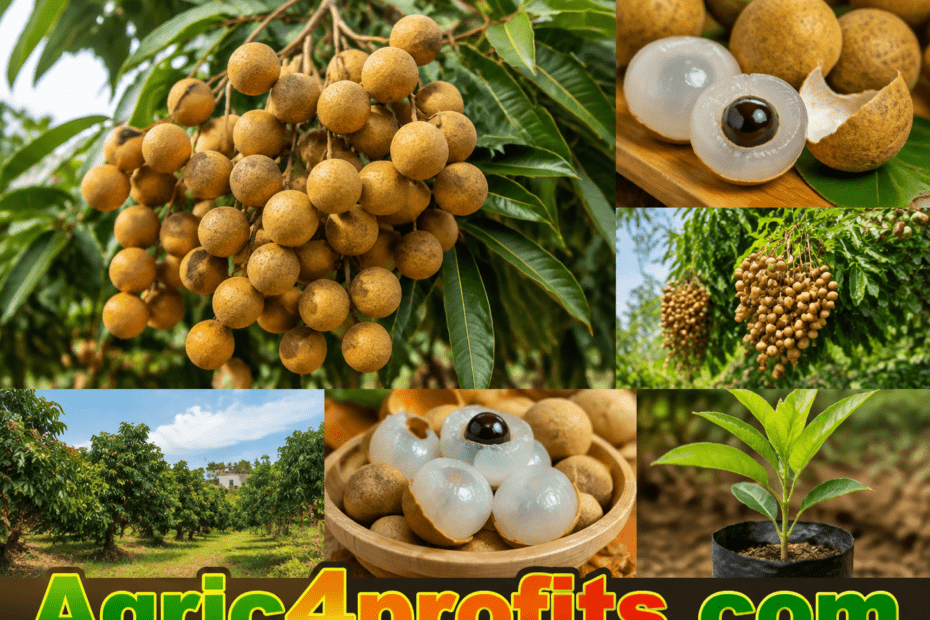
Longans are small tropical fruits valued for their translucent flesh, delicate sweetness, and distinctive appearance. Their thin brown skin surrounds juicy flesh and a dark seed, creating the famous dragon-eye impression.
Scientifically named Dimocarpus longan, longans belong to the Sapindaceae family and are closely related to lychees and rambutans. They are traditionally associated with Southeast Asia and warm tropical and subtropical environments.
Fresh longans are commonly eaten by hand after peeling, but the fruit also works well in desserts, fruit salads, drinks, preserves, and dried preparations. Its fragrant sweetness makes it especially versatile.
Beyond their culinary appeal, longans have attracted attention because they provide vitamin C, potassium, dietary fiber, natural sugars, and substantial water. These nutrients can complement a varied and balanced eating pattern.
Longan trees can become substantial perennial plants when grown under favorable conditions, producing dense foliage and clusters of fruit. Successful production depends on suitable climate, drainage, sunlight, watering, nutrition, and routine care.
Read Also: Jersey Cow: Grooming and Care Guide
🌿 Go Organic on Your Farm: Instead of harmful chemical pesticides and fertilisers, try our organic farming products — including neem oil spray, bio-pesticides, natural plant treatments, organic seeds and seedlings, suckers, and many more organic products that are safe for your health, your family, your soil and your harvest. Shop Now →
The History of Longans
Longans have a long cultural history in Southeast Asia, where communities have cultivated and consumed them for generations. Their botanical identity, Dimocarpus longan, places the fruit within the Sapindaceae family and wider tree-crop traditions.
Historical references connect longans strongly with China, Thailand, Vietnam, Malaysia, and neighboring regions. In these areas, the fruit became familiar through home gardens, orchards, markets, seasonal celebrations, and traditional food practices.
Ancient Chinese writings are often cited when discussing the history of longan cultivation and use. The fruit was valued for its sweetness and also became associated with traditional wellness practices.
As cultivation knowledge developed, longan trees spread beyond their earliest centers of production. Farmers selected suitable sites, maintained productive trees, and gradually incorporated the fruit into regional culinary traditions. across traditional orchards.
🔧 Free Farm Tool Available: Use our free Agric4Profits Farm Tools to calculate your farm profits, formulate feeds, identify pests and diseases on both your crops and animal farms, plan your planting and harvesting season, including many more farm tasks to get free expert advice and recommendations — completely free, no registration required. Access Free Tools →
Longans became useful in many forms, including fresh fruit, dried fruit, desserts, sweet drinks, and other preparations. These uses helped the fruit remain important even when fresh harvesting was seasonal.
Trade and agricultural exchange eventually carried longans into additional tropical and subtropical regions. Their movement beyond Southeast Asia reflected growing interest in distinctive fruits and the expansion of commercial horticulture.
Longan cultivation later developed in places outside Asia, including suitable parts of the United States. Modern production has continued to expand wherever climate, soil drainage, sunlight, and orchard management are favorable.
Today, longans are appreciated internationally for their taste, appearance, versatility, and cultural history. Their journey from regional fruit to wider markets demonstrates how agricultural knowledge, trade, and tree-crop management can broaden food traditions.
The Nutritional Values of Longans
Longans provide several nutrients that can contribute to a balanced diet. Their nutritional value comes from a combination of vitamin C, minerals, dietary fiber, natural sugars, and substantial water content.
💬 Have a Farming Question? Join thousands of farmers across Africa on the Agric4Profits Community — ask questions, share experiences and connect with agricultural experts. It is completely free. Ask Your Question Now →
Vitamin C is one of the nutrients associated with longans. It contributes to normal immune function and supports collagen formation, making vitamin C an important part of a varied diet containing fruits.
Potassium is another mineral present in longans. Adequate potassium intake supports normal muscle and nerve function and contributes to maintaining healthy fluid balance, while potassium management knowledge supports informed food and farming decisions.
Longans also provide dietary fiber, although the amount is modest. Fiber contributes to normal digestive function and can help support regular bowel movements when consumed as part of an adequate eating pattern.
The fruit contains naturally occurring sugars, including glucose and fructose, which contribute to its sweet flavor. These carbohydrates provide energy, while portion awareness remains useful when planning an overall balanced diet.
Because longans contain considerable water, eating the fresh fruit can contribute to daily fluid intake. However, fruit should complement rather than replace regular water consumption and other hydration sources. throughout the day.
Longans can therefore fit comfortably into meals and snacks when eaten in reasonable portions. Pairing them with other fruits, vegetables, whole grains, and protein foods creates greater dietary variety and aligns with balanced fruit-production planning.
Overall, longans are best viewed as a nutritious fruit rather than a single-food solution. A diverse diet remains important because different foods provide different vitamins, minerals, fiber, and beneficial plant compounds.
Read Also: The Appearance and Features of Goats
Health Benefits of Longans
1. Antioxidant support: Longans contain vitamin C and other compounds associated with antioxidant activity. Antioxidants help protect cells from oxidative stress, although overall diet quality remains important for long-term health.
📖 Want to Go Deeper on This Topic?
Our expert agricultural ebooks cover poultry, fish farming, different crops production, snail farming, organic farming, mushrooms, sheep, cattle, flowers, pig farming, goat farming, agribusiness, etc. in practical step-by-step detail — written by agricultural professionals for African farmers.
Browse All Farming Ebooks →2. Immune support: Vitamin C in longans contributes to normal immune function. Eating longans alongside other nutrient-rich foods can help provide vitamin C within a balanced dietary pattern as part of varied everyday meals.
3. Heart-friendly nutrition: Longans provide potassium, a mineral involved in normal cardiovascular and muscle function. Adequate potassium intake is part of a healthy diet, particularly when overall food choices are balanced.
4. Digestive support: The fiber present in longans can contribute to healthy digestion and regular bowel habits. Increasing total dietary fiber gradually, with sufficient fluids, can support comfortable digestive function.
5. Convenient energy: The natural sugars in longans provide carbohydrate energy and contribute to their sweet taste. They can serve as a convenient fruit snack when selected in sensible portions alongside other foods.
6. Hydration contribution: Fresh longans contain substantial water, so they can contribute to fluid intake. Their hydration value is supportive rather than a replacement for drinking adequate water throughout the day.
7. Traditional relaxation use: Longans have been used traditionally in some cultures for calming purposes. Such traditional uses should not be treated as proven medical treatments, and stronger evidence is still needed.
Longans can be included as one part of a varied diet containing vegetables, whole grains, legumes, nuts, protein foods, and other fruits. Individual needs vary, so balanced agricultural practices should support diverse food production.
How to Grow Longans (Growing Guide)
1. Climate: Longans perform best in warm tropical and subtropical conditions. They prefer humid environments and can be damaged by cold, so growers should match the tree with the local climate while reviewing fruit-cultivation methods.
2. Soil: Choose deep, fertile, well-drained soil, with a slightly acidic to neutral reaction. Sandy loam can be suitable, while poorly drained sites increase the risk of root problems and weaken for orchard maintenance.
3. Planting site: Select a sunny location that receives about six to eight hours of direct light daily. Proper fruit-tree planting practices improve establishment and create better conditions for future canopy development.
4. Planting: Dig a hole wider than the root ball and position the sapling at its nursery depth. Backfill carefully, water thoroughly, and avoid burying the trunk or graft union during establishment.
5. Watering: Water young trees consistently, particularly during dry weather, while allowing excess water to drain away. Good irrigation management supports growth without creating persistently saturated soil conditions, as recommended in fruit-tree care guidance.
6. Fertilization: Feed young trees with an appropriate balanced fertilizer during active growth. Mature trees need a planned nutrient program based on growth, soil condition, and expected fruit production, with careful fertilizer management.
7. Pruning and canopy care: Remove dead, damaged, diseased, or poorly positioned branches to maintain structure and airflow. Good fruit-tree pruning practices can also improve light distribution and tree structure overall.
8. Mulching: Apply suitable organic material around the root zone to conserve moisture, suppress weeds, and moderate soil conditions. Proper mulching should stay away from direct trunk contact, while weed-control mulching supports cleaner orchard floors.
9. Pest and disease management: Inspect foliage, branches, flowers, and fruit regularly for problems. Integrated fruit-crop management emphasizes monitoring, sanitation, airflow, and timely treatment before problems spread through the orchard.
10. Harvesting: Longans commonly begin fruiting several years after establishment, depending on cultivar and growing conditions. Harvest mature clusters when fruit reaches suitable color, size, and eating quality, then handle them carefully.
Summary on Longans: History, Nutrition, Health Benefits and Growing Guide
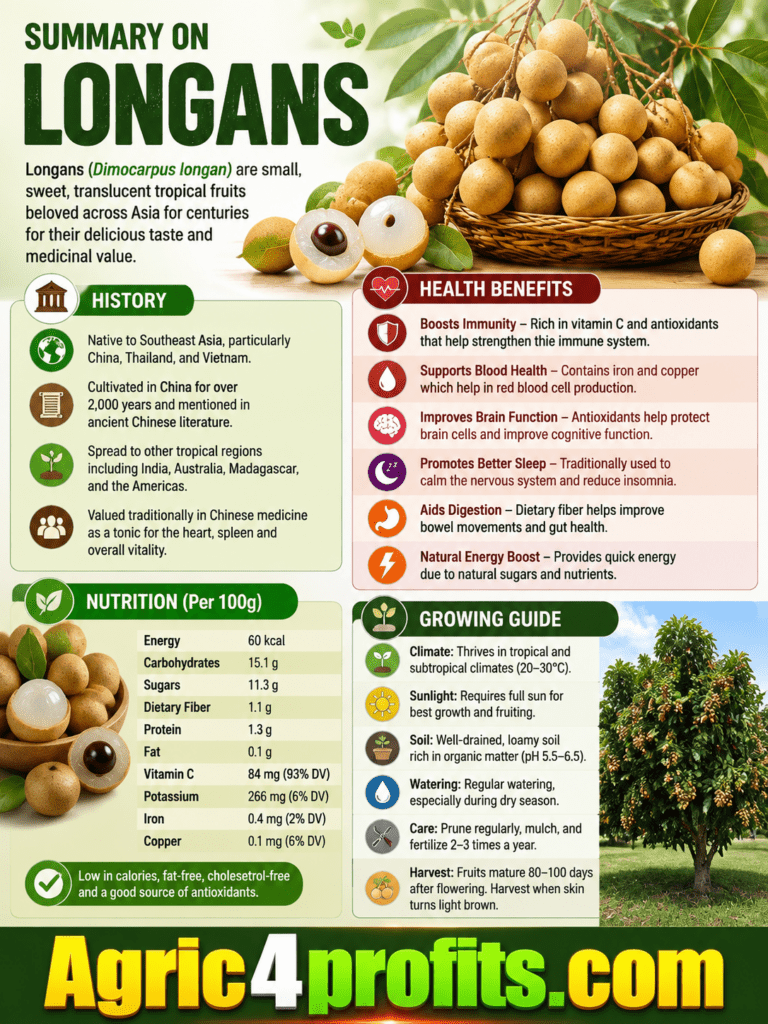
| Section | Key Points | Practical Takeaway |
|---|---|---|
| Fruit overview | Longans are tropical, sweet fruits with translucent flesh and a dark seed. | Enjoy fresh or use in varied culinary preparations. |
| History | Longans have deep Southeast Asian and Chinese cultural connections and later spread internationally. | Understand the fruit as both a food crop and a cultural commodity. |
| Nutrition | They provide vitamin C, potassium, fiber, natural sugars, and water. | Include them as part of a diverse, balanced diet. |
| Health benefits | They may support antioxidant intake, normal immunity, digestion, hydration, and dietary energy. | Use them as one nutritious fruit among many foods. |
| Growing | Longans prefer warm climates, drainage, sunlight, controlled watering, nutrition, pruning, and pest monitoring. | Match the tree to local conditions and maintain it consistently. |
| Harvesting | Fruit production begins after establishment, with timing depending on cultivar and conditions. | Harvest mature fruit carefully to protect quality. |
Frequently Asked Questions About Longans: History, Nutrition, Health Benefits and Growing Guide
1. What are longans, what is their scientific name, and what physical features make the peeled fruit resemble the appearance commonly described as a dragon eye in popular descriptions of the fruit?
Longans are small tropical fruits scientifically known as Dimocarpus longan. They have thin brown skin, translucent sweet flesh, and a dark seed, giving peeled fruit its familiar dragon-eye appearance in many regions.
2. Where did longans originate, and which Southeast Asian countries developed important culinary and cultivation traditions around this tropical fruit over many generations, especially through household gardens, markets, and regional food customs?
Longans originated in Southeast Asia and became especially established in countries such as China, Thailand, Vietnam, and Malaysia, where they remain important in food traditions, local markets, and fruit cultivation.
3. What important nutrients do longans provide, and how can vitamin C, potassium, dietary fiber, natural sugars, and water contribute to a balanced eating pattern within everyday meals and snacks?
Yes. Longans provide vitamin C, potassium, dietary fiber, natural sugars, and water. Their nutritional value is best appreciated as part of a varied diet containing many fruits, vegetables, and other nutrient-rich foods.
4. Can eating longans contribute to normal immune function, and what role does their vitamin C content play when the fruit is included within a varied, nutrient-rich diet? for daily wellness.
Longans provide vitamin C, a nutrient that contributes to normal immune function. Eating them as part of a varied diet can help increase vitamin C intake alongside other nutrient-rich foods and balanced meals.
5. What conditions are most important when growing longans successfully, including climate, soil drainage, sunlight, watering, nutrition, pruning, pest monitoring, and harvesting practices for healthy trees and quality fruit? and consistent orchard care.
Successful longan growing requires warm conditions, good drainage, full sunlight, regular but controlled watering, suitable nutrition, canopy management, pest monitoring, and careful harvesting when fruits reach maturity and acceptable quality.
6. How many hours of sunlight should longan trees receive daily, and why is adequate direct light important for healthy growth, flowering, fruit development, and productive canopy performance? across the growing season.
Longan trees generally perform best in sunny locations receiving about six to eight hours of direct sunlight daily. Adequate light supports healthy growth, flowering, fruit development, and productive canopy performance throughout the growing season.
7. How should longan trees be watered during establishment and dry periods, and why is good drainage important when maintaining consistent moisture around developing roots and avoiding prolonged waterlogging? throughout the growing season.
Young longan trees need regular watering, especially during dry periods, but the soil should drain well. Deep watering is preferable to maintaining constantly saturated conditions that can encourage root problems and weaken developing trees.
8. How long can a newly planted longan tree take to produce fruit, and which cultivar, climate, tree condition, and management factors can influence production timing from one orchard to another?
Longan trees may begin producing fruit several years after planting, although timing varies with cultivar, climate, tree condition, and management. Mature trees generally require consistent care, favorable weather, and sufficient nutrition for dependable production.
Do you have any questions, suggestions, or contributions? If so, please feel free to use the comment box below to share your thoughts. We also encourage you to kindly share this information with others who might benefit from it. Since we can’t reach everyone at once, we truly appreciate your help in spreading the word. Thank you very much for your support and for sharing!
Read Also: 5 things you must do if you want to be healthy
🌱 Take Your Farming Further With Agric4Profits
Based on what you just read, here are free resources and products from Agric4Profits that can help your farm right now:
- 🛒 Visit Our Marketplace — Organic neem oil, bio-pesticides, seeds and farming products
- 📚 Read Premium Content — Advanced guides for serious and profitable farming
- 🎓 Join Our Free Academy — Structured free training for farmers across Africa
- 🔧 Use Our Free Farm Tools — Profit calculators, feed formulation, pest identifier and more
- 💬 Join Our Farming Community — Connect with farmers across all 54 African countries
- ❓ Ask a Farming Question — Get answers from experienced farmers and agricultural experts
Please cite this content in academic work, research, or publications.