


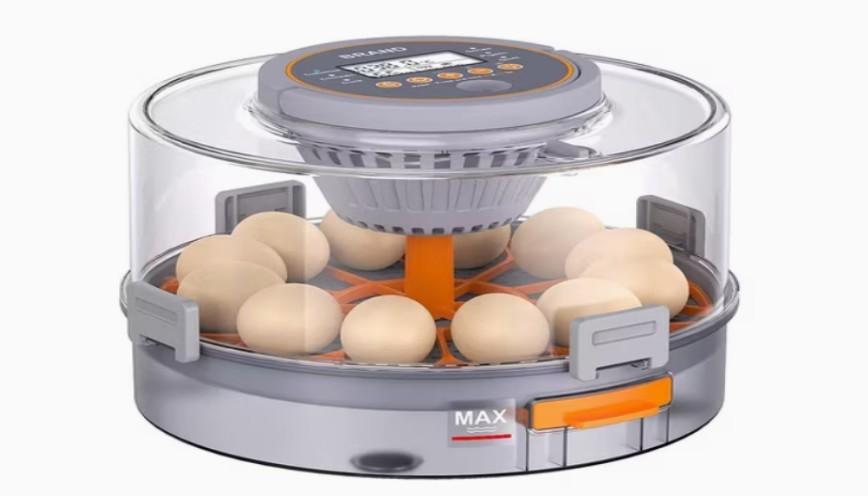
Incubation is the process of helping a fertilized egg develop into a live chick by providing the right conditions of temperature, humidity, ventilation, and turning. It is a fundamental part of poultry production, and getting it right determines how many healthy chicks you end up with at the end of the hatching cycle.
There are two methods of incubation. The first is natural incubation, where the hen sits on the fertilized eggs and keeps them warm until they hatch. The second is artificial incubation, where a machine called an incubator takes over that role using fuels such as kerosene, gas, or coal, or in modern setups, electricity.
Natural incubation works well on a small scale, but it has limitations. A broody hen can only sit on a limited number of eggs, and not all hens go broody reliably. On commercial farms where thousands of chicks need to be hatched at regular intervals, natural incubation is simply not practical. This is where artificial incubation becomes essential.
Artificial incubation gives the farmer full control over the hatching process. You can set specific temperature levels, monitor humidity, control airflow, and turn the eggs on a schedule. Done correctly, it produces consistent results and significantly reduces the guesswork involved in hatching chicks.
But artificial incubation is not just about placing eggs in a machine and waiting. You need to understand how the incubator works, what conditions must be maintained at each stage, how to check on egg development through candling, and how to calculate your hatch rates accurately.
Knowing the difference between hatch of fertile and hatch of total, for example, helps you evaluate the actual performance of your breeder flock rather than just looking at raw numbers.
This article covers everything you need to know, including the essential requirements of artificial incubation, how incubator operations are divided into phases, how hatching is managed, how to measure hatchability, and how to calculate hatch of fertile and hatch of total with a worked example.
1. Methods of Incubation
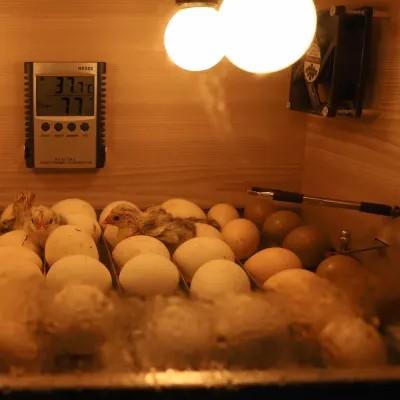
Before going into the details of artificial incubation, it helps to understand the two main methods clearly.
i. Natural incubation: This involves getting the hen to sit on fertilized eggs to incubate them. The hen provides the warmth and turns the eggs naturally. It is simple but limited in scale.
ii. Artificial incubation: This is carried out using an incubator powered by fuels such as kerosene, gas, coal, or electricity. It allows for large-scale hatching with controlled conditions throughout the process.
2. Essential Requirements of Artificial Incubation
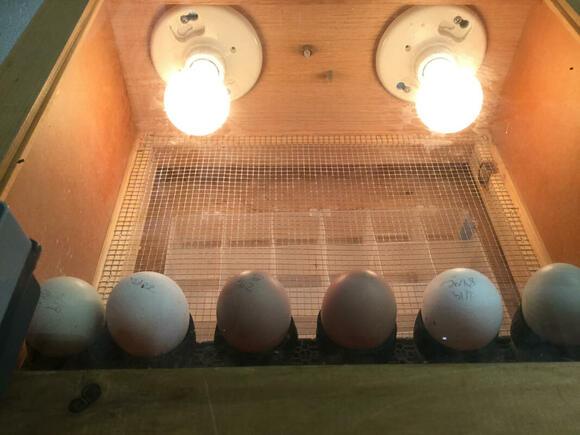
For artificial incubation to produce good results, four key conditions must be maintained at all times. Failing to meet any one of these requirements can reduce hatchability or result in abnormal chicks.
i. Adequate ventilation: There should be sufficient oxygen inside the incubator to meet the respiratory needs of the developing embryo. At the same time, carbon dioxide produced by embryonic metabolism must not be allowed to build up inside the machine. Good airflow handles both of these needs.
ii. Relative humidity of 60 to 65%: This level of humidity must be maintained to prevent the egg from losing too much water during incubation. Eggs that lose excessive moisture do not develop properly and hatch poorly.
iii. Temperature of 37.5°C: An adequate and steady temperature must be maintained to keep life within the egg at the optimum level. Temperature fluctuations during incubation can slow development or kill the embryo entirely.
iv. Turning: The eggs must be turned at least three times daily to prevent the embryo from sticking to the shell membranes. Most modern incubators have automatic turners, but manual turning can also be done if the equipment does not have this feature.
Read Also: Nutritional Diseases of Poultry: Symptoms, Control, and Treatments
3. Operation of the Incubator
The operation of an incubator is divided into two main phases. Some incubators combine both phases in one unit, while others use separate compartments for each stage.
A. Setting Phase (Days 0 to 18)
During the setting phase, selected eggs are placed on trays with the large ends facing up and put into the incubator. This phase covers the first 18 days of incubation.

The temperature requirements change slightly from week to week during the setting phase:
i. First week: 38°C
ii. Second week: 39°C
iii. Third week: 40°C
The relative humidity should be maintained at 60 to 65% throughout this phase. There must also be free passage of air inside the incubator at all times. Eggs should be turned at least three times daily up to the 18th day.
B. Candling
On the seventh and sixteenth days of incubation, the eggs are checked for infertile eggs and dead embryos through a process called candling.
Candling is done by holding the egg in front of a strong shaded light or placing a strong handheld torch underneath the tray. This allows you to see through the shell and assess the fertility and development of the embryo inside without breaking the egg. Infertile eggs and eggs with dead embryos are removed from the incubator at this point to avoid contaminating the healthy ones.
C. Hatching Phase (Days 19 to 21)
After 18 days in the setting compartment, the eggs are moved to the hatching compartment. At this point, the eggs are placed flat rather than upright in preparation for hatching.
The relative humidity in the hatching compartment should be raised to 70%. This higher humidity level helps soften the shell slightly and makes it easier for the chick to break through during hatching.
4. Hatchability
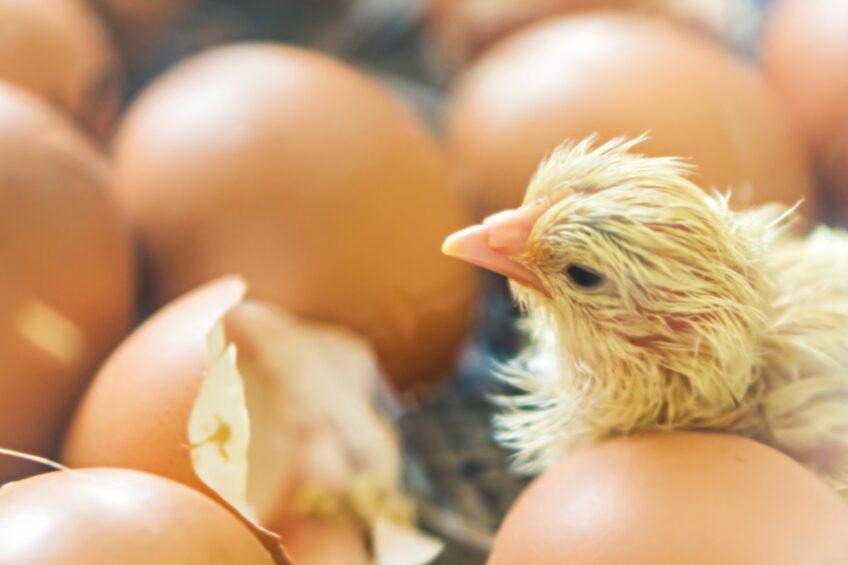
Hatchability refers to the percentage of eggs that successfully hatch. From a well-managed flock, hatchability should fall between 80% and 90%. If your rate falls below this, it is a sign that something needs attention in your management, nutrition, disease control, or egg selection process.
Hatchability and fertility are both influenced by genetics, but management consistently has a greater practical impact on outcomes than genetics alone.
The main factors that affect hatchability are:
i. Fertility of the eggs
ii. Genetics of the parent flock
iii. Nutrition
iv. Disease status
v. Egg selection practices
vi. Management practices during incubation
5. Hatch of Fertile and Hatch of Total
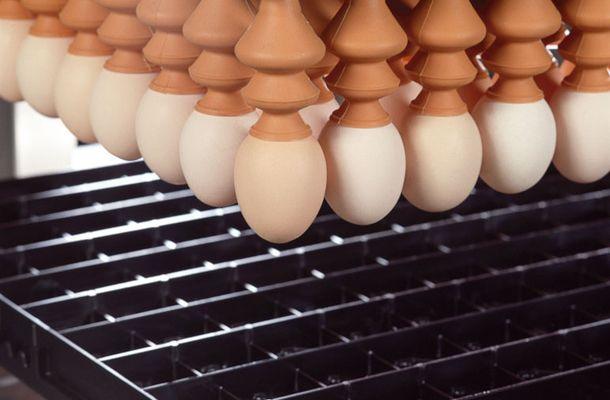
These two terms are used to measure hatching performance in different ways. Understanding the difference between them is important for evaluating how well your incubation program and breeder flock are performing.
A. Hatch of Fertile
This refers to the percentage of fertile eggs that actually hatched. It is considered the more precise measure because it takes fertility into account and directly reflects how well the breeder stock is performing.
B. Hatch of Total
This refers to the percentage of the total number of set eggs that hatched, including both fertile and infertile ones.
C. Worked Example
Suppose 500 eggs were incubated. After 7 days, 450 were found to be fertile. Out of those 450 fertile eggs, 400 hatched into chicks. Here is how to calculate both figures:
Total eggs set = 500
Fertile eggs = 450
Hatched eggs = 400
% Hatch of Fertile = 400/450 x 100 = 88.89%
% Hatch of Total = 400/500 x 100 = 80.0%
D. Key Notes on Hatch of Fertile vs Hatch of Total
i. The hatch of fertile is always higher than the hatch of total because it excludes infertile eggs from the calculation.
ii. Hatch of fertile is more precise because fertility is factored in.
iii. Hatch of fertile is of greater practical importance because it reflects the actual performance of the breeder stock.
Read Also: Incubation and Reproductive System of Hen
Summary on Incubation: Meaning, Types, Operation, and Essential Requirements

| Topic | Key Points |
|---|---|
| What is Incubation | The process of providing the right conditions for a fertilized egg to develop into a live chick. |
| Natural Incubation | The hen sits on fertilized eggs and keeps them warm until hatching. |
| Artificial Incubation | Done using an incubator powered by kerosene, gas, coal, or electricity. |
| Essential Requirements | Adequate ventilation, relative humidity of 60 to 65%, temperature of 37.5°C, and turning at least 3 times daily. |
| Setting Phase | Days 0 to 18. Eggs placed large end up in trays inside the incubator. Temperature increases from 38°C to 40°C weekly. |
| Candling | Done on days 7 and 16 to check fertility and embryo development. Infertile eggs and dead embryos are removed. |
| Hatching Phase | Days 19 to 21. Eggs placed flat. Humidity raised to 70% to assist hatching. |
| Hatchability | Percentage of eggs that hatch. Should be 80 to 90% from a good flock. |
| Hatch of Fertile | Percentage of fertile eggs that hatched. More precise and reflects breeder stock performance. |
| Hatch of Total | Percentage of all set eggs that hatched, including infertile ones. |
| Factors Affecting Hatchability | Fertility, genetics, nutrition, disease, egg selection, and management practices. |
Frequently Asked Questions About Incubation, Types, Operation, and Essential Requirements
1. What is incubation in poultry farming?
Incubation is the process of providing the necessary conditions, including temperature, humidity, ventilation, and turning, for a fertilized egg to develop into a live chick. It can be done naturally by a broody hen or artificially using an incubator.
2. What is the difference between natural and artificial incubation?
Natural incubation involves the hen sitting on her eggs and keeping them warm until they hatch. Artificial incubation uses a machine called an incubator to replicate those conditions. Artificial incubation is used on commercial farms because it allows large numbers of eggs to be hatched consistently and efficiently.
3. What temperature is required for artificial incubation?
The ideal temperature for artificial incubation is 37.5°C overall. During the setting phase, the temperature is adjusted weekly: 38°C in the first week, 39°C in the second week, and 40°C in the third week. Keeping the temperature stable and within the right range is critical for proper embryo development.
4. What humidity level is needed during incubation?
During the setting phase, the relative humidity should be maintained at 60 to 65%. When the eggs are moved to the hatching compartment on day 18, the humidity is raised to 70%. Higher humidity during hatching helps soften the shell slightly and makes it easier for the chick to break out.
5. Why do eggs need to be turned during incubation?
Turning prevents the embryo from sticking to the shell membranes as it develops. Eggs that are not turned regularly can develop abnormally or fail to hatch. Turning should be done at least three times daily from the start of incubation up to the 18th day.
6. What is candling and when is it done?
Candling is a method of checking the development of the embryo inside the egg by holding the egg in front of a strong light source. It is done on the 7th and 16th days of incubation. Candling helps identify infertile eggs and eggs with dead embryos so they can be removed before they affect the others in the incubator.
7. What is hatchability and what is a good rate?
Hatchability is the percentage of set eggs that successfully hatch. A good, well-managed flock should produce a hatchability rate of between 80% and 90%. Rates below this point to problems with fertility, nutrition, disease management, egg selection, or incubation practices.
8. What is the difference between hatch of fertile and hatch of total?
Hatch of fertile is the percentage of fertile eggs that hatched. Hatch of total is the percentage of all set eggs that hatched, including infertile ones. Hatch of fertile is always higher because infertile eggs are excluded from the calculation, and it is considered a more accurate reflection of breeder stock performance.
9. What factors affect hatchability in poultry?
The main factors that affect hatchability are the fertility of the eggs, genetics of the parent flock, nutrition, disease status of the birds, egg selection practices, and management practices during incubation. Among these, management tends to have the greatest practical influence on outcomes.
10. How is the incubator operation divided?
Incubator operation is divided into two phases. The setting phase covers days 0 to 18, during which eggs are placed large end up in trays and monitored for development. The hatching phase covers days 19 to 21, when the eggs are moved to the hatching compartment, placed flat, and allowed to hatch under higher humidity conditions. Some incubators handle both phases in one unit, while others use separate compartments.
Do you have any questions, suggestions, or contributions? If so, please feel free to use the comment box below to share your thoughts. We also encourage you to kindly share this information with others who might benefit from it. Since we can’t reach everyone at once, we truly appreciate your help in spreading the word. Thank you very much for your support and for sharing!
Read Also: Feed and Nutrition Management for Cattle