


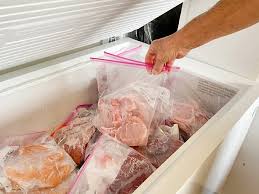
Meat is animal tissue used as food. Most often it refers to skeletal muscle and associated fat, but it may also refer to non-muscle organs, including lungs, livers, skin, brains, marrow, and kidneys. Other animal tissues used as food, and also to some extent in meat processing, are the internal organs, including the blood.
Meat Curing Agents
i. Nitrates
Sodium (NaNO3) or potassium nitrate (saltpeter, KNO3) allow cured meat color to develop in products where drying is a long-term process. Nowadays, they are used less frequently because to be effective, they must be reduced to nitrites under the influence of bacterial enzymes, and this is a time-consuming process.
ii. Nitrites
Nitrites are indispensable for meat curing, and no substitute has yet been found. Sodium nitrite (NaNO2) is a toxic substance and can be fatal even in small doses. For this reason, they are often mixed with common salt at a concentration of about 0.6 percent (so-called “nitrite salt”) when used for curing.
If excessive levels of nitrite are accidentally reached, the accompanying salty taste will be rejected by the consumer, thereby preventing nitrite poisoning. The maximum amount of nitrite permitted in finished meat products is usually 200 ppm (parts per million, or mg per kg), or may be less subject to the type of meat product or country legislation.
Saltpeter can be added to the nitrite salt at a concentration of 1 percent and used for curing dry hams and dry sausages. Typical levels of nitrite and nitrate in meat products are shown in Table 1.
Typical Amount of Nitrite and Nitrate in Cured Products
| Curing Agents | Amount of Nitrite or Nitrate in Cured-Meat Products |
|---|---|
| Nitrite salt (99.4% NaCl + 0.6% NaNO2) | All-meat products, 100 ppm as nitrite; Dry hams, 150 ppm as nitrite |
| Saltpeter (KNO3) | Dry sausages, 100 ppm as nitrate; Low-sodium products, 100 ppm as nitrate |
| Nitrite salt + saltpeter | Dry hams, 600 ppm as nitrate |
Three processes in meat curing are due to the effect of nitrites:
i. Cured-meat color development is achieved when the muscle pigment (myoglobin) in an acid environment combines with nitric oxide (NO) (formed from nitrite) to form NO-myoglobin. This reaction is affected by temperature, pH, and oxygen-reducing agents. NO-myoglobin is relatively resistant to light and oxygen and, most importantly, it is heat stable. Thus, cured cooked meat and meat products maintain a bright red color in contrast to uncured meat, which turns grey after cooking. Nowadays, it is considered that 3–50 ppm is sufficient to achieve color in cooked sausages.
ii. Cured-meat flavor development is based on various reactions between nitrite and the meat component. Typical flavor of cured-meat products is achieved with 20–40 ppm nitrite, which also has a preservative effect.
Even in small doses (80–150 ppm), nitrite prevents the growth of numerous microorganisms and food-poisoning bacteria (Clostridium botulinum, Salmonella spp., Staphylococcus spp., etc.). However, the effect of nitrite on shelf-life or prevention of food-poisoning bacterial growth must not be overestimated and decreases with increasing storage temperature.
Read Also: Sheep and Goat Housing Complete Guide
Common Spices in Meat Preservation
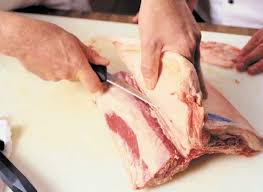
Spices act on the salivary and gastric glands to promote secretion, stimulating appetite and improving digestibility of meat products. Their use varies from country to country depending on the climate, customs, and eating habits.
There are spices whose taste and smell remain unchanged even after exposure to high temperatures (chilies and sage). Less resistant are cardamom, clove, pepper, rosemary, and thyme, and the least heat-resistant are coriander, mace, marjoram, nutmeg, allspice, and ginger.
Alternative Methods of Meat Preservation
There are other alternative means of meat preservation, which include the use of chemical additives, natural smoke, heat treatment, and drying.
1. Use of Chemical Additives
Phosphates are used to restore water-holding capacity (WHC) to chilled meat, approximately to the same level as hot-boned meat. Certain countries forbid phosphates, whereas some allow their use only where there is a proven technological effect.
Where permitted, they should be restricted to 0.3–0.5 percent of the sausage mixture weight. Phosphates break down actomyosin into actin and myosin, which can be solubilized by salt to increase the WHC. This effect is retained even in cooked products, increasing the yield.
Ascorbic acid (vitamin C) and its salts (sodium ascorbate) contribute to the development of cured-meat color. Sodium ascorbate is used in the manufacture of cooked sausages made from uncooked or precooked raw materials.
Ascorbic acid is used at a concentration of 0.03–0.05 percent, whereas sodium ascorbate is added at a concentration of 0.07 percent. Ascorbic acid is a strong reducing agent, enabling quicker formation of NO-myoglobin so that less nitrite is needed, and it inhibits the formation of an undesirable color in cured-meat products.
The curing of meat is a process depending upon the inhibition of microbial growth by the use of sodium chloride and control of water activity (aw) together with the optional additional use of nitrite salts to stabilize meat color and smoking to give further microbial control and a desirable cured meat flavor. Many traditional processes have been developed to give products of distinctive character.
Pre-slaughter control designed to achieve a low ultimate pH is an important aspect of all cured meat processes, since a pH of 5.8 or below is required to:
- Produce an open structure in the muscle, which encourages the rapid and complete penetration of salt into the tissue.
- Aid in the control of microbial development on both the surface of the products and in the deep tissues where anaerobic spoilage bacteria have slow growth only if the pH is below 5.6.
- Aid in maintaining a desirable light red color, which is best achieved by having meat at pH 5.8 or lower.
2. Natural Smoke in Meat Preservation
Natural smoke is a very complex mixture, consisting of a great number of compounds, and is obtained by controlled combustion of moist sawdust at low temperature. Sawdust from hardwoods is most commonly used to generate the smoke.
Nowadays, it is considered that optimal smoke composition is obtained at temperatures of 300–500°C. Smoke consists of gases (phenols, organic acids, carbonyls, and other compounds) and particles (pitch, tar, ash, and soot).
Gaseous components penetrate into a product through the casing to a certain level and react with other components of meat products. Other components are deposited onto the surface. Smoke provides typical flavor and distinctive color and hardens the surface of the meat product.
All substances added to meat products must have food-grade purity. They should not contain any food-poisoning bacteria, so they must be treated according to the highest hygienic standards.
It is important to keep them in properly closed containers or intact packages, away from any dampness and dust. They are usually kept in special, dry premises away from the workshop, in which they can be pre-weighed, blended, and packed into plastic bags in the proportions required for sausage formulations. The nitrate must be kept under lock and key.
Dosage by hand of any non-meat ingredient is not allowed. The only correct way is with scales, which must be checked occasionally for accuracy. One of the most serious consequences of failure to protect all non-meat substances is contamination with dirt, excreta from rodents, birds, or other animals, and infestation with insects.
The optional smoking process may be carried out by the conventional process of hanging the product in a smokehouse in the presence of smoke for 4–8 hours at temperatures of 35–40°C or by holding for several hours in a room to which smoke is ducted from a smoke generator consisting of a grinding wheel and a length of wood.
In both cases, the smoke should be generated from cured hardwood to avoid the gums associated with softwood such as pine. The smoking process has a number of effects, including a preservative effect brought about by the surface deposition of methanol, ethanol, dimethylpropanone, phenols, methanoic and ethanoic acids, furfuraldehyde, resins, waxes, tars, and doubtless, many other materials present in smoked products in levels ranging from parts per million to per billion.
Read Also: Guide On How To Increase Goats Milk
3. Heat Treatment in Meat Preservation
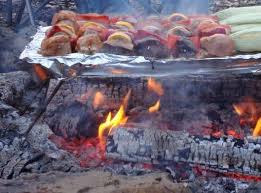
During processing, many meat products are subject to specific heat treatment. The first task of heat treatment is to:
- Reach satisfactory shelf-life by reduction of microorganisms.
The second task is to:
- Obtain desirable organoleptic characteristics.
- Preserve nutritive value.
- Improve digestibility of the product.
i. Reduction of Microorganisms
Microorganisms are destroyed if exposed to sufficiently high temperatures for long enough. There is a direct relationship between bacteria survival and time of exposure to temperatures.
As an example, if 10,000,000 bacteria (per ml) suspended in broth are exposed to heat (70°C), after the first five minutes, 1,000,000 will survive (90 percent are destroyed), after the next five minutes, the number of surviving will be 100,000 (again 90 percent are destroyed), and so forth.
This tenfold reduction in bacterial numbers between fixed time intervals is called decimal reduction. The time interval for decimal reduction varies between different bacteria and depends on the temperature applied.
The number of bacteria present in a meat product just before the heat treatment (initial number) should be as low as possible so that a shorter time or lower temperature is needed to achieve a satisfactory shelf-life for the product. As sausage fillings, as well as most other meat products, represent a very good medium for bacterial growth, they should immediately be exposed to heat treatment to prevent bacterial growth.
It is also important to perform all operations as quickly as possible and to maintain the highest hygienic standards so that the initial bacterial count remains as low as possible. The manufacturer must always bear in mind that bacteria grow very fast. Their number may double every 20 minutes.
4. Drying in Meat Preservation
A preservative effect is also induced by the surface drying that occurs to the extent of about 3% total weight loss in hot smoked products. An antioxidant effect is also produced by the deposition of phenolic compounds onto the surface, and these materials give rise in smoked products to a longer storage life free from rancidity development. Finally, smoking imparts a great deal of the characteristic flavor to traditional products.
The practice of sun-drying raw meat products has been practiced for thousands of years by pastoral and nomadic people seeking simple means to preserve meat in surplus supply.
A variety of traditional products have been developed that rely upon the interaction of preservation techniques involving:
- A restriction of water activity by drying.
- The use of salt and sugar to further control water activity and to act as selective inhibitors of microbial and enzymic actions.
- The use of spices to further limit microbial development and to impart characteristic flavors.
Cold Storage and Chilling Processes in Meat Preservation
1. Cold Storage
The familiar high perishability of meat is due to its nutritious composition, for both humans and microbes, as well as to meat’s invariable surface contamination by spoilage microorganisms. Low temperatures have been used throughout history to slow down the rate at which surface contaminants increase their numbers from initial levels to final levels indicative of spoilage.
The time taken for such microbial increase is a measure of the storage life. The term “cold storage” generally refers to the use of low temperatures within the range of 1 to 3.5°C, temperatures well in excess of the commencement of muscle freezing, but within the temperature optimum between -2°C and 7°C for growth of psychrophilic organisms.
The essence of meat marketing through cold storage is thus to have as rapid turnover as possible based upon a storage life of not more than 3–5 days, ensuring maintenance of the cold conditions throughout wholesale storage, distribution, retail storage, and sale.
This procedure is very widely used throughout western cities, relying upon a large daily kill at a city-based abattoir together with a cold-chain distribution and refrigerated storage in the consumer’s home. Spoilage of locally produced and consumed meat is avoided by using the meat promptly.
2. Chilling
Where a storage life in excess of about 5 days is required, as is the case for meat intended for export to other cities or countries, the temperatures of 1°C to 3.5°C are no longer adequate, and use must be made of lower temperatures together with other available methods of reducing the rate of onset of microbial spoilage.
These factors include:
- A reduction of the initial contamination to the lowest possible levels by means of strict hygiene during slaughter and carcass dressing.
- The choice of the lowest possible temperature that avoids freezing of the thin sections of the carcass, and its control to within the closest limits, which in practice means a temperature of -1.5 to 0.2°C.
- In the case of carcasses, the choice of storage at 87–81% relative humidity so that surface drying amounting to 2–4% of carcass weight occurs on the carcass surface, which is inhibitory to bacterial growth.
- The inclusion in the storage atmosphere of up to 25% carbon dioxide; levels in excess of 25% tend to promote the formation of the undesirable metmyoglobin and must be avoided.
- The use of meat of low pH, preferably below pH 5.8.
- A reduction of the carcass cooling process to the minimum time.
These principles find slightly different application depending on whether the meat is in the form of a carcass or in the form of boned-out meat cuts.
3. Freezing Process in Meat Preservation
By definition, the freezing and frozen storage of meat is carried out at temperatures where microorganisms will not grow, and at temperatures where the meat is hard enough to safely withstand bulk storage. In practice, this implies the use of temperatures below -15°C.
Meat, like other biological materials, has no precise freezing point but rather a freezing range in which the amount of water present as ice is determined by the lowness of the temperature.
Thus, at 0°C, no ice is present; at -10°C, about 83% of the available water is frozen; at -30°C, about 89% is frozen; and it is only at temperatures below -40°C that all of the available water is frozen at the eutectic point.
Once water has started to freeze, the rate of ice formation is determined by the rate of heat removal and the rate of diffusion of water from surrounding cell structures.
At slow rates of freezing, few crystallization centers are formed, resulting in the growth of large ice crystals, which can lead to cell rupture and excessive losses of fluid or drip when the meat is thawed.
At fast rates of freezing, the number of ice crystals increases, and the size of each crystal remains small to give a minimum fluid loss when the meat is thawed.
Frozen meats undergo slow deteriorative changes during frozen storage due principally to the oxidation of fats, affecting the flavor, particularly in those meats that contain a high proportion of unsaturated fats. Oxidation may be retarded by the use of oxygen-impermeable films and low-temperature storage.
Do you have any questions, suggestions, or contributions? If so, please feel free to use the comment box below to share your thoughts. We also encourage you to kindly share this information with others who might benefit from it. Since we can’t reach everyone at once, we truly appreciate your help in spreading the word. Thank you so much for your support and for sharing!