


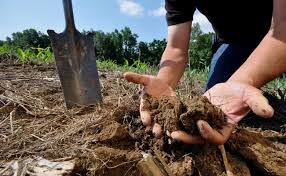
Mechanical methods in agriculture such as bunds, terraces, waterways, and structural barriers like vegetative strips or stone lines installed on farmlands can help break the force of wind or slow down the speed of runoff, thereby reducing soil erosion.
Terraces and Bunds for Agricultural Soil Protection
Terraces and contour bunds, either made of earth or stones, are permanent erosion control technologies used for cultivating crops on sloped lands.
Terraces consist of an excavated channel and a bank or ridge located on the downhill side. Contour bunds are typically used on lands with low gradient slopes, while terraces are constructed at right angles to the steepest slope in hilly areas.
These measures are effective for preventing gully erosion, which is one of the most severe forms of erosion. Although they help minimize excessive soil loss and silting of fields.
They demand intensive labour, frequent inspections, significant use of available farmland, and a large volume of construction materials, making them less appealing for consistent use by farmers.
Read Also: Poultry External Parasites and Control Measures
Waterways as a Runoff Management Strategy

Waterways, such as cut-off drains, are also permanent structures designed to collect and channel excess runoff to appropriate disposal points.
They are built following the natural slope of the land and are often grassed to prevent erosion of the channel itself.
Waterways are most suitable in regions experiencing high rainfall, and their effective construction and use may require an understanding of the local water movement patterns.
Use of Structural Barriers in Soil Conservation
Structural barriers made of stones or vegetation are installed along contour lines as another mechanical soil erosion control method.
These structures act as filters, slowing down runoff, increasing infiltration, promoting sediment deposition, and eventually assisting in the development of natural terraces.
Vegetative barriers are either planted in single lines or in strip formations several meters wide. A commonly used plant in northern Nigeria is Vetiver grass (Vetiver zizanioides), a hardy perennial with a strong and deep fibrous root system.
It is highly effective in semi-arid areas due to its resistance to drought, flooding, fire, and soil denudation. While these mechanical measures reduce soil loss, their labour-intensive installation and maintenance limit widespread adoption among farmers.
Read Also: Worm infection among Poultry Birds: Types, Causes and Treatment
Challenges Associated with Soil Conservation Practices
Several obstacles limit the adoption and success of mechanical soil conservation in agricultural areas:
1. Fragmented land ownership: This discourages individual farmers from making long-term investments in soil conservation.
2. High labour demand: The construction and maintenance of structures require significant manual effort.
3. Production risks in semi-arid zones: Flooding and other hazards reduce the perceived benefits of investing in conservation.
4. Lack of technical skills: Many farmers do not possess the knowledge to properly design and construct conservation structures, leading to poor quality and ineffective installations.
5. Unclear land tenure systems: These affect the ownership of conservation structures and reduce motivation for maintenance.
6. Irregular rainfall patterns: Due to climate variability, vegetative barriers may not perform as expected, especially during prolonged dry spells.
This article explained various mechanical methods of soil conservation in agriculture, including bunds, terraces, waterways, and vegetative or stone barriers.
These structures are essential for reducing erosion caused by wind or water by either blocking or slowing runoff. Although they are effective, their labour demand, cost of materials, land tenure uncertainties, and changing climate conditions discourage their widespread use by farmers.
In conclusion, mechanical soil conservation technologies remain an important component of sustainable farming practices.
However, for broader adoption, strategies must be developed to reduce labour requirements, provide technical support, and address land ownership constraints in rural agricultural communities.
Do you have any questions, suggestions, or contributions? If so, please feel free to use the comment box below to share your thoughts. We also encourage you to kindly share this information with others who might benefit from it. Since we can’t reach everyone at once, we truly appreciate your help in spreading the word. Thank you so much for your support and for sharing!