


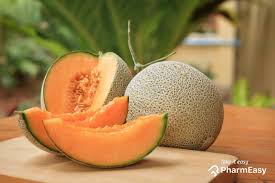
Melon (Cucumis melo), commonly known as muskmelon, cantaloupe, honeydew, or sweet melon, is a widely cultivated fruit prized for its sweet, juicy flesh and high nutritional value.
It is rich in vitamins A and C, vitamin B6, potassium, beta-carotene, and water content, offering benefits like immune support, hydration, and antioxidant protection.
Melon (Cucumis melo) Description
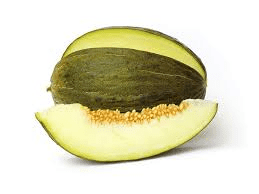
Cucumis melo is a climbing annual plant with stems up to 1.5 meters long that sprawl along the ground or climb using tendrils. It is grown from warm temperate zones to the tropics, at elevations up to 1,000 meters.
It thrives in daytime temperatures of 18–30°C (tolerating 9–35°C) but is killed by frost. It prefers 1,000–1,300 mm annual rainfall (tolerating 900–2,500 mm) and avoids excessive rain or humidity to prevent poor fertilization and leaf diseases.
It requires rich, well-drained, moisture-retentive soil in a warm, sunny location, with pH 6–7.5 (tolerating 5–8.7). Crops mature in 3–4 months from seed, typically yielding 5–30 tonnes per hectare (average 11–13 tonnes), with plants often limited to four fruits each.
This highly variable species has produced distinct forms and numerous varieties. The fruit is a pepo with sweet or bland flesh, musky or no aroma, and rind that is smooth, ribbed, wrinkled, or netted.
In North America, sweet netted-rind types are often called muskmelon or cantaloupe, while true European cantaloupe has ribbed, warty rind and is less common there.
Common Names of Melon include Snake cucumber, wild melon, orange melon, pickling melon, serpent melon, snap melon, round melon, Queen Anne’s melon, Armenian cucumber, melão (Portuguese), kharbuz / kharbuza (Pakistan), tian gua (pinyin, China), casaba, winter melon, melon, muskmelon, cantaloupe, honeydew, sweet melon, dudaim melon.
Key Notes:
1. Melon peel: High in minerals and phenolic compounds.
2. Melon seeds: Contain high levels of protein (15–36%), fiber (7–44%), and fat (13–37%).
3. Melon seed oil: Contains tocopherols, sterols, and phenolic compounds.
4. Linoleic acid: The most abundant fatty acid in melon seed oil (52–69%).
5. Melon byproducts: Excellent candidates for novel functional foods.
Read Also: Maize (Zea mays): Health Benefits, Healing Powers and Uses
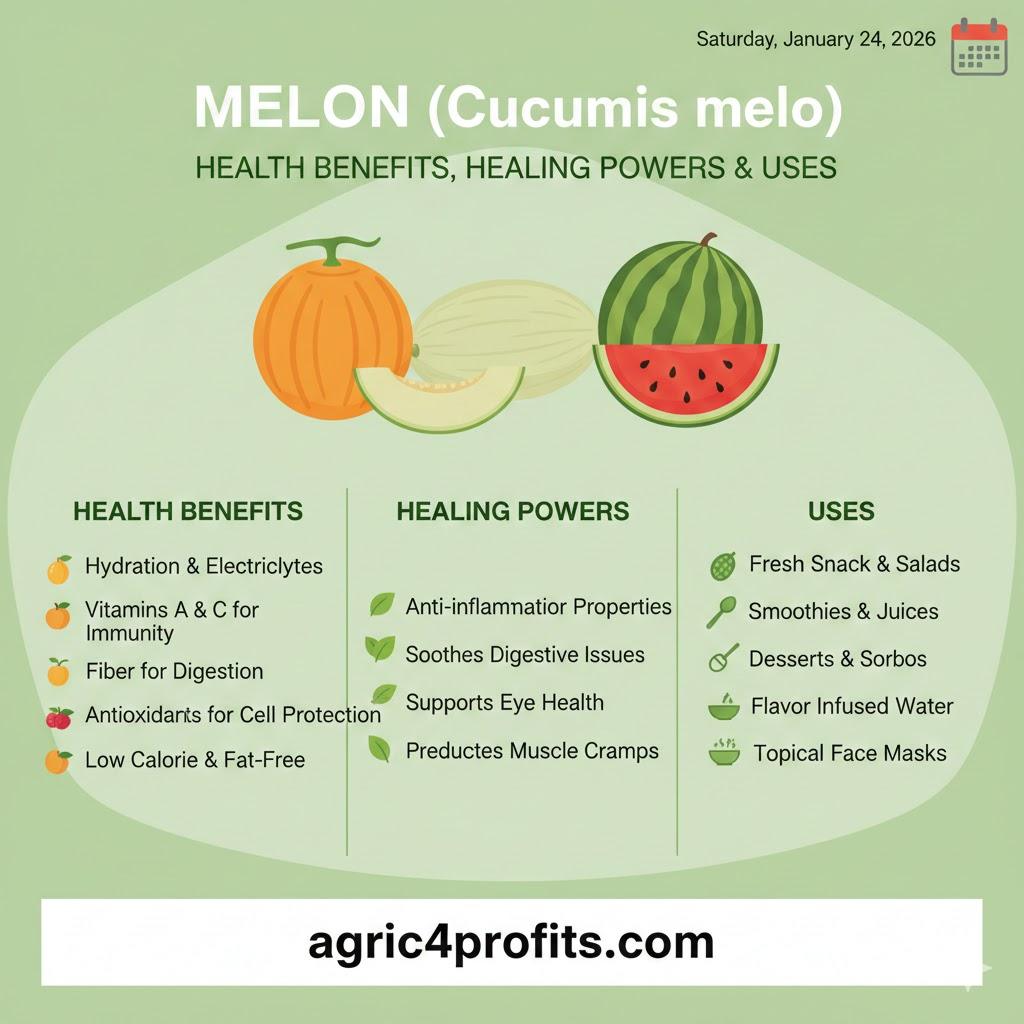
Melon has high water content, acting as a natural diuretic to remove toxins. Its fiber serves as a gentle laxative, aiding light constipation, hemorrhoids, and intestinal health.
It contains beta-carotene for vision support (sharpening vision, delaying cataracts) and vitamin C for nutrient processing and immune health. The juice cleanses the body and fights toxins.
Other Benefits of Melon (Cucumis melo)

Melon’s water purifies the body, fiber eases constipation and hemorrhoids, beta-carotene protects the retina, and vitamin C supports circulation and skin health.
Seeds can be ground into paste for anti-inflammatory face masks or consumed for folate and digestion benefits. High vitamin A and B complex support overall nutrition.
Melon aids skin health via hydration, vitamin C, and fiber for fluid regulation. It slows skin aging, promotes eye health, and is recommended fresh, in juice, or with seeds (eaten whole, blended, or as paste).
Read Also: Fluted Pumpkin Leaf Farming (Telfairia occidentalis): Complete Growing Guide for High Yields
 (Cucumis melo var. flexuosus – note differences from standard melon)
Melon is rich in antioxidants, potassium, and vitamins. Consume fresh or processed for health and skin benefits.
Scientific Evidence and Case Studies on Melon (Cucumis melo)
1. Antioxidant and Anti-inflammatory Properties: Extracts rich in superoxide dismutase from Cucumis melo demonstrate strong antioxidant and anti-inflammatory effects in vitro and in vivo.
2. Anti-cancer Potential: Cucumis melo extracts show promising anti-cancer activity in in vitro and in vivo studies across multiple cancer types.
3. Cardio-protective and Anti-atherogenic Effects: Sweet melon (Cucumis melo L. Inodorus) seed extract reduces obesity-related risks, improves lipid profiles, and offers cardio-protection in high-fat diet models.
4. Nutritional and Bioactive Composition: Various botanical types of melon provide high levels of vitamins, minerals, beta-carotene, polyphenols, and other compounds linked to protection against chronic diseases.
5. Diuretic and Other Effects: Seed extracts exhibit diuretic activity in animal models, supporting traditional uses for detoxification and kidney health.
Summary of Melon (Cucumis melo)
| Aspect | Description |
|---|---|
| Botanical Name | Cucumis melo L., also known as muskmelon, cantaloupe, honeydew, sweet melon |
| Plant Description | Climbing annual with 1.5 m stems and tendrils; grown in warm temperate to tropical zones |
| Growing Conditions | 18–30°C optimal, well-drained soil pH 6–7.5, moderate rainfall; matures in 3–4 months |
| Nutritional Value | High in water, vitamin A, vitamin C, vitamin B6, potassium, beta-carotene; seeds rich in protein, fiber, fat (linoleic acid), tocopherols |
| Health Benefits | Hydration/diuretic, gentle laxative for constipation/hemorrhoids, immune support, vision protection (beta-carotene), antioxidant/anti-inflammatory, skin health, potential cardio-protection |
| Uses | Eaten fresh (flesh/juice), seeds ground into paste for masks or consumption; versatile fruit in diets |
| Other Notes | Variable forms (netted, smooth, ribbed rind); peel/seeds as functional food sources; high water/fiber for detoxification |
Frequently Asked Questions
1. What is melon (Cucumis melo)?
Melon, also called muskmelon or cantaloupe, is a sweet, juicy fruit from a climbing annual plant widely grown for its edible pepo fruit.
2. What are the key nutrients in melon?
It is high in vitamins A, C, and B6, potassium, beta-carotene, water, and antioxidants; seeds provide protein, fiber, fats, and minerals.
3. How does melon support immune health?
Its vitamin C and A content strengthen the immune system and help with iron absorption.
4. Can melon help with blood pressure?
Yes, its potassium and diuretic properties from high water content aid in lowering and regulating blood pressure.
5. What are the digestive benefits of melon?
High fiber acts as a gentle laxative for constipation and hemorrhoids, while water supports hydration and toxin removal.
6. Does melon benefit eye health?
Beta-carotene and vitamin C protect the retina, sharpen vision, and help delay cataracts and other eye issues.
7. How can melon seeds be used?
Seeds are rich in nutrients; they can be eaten whole, blended, or ground into paste for anti-inflammatory face masks or internal benefits like folate support.
8. Is melon good for skin health?
Its high water, vitamin C, and antioxidants hydrate skin, promote smoothness, slow aging, and support circulation.
9. What are the antioxidant properties of melon?
Melon contains beta-carotene, polyphenols, and other compounds that provide strong antioxidant effects to combat oxidative stress.
10. Where is melon commonly grown?
It thrives in warm temperate to tropical regions, including gardens and commercial farms at elevations up to 1,000 meters.
Do you have any questions, suggestions, or contributions? If so, please feel free to use the comment box below to share your thoughts. We also encourage you to kindly share this information with others who might benefit from it. Since we can’t reach everyone at once, we truly appreciate your help in spreading the word. Thank you very much for your support and for sharing!
Disclaimer: This article is for educational and informational purposes only. The health benefits described are based on scientific research and traditional knowledge. They ayre not a substitute for professional medical advice, diagnosis, or treatment. Always consult a healthcare professional before using any herb or natural remedy for medical purposes.
Read Also: Foods and Drinks That Can Increase your Blood Sugar Level