



Pricing a menu effectively is a critical aspect of restaurant management, balancing costs, customer expectations, and profitability. This article explores the strategies and calculations involved in setting menu prices, ensuring restaurants achieve financial goals while delivering value to customers.
Understanding menu and recipe pricing involves analyzing overall restaurant costs, conducting recipe costing, and calculating final dish costs. These steps help establish menu prices that maximize profit margins while considering customer perceptions of value, service, and ambiance.
The process requires careful consideration of various factors, such as portion sizes, product quality, and menu mix. By blending high- and low-cost items, restaurants can achieve a target food cost percentage, ensuring both profitability and customer satisfaction.
This guide breaks down the key components of menu pricing, including pricing considerations, calculating menu item costs, and understanding food cost percentages. Each section provides actionable insights to help restaurant managers make informed pricing decisions.
Read Also: All You Need To Know About Animal Shelters
Pricing Considerations

Setting menu prices is more than just covering costs; it involves understanding customer expectations and market dynamics. Restaurants must balance profitability with perceived value, considering factors like ambiance, service, and convenience that influence what customers are willing to pay.
Location plays a significant role in pricing decisions. Customers in urban areas may expect higher prices due to increased operational costs, while those in suburban areas may prioritize affordability. Aligning prices with local market expectations is crucial for success.
Portion sizes and product quality also impact pricing. Larger portions or premium ingredients can justify higher prices, but only if customers perceive the value. A well-curated menu mix ensures a balance of offerings that appeal to diverse customer preferences.
A. Factors Influencing Menu Prices
1. Costs: The primary goal is to cover expenses and achieve profitability. Prices must account for ingredient costs, labor, and overhead while meeting budget goals or breaking even in some cases.
2. Customer Value Perception: Customers evaluate prices based on the overall dining experience, including food quality, service, and ambiance. Added-value features like convenience or unique offerings can support higher prices.
3. Location and Market: Pricing should reflect the restaurant’s location. Urban settings may allow for premium pricing, while suburban or rural areas may require more competitive pricing to attract customers.
4. Portion Sizes and Quality: Larger portions or high-quality ingredients can increase costs but also justify higher prices if aligned with customer expectations for value and satisfaction.
B. Balancing Profit and Appeal
Restaurants must balance high- and low-cost items to achieve a target food cost percentage. This approach, known as blended pricing, ensures profitability without alienating customers with overly high prices.
Menu engineering is a strategic tool for balancing costs. By analyzing sales and profitability, restaurants can promote high-margin items while maintaining a diverse menu that appeals to a broad customer base.
Effective menu design highlights items that optimize profit margins. Featuring popular or high-margin dishes through strategic placement or promotion can drive sales and improve overall financial performance.
Calculating Menu Item Costs
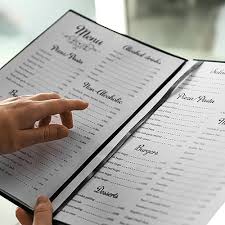
Accurately calculating menu item costs is essential for setting profitable prices. This process involves determining the cost per portion of ingredients and combining these costs to establish the total cost of a dish.
For à la carte menus, the main ingredient’s cost, such as a steak, is often the primary factor. Additional items like sides are priced separately, simplifying the cost calculation for individual menu items.
In prepared dishes, where ingredients are combined, a detailed recipe cost sheet is necessary. This sheet accounts for all components to provide an accurate portion cost, ensuring precise pricing decisions.
A. Cost Per Portion
1. Main Ingredient Costs: The cost of the primary ingredient, determined through yield tests, typically represents the largest portion of a dish’s cost. This forms the basis for pricing decisions.
2. Portion Cost Factor: This factor calculates the cost of a specific portion of the main ingredient, ensuring accurate pricing for items sold individually, like à la carte offerings.
3. Total Dish Cost: For prepared dishes, combine the costs of all ingredients using a recipe detail and cost sheet to determine the total cost per portion accurately.
4. Recipe Cost Sheets: These tools provide a comprehensive breakdown of all ingredients in a dish, ensuring no costs are overlooked when calculating the portion cost price.
B. Setting the Selling Price
Once the portion cost is determined, the selling price can be calculated using the food cost percentage. This percentage is derived by dividing the portion cost by the selling price.
Alternatively, a cost mark-up approach multiplies the portion cost by a mark-up factor to determine the selling price. This method ensures prices cover costs and contribute to profitability.
Historical data or industry averages often guide food cost percentages. However, relying solely on a standard percentage, like 30%, may not account for a restaurant’s unique circumstances.
C. Challenges in Pricing
Guessing market tolerance for prices, such as setting ₦450 for a bowl of soup, can lead to inaccurate pricing. This approach often ignores specific restaurant costs and customer expectations.
A more accurate method involves estimating total sales, labor costs, and desired profits. These figures help calculate a target food cost percentage tailored to the restaurant’s needs.
If the calculated mark-up results in unreasonable prices, it may indicate unrealistic assumptions about sales, labor, or overhead. Adjusting these projections ensures more viable pricing.
Read Also: All You Need To Know About Sweet William Flowers
Food Cost Percentages and Mark-Ups

Food cost percentages and mark-ups are critical tools for determining menu prices. They provide a structured approach to balancing costs and profitability while meeting customer expectations.
The food cost percentage is calculated by dividing the portion cost by the selling price. This percentage helps restaurants understand the cost structure of each menu item.
Alternatively, a cost mark-up is used to set prices by multiplying the portion cost by a mark-up factor. This method ensures prices cover costs and contribute to profit margins.
A. Calculating Food Cost Percentage
1. Formula: Divide the portion cost by the selling price to determine the food cost percentage. For example, a ₦100 portion cost with a ₦400 selling price yields a 25% food cost.
2. Industry Averages: Many restaurants use a standard food cost percentage, such as 30%, based on industry norms or past experience. However, this may not suit every establishment.
3. Tailored Calculations: Estimating total sales, labor costs, and profits provides a more accurate food cost percentage, reflecting the restaurant’s unique financial situation.
4. Worksheet Use: A worksheet, like the one shown in Figure 3.1, helps calculate menu prices by organizing cost data and ensuring all factors are considered.
B. Using Cost Mark-Ups
1. Mark-Up Formula: Multiply the portion cost by the mark-up factor to determine the selling price. For example, a ₦100 portion cost with a 4x mark-up results in a ₦400 price.
2. Deriving Mark-Ups: Divide 1 by the food cost percentage to calculate the mark-up factor. A 25% food cost percentage results in a 4x mark-up (1 ÷ 0.25).
3. Adjusting for Reasonableness: If mark-ups produce unreasonable prices, reassess projections for sales, labor, or profits to ensure pricing aligns with market expectations.
4. Strategic Pricing: Use mark-ups to balance high- and low-cost items, ensuring the menu achieves the target food cost percentage while remaining appealing to customers.
Frequently Asked Questions
1. What is menu engineering?
Menu engineering is the process of balancing high- and low-cost menu items to achieve a target food cost percentage. It involves analyzing sales and strategically promoting high-margin items.
2. How is food cost percentage calculated?
Food cost percentage is calculated by dividing the portion cost of a dish by its selling price. For example, a ₦100 portion cost with a ₦400 price yields 25%.
3. Why is blended pricing important?
Blended pricing balances high- and low-cost menu items to meet a target food cost percentage, ensuring profitability while maintaining a diverse and appealing menu.
4. How does location affect menu pricing?
Location influences customer expectations and operational costs. Urban restaurants may charge more due to higher costs, while suburban ones may prioritize affordability.
5. What is a recipe cost sheet?
A recipe cost sheet details the cost of all ingredients in a dish, providing an accurate portion cost price for menu items, especially prepared dishes.
6. How can restaurants justify higher prices?
Restaurants can justify higher prices with added-value features like premium ingredients, larger portions, exceptional service, or a unique dining experience.
7. Why might standard food cost percentages fail?
Standard percentages, like 30%, may not account for a restaurant’s unique costs, sales projections, or customer expectations, leading to inaccurate pricing.
8. How do portion sizes impact pricing?
Larger portion sizes increase costs but can justify higher prices if customers perceive them as valuable, aligning with their expectations for quality and satisfaction.
Do you have any questions, suggestions, or contributions? If so, please feel free to use the comment box below to share your thoughts. We also encourage you to kindly share this information with others who might benefit from it. Since we can’t reach everyone at once, we truly appreciate your help in spreading the word. Thank you so much for your support and for sharing!