


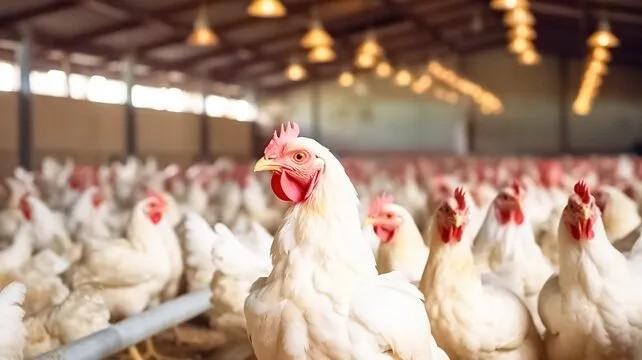
Table birds represent a significant portion of the poultry industry and a major source of income for farmers worldwide. These include broilers, old hens, cockerels, and cocks raised specifically for meat production. Understanding how to properly process and market these birds is essential for any poultry farmer looking to maximize profitability and build a sustainable business.
The market for table birds operates differently from egg production. While eggs can be stored for weeks with proper care, fresh poultry meat is highly perishable and requires careful handling from the moment of slaughter through to the consumer’s table. This perishability creates both challenges and opportunities for farmers who understand proper processing and marketing techniques.
Table birds can be marketed in two main ways: live or dressed and ready to cook. Each approach has distinct advantages and challenges. Live birds are commonly sold in traditional markets, particularly in developing countries where refrigeration infrastructure is limited and consumers prefer to buy live birds for freshness assurance. Dressed birds, on the other hand, command higher prices in urban markets and modern retail settings where consumers value convenience and are willing to pay for properly processed, ready-to-cook poultry.
The choice between selling live or processed birds depends on several factors including your market location, available equipment, local consumer preferences, and your capacity to maintain proper hygiene and cold chain management. Farmers near urban centers with access to processing facilities and cold storage often find dressed birds more profitable. Rural farmers far from these facilities typically focus on live bird sales to avoid the logistical challenges of processing and transport.
Processing table birds properly is not just about making them presentable for sale. It’s about food safety, quality preservation, and adding value that justifies higher prices. Poor processing leads to contamination, rapid spoilage, and products that consumers reject. Good processing, on the other hand, extends shelf life, maintains quality, and builds customer trust that translates into repeat business and premium pricing.
The processing sequence follows a logical order: killing and bleeding, scalding, plucking or picking, dressing and evisceration, chilling, and storage. Each step serves a specific purpose and must be done correctly to produce safe, high-quality products. Shortcuts or careless work at any stage compromise the final product and can result in unsaleable birds, financial losses, or worse, food poisoning incidents that destroy your reputation.
Marketing table birds also requires understanding pricing dynamics, supply and demand forces, and the practical realities of getting perishable products to consumers before they spoil. In many countries, poultry product prices are determined by market forces of demand and supply. However, in underdeveloped economies, price volatility, poor infrastructure, and inadequate cold storage facilities create additional challenges that farmers must navigate carefully.
This comprehensive guide walks through the entire process of table bird processing and marketing. We’ll cover each processing stage in detail, explain the equipment and techniques needed, discuss storage requirements, and examine the marketing considerations that determine whether your table bird operation succeeds or fails financially.
Read Also: Best Management and Processing Practices of Poultry Meats
1. Processing of Table Birds

Processing transforms a live bird into a product ready for cooking and consumption. The process involves several distinct stages, each requiring specific techniques, equipment, and attention to hygiene. Proper processing is essential for food safety, product quality, and shelf life.
A. Killing and Bleeding
Killing is the first and most critical step in processing. The method used affects blood removal, carcass quality, and shelf life. Complete bleeding is essential because residual blood in the carcass promotes bacterial growth and reduces storage time.
i. Hatching off the head: This traditional method involves using a hatchet or heavy knife to completely sever the head from the live chicken with a single swift blow. When done correctly, this method is quick and results in good bleeding. However, it requires skill and a steady hand to execute humanely and safely.
ii. Cutting the head off with a knife: A sharp knife is used to cut through the neck, severing the head cleanly. This method gives more control than using a hatchet and is common in small-scale operations. The knife must be extremely sharp to cut cleanly through bone and tissue in one motion.
iii. Cutting the jugular vein: This method involves making a precise cut to sever the jugular vein in the neck without removing the head entirely. The bird is typically hung upside down in a killing cone or restraint, and the cut is made inside the mouth or on the side of the neck. This method is preferred in many commercial operations because it keeps the bird more securely restrained during bleeding and reduces contamination from flapping.
iv. Bleeding: After killing by any method, the chicken must be allowed to bleed thoroughly. Hang the bird upside down or position it so blood drains freely from the body. Bleeding takes approximately 2 to 3 minutes. Complete bleeding is indicated when blood flow stops entirely. Incomplete bleeding leaves blood in the tissues, which darkens the meat, promotes spoilage, and reduces shelf life significantly.
B. Scalding

Scalding uses hot water to loosen the connection between feathers and skin, making plucking much easier and faster. The temperature and duration of scalding affect both the ease of plucking and the final appearance of the carcass.
i. Purpose: Scalding softens the skin and the protein that holds feathers in their follicles. This allows feathers to be removed with less force and damage to the skin.
ii. Temperature: Hot water at 50 to 55°C (122 to 131°F) is the standard scalding temperature. Water that’s too cool doesn’t loosen feathers adequately. Water that’s too hot begins cooking the skin, which tears easily during plucking and produces an unappealing final product.
iii. Duration: Immerse the bird for 30 to 90 seconds depending on bird size and water temperature. Young broilers require less time than older, tougher birds. The exact timing is learned through experience.
iv. Testing: You can test if scalding is sufficient by pulling a few large wing or tail feathers. If they come out easily, scalding is complete. If they resist, immerse the bird for a few more seconds.
v. Equipment: Use a large pot or tank that can hold enough water to fully immerse the bird. Maintain consistent water temperature throughout the scalding process. For processing multiple birds, you’ll need to refresh or reheat the water periodically as birds are added.
C. Picking or Plucking
Plucking removes all feathers from the carcass. The method used depends on your scale of operation, available equipment, and market requirements.
i. Hand picking: The scalded bird is de-feathered by hand, pulling feathers out by hand in the direction they grow. Start with large wing and tail feathers, then work over the entire body. Hand-picking is labor-intensive but requires no equipment and produces good results when done carefully. This method is suitable for small-scale operations processing a few birds at a time.
ii. Mechanical plucking: Commercial processing units use mechanical pluckers consisting of rotating drums with several stickers, usually made of rubber or plastic. The bird is held against the rotating drum, and the rubber fingers pull out feathers rapidly. Mechanical pluckers dramatically reduce labor time and can process large numbers of birds quickly. However, they require significant capital investment and regular maintenance.
iii. Technique matters: Whether plucking by hand or machine, work carefully to avoid tearing the skin. Torn skin reduces product quality and appearance. Some areas, particularly around the wings and thighs, require extra care to avoid damage.
iv. Pin feathers: Small pin feathers that remain after the main plucking must be removed individually. Use tweezers or specialized pin-pulling tools. In commercial operations, singeing (briefly passing the carcass over a flame) burns off remaining small feathers and hairs.
D. Dry Plucking

Dry plucking is an alternative method that involves removing feathers without prior scalding.
i. Process: Feathers are pulled directly from the dry, unscalded bird. This method is more laborious and time-consuming than wet plucking because the feathers are held more firmly in their follicles.
ii. Advantages: Dry plucking preserves a better color in the skin, which appears brighter and more yellow compared to scalded birds. The skin also maintains better texture and integrity. Dry-plucked carcasses often keep longer in storage than scalded carcasses because the skin hasn’t been exposed to hot water that can introduce contamination.
iii. Market preference: Some markets prefer dry-plucked birds for their superior appearance and keeping quality. This preference can justify the extra labor required for this method.
iv. Fire or wax plucking: Birds can also be defeathered using fire (singeing) or wax plucking. Wax plucking involves dipping the bird in melted wax, allowing it to harden, then peeling off the wax along with the feathers. This method is particularly effective for waterfowl with dense, water-resistant feathers.
E. Dressing and Evisceration
Dressing transforms the plucked carcass into a product ready for cooking by removing all inedible or unwanted parts.
i. Removing external parts: Cut off the head (if not already removed during killing), neck, and feet at the hock joint. These parts can be saved and sold separately or discarded depending on local market practices.
ii. Internal evisceration: This critical step removes all internal organs from the body cavity. The process begins by making a careful incision between the end of the keel bone (breastbone) and the rectum. The cut must be large enough to insert your hand but not so large that it damages the carcass appearance.
iii. Removing organs: Reach into the body cavity and carefully pull out all internal organs including the gizzard, lungs, liver, intestines, crop, heart, and other internal tissues. Work systematically to ensure nothing is left inside. The intestines must be removed very carefully without breaking them, as ruptured intestines contaminate the meat with fecal matter.
iv. Edible organs: The heart, liver, and gizzard (giblets) are often saved, cleaned, and packaged separately. The liver should be inspected and any bile-stained portions removed, as bile tastes extremely bitter. The gizzard must be split open, the tough inner lining removed, and thoroughly cleaned before it can be used.
v. Final cleaning: Rinse the eviscerated carcass thoroughly inside and out with clean, cold water to remove any remaining blood, tissue fragments, or contamination.
vi. Whole or parts: The dressed chicken can be sold whole or cut into parts (breast, thighs, drumsticks, wings). Cutting into parts requires skill to produce uniform, attractive pieces that maximize value.
F. Chilling

Chilling the dressed chicken immediately after processing is essential for food safety and quality preservation.
i. Purpose: Rapid chilling prevents bacterial growth and slows enzymatic activities that would otherwise degrade meat quality. Bacteria multiply rapidly at temperatures between 5°C and 60°C, so getting the carcass temperature down quickly is critical.
ii. Method: Place the dressed carcass in a cold chamber or refrigerator with the temperature maintained at 1 to 5°C (34 to 41°F). The carcass should reach this temperature within a few hours of processing.
iii. Ice or water chilling: Some operations chill carcasses by immersing them in ice water or ice slush. This method cools the bird very quickly but can introduce water contamination if the ice water isn’t kept clean. Change the chill water frequently when processing multiple birds.
iv. Air chilling: Carcasses can also be chilled by cold air circulation in a refrigerated room. This method avoids water contamination and may produce better skin texture, but it takes longer to bring the carcass temperature down.
G. Storage
Proper storage extends the shelf life of processed poultry and maintains quality until the product reaches consumers.
i. Short-term storage: For storage of one to two days, maintain temperature at approximately 2°C (36°F). At this temperature, fresh poultry remains in good condition for retail sale as fresh meat.
ii. Long-term storage: For extended storage periods, freeze carcasses at -5°C to -18°C (23°F to 0°F) or colder. Properly frozen poultry can be stored for several months without significant quality loss. However, freezing and thawing affect meat texture, so fresh meat is always preferred when possible.
iii. Packaging for storage: Wrap or package carcasses appropriately before storage to prevent moisture loss (freezer burn) and contamination. Vacuum packaging extends storage life significantly by excluding oxygen that bacteria need to multiply.
iv. Temperature monitoring: Monitor storage temperatures constantly. Temperature fluctuations compromise product quality and safety. A few hours at an improper temperature can render an entire batch unsaleable.
2. Marketing Considerations for Table Birds

Understanding market dynamics is as important as knowing how to process birds properly. Production without effective marketing leaves you with products you can’t sell at profitable prices.
A. Pricing and Market Forces
In most countries, the prices of poultry products are determined by the forces of demand and supply. When supply is abundant relative to demand, prices fall. When demand exceeds supply, prices rise. Understanding these dynamics helps you time your production and marketing for better returns.
i. Developed economy patterns: In developed economies with established market systems, prices follow predictable patterns based on supply, demand, seasonal factors, and input costs. Farmers can track trends, anticipate price movements, and plan production accordingly.
ii. Underdeveloped economy challenges: In underdeveloped economies, the pricing scheme described above often doesn’t operate smoothly. There are no accurate statistics on production, supply, and demand. Consequently, price changes can be violent, unpredictable, and difficult to control. Farmers face much higher market risk in these environments.
iii. Infrastructure impact: Poor cold storage facilities make the handling of poultry products precarious and prices unstable. When farmers can’t store products to wait for better prices, they must sell immediately at whatever price the market offers. This puts farmers at a disadvantage and creates wild price swings.
B. Location and Market Access
Your farm’s location relative to major markets has an enormous impact on profitability, particularly for perishable products like fresh poultry meat.
i. Farmers near towns or cities: For farmers located near urban centers, setting the market price at a level that consumers will pay is usually met with people eager to buy. Product disposal is not a problem. Short transport distances mean fresh products, lower transport costs, and better profit margins. Urban proximity is a significant competitive advantage in the poultry meat business.
ii. Rural farmers far from markets: Farmers in rural areas away from main markets face serious challenges. The cost of transporting products to market can make their products more expensive than those from urban or peri-urban farms. After accounting for transport costs, there may be no profit left. Additionally, long transport times for fresh poultry meat increase spoilage risk, particularly in hot climates without refrigerated transport.
iii. Strategic responses: Rural farmers must develop strategies to overcome location disadvantages. Options include forming cooperatives to share transport costs, developing local markets rather than competing in distant urban markets, focusing on live bird sales that travel better than dressed birds, or adding value through processing that justifies higher prices and longer transport costs.
C. Marketing Live Versus Dressed Birds
The choice between selling live or dressed birds affects every aspect of your operation from facility design to daily workflow.
i. Live bird advantages: No processing facilities or equipment needed, no cold storage required, birds can be held longer before sale, traditional markets prefer live birds for freshness assurance, and reduced food safety liability because the buyer handles processing.
ii. Live bird disadvantages: Lower prices per kilogram compared to processed birds, limited to markets where live bird sales are practiced, transport stress affects bird condition, and potential for disease spread when moving live birds between locations.
iii. Dressed bird advantages: Higher prices per kilogram, access to modern retail markets, convenience appeals to urban consumers, and reduced transport weight (no feathers, organs, feet, head).
iv. Dressed bird disadvantages: Requires processing facilities, cold chain management is essential, higher capital investment in equipment, greater food safety responsibility, and products must sell quickly before spoiling.
D. The Fundamental Marketing Principle
It is of no value to produce poultry commodities (eggs and meat) without serious effort to secure a market for them. This statement bears repeating because it’s the most common mistake new poultry farmers make. They focus all their energy on production and assume the market will take care of itself. It won’t.
Successful farmers identify buyers before they produce. They understand what those buyers want, what prices they pay, what quality standards they require, and what volumes they need. This market intelligence shapes every production decision from breed selection through processing methods.
In conclusion, processing and marketing table birds successfully requires mastering both technical processing skills and market understanding. The processing sequence (killing, bleeding, scalding, plucking, dressing, evisceration, chilling, and storage) must be executed properly to produce safe, high-quality products that consumers will buy. Marketing decisions about live versus dressed sales, target markets, pricing strategies, and distribution channels determine whether the processing effort translates into profitable sales. Farmers who excel at both processing and marketing build sustainable, profitable table bird operations.
Read Also: Production Practices for Poultry Operations
Summary on Processing and Marketing Table Birds

| Aspect | Key Points |
|---|---|
| Table Birds Definition | Broilers, old hens, cockerels, and cocks; sold live or dressed |
| Processing Stages | Killing, bleeding, scalding, plucking, dressing, evisceration, chilling, storage |
| Killing Methods | Hatching off the head, cutting with a knife, cuttinthe g jugular vein; must bleefor d 2-3 minutes |
| Scalding | 50-55°C water for 30-90 seconds; softens skin, facilitates feather removal |
| Plucking Methods | Hand picking, mechanical pluckers, dry plucking, fire/wax plucking |
| Dry Plucking Benefits | Better skin color, better texture, keeps longer than scalded carcasses |
| Evisceration | Remove all internal organs through incision between keel bone and rectum |
| Chilling Temperature | 1-5°C ia n cold chamber to prevent bacterial growth and enzymatic activity |
| Short-term Storage | 2°C for 1-2 days; suitable for fresh retail sales |
| Long-term Storage | -5°C to -18°C for months; freezing affects texture but extends shelf life |
| Pricing Dynamics | Determined by supply and demand; unstable in underdeveloped economies |
| Location Impact | Urban farmers have market advantage; rural farmers face high transport costs |
| Infrastructure Challenges | Poor cold storage makes handling precarious and prices unstable |
| Marketing Principle | Never produce without securing market first; identify buyers before production |
Frequently Asked Questions About Processing and Marketing Table Birds
1. What’s the difference between selling live birds and dressed birds in terms of profitability?
Dressed birds typically sell for higher prices per kilogram than live birds because you’re adding value through processing and providing convenience to the buyer. However, dressed birds require processing facilities, equipment, skilled labor, and cold storage, all of which cost money. Live birds have lower per-kilogram prices but also lower costs because you avoid processing expenses. Your choice depends on market access, available capital, and local consumer preferences. Urban markets often prefer dressed birds; rural markets typically buy live.
2. How long can I safely store processed chicken before it must be sold?
At refrigerator temperature (2°C), fresh processed chicken stays safe for 1 to 2 days. Beyond that, quality declines rapidly and bacterial counts increase to unsafe levels. For longer storage, freeze at -5°C to -18°C, which preserves chicken for several months. However, freezing and thawing affect texture, so fresh is always preferred when possible. Never hold fresh chicken at room temperature for more than 2 hours, as bacteria multiply rapidly at temperatures between 5°C and 60°C.
3. Why is complete bleeding so important after killing the bird?
Residual blood in the carcass promotes bacterial growth, darkens the meat, and significantly reduces shelf life. Blood provides nutrients that bacteria need to multiply. Incomplete bleeding also affects appearance because blood-stained meat looks unappealing to consumers. Always allow 2 to 3 minutes for complete bleeding and ensure blood drains freely from the carcass by positioning the bird appropriately.
4. Can scalding water be too hot, and what happens if it is?
Yes, water above 55°C begins cooking the skin, which makes it tear easily during plucking. Overscalded skin appears white, feels soft and mushy, and produces an unattractive final product. The carcass may also develop areas where the skin has pulled away from the meat entirely. Use a thermometer to maintain water temperature between 50 and 55°C for best results. Adjust immersion time rather than increasing temperature if feathers don’t loosen adequately.
5. Is dry plucking worth the extra labor compared to wet plucking?
It depends on your market. Dry-plucked birds have better skin color, better texture, and keep longer than scalded birds, which can justify premium prices in markets that value these qualities. However, dry plucking is significantly more labor-intensive and time-consuming. For small-scale operations selling to customers who appreciate superior quality and are willing to pay for it, dry plucking can be worthwhile. For high-volume commercial operations, wet plucking followed by mechanical pluckers is more economical.
6. What’s the biggest risk during evisceration and how do I avoid it?
The biggest risk is rupturing the intestines, which releases fecal matter that contaminates the meat with dangerous bacteria like Salmonella and E. coli. To avoid this, work carefully when removing organs, don’t pull or yank roughly, and if you do rupture the intestines, wash the carcass immediately and thoroughly with clean cold water. Some contaminated carcasses may need to be discarded entirely if contamination is severe. Prevention through careful technique is far better than trying to clean up after contamination.
7. How do I know if my cold storage temperature is adequate?
Use a reliable thermometer (preferably digital) to monitor temperature constantly. For fresh chicken storage, maintain 1 to 5°C consistently. For frozen storage, maintain -5°C to -18°C or colder. Check the temperature multiple times daily, particularly after opening and closing the storage unit. Temperature fluctuations compromise food safety and quality. If you notice your storage unit struggles to maintain temperature or cycles frequently, it may be undersized, malfunctioning, or opened too often.
8. Why do rural farmers struggle more with table bird marketing than urban farmers?
Transport costs and distance are the main factors. A rural farmer 100 kilometers from the city must pay for fuel, vehicle, time, and risk of spoilage during transport. These costs can equal 20 to 30% or more of the product value. By the time rural chicken reaches urban markets, it’s older, more expensive, and less attractive than locally produced chicken. Urban farmers deliver fresh products daily with minimal transport cost, allowing them to price competitively while maintaining good margins. This location advantage is very difficult for rural farmers to overcome.
9. What equipment is essential for small-scale table bird processing?
At minimum, you need: sharp knives for killing and dressing, a large pot or tank for scalding, a heat source to maintain water temperature, a work tablea ata comfortable height, access to clean water for washing, containers for collecting blood and organs, and some form of refrigeration for chilled storage. As you scale up, mechanical pluckers, dedicated processing rooms with proper drainage, separate areas for different processing stages, and better cold storage become worthwhile investments.
10. How can I compete with larger commercial processors who have economies of scale?
Focus on quality, freshness, and local relationships rather than competing on price. Emphasize that your birds are processed daily and sold fresh, not frozen. Build direct relationships with restaurants, hotels, and retailers who value reliable suppliers of quality products. Consider value-added products like marinated chicken, specialty cuts, or organic/free-range birds that command premium prices. Small scale can be an advantage when it means better quality control, fresher products, and personalized service that large processors can’t match.
Do you have any questions, suggestions, or contributions? If so, please feel free to use the comment box below to share your thoughts. We also encourage you to kindly share this information with others who might benefit from it. Since we can’t reach everyone at once, we truly appreciate your help in spreading the word. Thank you very much for your support and for sharing!
Read Also: Comprehensive Guide on How to Start Cockerel Farming Business