


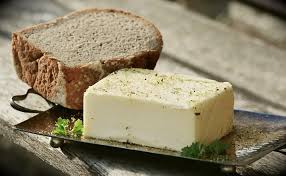
The cream quality and the sanitary conditions used in the butter processing are the major determinants of the microbiological quality of butter. All three major groups of organisms – bacteria (e.g., Pseudomonas spp.), yeasts (e.g., Candida spp.), and molds (e.g., Geotrichum) have been implicated in spoilage of butter on the surface causing flavour defects such as putridity, rancidity and/or fishy flavour as well as surface discoloration.
The flavour defects in unsalted butter have been attributed to growth of coliforms, Enterococcus and Pseudomonas in the water-phase of butter. Microorganisms of concern in the spoilage of butter are mainly psychrotrophs, which are predominantly Gram-negative, rod-shaped microorganisms.
The main characteristic of psychrotrophs which makes them important in the spoilage of butter, is their ability to survive at low temperatures (3–7ºC) and the production of enzymes (lipase and protease) which catalyze the hydrolysis of lipids and proteins in the butter, respectively.
The rich nutrient content of the butter also makes it susceptible to spoilage microorganisms other than Pseudomonas such as Serratia, Acinetobacter and Moraxella. Two main types of butter spoilage are color change at the surface (surface taint) and rancidity. The major culprit for both is believed to be Pseudomonas spp. Shewanella putrefaciens (formerly Alteromonas putrefaciens) or Flavobacterium spp. which also play role in development of surface taints in butter.
Some species such as P. putrefaciens are able to grow on butter surface and produce a putrid odour within a relatively short period of time (7–10 days) at refrigeration temperature. The odour is suggested to be the result of releasing organic acids such as isovaleric acid.
Black discoloration and skunk-like odour are also developed in butter by Pseudomonas nigrificans and Pseudomonas mephitica respectively. Pseudomonas fragi and, in rare cases, Pseudomonas fluorescens as well as non-microbial lipases degrade milk fat into free fatty acids leading to hydrolytic rancidity in butter.
Hydrolytic rancidity in butter can also be the result of activity of Micrococcus spp. and molds such as Rhizopus, Geotrichum, Penicillium and Cladosporium.
Read Also: 7 Medicinal Health Benefits of Daffodils (Narcissus Plant)
Contamination and Microbial Spoilage of Poultry
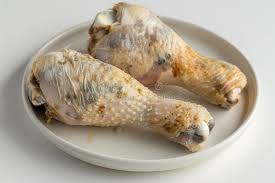
Poultry is susceptible to contamination by various sources. Contamination of skin and lining of the body cavity take place during various processing operations. The organisms of great importance in poultry are Salmonella spp. and Campylobacter jejuni. Several Gram-negative psychrotrophic bacteria such as Pseudomonas, Acinetobacter and Flavobacterium have also been isolated from poultry carcasses.
Ground turkey also may carry fecal Streptococci. It is important to freeze the poultry fast in order to keep it in good condition for several months. Freezing further reduces the number of microorganisms in the poultry meat provided the temperature is maintained quite low (-18 ° C or below).
Primary Causes of Poultry Product Spoilage
The primary causes of poultry products spoilage are:
- Prolonged distribution or storage time.
- Inappropriate storage temperature
- High initial bacterial counts
- High post-rigor meat pH
Factors Contributing to Poultry Spoilage
Companies are able to prevent prolonged storage times by properly rotating their stock. Product that is to be sold in locations far from the processing plant should be transported at temperatures that are below freezing point (26oF), but not sufficient to freeze the muscle tissue. Inappropriate storage temperatures or fluctuations in storage temperature are the most avoidable causes of spoilage.
Temperature abuse can occur during distribution, storage, retail display or handling of the product by the consumer. Processors can determine whether product has been temperature abused by monitoring temperature or evaluating bacterial populations throughout the distribution system. Initial bacterial counts on broiler carcasses may have a direct effect on the shelf-life of fresh product as well.
The initial number of bacteria on poultry is generally a function of grow-out procedures, production practices, and plant and processing sanitation. Higher numbers of spoilage bacteria on the chicken immediately after processing, translates to more rapid spoilage.
High post-rigor meat pH is often caused by stress on the birds during grow-out or transportation. This reduces the shelf-life of the meat by up to six days and is due to the fact that spoilage bacteria multiply much more rapidly on meat that is at a pH of 6.2 than on meat that is at a normal post-rigor pH of 5.4-5.6.
Bacteria Responsible for Poultry Spoilage
Research demonstrates that the populations of bacteria high in number on the carcass immediately after processing are not the ones that grow under refrigeration and spoil carcasses. The bacteria found after carcasses spoil are very difficult to find on carcasses at the time of processing.
After processing, the spoilage bacteria are present in very low numbers, but they can multiply rapidly to cause spoilage odours and slime. These spoilage bacteria are called psychrotrophic bacteria because they are able to multiply under cold conditions.
Fresh poultry products held long enough at refrigerator temperatures will spoil as a result of the growth of psychrotrophic bacteria. In contrast, the bacteria that exist in higher numbers at the time of processing on the skin of chickens and in their intestinal tracts are primarily mesophiles.
These bacteria do not multiply to an appreciable degree at refrigerator temperatures. Salmonella, E. coli and other bacteria found on chickens are mesophiles. When a company conducts an Aerobic Plate Count‖ or Total Plate Count‖ on a chicken carcass, it is measuring the mesophiles.
Read Also: Bacterial Canker (Stone fruit trees): Description, Damages Caused, Control and Preventive Measures
Origin of Spoilage Bacteria in Poultry
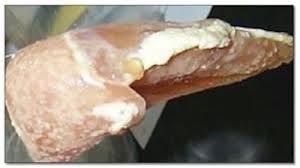
Spoilage bacteria on the carcass immediately after processing come from the feathers and feet of the live bird, the water supply in the processing plant, the chill tanks and processing equipment. These spoilage bacteria are not usually found in the intestines of the live bird. High populations of Acinetobacter (108cfu/g) have been found on the feathers of the bird and may originate from the deep litter.
Other spoilage bacteria, such as Cytophaga and Flavobacterium, are often found in chill tanks but are rarely found on carcasses. The psychrotrophic spoilage bacteria on chicken carcasses immediately after slaughter are generally Acinetobacter and pigmented pseudomonads. Although strains of nonpigmented Pseudomonas produce off-odours and off-flavors on spoiled poultry, initially, they are difficult to find on carcasses and P. putrefaciens (Shewanella putrefaciens) is rarely found.
Specific Bacterial Species Causing Poultry Spoilage
The bacterial genera most isolated in high numbers on spoiled poultry were Pseudomonas fluorescens, putida, or fragi or Shewanella putrefaciens. Identification of the genus and species most responsible for spoiling poultry is important because, once identified, it is easier to understand the mechanisms by which they produce spoilage.
High numbers (105 cfu/cm2) of psychrotrophic spoilage bacteria are required on poultry surfaces before off-flavors, off-odors and appearance defects are able to be detected organoleptically. Researchers have reported that higher numbers of bacteria (3.2×10⁷ to 1×10⁹ cfu/cm2) were required to produce slime than were needed for odor to become noticeable.
Frequently Asked Questions
- What are the main microorganisms causing spoilage in butter?
The main microorganisms implicated in butter spoilage include bacteria like Pseudomonas spp., yeasts like Candida spp., and molds like Geotrichum, which cause flavour defects such as putridity, rancidity, fishy flavour, and surface discoloration. - Why are psychrotrophs significant in butter spoilage?
Psychrotrophs are significant because they survive at low temperatures (3–7ºC) and produce enzymes like lipase and protease that hydrolyze lipids and proteins in butter, leading to spoilage. - What causes hydrolytic rancidity in butter?
Hydrolytic rancidity in butter results from the degradation of milk fat into free fatty acids by Pseudomonas fragi, Pseudomonas fluorescens, non-microbial lipases, Micrococcus spp., and molds such as Rhizopus, Geotrichum, Penicillium, and Cladosporium. - Which bacteria are of primary concern in poultry contamination?
The organisms of great importance in poultry are Salmonella spp. and Campylobacter jejuni, along with Gram-negative psychrotrophic bacteria such as Pseudomonas, Acinetobacter, and Flavobacterium. - How does freezing help prevent poultry spoilage?
Freezing poultry fast reduces the number of microorganisms and keeps it in good condition for several months if the temperature is maintained at -18°C or below. - What are the primary causes of poultry product spoilage?
The primary causes include prolonged distribution or storage time, inappropriate storage temperature, high initial bacterial counts, and high post-rigor meat pH. - Where do spoilage bacteria in poultry originate?
Spoilage bacteria on poultry carcasses come from the feathers and feet of the live bird, the water supply in the processing plant, chill tanks, and processing equipment, not usually from the intestines. - Which bacterial species are most commonly isolated from spoiled poultry?
The bacterial genera most isolated in high numbers on spoiled poultry are Pseudomonas fluorescens, putida, fragi, or Shewanella putrefaciens, which produce off-odors, off-flavors, and slime.
Do you have any questions, suggestions, or contributions? If so, please feel free to use the comment box below to share your thoughts. We also encourage you to kindly share this information with others who might benefit from it. Since we can’t reach everyone at once, we truly appreciate your help in spreading the word. Thank you so much for your support and for sharing!