


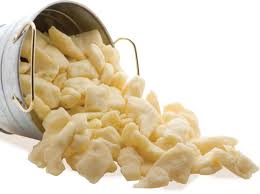
The word fermentation has many meanings. According to Louis Pasteur, it describes life in the absence of oxygen. Fermentation is the process that bacteria use to make energy from carbohydrates in the absence of oxygen. Fermentation involves exposing the raw or starting food materials to conditions that favor growth and metabolism of specific and desirable microorganisms.
As the desirable microorganisms grow, they utilize some nutrients and produce some end products. These end products, along with the unmetabolized components of the starting materials, constitute the fermented foods having desirable acceptance qualities, many of which are attributed to the metabolic end products.
With a few exceptions, fermentation describes any biological process that makes vinegar, antibiotics, monosodium glutamate, amino acids, citric acid, etc., whether oxygen is present or not. Food fermentations are bioprocesses that change food properties while the bacteria generate energy in the absence of oxygen.
These changes go far beyond acid production. Fermentations add value to foods by producing flavor compounds and carbonation, altering texture, and increasing nutrient bioavailability.
The production of a fermented product has two related yet separate aspects, one involving the importance of metabolic activities of microorganisms during fermentation and storage of the product and the other involving the parameters used during processing and storage of the product.
Read Also: Poultry Management during Winter Cold
Microorganisms Involved in Fermentation Processes
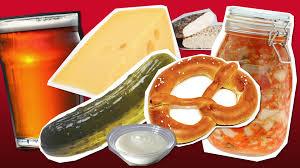
The process of breaking carbon sources into desirable end products that benefit humans involves the activities of a number of microorganisms. Many desirable species and strains of bacteria, yeasts, and molds are associated with fermentation of foods.
Depending on a product, fermentation may be achieved by a single predominating species and strain. However, in most fermentations, a mixed population of several bacterial species and strains, or even bacteria and yeasts or bacteria and molds, is involved.
When a fermentation process involves a mixed population, the members act together to aid the process in a synergistic manner. Maximum growth of a desirable microorganism and optimum fermentation rates are dependent on environmental parameters.
Such as nutrients, temperature of incubation, oxidation-reduction potential, and pH. In the fermentation process, if the different species in a mixed population need different environmental conditions (e.g., temperature of growth), a compromise is made to facilitate growth of all the species at a moderate rate.
Depending on the raw or starting material and a specific need, carbohydrates (dextrose in meat fermentation), salts, citrate, and other nutrients are supplemented. In some natural fermentations, several species may be involved for the final desirable characteristics of the product.
However, instead of growing at the same time, they appear in sequence with the consequence that a particular species predominates at a certain stage during fermentation.
Types of Fermentation Processes
Foods can be fermented in three different ways, based on the sources of the desirable microorganisms: natural fermentation, back slopping, and controlled fermentation.
1. Natural Fermentation Processes
Many raw materials used in fermentation contain both desirable and associated microorganisms. The conditions of incubation are set to favor rapid growth of the desirable types and no or slow growth of the associated (many are undesirable) types.
A product produced by natural fermentation can have some desirable aroma resulting from the metabolism of the associated flora. However, because the natural microbial flora in the raw materials may not always be the same, it is difficult to produce a product with consistent characteristics over a long period of time.
Also, chances of product failure because of growth of undesirable flora and foodborne diseases by the pathogens are high.
2. Back Slopping Fermentation Method
In this method, some products from a successful fermentation are added to the starting materials, and conditions are set to facilitate the growth of the microorganisms coming from the previous product.
This is still practiced in the production of many ethnic products in small volumes. Retention of product characteristics over a long period may be difficult because of changes in microbial types. Chances of product failure and foodborne diseases are also high.
3. Controlled Fermentation Techniques
In controlled fermentation, the starting materials may be heat-treated and inoculated with a high population (106 cells/mL or more) of a pure culture of single or mixed strains or species of the starter culture. Incubation conditions are set for the optimum growth of the starter cultures.
Large volumes of products can be produced with consistent and predictable characteristics each day. Generally, there is less chance of product failure and foodborne diseases. However, there may be no growth of desirable secondary flora. As a result, a product may not have some delicate flavor characteristics.
4. Microbial Activity in Fermented Products
The microbiology of fermented products involves the metabolic activities of microorganisms that give rise to new products. Fermentation processes involve exposing the raw or starting food materials to conditions that favor growth and metabolism of specific and desirable microorganisms.
Microorganisms, often known as starter culture, grow and utilize some nutrients to produce some end products. These end products, along with the unmetabolized components of the starting materials, constitute the fermented foods having desirable qualities.
Microbiology of Cottage Cheese Production
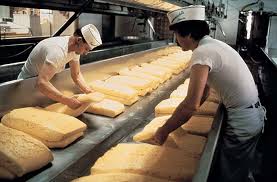
Cheese is a product of milk fermentation made by coagulating the casein in milk with lactic acid. It is produced by lactic acid bacteria, without or with the enzyme rennin. The process is followed by collecting the casein for further processing, which may include ripening. Cottage cheese is made from low-fat or skim milk and has a soft texture with approximately 80% moisture.
It is unripened and has a buttery aroma resulting from diacetyl (along with lactic acid and little acetaldehyde). Made from pasteurized milk, the milk is inoculated with a starter culture, usually containing Lactococcus cremoris and L. lactis, and then incubated until fermentation products cause the proteins in milk to coagulate.
The coagulated proteins, or curd, are heated and cut into small pieces to make it easier to drain the liquid waste portion. Unlike most cheeses that undergo further microbial processes called ripening or curing, cottage cheese is unripened.
The initial steps of ripened cheese production are the same as those of cottage cheese, except the enzyme rennin is added to the fermenting milk to speed protein coagulation. After the proteins coagulate, the whey (the liquid waste portion) is removed.
The curds are then salted, pressed, and shaped into the traditional forms, usually bricks or wheels. The cheese is then ripened, resulting in characteristic textural and flavor changes due to the metabolic activities of naturally occurring or starter lactic acid bacteria.
Depending on the type of cheese, ripening can take from several weeks to years. Longer ripening creates more acidic, sharper cheeses. Some cheeses are inoculated with other bacteria or fungi that give characteristics particular to the kind of cheese.
The bacterium Propionibacterium shermanii ripens Swiss cheese and gives it the characteristic holes and a nutty flavor. This bacterium ferments organic compounds to produce propionic acid and CO2. The CO2 gas causes the holes in the cheese, while the propionic acid gives the typical flavor. Propionic acid also inhibits spoilage organisms.
Processing Steps for Cottage Cheese from Skim Milk
To produce cottage cheese, the skimmed milk is:
- Pasteurized, cooled to 70°F (22.2°C), starter added, and incubated for 12 hours at pH 4.7.
- Firm curd set, cut in cubes, and cooked at 125°F (51.7°C) for 50 minutes or more.
- Whey drained off, stirred to remove more to get dry curd.
- Salted, creamed, and preservative added.
- Packaged and refrigerated.
Read Also: Types and Recommended Duration for your Physical Activity
Microbial Fermentation in Coffee Processing
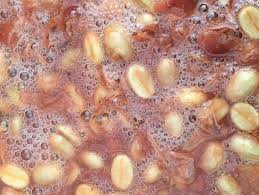
Coffee is made from several species of Coffea, including Coffea arabica, C. robusta, and C. canephora, which are grown in South America, Central America, Hawaii, Ethiopia, and India. Coffee cherries, which are much smaller than cocoa pods, contain coffee beans surrounded by fleshy mucilage.
The mucilage must be removed to liberate the beans. This can be done mechanically, by enzymes, by dehydration, or by fermentation. Fermentation plays a much less critical role in coffee production as it contributes very little to the bean flavor or quality compared to cocoa production. It is basically important to liberate the beans.
When the beans are fermented, they are first mechanically depulped. The beans, covered with residual mucilage, are submerged in tanks of water. Native yeast, molds, lactic acid bacteria, and gram-negative bacteria ferment the mucilage to water-soluble products that can then be washed away.
Since the main component of mucilage is pectin, the fermentation is dominated by a pectinolytic population. During the fermentation, which takes 12 to 60 hours, the pH of the beans drops to 3.7 from the pH of 5.4 to 6.4 characteristic of the native bean.
The beans are then subjected to 10 to 25 days of sun drying characterized by an ill-defined microbial succession. The beans can then be roasted and ground.
Microbial Fermentation in Vinegar Production
Vinegar is made by oxidizing ethanol to acetic acid. The process of vinegar fermentation is as ancient as that of wine. It follows the discovery of wine, since vinegar is made from wine or other alcoholic substrates. It was accidentally discovered when Gluconobacter or Acetobacter spp. contaminated wine and turned it to vinegar.
The process occurs in a two-step bioprocess. First, alcoholic fermentation by yeast to produce alcohol. Ethanol from wine or hard cider is mostly used, but vinegar can be made by the fermentation of almost any fruit or starchy material.
After the production of alcohol, the ethanol content of the first bioprocess is oxidized to acetic acid. Gluconobacter oxydans, used in making vinegar, is a strict aerobe; therefore, the ethanol is oxidized to acetic acid, and oxygen transfer is the rate-limiting step in the process.
Earlier processors of vinegar simply left wine in wooden barrels exposed to the air, inoculated it with Gluconobacter, and waited. The wine became vinegar after several weeks or months. With technological advancement, the trickling fermentor is a large wooden box with slatted sides to allow oxygenation.
The box is filled with wood shavings, on which the Gluconobacter grows as biofilms. A rotating sprayer at the top of the chamber sprays the alcoholic liquid on the top of the chips, and it trickles down over the immobilized Gluconobacter, being converted to acetic acid in the process.
The large surface area of the bacteria on the wood shavings exposed to oxygen makes this method very efficient. Its demise occurred not due to technical limitations but because the craftsmen who could build trickling fermentors retired or died.
The trickling fermentor is probably the first bioreactor using immobilized-cell technology. The most modern method of vinegar production is the submerged culture reactor. By pumping oxygen through these very large fermentors, at rates equal to the volume of the fermentor, large quantities of vinegar can be made in a very short time.
Frequently Asked Questions (FAQs) on Microbiology of Cheese and Beverage Fermentation
- What is the role of fermentation in food production?
Fermentation involves exposing raw food materials to conditions that favor the growth and metabolism of specific microorganisms, which utilize nutrients to produce end products. These end products, along with unmetabolized components, create fermented foods with desirable qualities like flavor, carbonation, altered texture, and increased nutrient bioavailability. - Which microorganisms are typically involved in food fermentation processes?
Food fermentation involves bacteria (e.g., lactic acid bacteria like Lactococcus cremoris and L. lactis), yeasts, and molds. Depending on the product, a single species or a mixed population of bacteria, yeasts, or molds may act synergistically, with growth optimized by environmental parameters like nutrients, temperature, pH, and oxidation-reduction potential. - What are the three main types of fermentation processes for foods?
The three main types are natural fermentation (using native microorganisms in raw materials), back slopping (adding products from a previous successful fermentation), and controlled fermentation (using heat-treated materials inoculated with pure starter cultures for consistent results). - How is cottage cheese produced, and what microorganisms are involved?
Cottage cheese is made from pasteurized low-fat or skim milk inoculated with starter cultures, usually Lactococcus cremoris and L. lactis. The milk is incubated until lactic acid causes protein coagulation, forming curds that are heated, cut, drained of whey, salted, creamed, and refrigerated. It is unripened, with a buttery aroma from diacetyl. - What role does fermentation play in coffee processing?
Fermentation in coffee processing is primarily used to remove mucilage from coffee beans, contributing little to flavor or quality. Native yeasts, molds, lactic acid bacteria, and gram-negative bacteria ferment the pectin-rich mucilage in water tanks for 12 to 60 hours, lowering the pH to 3.7, followed by sun drying for 10 to 25 days. - How is vinegar produced through microbial fermentation?
Vinegar production involves a two-step bioprocess: yeast ferments sugars to ethanol, followed by Gluconobacter oxydans or Acetobacter spp. oxidizing ethanol to acetic acid. Traditional methods used wooden barrels, while modern methods use trickling fermentors or submerged culture reactors for efficient oxygenation and faster production. - What distinguishes controlled fermentation from natural fermentation?
Controlled fermentation uses heat-treated materials inoculated with high populations of pure starter cultures, ensuring consistent product characteristics and lower risks of failure or foodborne diseases. Natural fermentation relies on native microorganisms, leading to variable characteristics and higher risks of undesirable flora growth. - How do microorganisms contribute to the flavor and texture of ripened cheeses?
In ripened cheeses, lactic acid bacteria and sometimes other microbes like Propionibacterium shermanii (in Swiss cheese) produce acids, CO2, and other compounds during ripening. These cause textural changes (e.g., holes in Swiss cheese) and flavor development (e.g., nutty flavor from propionic acid), with longer ripening yielding sharper flavors.
Do you have any questions, suggestions, or contributions? If so, please feel free to use the comment box below to share your thoughts. We also encourage you to kindly share this information with others who might benefit from it. Since we can’t reach everyone at once, we truly appreciate your help in spreading the word. Thank you so much for your support and for sharing!