


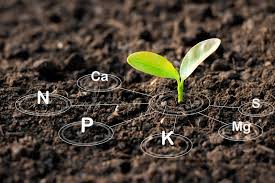
Nutrient availability to plants is determined by factors affecting the soil’s ability to supply nutrients and the plant’s capacity to utilize those nutrients.
The term “nutrient availability” is commonly used in plant nutrition but often lacks precision. As a first approach, the available nutrient in soil may be considered the fraction accessible to plant roots.
Nutrient availability encompasses both the chemical and physical status of nutrients in the soil and the plant-root relationship, which involves plant metabolism.
A nutrient accessible to one plant species may not be accessible to another due to differences in root morphology and metabolism. Understanding the factors and their causal relationships contributing to nutrient availability is essential.
Read Also: 6 Ways to Enhance Egg Production and Maximize Profits on Poultry Layers
Nutrient Transport from Soil to Root Surface

1. Root Interception in Nutrient Uptake
Nutrients become available to plant roots through root interception. As plant roots grow through the soil, they encounter and intercept nutrients.
The amount of nutrients directly contacting plant roots (interception) is small compared to the total nutrient demand, particularly for nutrients required in large quantities.
2. Mass Flow in Nutrient Delivery
Mass flow involves the movement of solutes (minerals + water) associated with the net movement of water. It is a critical process for transporting plant nutrients from the soil to root surfaces.
Mass flow occurs when solutes are carried with the convective flow of water from the soil to plants. The amount of nutrients reaching the root depends on the rate of water flow or the plant’s water consumption and the average nutrient concentration in the water.
3. Diffusion in Nutrient Movement
When the supply of a particular nutrient to the root surface via root interception or mass flow is insufficient to meet plant demands, continued uptake by the plant depletes the concentration at the root surface.
The resulting concentration gradient from the bulk soil to the root surface causes nutrients to diffuse along that gradient toward the root surface. Diffusion is the flow of nutrients along a concentration gradient.
When a difference in nutrient concentration exists within the soil solution, the nutrient moves from an area of higher concentration to an area of lower concentration.
It is directed toward the root when the concentration at the root surface decreases and away from the roots when it increases.
4. Nutrient Transport from Root to Plant Tissues
Mineral nutrients are transported within plants through vascular tissue. When roots absorb nutrients from the soil as molecules of inorganic compounds, they move upward through the xylem tissues.
Organic molecules are taken up by the phloem and transported to needed plant parts, such as fresh new leaves and branches.
Read Also: Daily Poultry Feed Requirements for each Stage
Diagram of Nutrient Transfer in Xylem and Phloem

Diagram showing transfer in xylem (X) and phloem (P) in a stem with a connected leaf, where:
X = xylem, P = phloem, T = transfer-cell
Fig. 3.1
(Adapted from Marschner, H., 1986)
In this article, the process of nutrient transport to the root surface in the soil has been explored, highlighting mechanisms such as root interception, mass flow, and diffusion, as well as nutrient movement within the plant via xylem and phloem.
Do you have any questions, suggestions, or contributions? If so, please feel free to use the comment box below to share your thoughts. We also encourage you to kindly share this information with others who might benefit from it. Since we can’t reach everyone at once, we truly appreciate your help in spreading the word. Thank you so much for your support and for sharing!