


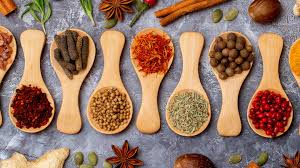
The previous article discussed indigenous condiments, which are locally processed and consumed condiments that enhance flavor, appearance, and nutritive value of foods. This article analyzes non-indigenous condiments, their examples, health benefits, and culinary uses.
Read Also: Recommended Methods of Selecting Snail Breeding Stock
Non-Indigenous Condiments: Ketchup and Soy Sauce
1. Ketchup: A Global Condiment Evolution
The use of ketchup began as a Chinese fish sauce called ke-tsiap and was originally tomato-free. The name was gradually changed to ketchup, and in Britain, other ingredients instead of fish were added.
The sauce was more similar to soy sauce or Worcester sauce than to the tomato ketchup. During the 19th century, ketchup was prepared from oysters, mussels, mushrooms, walnuts, lemons, celery, and even fruits, such as plums and peaches.
Usually, components were either boiled down into a syrup-like consistency or left to sit in salt for extended periods of time. Both of these processes led to a highly concentrated end product: a salty, spicy flavor bomb. Tomatoes were included in ketchup around 1700, and modern ketchup contains tomatoes, onions, vinegar, sugar, and spices.
2. Soy Sauce: A Staple in Asian Cuisine
Soy sauce is available in many varieties worldwide, including chemically produced soy sauce and fermented or naturally brewed soy sauce (NBSS). Soy sauce, also called jiangyou in Chinese, shoyu in Japanese, and soya sauce in British English, is the most consumed seasoning in East and Southeast Asian cuisine and is still gaining considerable popularity in Western countries.
Its distinct flavor is characterized by a strong umami, salty, and caramel-like character which enhances the overall savory taste and aroma of many kinds of dishes. Soy sauce is used for a wide variety of both cooked (hot and cold) and uncooked foods, such as sushi, sashimi, stir-fried noodles, and any type of fish, meat, and/or vegetable stews.
In ancient China, about 2200 years ago, soy sauce was developed as a way to preserve food due to its salt content and also to enhance the flavor of the modest, vegetarian Buddhist diet since salt at that moment was an expensive commodity.
Nowadays, soy sauce is used as a food product rather than a food preservative. In fact, its production methods have been developed into advanced technologies, and the flavor quality and consistency have improved markedly.
Soy sauce is made using essentially five basic raw ingredients: soybeans/soybean flakes (as the main protein source), wheat/wheat flour (as the main carbohydrate source), salt, water, and Aspergillus oryzae/Aspergillus sojae, salt-tolerant yeast, and lactic acid bacteria.
Nonetheless, existing fermentation processes are remarkably diverse and complex, making soy sauce a widely varied product with strong local/cultural heritage. Like balsamic vinegar, soy sauce can be found worldwide, from the cheapest hydrolyzed forms to the most expensive premium, aged brands.
Fermented soy sauce itself comes in many forms, namely, sweet, salty, light, and dark. They differ in their color, viscosity, sweetness, and umami flavor. Light soy sauce is light and thin and is the type which has the characteristic of saltiness and umami in a complex combination.
It is obtained from pressing the fermented soybeans the first time. It is also called superior soy sauce. Dark sauce is darker and less salty, produced by fermenting the pressed soybean residue (after extracting the light soy sauce) with more brine.
Various additives determine the composition of the other varieties. For instance, sweet soy sauce has added palm sugar and is heated after fermentation. Salty soy sauce has added salt.
Read Also: How to Extract and Package Snail Slime (Snail filtrate) for Commercial Use
Importance of Sauces in Food Preparation
Sauces play a vital role in culinary arts by:
- Enhancing flavor.
- Aiding digestion, for example, mint sauce and apple sauce with roast pork.
- Providing moistness to food; white sauce adds creaminess to firm and dry food.
- Adding color to food; hollandaise sauce served on vegetables adds color.
- Serving as an accompaniment, sometimes giving a contrast taste to another food, for example, cranberry sauce with roast pork.
- Giving a name to the dish, for example, Madeira wine when added to brown sauce, it is called sauce Madeira.
- Enhancing the nutritional value of the dish.
- Dressing and complementing food that needs some additional quality and makes the food more palatable, for example, Chaufroid sauce is used to coat various food items and gives a good appearance.
- Giving tartness and contrasting or balancing a bland food, for example, Devil sauce served with eggs gives appealing tartness.
Mayonnaise and Hollandaise Sauce: Classic Condiments
1. Mayonnaise: A Versatile Cold Sauce
Mayonnaise is a basic cold sauce. It is used as a salad dressing and as an accompaniment. It has a wide variety of uses, particularly in hors d’oeuvres and salads. It is a rich sauce, as it is thickened with egg yolk and has a high percentage of fat.
Basic Recipe for Mayonnaise: 1 Liter
| Ingredients | Quantity |
|---|---|
| Egg yolks | 8 |
| Salad or olive oil | 1 lit. |
| French mustard | ¼ tsp. |
| Vinegar | 25 ml. |
| Lemon | 1 |
| Seasoning | to taste |
Method of Preparation:
- Place egg yolks, vinegar, and seasoning in a clean bowl and whisk well.
- Add oil slowly, a little at a time, whisking continuously, until all the oil is incorporated.
- Finish the sauce by adding the juice of lemon and warm water.
This is done to ensure coherence of the sauce and to prevent its turning or curdling. Mayonnaise is suitable for serving with cold fish, meat, and hors d’oeuvres.
2. Hollandaise Sauce: A Rich Warm Sauce
Hollandaise sauce is a warm yellow and rich sauce. It contains a high percentage of fat and egg yolks. It is an emulsion of butter, lemon juice, and egg yolks. Hollandaise is served over grilled or baked fish, vegetables, and eggs. It is an accompaniment to cauliflower, asparagus, broccoli, salmon, and trout.
Recipe for Hollandaise Sauce: 500 gm
| Ingredients | Quantity |
|---|---|
| Butter | 500 gm. |
| Egg yolks | 5 |
| Crushed peppercorns | 8 |
| Vinegar | 30 ml |
| Lemon juice | 2 |
Method of Preparation:
- Melt butter in a pan and keep aside.
- Place crushed peppercorns and vinegar in a pan and reduce completely.
- Add one tablespoon of water and cool.
- Add egg yolks and whisk.
- Place the pan in a double boiler and whisk the egg yolks till a sabayon is formed (thickens). Then gradually add the melted butter until it is blended and forms a smooth sauce. Add lemon juice.
- Strain through a fine strainer and correct seasoning. Store at 30-37°C, if necessary.
Bouillons, Fish Sauce, and Thickening Agents
1. Bouillons: Flavorful Broths
Bouillons and consommés are thin, clear liquids obtained either (1) by cooking suitable protein-rich substances or their extracts and/or hydrolysates with water, with or without the addition of seasonings and/or flavoring substances, edible fats, sodium chloride (salt), spices, and their natural extracts or distillates or other foodstuffs to improve their taste.
The forms of presentation may be as ready-to-use bouillons and consommés to be consumed with or without heating; condensed and concentrated bouillons or consommés presented as liquid, semi-liquid, or paste-like products, which, after the addition of water according to the directions for use, yield regular bouillons or consommés.
Dehydrated bouillons and consommés, which are dry products that, after reconstitution with water according to the directions for use with or without heating, yield the regular hydrated product. Examples of bouillons sold in Nigeria are Knorr and Maggi cubes.
2. Fish Sauce: A Fermented Delicacy
Fish sauce is a translucent, not turbid, liquid product with a salty taste and fish flavor obtained from fermentation of a mixture of fish and salt. The product is prepared by mixing fish (sound and wholesome fish or parts of fish in a condition fit to be sold fresh for human consumption) with salt and is fermented in covered containers or tanks.
Generally, the fermentation process takes not less than 6 months. Subsequent extractions may follow by adding brine to further the fermentation process, in order to extract the remaining protein, fish flavor, and odor. Other ingredients may also be added to assist the fermentation process.
3. Thickening Agents: Enhancing Sauce Texture
Thickening agents or liaisons are used to thicken sauces. Some of them are:
i. Roux: A fat and flour mixture, which are cooked together. It is cooked to various degrees, namely white, blond, or brown. Equal quantities of flour, butter, and margarine are taken to prepare the different colored roux. The color acquired depends upon the degree of cooking of the flour, and the color of the sauce depends upon the liquid and roux used.
While preparing sauce, boiling liquid should never be added to a hot roux, as it may become lumpy; a cold liquid to a hot roux, or a hot liquid to a cold roux may be added to get a smooth texture.
ii. Starch: Arrowroot, corn flour, fecule (potato starch), and tapioca are used to thicken the sauce. A paste should be made of cold liquid and starch, and then stirred into boiling liquid and allowed to boil, till the starch is cooked. It gelatinizes at 93°C (200°F). Starch contains no gluten and gives clear sauce and thickens more as it cools.
iii. Beurre Manié or Manié Butter: Chiefly used for fish sauces. Equal quantities of flour and butter are kneaded together, and very little quantity is added at a time to boiling liquid and stirred well to form a smooth consistency.
iv. Yolks of Egg and Cream: A liaison, added as a finishing agent at the end of cooking. The product is never boiled when the liaison is added, or it would curdle. The liaison is added to thicken delicate cream or velouté soups. Yolks of eggs are used to prepare mayonnaise by emulsifying it with oil.
x. Blood: Usually used for game cooking. It thickens the sauce and gives a particular flavor, for example, preparation of Jugged Hare.
Mustard, dill, soy sauce, mayonnaise, and others are examples of non-indigenous condiments. Dill is known as a garden plant in ancient literature, and the use of its fruits as a condiment was known since biblical times.
Dill is of value for both its leaves and seeds. Mayonnaise is a basic cold sauce, while hollandaise is a warm yellow and rich sauce. Finishing techniques, which are a means of adding value to sauces, were also discussed in this article. Such techniques include reduction, straining, deglazing, and seasoning, among others.
Do you have any questions, suggestions, or contributions? If so, please feel free to use the comment box below to share your thoughts. We also encourage you to kindly share this information with others who might benefit from it. Since we can’t reach everyone at once, we truly appreciate your help in spreading the word. Thank you so much for your support and for sharing!