


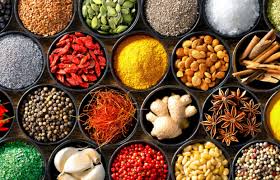
Spices have consistently been recognized as a part of the culinary ethos. In the culinary industry, it has been a history from its beginning that flavouring and colouring have been used to preserve food and for medical purposes. The use of spices as food flavour is now a significant course globally.
Spices from seeds are rich sources of fat, protein, and carbohydrates. Spices play a key role in nutrition as good sources of micro and macronutrients. Ogunka-Nnoka and Mepha (2008) conducted research on the proximate analysis of some Nigerian spices.
These were shown to be fairly rich in nutrients. Many spices have rich sources of calcium, phosphorus, magnesium, and micronutrients such as zinc.
Spices do not only cover the colour of food, aroma, and flavour; they are also used for the duration of chronic illness to help human beings for the maintenance of their health and beauty.
Spices contain some chemical and bioactive molecules such as sulphur compounds, tannins, vitamins, etc. Spices like rosemary, cinnamon, and oregano have an excellent percentage of antioxidants. In this article, the nutritional composition of certain spices will be discussed.
Nutritional Composition of Ginger and Cinnamon
1. Ginger
Ginger is used extensively in food, beverage, and confectionery industries in products such as marmalade, pickles, chutney, ginger wine, liquors, and other bakery products. The chemical components of ginger vary considerably, depending on the location of cultivation and postharvest treatments.
Ginger contains polyphenol compounds such as gingerol and its derivatives such as zingiberene, bisabolene, camphene, geraniol, linalool, borneol, and oleoresin (a combination of volatile oils and resin) that account for its characteristic aroma and therapeutic properties.
Dry ginger contains essential oil 1-3%, oleoresin 5-10%, starch 50-55%, and moisture 7-12% with small quantities of protein, fibre, fats, and ash. The ginger rhizome contains several interesting bioactive constituents and has health-promoting properties.
2. Cinnamon
Cinnamon spice is obtained from the bark of the cinnamon tree. Harvesting for bark is made after the second or third year of planting, and the subsequent harvest is made between 12 and 18 months after the previous harvest.
The branches harvested this way are processed by scraping off the outer bark, then beating the branch evenly with a hammer to loosen the inner bark. The outer bark of the tree is thick and brownish. The inner bark is more useful than the outer one.
- How many percent of protein does ginger contain?
Answer: Dry ginger contains small quantities of protein, typically less than 5%. - How many percent crude fibre does cinnamon have?
Answer: The crude fibre content of cinnamon is not specified in the provided data. Further analysis would be required to determine the exact percentage.
Read Also: How to Process, Package, and Export Spice Mixes
Nutritional Composition of Nutmeg and Turmeric
1. Nutmeg
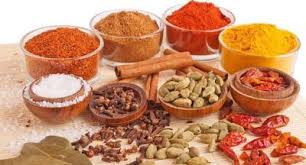
Though nutmeg is used sparingly in dishes, it still impacts health in many ways with high nutritive contents like vitamins, minerals, and organic compounds related to essential oils.
According to the USDA National Nutrient Database, these beneficial components include dietary fiber, manganese, thiamine, vitamin B6, folate, magnesium, and copper.
Nutrient Value – Nutmeg (per 100 g)
| Nutrient | Value |
|---|---|
| Water (g) | 6.23 |
| Energy | 525.00 |
| Energy (kJ) | 2196.00 |
| Protein (g) | 5.84 |
| Total lipid (fat) (g) | 36.31 |
| Ash (g) | 2.34 |
| Carbohydrate (g) | 49.29 |
| Fiber, total dietary (g) | 20.80 |
| Sugars, total including NLEA (g) | 2.99 |
| Calcium, Ca (mg) | 189.00 |
| Iron, Fe (mg) | 3.04 |
| Magnesium, Mg (mg) | 183.00 |
| Phosphorus, P (mg) | 213.00 |
| Potassium, K (mg) | 350.00 |
| Sodium, Na (mg) | 16.00 |
| Zinc, Zn (mg) | 2.15 |
| Copper, Cu (mg) | 1.03 |
| Manganese, Mn (mg) | 2.90 |
| Selenium, Se (µg) | 1.60 |
| Vitamin C, total ascorbic acid (mg) | 3.00 |
| Thiamine (mg) | 0.35 |
| Riboflavin (mg) | 0.06 |
| Niacin (mg) | 1.30 |
| Vitamin B-6 (mg) | 0.16 |
| Folate, total (µg) | 76.00 |
| Folate, food (µg) | 76.00 |
| Folate, DFE (µg) | 76.00 |
| Choline, total (mg) | 8.80 |
| Vitamin A, RAE (µg) | 5.00 |
| Carotene, beta (µg) | 28.00 |
| Cryptoxanthin, beta (µg) | 66.00 |
| Vitamin A, IU (IU) | 102.00 |
| Fatty acids, total saturated (g) | 25.94 |
| Fatty acids, total monounsaturated (g) | 3.22 |
| Fatty acids, total polyunsaturated (g) | 0.35 |
| Phytosterol (mg) | 62.00 |
2. Turmeric
The spice turmeric is a botanical that is used widely in the Middle East and Asia, not only to impart a distinctive flavour to foods, but also purportedly to provide health benefits as a component of traditional medicines.
Recently, it has been added to nutraceuticals, beverages, and processed foods. Turmeric is obtained from the rhizome of Curcuma longa L. (Zingiberaceae family).
Proximate Composition of Turmeric
| Parameter | Composition (%) |
|---|---|
| Moisture | 8.92±0.02 |
| Dry matter | 91.00±0.01 |
| Ash content | 2.85±0.02 |
| Crude fibre | 4.60±0.01 |
| Crude protein | 9.40±0.02 |
| Fat | 6.85±0.00 |
| Carbohydrate | 76.38±0.01 |
Mineral and Vitamin Composition of Turmeric
| Parameter | Composition (%) |
|---|---|
| Riboflavin | 0.59±0.02 |
| Thiamine | 0.16±0.00 |
| Niacin | 2.30±0.00 |
| Calcium | 0.21±0.01 |
| Phosphorus | 0.63±0.02 |
| Potassium | 0.46±0.03 |
| Iron | 0.045±0.02 |
Read Also: Economic Importance, Uses, and By-Products of Watermelon Axils
Nutritional Composition of Clove
1. Clove
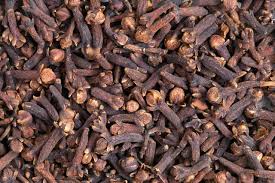
Spices are used frequently in most homes and restaurants. They are used as an aromatic and stimulating addition to medicines and to snuff. Ground to powder, they may be taken as a stimulant or stomachic or to relieve constipation, thus most times ameliorating food and health problems.
Several of these plants’ parts are used in various concoctions in folk medicine. An example of these spices is the clove or lavanga (Syzygium aromaticum).
Cloves are the aromatic dried flower buds of a tree in the family Myrtaceae the Myrtle family. Cloves are native to Indonesia and the Molucca Islands and are used as a spice in cuisines all over the world.
Nutritional Composition of Garlic
1. Garlic
Garlic (Allium sativum L.) is the most economically important species of the Allium genus and an important vegetable crop throughout the world. Garlic is considered a rich source of volatile compounds, which are responsible for the distinct flavour and the bioactive properties of dry bulbs.
There is also a high content of non-volatile compounds with well-known medicinal and therapeutic properties, such as amides, nitrogen oxides, phenolic compounds, especially flavonoids, proteins, saponins, and sapogenins, as well as antioxidants, minerals (especially P, K, and Se), and vitamins (especially vitamin C and vitamins of B complex).
According to Koch and Lawson (2018), dry garlic bulbs mainly consist of water (62–68%) and carbohydrates (26–30%), while proteins are detected in relatively smaller amounts (1.5–2.1%).
Moreover, protein contents of 4–6% are also very common in various cultivars, considering the high dry matter content of the bulbs, while ash content ranges between 0.6% and 1.0%, and energy content is around 140 kcal 100 g⁻¹ f.w.
Spices contain high nutritive contents like vitamins, minerals, and organic compounds related to essential oils.
There is also an abundance of non-volatile compounds with well-known medicinal and therapeutic properties, such as amides, nitrogen oxides, phenolic compounds, especially flavonoids, proteins, saponins, and sapogenins, as well as antioxidants, minerals (especially P, K, and Se), and vitamins (especially vitamin C and vitamins of B complex). These available compounds in spices are referred to as their chemical components.
Do you have any questions, suggestions, or contributions? If so, please feel free to use the comment box below to share your thoughts. We also encourage you to kindly share this information with others who might benefit from it. Since we can’t reach everyone at once, we truly appreciate your help in spreading the word. Thank you so much for your support and for sharing!