


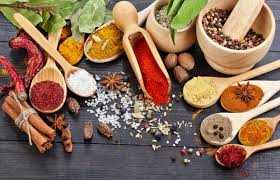
Herbs and spices are plant-derived seasonings used for culinary purposes. The terms “herbs” and “spices” are often used interchangeably, but they have specific definitions in botany.
Herbs store flavor components in their leaves, whereas spices store theirs in seeds, bark, and roots. In addition to enhancing food flavor, culinary spices have been used as food preservatives and for their health-enhancing properties for centuries. Herbs and spices are also rich in essential nutrients for health.
Nigeria and Africa are blessed with a rich array of indigenous herbs and spices that contain a wealth of nutrients. Over the years, indigenous fermented condiments have been produced from various plant parts for adding flavor to foods. These condiments also contain high levels of nutrients such as proteins and minerals.
In this article, the nutritional composition of indigenous spices and condiments is discussed.
Nutritional Composition of Key Indigenous Spices
1. Piper guineensis (Black Pepper)
Piper guineensis, commonly known as black pepper, is known as uziza among the Igbos and Iyre by the Yorubas. The leaves and seeds are consumed widely as a spice and used in the preparation of different dishes.
The leaves and seeds are considered medicinal, as reported in literature. In some parts of Nigeria, the seeds and leaves are used in a popular dish consumed by women after childbirth to enhance uterine contraction and facilitate the expulsion of the placenta and other remains from the womb.
The protein content of uziza seeds is about 11%, making the seed a moderate source of protein. The ash and crude fiber contents are 6.5% and 2.88%, respectively. The high ash content indicates a significant mineral content in the seed.
Uziza seeds contain high levels of calcium, phosphorus, and potassium (317.68 mg/100g, 146.85 mg/100g, and 122.07 mg/100g, respectively). A balanced proportion of calcium and phosphorus is needed in the body.
Phosphorus is an essential component of bone mineral. Deficiency in phosphorus-calcium balance results in osteoporosis, arthritis, pyorrhea, rickets, and tooth decay.
The most abundant vitamin in uziza seeds is vitamin A (17.48 mg/100g), followed by vitamin C (2.51 mg/100g). The seed also contains vitamins B1 and B2. The least abundant vitamin is thiamine (vitamin B1), with values of 0.028 mg/100g and 0.082 mg/100g for the leaves and seeds, respectively.
Vitamin A is crucial for visual health, immune function, and fetal growth and development. Vitamin A deficiency is a public health problem in many parts of the world, particularly Africa and Southeast Asia. The recommended daily intake of vitamin A for children (7–10 years) is 400 µg.
2. African Nutmeg (Monodora myristica)
African nutmeg contains moderate amounts of protein (about 16%). The fat content is appreciable (28.60%). The seed has high fiber and ash content. High-fiber food consumption has been associated with a reduced risk of cardiovascular diseases.
The vitamin composition of raw Monodora myristica includes ascorbic acid (180.60 g/100g), thiamin (0.77 mg/100g), riboflavin (0.15 mg/100g), and niacin (18 mg/100g). The high ascorbic acid content indicates that the spice can protect against oxidative damage by scavenging free radicals.
African nutmeg is rich in minerals such as potassium, phosphorus, calcium, and iron. The iron content is significant, as iron helps reduce iron deficiency anemia, a public health concern in developing countries.
3. Tetrapleura tetraptera
The crude protein content of Tetrapleura tetraptera seeds is reported as 8.65%. The recommended daily intake (RDI) for protein ranges from 14 g to 65 g (14 g for infants younger than 1 year; 16 g for children between 1 and 4 years; 60 g for pregnant women; and 65 g for nursing mothers). The ash content is 3.84%.
T. tetraptera contains essential minerals for human nutrition. The iron (Fe) content is 29.69 mg/kg. Results show that T. tetraptera fruits have higher iron content than some spices such as dried pepper, garlic, and fig.
T. tetraptera is a good source of iron, an important component of hemoglobin that plays a role in oxygen transport from the heart to all cells. The use of this fruit by lactating mothers to regenerate lost blood may be due to its high iron content.
The zinc (Zn) content is 5.45 mg/kg, indicating that T. tetraptera is a good source of this mineral. Zinc is a vital trace element providing a natural protective mechanism against viruses, especially those causing respiratory tract infections.
The magnesium (Mg) content is 509.22 mg/kg, with the woody shell having the highest amount. The RDI for magnesium is 350 mg; values obtained in this study are higher, indicating that T. tetraptera fruits, when used as a spice, can substantially contribute to the RDI of this element.
The vitamin content of the fruits ranges from 3.22–4.69% for vitamin A, 2.66–3.69% for vitamin E, 0.88–1.24% for vitamin C, 0.11–0.12% for niacin, 0.01–0.04% for thiamine, and 0.01–0.03% for riboflavin.
Vitamin A is essential for vision, healthy skin, mucous membranes, immune system, and bone and tooth growth. Vitamin E is an antioxidant protecting cell walls.
Vitamin C (ascorbic acid) is an antioxidant enzyme needed for protein metabolism, immune system function, wound healing, and iron absorption. Niacin (vitamin B3) is needed for energy metabolism and supports skin health, nervous, and digestive systems.
Thiamine (vitamin B1) is part of an enzyme needed for energy metabolism and nerve function, helping break down carbohydrates, fats, and alcohol. Riboflavin (vitamin B2) is needed for energy metabolism, normal vision, and skin health.
Read Also: Economic Importance, Uses, and By-Products of Watermelon Axils
Nutritional Composition of Indigenous Herbs
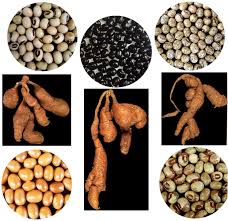
1. African Basil Leaves (Ocimum gratissimum)
African basil leaf, known as Efirin, Daidoya, Nchanwu, or scent leaf, with the botanical name Ocimum gratissimum, is a tropical plant species belonging to the family Labiatae.
The nutritional profile of fresh and dried African basil is shown below. Fresh O. gratissimum is low in protein and other nutrients, but dried samples have higher levels due to the concentration effect from moisture loss.
Proximate Composition of Ocimum gratissimum Leaf (g/100g sample)
| Component | Fresh Leaves | Dried Leaves |
|---|---|---|
| Moisture | 86.90 | 7.0 |
| Protein | 3.0 | 11.4 |
| Crude Fibre | 4.0 | 13.7 |
| Crude Lipid | 0.9 | 3.7 |
| Ash | 1.0 | 16.4 |
| Carbohydrates | 4.2 | 47.8 |
| Gross Energy | 43.9 | 297.0 |
The fresh leaves are rich in β-carotene and ascorbic acid but low in niacin and riboflavin. Drying significantly reduces water-soluble vitamins (B vitamins and vitamin C) and increases β-carotene concentration compared to the fresh sample.
Vitamin Composition of Ocimum gratissimum Leaf (mg/100g)
| Vitamin | Fresh Leaves | Dried Leaves |
|---|---|---|
| Niacin | 0.27 | 0.11 |
| Riboflavin | 0.14 | 0.03 |
| Thiamine | 0.18 | 0.07 |
| β-Carotene (µg/100g) | 571.60 | 871.00 |
| Ascorbic Acid | 36.47 | 11.87 |
The fresh leaf is low in sodium, potassium, calcium, magnesium, iron, phosphorus, and copper but high in manganese and zinc. Drying significantly concentrates the minerals compared to the fresh sample.
Mineral Composition of Ocimum gratissimum Leaf (mg/100g)
| Mineral | Fresh Leaves | Dried Leaves |
|---|---|---|
| Sodium | 11.3 | 206.7 |
| Potassium | 30.7 | 323.3 |
| Calcium | 15.7 | 256.7 |
| Magnesium | 14.3 | 340.0 |
| Iron | 0.3 | 2.4 |
| Phosphorus | 39.3 | 466.7 |
| Manganese | 5.3 | 6.1 |
| Zinc | 3.7 | 4.1 |
| Copper | 0.3 | 5.4 |
2. Gongronema latifolium (Amaranth Globe)
Gongronema latifolium, a tropical rainforest plant belonging to the family Asclepiadaceae, is commonly grown in West Africa and locally called “Utasi” by the Ibibios, Quas, and Efiks; “Utazi” by the Igbos in Southeast Nigeria; and “Arokeke” by the Yorubas in Southwest Nigeria.
The leaves are used as vegetables in soups, adding a bittersweet flavor. They are also sometimes used to spice locally brewed beer.
The proximate composition of dried G. latifolium leaves shows 25.55% crude protein, 13.69% crude fiber, 6.13% crude fat, and 11.63% ash. The leaves contain significant amounts of vitamins and minerals.
The vitamin A, E, and C contents are 393.00 mg/100g, 44.03 mg/100g, and 0.20 mg/100g, respectively, while riboflavin, thiamine, and niacin levels are 0.96%, 0.18%, and 0.81%, respectively.
Mineral Composition of G. latifolium (mg/100g)
| Mineral | Amount |
|---|---|
| Manganese | 0.04 |
| Selenium | Trace |
| Zinc | 0.05 |
| Iron | 0.28 |
| Copper | 0.10 |
| Magnesium | 1.06 |
| Chromium | 0.04 |
Read Also:Economic Importance, Uses, and By-Products of Watermelon Shoots
Nutritional Composition of Fermented Condiments
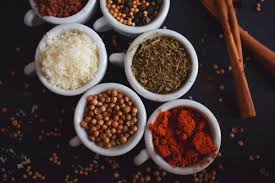
The use of fermented vegetable proteins as seasonings is widespread in Africa, especially among rural dwellers. In West Africa, common fermented vegetable condiments include iru or dawadawa from locust bean (Parkia biglobosa), ogiri from melon seeds (Citrullus vulgaris), daddawa and soumbala from soybean (Glycine max), ugba from African oil bean seed (Pentaclethra macrophylla), and owoh from cotton seeds (Gossypium hirsutum).
A large percentage of Africa’s population lives below the poverty line with diets poor in protein and other essential nutrients. Fermented food condiments are rich in proteins and other essential nutrients, serving as affordable supplements beyond their use as flavoring agents.
Proximate Composition of Indigenous Condiments
Table 5 shows the proximate composition of five indigenous condiments in Nigeria. These condiments are rich in protein, except for ugba.
Plant sources of protein are vital in the diets of people in developing countries, as a significant proportion cannot afford animal protein sources like meat, fish, or eggs. These condiments serve as affordable protein sources and contain appreciable amounts of fat.
Proximate Composition (%) of Indigenous Condiments
| Condiment | Moisture | Ash | Crude Fibre | Crude Protein | Carbohydrate | Fat |
|---|---|---|---|---|---|---|
| Iru/Dawadawa | 52.0 | 3.6 | 4.0 | 32.9 | 16.3 | 24.2 |
| Ogiri | 44.1 | 3.0 | 15.6 | 19.9 | 25.2 | — |
| Owoh | 46.6 | 2.21 | 6.01 | 16.37 | 14.06 | 20.76 |
| Ugba | 34.4 | 1.11 | 2.93 | 7.13 | 17.48 | 19.72 |
| Okpehe | 9.46 | 4.84 | 2.99 | 36.88 | 47.18 | 11.35 |
Mineral Composition of Indigenous Condiments
Table 6: Mineral Composition (mg/100g) of Fermented Condiments
| Condiment | P | K | Na | Ca | Mg | Zn | Fe | Mn |
|---|---|---|---|---|---|---|---|---|
| Iru/Dawadawa | 80.00 | 205.00 | — | 9.01 | 35.00 | — | 3.31 | — |
| Ogiri | 91.17 | 1075.00 | 369.36 | 78.60 | 58.72 | 1.17 | 14.50 | 1.15 |
| Owoh | — | 464.50 | 416.50 | 246.0 | 150.0 | 119.7 | 16.0 | — |
| Ugba | 291.02 | 110.39 | 172.06 | 208.92 | 334.98 | 9.23 | 42.46 | 26.87 |
| Okpehe | — | 183.1 | — | 45.3 | — | 14.2 | 10.24 | 4.2 |
Magnesium is an important trace element involved in calcium metabolism in bones and the management of circulatory diseases, such as ischemic heart disease. Magnesium serves as a catalyst in energy-producing reactions within cells and facilitates muscle relaxation.
All condiments contain rich amounts of magnesium, especially ugba and owoh. The condiments also contain high amounts of potassium, phosphorus, and calcium. Calcium, together with phosphorus, is involved in bone and teeth formation, blood clotting, and nerve-muscle transmission.
The iron content of ugba is noteworthy, as iron deficiency anemia is a public health concern in developing countries. Consuming local condiments, especially ugba, could help reduce this health challenge.
Indigenous spices, herbs, and condiments are used to add flavor to dishes and improve their sensory properties. These food ingredients are also rich in nutrients. The spices and herbs are rich in vitamins and minerals, while the condiments are good sources of protein.
Efforts must urgently be made to promote the utilization of these indigenous food ingredients to enhance the nutritional status and well-being of the populace, especially in developing countries.
Do you have any questions, suggestions, or contributions? If so, please feel free to use the comment box below to share your thoughts. We also encourage you to kindly share this information with others who might benefit from it. Since we can’t reach everyone at once, we truly appreciate your help in spreading the word. Thank you so much for your support and for sharing!