


The aim of purchasing alcoholic and non-alcoholic beverages is to acquire the best quality at the lowest price. The purchasing manager, in collaboration with the Food and Beverage Manager, the head cellar man, and the head wine waiter, is responsible for procuring beverages.
Beverages contribute more to profit than foods and require fewer staff to process them into finished products for customers. When purchasing, it is crucial to recognize that expensive products or those with attractive labels do not necessarily guarantee superior quality.
Definition of Purchasing
Purchasing is the activity of acquiring goods or services to accomplish an organization’s goals. Various organizations strive to set standards in the purchasing process; however, the process varies greatly between organizations.
Purchasing involves not only procuring items but also the search, selection, purchase, receipt, storage, and final use of a commodity in accordance with the establishment’s policy.
Objectives of Beverage Purchasing
The major objectives of purchasing are to:
- Maintain the quality and value of a company’s products,
- Minimize cash tied up in inventory,
- Maintain the flow of inputs to ensure the flow of outputs,
- Strengthen the organization’s competitive position.
Purchasing may also involve:
- Development and review of product specifications,
- Receipt and processing of requisitions,
- Advertising for bids,
- Bid evaluation,
- Award of supply contracts,
- Inspection of goods received, and
- Their appropriate storage and release.
Read Also: Introduction to Ruminant Animals Production
Beverage Purchasing Management
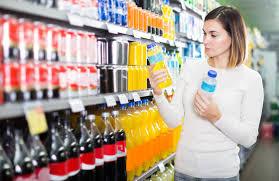
Purchasing management directs the flow of goods and services in a company and manages all data related to supplier interactions. Effective purchasing management requires knowledge of the supply chain, business and tax laws, invoice and inventory procedures, and transportation and logistics issues.
A strong understanding of the products and services to be purchased is essential, and purchasing management professionals must plan, execute, and oversee strategies that enhance company profitability.
Sourcing reliable suppliers is a critical part of purchasing management. Purchasing managers, agents, and buyers typically learn about new products and services through Internet searches, trade shows, and conferences.
These professionals must be skilled negotiators, understand technical product information, possess strong mathematical abilities, be proficient with spreadsheet software, understand marketing methodologies, and excel as decision-makers. It is essential to verify that potential suppliers can deliver quality merchandise at a suitable price and on time.
Process of Purchasing Beverages
Purchasing alcoholic beverages requires knowledge of spirits and wines. A purchasing agent should be well-informed about wine types, vintages, and the appropriate pairing of wines with foods to create a well-developed wine list. Maintaining an adequate inventory is the most critical factor for profitable beverage purchasing.
Stock levels must be kept as low as possible while ensuring sufficient beverages to service functions. The primary advantage of beverage purchasing is that requirements can be estimated well in advance of functions.
Sources of Beverage Purchase
In beverage management, purchasing involves the following sources:
- Wine shippers
- Wholesalers
- Beverage manufacturers
- Auctions
- Cash-and-carry
1. Wine Shippers
These firms purchase wine from the country of origin and ship it to the destination country. Often, they focus on wines from specific regions, resulting in a limited product range. Shippers may prefer to deal with prestigious establishments or large companies, so their products are typically purchased through a wine or spirit wholesaler.
2. Wholesalers
Wholesalers are often subsidiary wine companies of large breweries or independent wine companies. They offer a wide range of beverages and provide regular delivery services to customers. Additionally, they can supply promotional materials and literature for both bar and restaurant sales.
3. Beverage Manufacturers
This method is used for large purchases, where the purchasing manager deals directly with the beverage manufacturer. It is commonly applied for purchasing main spirits, minerals, and beers. Beverages can also be sourced through auctions and cash-and-carry outlets.
Read Also: Collection, Handling, Storage and Pre-Treatment of Seeds
Beverage Purchase Specifications
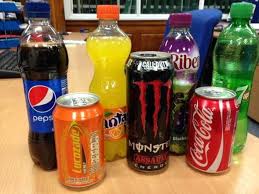
A purchaser cannot simply order a case of drink from a supplier. The supplier requires specific details, such as the type of drink, case size, number of bottles per case, and other relevant information.
A purchase specification includes critical details to make the process more efficient. For alcoholic beverages, specifications include:
- Product name, with preferred brand names listed,
- Quantity to be purchased (e.g., litre, fifth, gallon),
- Indication of proof (e.g., 80% proof, 100% proof, or 175% proof),
- Unit by which prices are quoted (e.g., case, keg, or barrel).
The purpose of a purchase specification is to clearly define the standard of products to be purchased. It is a precise written statement of the product’s characteristics required by the user.
The purchasing manager uses this to inform suppliers of exact needs, and it guides the receiving and cellar department staff on what to accept during delivery.
Developing and Using Purchase Specifications
Written specifications achieve the following:
- Communicate the characteristics of products and services needed, reducing misunderstandings between buyer and seller,
- Provide the receiver with product characteristics to verify before accepting delivered goods,
- Ensure consistency in items served by providing consistent products,
- Allow the operation to solicit bids from multiple suppliers,
- Facilitate training of purchasers and enable others to step in if needed.
Contents of a Specification
Specifications include:
- The intended use of the product or service,
- The specific, definitive name of the product,
- Packer’s or producer’s brand name,
- Quality grades,
- Size or size range of items needed,
- Package size,
- Preservation and/or processing method,
- Point of origin,
- Method of packing.
Specifications for branded items, such as cans of Pepsi-Cola, may be as simple as the name, can size, and number of cans per case. For non-branded items, such as apples, detailed specifications are required for effectiveness.
Quantity Standards for Beverage Purchasing
Setting standards for the quantity of beverages to purchase at a given time is critical. Factors to consider include:
- Frequency of order placement,
- Available storage space,
- Funds available for inventory purchases,
- Delivery schedules set by purveyors,
- Minimum order requirements set by purveyors,
- Price discounts for volume orders,
- Price specials available,
- Limited availability of some items.
The amount of stock on hand and the established par stock for the storeroom, as well as needs for booked occasions, must be considered. Every beverage storeroom should have a defined par stock based on actual needs, tested periodically to prevent overstocking. Overstocking slow-moving items ties up cash in inventory. After evaluating these factors, the quantity to purchase is determined.
Selecting Brands to Purchase
Many beverage purchasers fear lost sales if a particular brand is out of stock. Others view it as a matter of honor to ensure no customer is told a requested beverage is unavailable.
While striving to satisfy customers is important, overloading inventories with unusual brands or types of liquor should be avoided. Adequate inventories are necessary, but liquor stock must move to maximize profit.
Beverage Purchase Orders
For reliability, liquor purchase orders should be written rather than verbal. Such orders require management approval to prevent excessive inventories. A copy of the purchase order informs the receiving clerk of what and how much to expect.
Verification of Beverage Invoices
The beverage purchasing manager should personally approve invoices before payments are made, as they are aware of the purchase terms, brands, and quantities ordered.
Purposes of Beverage Purchasing Controls
Controls in beverage purchasing are essential to:
- Maintain an appropriate supply of ingredients for producing beverage products,
- Ensure the quality of ingredients purchased is suitable for their intended use,
- Secure ingredients at the optimum price.
Do you have any questions, suggestions, or contributions? If so, please feel free to use the comment box below to share your thoughts. We also encourage you to kindly share this information with others who might benefit from it. Since we can’t reach everyone at once, we truly appreciate your help in spreading the word. Thank you so much for your support and for sharing!