


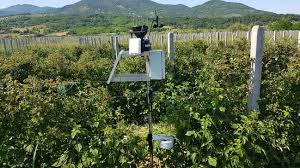
An agro-meteorological station (weather station) is a facility, either on land or sea, with instruments and equipment for measuring atmospheric conditions to provide information for weather forecasts and to study the weather and climate. Weather stations range from simple analogue technology to digital technology.
The measurements frequently taken include temperature, atmospheric pressure, humidity, wind speed, wind direction, and precipitation amounts. Weather station sensors are used to take readings of various weather elements, so the data collected can be analyzed using weather station software.
Guidelines for Installing Agro-Meteorological Stations
To report accurate weather information, care must be taken in deciding where to place the weather station. The process of deciding how and where to install the weather station is called “siting.”
Siting is the single most important factor in ensuring accurate readings. In fact, siting influences the accuracy of weather readings much more than the quality of the weather instruments themselves.
Read Also: 16 Medicinal Health Benefits Of Scleromitrion diffusum (Spreading Diamond Flower)
Accurate Temperature Measurement for Agricultural Monitoring
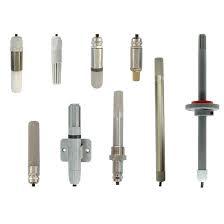
The most common error in installing a weather station is associated with misplacing the thermometer sensor. Meteorologists define temperature as the temperature in shade with plenty of ventilation.
When placing the weather station, make sure:
- The thermometer sensor never receives direct sunlight.
- The thermometer receives plenty of ventilation and is not blocked from the wind.
- If the thermometer is placed on a rooftop, it should be at least 5 feet above the rooftop.
- If the thermometer is placed above grass, it should be at least 5 feet above the grass surface.
- The thermometer is at least 50 feet from the nearest paved surface.
Suggestion: Use a radiation shield for the thermometer. This way, the weather station can be placed in direct sunlight, with the thermometer located inside the radiation shield.
Humidity Measurement for Agricultural Environments
Humidity measurements should reflect the humidity of the general atmosphere in the location. Plants and bodies of water influence humidity measurements. Hence, the humidity sensor should be at least 50 feet away from the nearest tree or body of water.
Positioning the Rain Collector for Accurate Rainfall Data
The rain collector (or rain gauge) should receive rainfall as if it were in the middle of a large field. Nearby buildings create “shadows.” Imagine a building nearby to the west, and it is raining with a west wind.
In such an event, the station’s rain collector is bound to miss a lot of falling rain because of the “shadow” cast by the building. As a rule of thumb:
- The rain collector should be placed with at least 5 feet horizontal clearance from the nearest obstruction.
- If a nearby obstruction is just over 5 feet away, that obstruction should be no more than 10 feet tall.
Measuring Wind Speed and Direction for Agricultural Applications
Similar to a rain collector, the anemometer should reflect wind patterns as if the instrument was placed in a large field.
- The standard wind measurement should be taken at 10 meters (33 feet) above the ground. A rooftop works best.
- The anemometer should be placed as high as is convenient.
- The anemometer should be the highest object around; 7 feet or more above surrounding obstructions is best.
Read Also: 12 Medicinal Health Benefits Of Renealmia alpinia (Pink cone ginger)
Types and Settings of Weather Element Sensors in Agriculture

1. Thermometer for Temperature Monitoring
A thermometer measures temperature. Some weather stations measure both indoor and outdoor temperatures, record highs and lows, show trends to indicate temperature rising or falling, and even predict short-term future temperature ranges.
Ordinary spirit-in-glass thermometer: This simple louvred thermometer screen is available as a kit.
2. Hygrometer for Humidity Assessment
A hygrometer measures relative humidity. Relative humidity is the quantity or percentage of water vapor (water in gas form) in the air. Humidity influences environmental factors and calculations like precipitation, fog, dew point, and heat index.
Humidity is measured most accurately with a wet- and dry-bulb thermometer.
3. Barometer for Atmospheric Pressure Tracking
A barometer measures atmospheric pressure. A barometer can help forecast upcoming weather based on changes in atmospheric pressure. Some weather stations feature a barometric pressure history chart or pressure trend arrow to track changes, like a pressure drop.
A simple, clearly marked barometer.
4. Anemometer for Wind Speed Measurement
An anemometer measures how fast the wind is blowing, or wind speed. Some weather stations can display wind speed in MPH, KPH, or knots, and record current, peak, and average wind speed readings.
A simple homemade weather vane: The ventimeter can measure wind speed and indicate wind direction.
5. Wind Vane for Wind Direction Detection
A wind vane, or weather vane, is an instrument that determines which direction the wind is blowing.
6. Rain Gauge for Precipitation Measurement
A rain gauge measures rainfall or liquid precipitation. Some weather stations include rainfall alerts to notify when a rain event has begun or to alert of potential flood conditions.
The opening of the collector should have a receiving area of 200 to 500 cm². (The most common standards are: 200 cm², 324 cm² [diameter: 8 inches], and 400 cm². However, in many countries, 126 cm² [diameter: 5 inches] is still used.)
The rim of the collector should have a sharp edge, fall away vertically inside, and be steeply beveled outside. It should be designed to prevent rain from splashing in and out. The receiving water container should have a narrow neck and be protected from radiation to prevent loss of water by evaporation.
The rain measures, measuring glass, or dip rod have to be graduated to correspond to the relative areas of cross-section of the gauge orifice. A measuring cylinder should be made of a clear material (glass or molded plastic), have a low coefficient of expansion, and its diameter should not exceed three times the gauge diameter.
Graduation should be in units of rainfall, and at least every 0.2 mm should be marked. Dip rods are mainly used to measure rainfall in monthly or seasonal gauges. However, these measurements should be checked using cylinders.
A cheap plastic rain gauge with funnel and measuring cylinder.
Importance of Weather Sensors in Agricultural Studies
The measurements and observations outlined in this article can form the basis of many interesting constructional and experimental instruments in the study of weather for agriculture. These simple sensors form the background to the understanding and use of advanced versions.
Do you have any questions, suggestions, or contributions? If so, please feel free to use the comment box below to share your thoughts. We also encourage you to kindly share this information with others who might benefit from it. Since we can’t reach everyone at once, we truly appreciate your help in spreading the word. Thank you so much for your support and for sharing!