


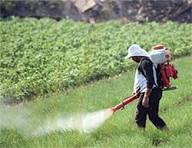
Environmental contaminants are chemicals that accidentally or deliberately enter the environment, often, but not always, as a result of human activities. In this article we shall focus on naturally occurring and environmental chemical contaminants; environmental contaminants, factors that determine the harmfulness of chemicals in the body, common contaminants found in food and heavy metals.
Introduction to Contaminants in Agricultural Systems
Synthetic and natural chemicals (e.g., metals) can be released as a result of industrial processes. When released in the environment, these contaminants may enter the food chain, where they pose potential health risks to living things.
Environmental Contaminants in Agricultural Environments
Environmental contaminants can be found naturally, or are released into the environment accidently or deliberately as a result of human activities. Some contaminants have been manufactured for industrial use and because they are very stable, they do not break down easily.
Other environmental contaminants are naturally-occurring chemicals, but industrial activity may increase their mobility allowing them to enter the food chain at higher levels than would otherwise occur.
Environmental contaminants that are present in the air, water or soil may be taken up by plants, wildlife and fish, and a wide variety have been detected in foods.
These contaminants range from metals and “ionic” species like perchlorate, to organic (e.g., carbon-based) substances, including “persistent organic pollutants” (POPs) named for their ability to remain in the environment for prolonged periods without breaking down.
Some POPs such as Polychlorinated biphenyls (PCBs) that have been banned for industrial or agricultural use in various countries for many years still remain in the food chain.
Other POPs, such as brominated flame retardants, have been more recently identified, and have been found in the environment and the food chain.
Read Also: How to determine if your Housing is Conducive for your Fishes
Factors Determining Harmfulness of Chemicals in Agricultural Food Chains

The effect of the chemical on the body depends on the following factors:
- Route of exposure (e.g., skin contact/dermal absorption, inhalation, or ingestion)
- Amount entering the body
- Characteristics of the chemical (e.g., toxicity, rate of removal from the body)
- Biological variation of humans
Routes of Exposure in Agricultural Systems
Contaminants may enter the aquatic food chain through water bodies; plants, through contaminated soil; and deposition onto food plants through contaminants in the air.
Contaminants that are absorbed through ingestion enter the blood stream and are carried to different parts of the body.
They are then stored either in the fat or bone, or metabolised by the liver and excreted through urine, lungs, sweat, semen, milk, saliva and bile. Infants can be exposed to contaminants in breast milk, though it is important to keep in mind that the benefits of breastfeeding outweigh the health risks posed by the low levels of contaminants that have been detected in breast milk.
Amount of Contaminants Entering the Body
The amount and frequency of any chemical entering the body is very important as it is the amount (or dose) that determines whether or not the chemical will pose a concern to the health of a person.
Exposures can be either short-term or long-term:
- Short-term exposure to a contaminant is often associated with higher concentrations of contaminants.
- Long-term exposure to a contaminant is more often associated with lower concentrations of contaminants.
Type and Toxicity of Contaminants
Toxicity is a measure of the poisoning strength of a contaminant. For contaminants that are not very toxic, large amounts are needed to cause poisoning, and for those that are very toxic, only small amounts are needed to cause poisoning.
Rate of Contaminant Removal
Many chemicals entering the body may be excreted unchanged, while others are broken down by the human body. Eventually, most contaminants are removed from the body as waste in the faeces, urine, and sweat, or as exhaled breath.
The health risks to people are reduced if the body is able to break down the contaminants into a less toxic product or rapidly remove them from the body.
Biological Variation in Susceptibility
Biological variation refers to the different characteristics (e.g., age and gender) of an individual that may make him/her more susceptible to poisoning from contaminants. Young children, the elderly, pregnant or lactating women, those with a weakened immune systems and individuals with poor nutritional status may be more susceptible to the toxic effects of chemical contaminants.
Bioaccumulation is the concentration of a toxic chemical that gradually increases in the living tissues of plants, animals or people as they continue to drink contaminated water, or eat contaminated food.
Biomagnification is the result of the accumulation of a chemical in an organism at higher levels than are found in its food supply. It occurs when a chemical becomes more concentrated as it moves up through the food chain. For example, animals that eat other animals and plants consume all the contaminants that their food sources were exposed to.
As a result, the animals at the very top of the food chain are exposed to the highest levels of contaminants. Plants, wildlife and humans absorb heavy metals from various food sources. In some wildlife (e.g., caribou, seal, fish), the levels of metals are often higher in the organs than in the muscle/ meat.
Common Contaminants in Agricultural Food Products

The most common contaminants that can be found in foods are:
- Heavy metals: Cadmium (Cd), Lead (Pb), Mercury (Hg) and Arsenic (Ar)
- Persistent Organic Pollutants (POPs)
- Pesticides: aldrin, dieldrin, endrin, heptachlor, hexachlorobenzene, mirex, Dichloro-DiphenylTrichloroethane (DDT), chlordane and toxaphene
- Industrial chemicals: Polychlorinated biphenyls (PCBs)
- By-products: polychlorinated dibenzo-p-dioxins (PCDD) (e.g., dioxins) and polychlorinated dibenzofurans (PCDF) (“furans”)
- Polybrominated diphenyl ethers (PBDEs)
- Perfluorinated chemicals: Perfluorooctane sulfonic acid (PFOS), Perfluorooctanoic acid (PFOA)
- Polycyclic aromatic hydrocarbons (PAHs)
- Radionuclides: Polonium, Radium, Cesium, Strontium, and Uranium
Heavy Metals in Agricultural Systems
Heavy metals (e.g., cadmium, lead, mercury and arsenic) are naturally occurring. They can also enter the environment as a result of anthropogenic activities. For example, naturally occurring chemicals can be the result of the weathering of rocks and soil which can release metals into rivers and lakes.
Human activities such as mining, clear cutting, industrial processes, and burning of fossil fuels, garbage, and forests, also release heavy metals into the environment. Heavy metals are a cause for concern because they do not break down over time and tend to bioaccumulate in the body.
The rate at which a chemical is absorbed (bioavailability) is an important factor in toxicity. While some metals (at low levels) are considered essential nutrients for humans (e.g., iron and zinc), others such as cadmium, mercury and lead, are not needed by the body and can be harmful (see Table 15 for heavy metals and their effects).
Cadmium in Agricultural Food Chains
Cadmium is a naturally occurring element found in the environment. It appears as a soft, silver-white, heavy metal and enters the soil, water, and air from mining, industry, and burning coal and household wastes.
Cadmium has many uses, such as in batteries, pigments, metal coatings, and plastics.
1. Cadmium in Humans: Human exposure to cadmium occurs through the consumption of contaminated foods e.g., milk, meat, fish, fruit, wheat, rice and potatoes. Cadmium levels in humans accumulate with age, with highest concentrations found in the kidney and liver.
2. Cadmium and Wildlife: The highest cadmium levels (100-1000 μg/kg) are found in the internal organs (kidney and liver) of mammals and in certain species of mussels, scallops and oysters. Cadmium does not break down easily in animals and it tends to increase with age.
Cadmium levels bioaccumulate in marine mammals, making marine mammals more adversely affected by cadmium exposure than birds and land mammals.
Lead in Agricultural Food Chains
Lead is a persistent heavy metal that occurs naturally in the environment and is also released as a result of human activities. When released in the air, lead travels long distances in the environment.
Though lead itself does not break down, its compounds such as lead acetate, lead chloride, and lead chromate, are altered by exposure to sunlight, air and water. Mobility and bioavailability of lead are influenced by pH, soil texture (clay content) and organic content.
1. Lead in Humans: Exposure to lead in humans is from the consumption of lead-contaminated wildlife (such as moose, deer, and waterfowl) that have been shot by lead shots/ pellets (Verbrugge et al, 2008).
The effects of lead in humans are the same, whether it enters the body through breathing or ingestion. Lead can affect almost every organ and system in the body.
Once lead is absorbed, it circulates in the bloodstream where it gradually accumulates in soft tissue such as the liver, kidneys, pancreas and lungs, with a high proportion transferred to the bone, where it accumulates over time and remains for long periods. The estimated time for the body to excrete half the accumulated lead is about 25 years.
2. Lead and Wildlife: Lead poses a threat to wildlife, especially waterfowl and birds of prey. In wild mammals, lead poisoning is the result of the consumption of lead contaminated prey.
Mercury in Agricultural Food Chains
Mercury is a heavy metal that does not break down in the environment and hence, bioaccumulates. Mercury is released into the atmosphere as a result of human activities, such as combustion and industrial activities.
Once in the atmosphere, it is widely dispersed and can circulate for many years. The long atmospheric lifetime of its gaseous form makes the emission, transport and deposition of mercury a global issue.
The concern over mercury in the environment arises from the toxic forms in which it can occur. Once released, mercury enters the air, water and soil and continues to move over long periods of time, depending on its chemical form.
Mercury exists in three forms:
1. Elemental (metallic) mercury is the pure form of mercury. It is a heavy, shiny, silver-white volatile liquid that releases a colourless and odourless toxic vapour at room temperature. It is the primary form of mercury released into the air by natural processes, such as volcanic activity.
2. Inorganic mercury enters the air, water, or soil from the weathering of rocks that contain mercury or from mining ore deposits, burning coal and waste, and from manufacturing plants. It is formed when elemental mercury combines with other elements such as sulphur, chlorine or oxygen to create compounds known as mercury salts.
3. Organic mercury: is formed when elemental mercury combines with carbon. Microorganisms in the environment can convert inorganic mercury to the organic form of mercury, also known as methylmercury. Methylmercury is a highly toxic organic compound of mercury, and is more toxic than elemental mercury.
4. Mercury in Humans: In humans, the main source of mercury exposure is from the consumption of fish – present in the form of methylmercury. A wide range of adverse health effects has been observed in humans following methylmercury exposure, and the severity depends on the magnitude of the dose and the duration of exposure.
The central and peripheral nervous systems are generally considered to be the target organs of organic mercury-induced toxicity in humans.
5. Mercury and Wildlife: Mercury levels in wildlife depend on the body of water, the species, age and size of the animal. Younger and smaller animals tend to have lower concentrations of mercury than older and larger ones within the same water body.
Arsenic in Agricultural Food Chains
Arsenic is a naturally occurring element widely distributed in the earth‘s crust. Arsenic is classified as a metalloid; it exhibits properties of both a metal and a non-metal. Arsenic exists in different forms and can be classified into two groups: organic and inorganic. Inorganic arsenic is considered to be the most toxic to human health.
Arsenic can be found in both surface water and ground water sources; levels are generally higher in ground water.
Foods that have been found to contain very low levels of arsenic include meat and poultry, milk and dairy products, bakery goods and cereals, vegetables, and fruits and fruit juices. These trace levels of arsenic reflect normal accumulation found in the environment.
While both organic and inorganic arsenic can be found in food, the levels of each depend on the type of food; inorganic arsenic is not usually found at high levels.
1. Arsenic in Humans: Exposure to arsenic in humans is from the consumption of contaminated food (particularly meat, fish and shellfish) and drinking water. Long-term exposure to high levels of inorganic arsenic may contribute to the risk of cancer and can affect the gastrointestinal tract, kidneys, liver, lungs, and skin. Skin, bone, and muscle represent the major storage organs.
Short term exposure to high levels of inorganic arsenic can also cause various health effects including skin effects, nausea, diarrhea, vomiting and numbness in hands and feet.
2. Arsenic and Wildlife: Arsenic concentrations in plants and animals are usually low, but are elevated in marine biota; higher levels of organic arsenic are generally found in fish, shellfish and seaweed.
The organic form of arsenic (arsenobetaine) poses little risk in fish and shellfish, and therefore a low risk to humans who consume them. While arsenic is bioconcentrated by organisms, it does not biomagnified in the food chain.
Read Also: How many plots of land do I need to start fish farming?
Effects of Heavy Metals in Agricultural Systems

Heavy Metals and Their Effects
| HEAVY METALS | Source | Sources of Exposure in Animals | Sources of Exposure in Humans | Effects in Humans | Reducing Exposure |
|---|---|---|---|---|---|
| Cadmium | Burning of coal or oil, vehicle exhaust, cigarette smoke, metal processing industries, mining, waste hauling, waste disposal activities, soil, surface water (as dust), volcanoes, and weathering of rocks | Plants (e.g., lichens, willows) grown in contaminated soil or water, organ meats from contaminated animals, (e.g., caribou, and moose), shellfish and plants from contaminated waters (e.g., mussels, oysters, and seaweed), and contaminated drinking water | Foods grown in contaminated soils (e.g., mushrooms), organ meats, contaminated drinking water | Acute exposure may cause: Irritation of the stomach, vomiting, and diarrhea. Chronic exposure: Maternal exposure to cadmium is associated with an increase in spontaneous abortions and low birth weight babies | Eat a balanced diet (this reduces the amount of cadmium absorbed by the body). Refer to Canada‘s Food Guide for First Nations, Inuit and Métis. http://www.hc-sc.gc.ca/fn-an/pubs/fnim-pnim/index-eng.php. Avoid meat or organs that may have been shot by lead. Follow consumption guidelines for oysters in your area to minimize the intake of cadmium. Do not harvest fish or shellfish from closed harvest areas |
| Lead | Burning of fossil fuels, mining, thermal power plants, vehicle exhaust, old paint work, production of batteries, ammunition (e.g., lead shots used for hunting), fishing sinkers, tackle and other related fragments, solder and lead pipes, devices used to shield x-rays, some children‘s toys, crayons, chalk, air near emission sources, house dust, soil, and paint flakes in old house | Gravel contaminated with lead pellets, wounded or dead prey containing lead shot, and lead bullets or fragments | Contaminated foods such as wild birds (e.g., duck, swan, and geese), wild game, and crops grown in contaminated soil. Contaminated water and the use of lead-glazed ceramics to cook | Acute exposure may cause: Convulsions and memory loss. Chronic exposure may cause: muscle weakness, loss of appetite, abdominal pain, constipation, sleeplessness, irritability, headache, impaired mental function, impaired visual and motor performance, brain and kidney damage, damage to the nervous and reproductive systems, and weakness in fingers, wrists, or ankles. In men, high exposure levels may: damage the organs responsible for sperm production. In pregnant women may cause: miscarriages and stillbirth. In young children may cause: decreased IQ, developmental delays, hearing problems, and behavioural disturbances | Avoid the meat or organs that may have been shot by lead. Do not put food or beverages in any leaded crystal containers (particularly acidic foods such as fruit juice). Avoid drinking from leaded crystal (HC, 2008a,f). For more information on lead, consult: http://www.hc-sc.gc.ca/ewh-semt/contaminants/lead-plomb/asked_questions-questions_posees-eng.php |
| Mercury – Elemental (metallic) | Industrial processes, various commercial products (e.g., batteries, lamps, thermometers), dentistry (e.g., amalgam fillings), the pharmaceutical industry, sphygmomanometers (devices used to test blood pressure), electrical switches, lakes, streams and oceans, goldmine sites, spills, incinerators, and fossil fuels | Amalgam fillings and inhalation of mercury vapour | Amalgam fillings and inhalation of mercury vapour | Acute exposure may cause: respiratory problems (such as, cough, sore throat, and shortness of breath), gastrointestinal problems (e.g., metallic taste, nausea, vomiting, diarrhea, and abdominal pain) as well as headache, weakness, and visual disturbances | Follow Health Canada‘s consumption advice that has been issued for certain types of commercially-available predatory fish (see: http://www.hc-sc.gc.ca/fn-an/securit/chem-chim/environ/mercur/cons-adv-etud-eng.php). Follow Federal Provincial Territorial (F/P/T) advice on sport fish consumption. Eat a variety of fish and shellfish that contain low levels of mercury and high concentrations of omega-3 fatty acids (e.g., anchovy, capelin, char, hake, herring, Atlantic mackerel, mullet, Pollock (Boston bluefish), salmon, smelt, rainbow trout, lake whitefish, blue crab, shrimp, clam, mussel and oyster, (refer to Chapter 6 on fish), limit consumption of predatory birds and fish. Eat smaller, younger, non-predatory fish. Avoid consumption of fish from water bodies identified as being contaminated. Young children and women of child bearing age should limit consumption of fish known to contain mercury |
| Mercury – Inorganic | Mining of ore, coal burning, and waste incineration | Breathing vapours from spills, incinerators, and mercury containing fuels | Breathing vapours from spills, incinerators, and mercury containing fuels | Chronic exposure may cause: renal damage. Acute exposure may cause: neurological damage, damage to the mouth, respiratory tract and lungs, and respiratory failure which can cause death | |
| Mercury – Organic (methylmercury) | Contaminated fresh water and saltwater fish and marine mammals | Predatory fish with higher levels of mercury: Shark, swordfish, fresh and frozen tuna, escolar, marlin and orange roughy, and freshwater fish (that feed on other fish) that may have elevated levels of mercury: Northern pike and walleye. Fish-eating birds with high levels of mercury: loons, merganser ducks, osprey, eagles, herons, and kingfisher. Predatory mammals (e.g., otters) | Predatory fish with higher levels of mercury: Shark, swordfish, fresh and frozen tuna, escolar, marlin and orange roughy, and freshwater fish (that feed on other fish) that may have elevated levels of mercury: Northern pike and walleye | Short to long-term exposures to very high levels of methyl mercury, may cause: paresthesia, malaise and blurred vision, concentric constriction of the visual field, deafness, dysarthria, and ataxia. High exposures, may lead to: coma and death. In the developing fetus, exposure may affect: the developing nervous system at substantially lower doses than in adults | |
| Arsenic | Used in the manufacture of a variety of products (e.g., transistors, lasers, and semiconductors, and in the processing of glass, pigments, textiles, paper, metal adhesives, ceramics, wood preservatives, ammunition, and explosives), also used in the hide tanning process and, to some extent, as a pesticide, feed additive, and pharmaceuticals, including veterinary drugs. May enter our environment directly from industrial effluents and indirectly from atmospheric deposition | Surface and ground water including foods grown in contaminated soil | Meat, poultry, milk and dairy products, bakery goods and cereals, vegetables, fruits and fruit juices, fish, and shellfish | Low levels may cause: nausea and vomiting, decreased production of red and white blood cells, abnormal heart rhythm, damage to blood vessels, and a sensation of “pins and needles” in the hands and feet, while very high levels of arsenic can result in death. Long term exposure through ingestion may cause: darkening of the skin and the appearance of small “corns” or “warts” on the palms, soles, and torso | Contact the local environmental health officer if the water is contaminated with arsenic |
Environmental contaminants are those substances which are present in the environment above the permissible limits of concentration, which adversely alters the environment and is toxic to the human, animal and even plant health.
In this article we have examined naturally occurring and environmental chemical contaminants; environmental contaminants, factors that determine the harmfulness of chemicals in the body, common contaminants found in food and heavy metals.
Do you have any questions, suggestions, or contributions? If so, please feel free to use the comment box below to share your thoughts. We also encourage you to kindly share this information with others who might benefit from it. Since we can’t reach everyone at once, we truly appreciate your help in spreading the word. Thank you so much for your support and for sharing!