



Microorganisms such as yeasts, moulds, bacteria, and viruses play significant roles in food safety and quality. Understanding their morphology and structure is essential for managing their impact in food production and preservation.
Structure and Characteristics of Yeasts and Moulds
Both yeasts and moulds are eukaryotic, but yeasts are unicellular, whereas moulds are multicellular. Eukaryotic cells are generally much larger (20 to 100 µm) than prokaryotic cells (1 to 10 µm). Eukaryotic cells have rigid cell walls and thin plasma membranes.
The cell wall does not have mucopeptide, is rigid, and is composed of carbohydrates. The plasma membrane contains sterol. The cytoplasm is mobile (streaming) and contains organelles (mitochondria, vacuoles) that are membrane-bound. Ribosomes are 80S type and attached to the endoplasmic reticulum.
The DNA is linear (chromosomes), contains histones, and is enclosed in a nuclear membrane. Cell division is by mitosis (asexual reproduction); sexual reproduction, when it occurs, is by meiosis.
Moulds are nonmotile, filamentous, and branched. The cell wall is composed of cellulose, chitin, or both. A mould (thallus) is composed of large numbers of filaments called hyphae. An aggregate of hyphae is called mycelium.
A hypha can be nonseptate, septate-uninucleate, or septate-multinucleate. A hypha can be vegetative or reproductive. The reproductive hypha usually extends in the air and forms exospores, either free (conidia) or in a sack (sporangium). Shape, size, and color of spores are used for taxonomic classification.
Yeasts are widely distributed in nature. The cells are oval, spherical, or elongated, about 5–30 x 2–10 µm in size. They are non-motile. The cell wall contains polysaccharides (glycans), proteins, and lipids.
The wall can have scars, indicating the sites of budding. The membrane is beneath the wall. The cytoplasm has a finely granular appearance for ribosomes and organelles. The nucleus is well-defined with a nuclear membrane.
Read Also: Animal Segregation Analysis: Complex Segregation Analysis
Morphology and Structure of Bacterial Cells
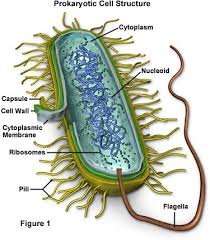
Bacteria are unicellular, most ca. 0.5–1.0 x 2.0–10 µm in size, and have three morphological forms: spherical (cocci), rod-shaped (bacilli), and curved (comma). They can form associations such as clusters, chains (two or more cells), or tetrads. They can be motile or nonmotile.
Cytoplasmic materials are enclosed in a rigid wall on the surface and a membrane beneath the wall. Nutrients in molecular and ionic form are transported from the environment through the membrane by several but specific mechanisms. The membrane also contains energy-generating components. It also forms intrusions in the cytoplasm (mesosomes). The cytoplasmic material is immobile and does not contain organelles enclosed in a separate membrane.
The ribosomes are 70S type and are dispersed in the cytoplasm. The genetic materials (structural and plasmid DNA) are circular, not enclosed in a nuclear membrane, and do not contain basic proteins such as histones. Both gene transfer and genetic recombination occur, but do not involve gamete or zygote formation. Cell division is by binary fission.
Prokaryotic cells can also have flagella, capsules, surface layer proteins, and pili for specific functions. Some also form endospores (one per cell). On the basis of Gram-stain behavior, bacterial cells are grouped as Gram-negative or Gram-positive.
Gram-negative cells have a complex cell wall containing an outer membrane (OM) and a middle membrane (MM). The OM is composed of lipopolysaccharides (LPS), lipoprotein (LP), and phospholipids. Phospholipid molecules are arranged in a bilayer, with the hydrophobic part (fatty acids) inside and hydrophilic part (glycerol and phosphate) outside.
LPS and LP molecules are embedded in the phospholipid layer. The OM has limited transport and barrier functions. The resistance of Gram-negative bacteria to many enzymes (lysozyme, which hydrolyzes mucopeptide), hydrophobic molecules (SDS and bile salts), and antibiotics (penicillin) is due to the barrier property of the OM.
LPS molecules also have antigenic properties. Beneath the OM is the MM, composed of a thin layer of peptidoglycan or mucopeptide embedded in the periplasmic materials that contain several types of proteins. Beneath the periplasmic materials is the plasma or inner membrane (IM), composed of a phospholipid bilayer in which many types of proteins are embedded.
Gram-positive cells have a thick cell wall composed of several layers of mucopeptide (responsible for thick rigid structure) and two types of teichoic acids. Some species also have a layer over the cell surface, called surface layer protein (SLP).
The wall teichoic acid molecules are linked to mucopeptide layers, and the lipoteichoic acid molecules are linked to both mucopeptide and cytoplasmic membrane. Teichoic acids are negatively charged (because of phosphate groups) and may bind to or regulate the movement of cationic molecules in and out of the cell. Teichoic acids have antigenic properties and can be used to identify Gram-positive bacteria serologically.
Read Also: All You Need To Know About Animal Shelters
Characteristics of Viruses in Food Microbiology
Viruses are regarded as noncellular entities. Bacterial viruses (bacteriophages) important in food microbiology are widely distributed in nature. They are composed of nucleic acids (DNA or RNA) and several proteins.
The proteins form the head (surrounding the nucleic acid) and tail. A bacteriophage attaches itself to the surface of a host bacterial cell and inoculates its nucleic acid into the host cell. Subsequently, many phages form inside a host cell and are released outside following lysis of the cell.
Several pathogenic viruses have been identified as causing foodborne diseases in humans. However, because they are difficult to detect in foods, the involvement of other pathogenic viruses in foodborne diseases is not properly known.
The two most important viruses implicated in foodborne outbreaks are hepatitis A and Norwalk-like viruses. Both are single-stranded RNA viruses. Hepatitis A is a small, naked, polyhedral enteric virus ca. 30 nm in diameter. The RNA strand is enclosed in a capsid.
Do you have any questions, suggestions, or contributions? If so, please feel free to use the comment box below to share your thoughts. We also encourage you to kindly share this information with others who might benefit from it. Since we can’t reach everyone at once, we truly appreciate your help in spreading the word. Thank you so much for your support and for sharing!