


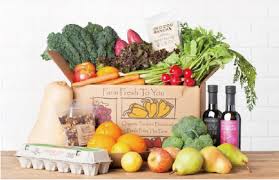
Packaging is an indispensable element in the food manufacturing process. Nowadays, plastics are used preferentially for packaging foodstuffs. They are capable of retarding and sometimes preventing the detrimental changes that may occur in packed products due to external influences, e.g., oxygen, light, and microorganisms.
Plastics are also able to reduce greatly the loss of components, such as water or flavor, from packed material. Therefore, plastic packages extend the shelf-life of many products. Various materials and additives can be used in packaging, as long as they have the desirable functional properties and do not pose health hazards after being in contact with food.
Such concerns may occur when some substances migrate from the packaging into the food.
In this article we will examine toxicity of packaging materials; polymers and their constituents: classification of plastics, monomers, oligomers and other starting substances and additives in polymeric packaging.
Polymers and Constituents in Agricultural Food Packaging
Plastic materials are the main components of food packages used for dairy products, baked goods, breads, beverages, breakfast cereals, confectionery, pasta, and other miscellaneous food products.
Read Also: Guide On How To Increase Goats Milk
Classification of Plastics in Agricultural Packaging
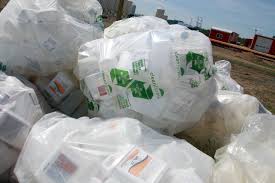
Plastics can be classified into two categories: thermoplastic and thermosetting.
Thermoplastic Polymers in Food Packaging
Plastics can be classified as thermoplastic or thermosetting. Thermoplastics are materials that can be repeatedly softened by heat and hardened by cooling. Typical of the thermoplastic family are the styrene polymers and copolymers, acrylics, cellulosics, polyethylenes, polypropylenes, vinyls, and nylons.
Thermoset Polymers in Food Packaging
Thermoset polymers are those that undergo chemical reactions induced by heat, pressure, catalysts, and ultraviolet (UV) light, leading to an infusible state. Typical plastics in the thermosetting family are amines (melamine, benzoguanamine, and urea), most polyesters, alkyds, epoxides, polyurethanes, and phenolics.
Thermoset polymers, after crosslinking, drying, curing, and hardening solidify to a three dimensional crosslinked matrix, cannot be melted without destroying their original characteristics. The most common thermoset plastics are epoxy resins, derived from reaction of bisphenol A and epichlorhydrin.
Additives in Polymeric Packaging for Agricultural Products
To achieve the desirable functional properties of the finished products, additives have to be incorporated with the polymers. Emulsifiers, surfactants and buffering agents are also used to provide a suitable medium for polymerization.
Monomers or oligomers are not chemically bound to the polymer molecules and can therefore move within the polymer matrix.
Consequently, at the interface between packaging material and food they can dissolve in the food product. Monomers are reactive substances with respect to living organisms, and are therefore toxic to some degree.
A lot of concern also focuses on additives from packaging materials ending up in food (e.g., phthalate plasticizers, which are indicated for many serious, chronic health effects).
Polyethylene Terephthalate (PET) in Agricultural Packaging
Polyethylene terephthalate (PET) is a copolymer of ethylene glycol with either terephthalic acid or dimethyl terephthalate. PET is used in packaging applications for soft drinks and mineral water, and for the bottles that are collected by curbside or deposit systems. As it does not thermally deform below about 220 C, PET is also used for trays and dishes for microwave and conventional cooking.
PET itself is biologically inert if ingested and is dermally safe during handling. No adverse effects have been observed at exposures anticipated to occur from the use of PET packages.
Read Also: Sheep and Goat Housing Complete Guide
Nylon Resin in Agricultural Food Packaging
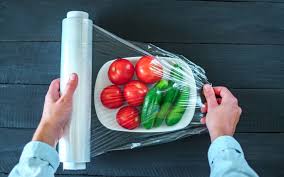
Polyamides, commonly known as ‗nylons,‘ may safely be used to produce articles intended for application in processing, handling, and packaging of food, including for products intended to be cooked directly in their packages.
Nylon microwave and roasting bags were reported to release, at cooking temperatures, volatile compounds, such as Nylon 6,6 cyclic monomer.
Bisphenol-Type Contaminants in Food Packaging
Bisphenol A (BPA) (Figure 1) is a starting substance utilized in the manufacture of most types of epoxy resins, which are then crosslinked and used to coat food cans. Another application of BPA is in the manufacture of plastic materials, in particular polycarbonates.
BPA serves also as an antioxidant or stabilizing material for many types of plastics, e.g., polyvinyl chloride (PVC).
All the bisphenol-type compounds mentioned have the potential to migrate into the packaged food. Migration of BPA can occur from can coatings into food or food simulants.
BPA migration has been identified in canned commodities, including vegetables, fish in aqueous media, and meat products, and from cans containing coffee and caffeine.
PVC stretch films used for food packaging may also be a source of BPA. The monomer can be leached when canned food is heated at typical can processing temperatures.
Isocyanates in Agricultural Packaging Materials
Isocyanates are used in polyurethane polymers and adhesives. In production of multilayer plastic materials, it is common to apply reactive adhesive mixtures containing aromatic isocyanate monomers.
However, in cases of incomplete curing, primary aromatic amines (PAAs) may be produced from residues of the aromatic isocyanates and water. PAAs can be transferred from packaging into food.
Some PPAs, including 2,4-diaminotoluene and 4,40 -methylenedianiline, are classified as ‗‗possibly carcinogenic to humans‘‘ by the International Agency for Research on Cancer (IARC).
Styrene in Agricultural Food Packaging
Styrene is a commercially important monomer that is used extensively in the manufacture of polystyrene resins and in co-polymers with acrylonitrile and 1,3-butadiene (reinforced plastics). Exposure to styrene occurs due to intake of food that has been in contact with styrene-containing polymers. IARC has determined that styrene is possibly carcinogenic to humans.
Vinyl Chloride in Agricultural Packaging
Vinyl chloride monomer (VCM) is the main substrate for the manufacture of polymers used as packaging materials for food. Since VCM is considered by IARC to be a human carcinogen, monomer levels in PVC food packaging materials are strictly controlled. To ensure a safe product, the residual content of VCM in the finished material or article is limited to one mg per kg in the final product.
Antioxidants, Light Stabilizers, and Thermal Stabilizers
Plastics generally age rapidly and undergo polymer degradation when exposed to UV light and in the presence of oxygen. The rate of oxidation is decreased by adding stabilizing additives, such as antioxidants or light stabilizers.
Commonly used antioxidants include:
- mixtures of the isomers 3-tert-butyl-4-hydroxyanisole and 2-tert-butyl4-hydroxyanisole (BHA)
- 2,6-di-tert-butyl-4-methyl-phenol (BHT)
- 2-(20 -hydroxy-50 methylphenyl)benzotriazole (Tinuvin P)
- 2-(5-chloro-2H-benzotriazole-2-yl)-6-(1,1-dimethylethyl)-4-methylphenol (Tinuvin 326)
- bis(2,2,6,6-tetramethyl-4-piperydyl)sebacate (Tinuvin 770 DF)
- 2-[2-hydroxy-3,5-bis(1-methyl-1-phenyl)phenyl]benzotriazole (Tinuvin 234)
- 2-hydroxy-4-n-octyloxybenzophenone (Chimasorb 81)
- octadecyl-3-(3,5-di-tert-butyl-4-hydroxyphenyl)propionate (Irganox 1076)
- 1,3,5-trimethyl-2,4,6-tris(3,5-di-tert-butyl-4-hydroxyphenyl)propionate (Irganox 1330)
- pentaerythrityl-tetrakis-3-(3,5-di-tert-butyl-4-hydroxyphenyl)propionate (Irganox 1010)
- tris-(2,4-di-tert-butylphenyl)phosphite (Irgafos 168)
- tetrakis(2,4-di-tert-butylphenyl)-4,4‘-biphenylene diphosphonite (Irgafos P-EPQ)
Some of these antioxidants appear in the list of additives that may be used in the manufacture of plastic materials intended to come into contact with food.
Plasticizers in Agricultural Food Packaging
Plasticizers are used in the polymer industry to improve flexibility, workability, and general handling properties. Dibutyl sebacate and phthalates, such as dibutyl phthalate, diethyl phthalate, dicyclohexyl phthalate, butylbenzyl phthalate, and diphenyl-2-ethylhexyl phosphate, serve widely as plasticizers in vinylidene chloride copolymers, nitrocellulose-coated regenerated cellulose film, and cellulose acetate.
Butyl stearate, acetyltributyl citrate, alkyl sebacates, and adipates are typical low-toxicity plasticizers and are commonly used.
Lubricants and Slip Additives in Packaging
While plasticizers change the physical properties of a polymer, lubricants are added to change the processing properties of the material. Lubricants are widely used in thermoplastic polymers to increase the overall rate of processing or to improve surface release properties during extrusion, injection, molding or compression molding.
Slip additives act at the surface of a polymer film or article to reduce the friction between it and another surface.
Nonylphenol in Agricultural Packaging
Alkylphenols, e.g., p-nonyl-phenol (NP), serve widely as antioxidants and surfactants for plastics such as PVC and polystyrene. NP, like BPA and some phthalic acid esters, belongs to the group of anthropogenic endocrine disruptors.
Significance of Packaging in Agricultural Food Systems
Food packaging is of high societal value because it conserves and protects food, making food transportable and conveys information to customers. It is also relevant for marketing, which is off economic significance.
Food and beverages can be very aggressive products and may interact strongly with materials that they touch hence materials used in packaging must be able to preserve and protect its content, resist any chemical reactions, and withstand the handling and processing conditions.
Do you have any questions, suggestions, or contributions? If so, please feel free to use the comment box below to share your thoughts. We also encourage you to kindly share this information with others who might benefit from it. Since we can’t reach everyone at once, we truly appreciate your help in spreading the word. Thank you so much for your support and for sharing!