


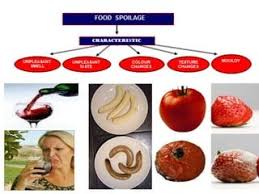
The microbial groups important in foods consist of several species and types of bacteria, yeasts, moulds, and viruses. Although some algae, protozoa, and worms (such as nematodes) are significant in foods, they are not included among the microbial groups in this article. Bacteria, yeasts, moulds, and viruses are important in food for their ability to cause foodborne diseases and food spoilage and to produce food and food ingredients.
Many bacterial species and some moulds and viruses, but not yeasts, are able to cause foodborne diseases. Most bacteria, moulds, and yeasts, because of their ability to grow in foods (viruses cannot grow in foods), can potentially cause food spoilage. Several species of bacteria, moulds, and yeasts are considered safe or food-grade, or both, and are used to produce fermented foods and food ingredients.
Among the four major groups, bacteria constitute the largest group. Because of their ubiquitous presence and rapid growth rate, even under conditions where yeasts and moulds cannot grow, they are considered the most important in food spoilage and foodborne diseases.
Prion or proteinaceous infectious particles have recently been identified to cause transmissible spongiform encephalopathies (TSEs) in humans and animals. However, their ability to cause foodborne diseases is not clearly understood.
Read Also: Deep Litter Poultry Production System
Bacterial Pathogens and Spoilage Organisms
1. Acinetobacter
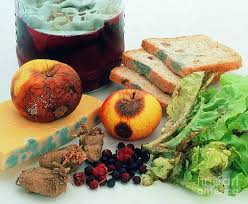
Acinetobacter is a genus of gram-negative bacteria belonging to the gamma proteobacteria. Acinetobacter species are non-motile and oxidase-negative and occur in pairs as observed under magnification. Young cultures show rod-shaped morphology. They are strict aerobes that do not reduce nitrates. They are important soil and water organisms and are also found on many foods, especially refrigerated fresh products.
2. Bacillus cereus
Bacillus cereus is a thick, long, rod-shaped, gram-positive, catalase-positive, aerobic, spore-forming organism, and it is important in foodborne illness. It is a normal inhabitant of soil and is isolated from a variety of foods. It is quite often a cause of diarrheal illness due to the consumption of desserts, meat, dishes, dairy products, rice, pasta, etc., that are cooked and kept at room temperature as it is thermoduric.
Some B. cereus strains are psychrotrophic as they grow at refrigeration temperature. B. cereus is spread from soil and grass to cows’ udders and into raw milk. It is also capable of establishing in cans, producing proteolytic and amylolytic enzymes, and also phospholipase C (lecithinase).
The production of these enzymes by these organisms can lead to the spoilage of foods. The diarrheal illness is caused by an enterotoxin produced during the vegetative growth of B. cereus in the small intestine.
The bacterium has a maximum growth temperature around 48°C to 50°C and a pH range of 4.9 to 9.3. Like other spores of mesophilic Bacillus species, spores of B. cereus are also resistant to heat and survive pasteurization temperature.
3. Bacillus subtilis
Bacillus subtilis, known also as the hay bacillus or grass bacillus, is a gram-positive, catalase-positive bacterium commonly found in soil. A member of the genus Bacillus, B. subtilis is thin, short, rod-shaped, and has the ability to form a tough, protective endospore, allowing the organism to tolerate extreme environmental conditions. B. subtilis produces the proteolytic enzyme subtilisin. B. subtilis spores can survive the extreme heat during cooking and are responsible for causing ropiness, a sticky, stringy consistency caused by bacterial production of long-chain polysaccharides in spoiled bread dough.
4. Corynebacterium
Corynebacterium is a genus of gram-positive, rod-shaped bacteria. They are widely distributed in nature and are mostly innocuous. Some are useful in industrial settings, such as C. glutamicum. Others can cause human disease. C. diphtheriae, for example, is the pathogen responsible for diphtheria. Some species are known for their pathogenic effects in humans and other animals.
Perhaps the most notable one is C. diphtheriae, which acquires the capacity to produce diphtheria toxin only after interacting with a bacteriophage. Diphtheria toxin is a single, 60,000 molecular weight protein composed of two peptide chains, fragment A and fragment B, held together by a disulfide bond.
5. Clostridium perfringens
Clostridium perfringens is a gram-positive, encapsulated, anaerobic, non-motile bacterium commonly found on meat and meat products. It has the ability to cause foodborne disease. It is a toxin-producing organism, producing C. perfringens enterotoxin and β-toxin that are active on the human GI tract.
It multiplies very rapidly in food (doubling time < 10 minutes). Spores are resistant to radiation, desiccation, and heat and thus survive in incompletely or inadequately cooked foods. However, it tolerates moderate exposure to air. Vegetative cells of C. perfringens are also somewhat heat-tolerant as they have a relatively high growth temperature (43°C–45°C) and can often grow at 50°C. They are not tolerant to refrigeration and freezing. No growth occurs at 6°C. C. perfringens is present in soil and other natural environments.
7. Clostridium botulinum
Clostridium botulinum produces the most potent toxin known. It is a gram-positive, anaerobic, rod-shaped bacterium. Oval endospores are formed in stationary phase cultures. There are seven types of C. botulinum (A to G) based on the serological specificity of the neurotoxin produced. Botulism is a rare but very serious disease.
The ingestion of neurotoxin produced by the organism in foods can lead to death. However, the toxin (a protein) is easily inactivated by heat. The organism can grow at temperatures ranging from 10–48°C with an optimum growth temperature at 37°C. Spores are highly heat-resistant. The outgrowth of spores is inhibited at pH < 4.6, NaCl > 10%, or water activity < 0.94. Botulinum spores are probably the most radiation-resistant spores of public health concern.
Contamination of foods is through soil and sediments where they are commonly present. The organism grows under obligate anaerobic conditions and produces toxin in under-processed (improper canning) low-acid foods at ambient temperature.
8. Campylobacter
Campylobacter are gram-negative, non-spore-forming rods. Campylobacter jejuni is an important foodborne pathogen. It is one of the many species within the genus Campylobacter. Campylobacter species C. jejuni and C. coli cause diarrhea in humans. The organism is heat-sensitive (destroyed by milk pasteurization temperature). It is also sensitive to freezing.
The organism belongs to the family Campylobactereaceae. The organisms are curved, S-shaped, or spiral rods that may form spherical or coccoid forms in old cultures or cultures exposed to air for prolonged periods. Most of the species are microaerophilic.
It is oxidase- and catalase-positive and does not grow in the presence of 3.5% NaCl or at 25°C or below. The incidences reported for gastroenteritis by this organism are as high as in the case of Salmonella. The organism is commonly present in raw milk, poultry products, fresh meats, pork sausages, and ground beef.
9. Enterococcus (E. faecium, E. faecalis)
Enterococcus is a genus of lactic acid bacteria, gram-positive cocci that often occur in pairs (diplococci) or short chains and are difficult to distinguish from Streptococci on physical characteristics. The two species are commensal organisms in the intestines of humans.
The Enterococci are facultative anaerobic organisms, non-spore-forming, that grow optimally at 35°C. However, they tolerate a wide range of environmental conditions (10–45°C), pH (4.5 to 10.5), quite high NaCl concentration (6.5%), and can survive heating at 60°C for 30 minutes. Catalase-negative, oxidase-negative bacteria of the genus Enterococcus are ubiquitous organisms that often occur in large numbers on vegetables, plant materials, and foods, especially those of animal origin such as meat and dairy products.
Enterococci also constitute a large proportion of autochthonous bacteria associated with the mammalian gastrointestinal tract. The resistance of Enterococci to pasteurization temperatures and their adaptability to different substrates and growth conditions in food products manufactured from raw materials and in heat-treated food products is of great significance. Enterococci may constitute an important part of the microflora of fermented cheese and meats.
10. Escherichia coli
E. coli strains are associated with foodborne gastroenteritis. These are gram-negative, asporogenous rods that ferment lactose and produce dark colonies with a metallic sheen on Endo agar. The organism grows well on a large number of media and in many foods. They grow over a wide range of temperatures (4 to 46°C) and pH (4.4 to 9.0).
However, they grow very slowly in foods held at refrigerator temperatures (5°C). They belong to the family Enterobacteriaceae. The organism is also an indicator of faecal pollution. The organism is also capable of producing acid and gas and off-flavors in foods. E. coli strains involved in foodborne illness can be placed into five groups: Enteropathogenic E. coli (EPEC), Enterotoxigenic E. coli (ETEC), Enteroinvasive E. coli (EIEC), Enterohemorrhagic E. coli (EHEC), and Facultatively enteropathogenic E. coli (FEEC). The organism also grows in the presence of bile salts. The primary habitat of E. coli is the intestinal tract of most warm-blooded animals. E. coli O157:H7 strains are unusually tolerant of acidic environments.
11. Lactococcus
Lactococcus is a genus of lactic acid bacteria that were formerly included in the genus Streptococcus Group N (Group N Streptococci). They are known as homofermenters, meaning that they produce a single product of glucose fermentation.
They are gram-positive, catalase-negative, non-motile cocci that are found singly, in pairs, or in chains. Some strains of lactococci are known to grow at or below 7°C. Lactococci are intimately associated with dairy products. These organisms are commonly used in the dairy industry in the manufacture of fermented dairy products like cheeses.
They can be used in single-strain starter cultures or in mixed-strain cultures with other lactic acid bacteria such as Lactobacillus and Streptococcus. Their main purpose in dairy production is the rapid acidification of milk. This causes a drop in the pH of the fermented product, which prevents the growth of spoilage and pathogenic bacteria. These bacteria also play a role in the flavor of the final product.
Dairy lactococci have also been exploited for several industrial fermentations in the biotechnology industry. They are easily grown at industrial scale on cheap whey-based media. Lactococcus lactis subsp. lactis includes species formerly designated as S. lactis subsp. lactis. L. lactis subsp. cremoris is distinguished from L. lactis subsp. lactis by the inability to: grow at 40°C, grow in 4% NaCl, hydrolyze arginine, or ferment ribose.
12. Lactobacillus (L. bulgaricus, L. helveticus, L. plantarum, L. acidophilus, L. casei, L. lactis, L. fermentum)
The organisms belonging to this important genus are rods, usually long and slender, and in some species form chains. They are aerotolerant/microaerophilic, but some ferment sugars chiefly to lactic acid if they are homofermentative.
The heterofermentative species, besides lactic acid, also produce small amounts of acetic acid, carbon dioxide, and trace amounts of volatile compounds such as acetaldehyde and alcohol. The homofermentative species of Lactobacillus include L. bulgaricus, L. casei, L. helveticus, L. lactis, L. acidophilus, and grow optimally at 37°C. L. fermentum and L. brevis are typical examples of heterofermentative Lactobacillus and grow well at higher temperatures.
Lactobacilli are of considerable importance in foods as they ferment sugar to lactic acid and other desirable flavoring compounds and are thus used in the production of fermented plant, dairy, and meat products. However, they are also implicated in the spoilage of wine and beer.
The organism normally occurs on plant surfaces, silage, manure, and dairy products. They are quite fastidious in their nutritional requirements as they are unable to synthesize certain vitamins they require, and therefore, media need to be supplemented with these vitamins for their growth.
13. Leuconostoc
Leuconostoc is a genus of gram-positive bacteria, placed within the family of Leuconostocaceae. They are generally ovoid cocci, often forming chains. Leuconostoc spp. is intrinsically resistant to vancomycin and is catalase-negative (which distinguishes them from Staphylococci). All species within this genus are heterofermentative and are able to produce dextran from sucrose.
They are generally slime-forming. Blamed for causing the ‘stink’ when creating a sourdough starter, some species are also capable of causing human infection. Leuconostoc spp., along with other lactic acid bacteria such as Pediococcus and Lactobacillus spp., is responsible for the fermentation of cabbage to sauerkraut.
In this process, the sugars in fresh cabbage are transformed to lactic acid, which gives it a sour flavor and good keeping qualities.
14. Listeria monocytogenes
Listeria monocytogenes in foods has attracted worldwide attention due to the serious illness it causes in humans. The Listeria is gram-positive, non-spore-forming, non-acid-fast rods. The organism is catalase-positive and produces lactic acid from glucose and other fermentable sugars. The organism grows well in brain heart infusion (BHI), trypticase soy, and tryptose broths.
However, the medium should be fortified with B vitamins and amino acids. It is a mesophilic organism with an optimal growth temperature of 37°C, but it can also grow at refrigerator temperature. Strains grow over the temperature range of 1°C to 45°C and pH range of 4.1 to 9.6.
Listeria monocytogenes is widely distributed in nature and can be isolated from decaying vegetation, soil, animal feces, sewage, silage, and water. The organism has been found in raw milk, pork, raw poultry, ground beef, and vegetables.
The most significant virulence factor associated with L. monocytogenes is listeriolysin O. The virulent strains produce β-hemolysis on blood agar and acid from rhamnose. L. monocytogenes grows well in moderate salt concentrations (6.5%).
L. monocytogenes is unique among foodborne pathogens; while other pathogens excrete toxins or multiply in the bloodstream, L. monocytogenes enters the host’s cells and grows inside the cell. In humans, it crosses the intestinal barrier after entering by the oral route. Ready-to-eat (RTE) foods that are preserved by refrigeration pose a special challenge with regard to L. monocytogenes infection.
15. Micrococcus
Micrococcus occurs in a wide range of environments, including water, dust, and soil. Micrococci are gram-positive spherical cells ranging from about 0.5 to 3 micrometers in diameter and typically appear in tetrads. Micrococcus has a substantial cell wall, which may comprise as much as 50% of the cell mass.
Some species of Micrococcus, such as M. luteus and M. roseus, produce yellow or pink colonies when grown on mannitol salt agar. Micrococcus is generally thought to be a saprophytic or commensal organism, though it can be an opportunistic pathogen, particularly in hosts with compromised immune systems, such as HIV patients.
16. Proteus
Since it belongs to the family of Enterobacteriaceae, general characteristics have been applied to this genus: It is oxidase-negative but catalase- and nitrate-reductase-positive. Three species, P. vulgaris, P. mirabilis, and P. penneri, are opportunistic human pathogens. Proteus includes pathogens responsible for many human urinary tract infections. P. mirabilis causes wound and urinary tract infections.
Most strains of P. mirabilis are sensitive to ampicillin and cephalosporins, but P. vulgaris is not sensitive to these antibiotics. However, this organism is isolated less often in the laboratory and usually only targets immune-suppressed individuals. P. vulgaris occurs naturally in the intestines of humans and a wide variety of animals, manure, soil, and polluted waters. P. mirabilis, once attached to the urinary tract, infects the kidney more commonly than E. coli. P. mirabilis is often found as a free-living organism in soil and water.
17. Pseudomonas fluorescens
Pseudomonas fluorescens is a common gram-negative, rod-shaped, motile bacterium. The organism is psychrotrophic in nature and grows at refrigeration temperature (7°C). It has an extremely versatile metabolism and can be found in the soil and in water. It is an obligate aerobe, but certain strains are capable of using nitrate instead of oxygen as a final electron acceptor during cellular respiration.
Optimal temperature for growth of Pseudomonas fluorescens is 25–30°C. It is oxidase-positive and a nonsaccharolytic organism. Heat-stable lipases and proteases are produced by Pseudomonas fluorescens and other similar pseudomonads. These enzymes cause milk to spoil, by causing bitterness, casein breakdown, and ropiness due to the production of slime and coagulation of proteins.
18. Pseudomonas aeruginosa
Pseudomonas aeruginosa is a gram-negative, aerobic, rod-shaped bacterium with unipolar motility. It is an opportunistic human and plant pathogen. Gram-stained Pseudomonas aeruginosa bacteria (pink-red rods) secrete a variety of pigments, including pyocyanin (blue-green), pyoverdine (yellow-green and fluorescent), and pyorubin (red-brown). P. aeruginosa is often preliminarily identified by its fluorescence and grape-like or tortilla-like odor in vitro.
Definitive clinical identification of P. aeruginosa often includes identifying the production of pyocyanin and fluorescein, as well as its ability to grow at 42°C. It is capable of growth in diesel and jet fuel, where it is known as a hydrocarbon-using microorganism (or “HUM bug”), causing microbial corrosion. P. aeruginosa is considered by many as a facultative anaerobe.
19. Salmonella (S. typhimurium, S. typhi, S. enteritidis)
Salmonella spp. has been reported to be a leading cause of foodborne illnesses in humans. Foodborne salmonellosis surpasses all other foodborne bacterial illnesses in humans. Enteric fever is a serious human disease associated with typhoid and paratyphoid strains. Salmonella belong to the family Enterobacteriaceae.
The optimum growth temperature is 37–45°C. The organism can also grow at about 7°C in foods. It ferments carbohydrates with the production of acid and gas. Salmonella are oxidase-negative, catalase-positive, grow on citrate as a sole carbon source, and produce H2S.
Some Salmonella strains can grow at higher temperatures (54°C), while others exhibit psychrotrophic properties. The organism has the ability to grow at pH values ranging from 4.5 to 9.5, with an optimum pH for growth at 6.5 to 7.5. It is facultatively anaerobic, gram-negative, non-spore-forming, rod-shaped (2–4 µm) bacteria belonging to the family.
Milk, meat, and poultry are principal vehicles of human foodborne salmonellosis. Ingestion of only a few Salmonella cells can be infectious. Low levels of Salmonellae in finished food products may, therefore, be of serious public health consequence.
20. Serratia
Serratia is a genus of gram-negative, facultatively anaerobic, rod-shaped bacteria of the Enterobacteriaceae family. The most common species in the genus, S. marcescens, is normally the only pathogen and usually causes nosocomial infections.
However, rare strains of S. plymuthica, S. liquefaciens, S. rubidaea, and S. odoriferae have caused diseases through infection. Members of this genus produce characteristic red pigment, prodigiosin.
21. Staphylococcus aureus
Staphylococcus aureus is commonly associated with humans. It is a gram-positive, catalase-positive coccus. It is the common cause of foodborne gastroenteritis known as staphylococcal food poisoning.
Staphylococcal gastroenteritis is caused by the ingestion of food that contains one or more enterotoxins, which are produced by some strains of S. aureus. Although enterotoxin production is believed generally to be associated with coagulase and thermonuclease-producing S. aureus strains, many species of Staphylococcus that produce neither coagulase nor DNase are also known to produce enterotoxin.
22. Shigella
Bacillary dysentery, or shigellosis, is caused by Shigella species. Shigella is a member of the family Enterobacteriaceae. The growth temperature varies from 10 to 48°C. Shigella does not usually survive well in low pH foods. It is sensitive to ionizing radiations.
Shigella species are non-motile, oxidase-negative, produce acid only from sugars, and do not grow on citrate as a sole carbon source. Bacillary dysentery, or shigellosis, is caused by the ingestion of contaminated foods, and in some instances, it subsequently leads to rapid dissemination through contaminated feces from infected individuals. The infective dose may be as low as 100 cells.
Contamination of foods usually does not occur at the processing plant but rather through an infected food handler. Humans are the natural reservoir of Shigella, and the organism is spread through the fecal-oral route.
Vibrio
Vibrio cholerae and V. parahaemolyticus are the two important species of the genus Vibrio. Vibrio cholerae causes cholera, one of the few foodborne illnesses with epidemic and pandemic potential.
Vibrio cholerae are gram-negative, straight, or curved rods and belong to the family Vibrionaceae. Important distinctions within the species are made on the basis of the production of cholera enterotoxin (CT) and serogroup.
Vibrio cholerae is part of the normal free-living bacterial flora in estuarine areas. Amongst the many different enrichment broths described for the isolation of vibrios, alkaline peptone water is the most commonly used. Though V. parahaemolyticus can grow in the presence of 1–8% NaCl, the best growth occurs in the salt concentration of 2 to 4%.
Yersinia
Yersinia enterocolitica and Yersinia pestis are the two important human pathogens. While Y. enterocolitica causes foodborne gastroenteritis, Y. pestis is an agent of human plague. Y. enterocolitica, also known as a newly emerging human pathogen, is a heterogeneous species that is divisible into a large number of subgroups. Y. enterocolitica is unusual because it can grow at temperatures below 4°C. The generation time at the 28–30°C (optimum growth temperature) is about 34 minutes.
It also survives in frozen foods but grows better in processed foods such as pasteurized milk, vacuum-packed meat, boiled eggs, boiled fish, and cottage cheese. Both species can grow over a pH range of 4 to 10 (optimum pH is 7.6) and tolerate an alkaline environment well. They are motile at a temperature < 30°C. However, both these organisms are susceptible to pasteurization, ionizing, and ultraviolet (UV) irradiation.
The organism can also tolerate up to 5% NaCl. Infections with Yersinia species are due to the transmission of the organism from animals to humans. The organism is frequently present in pork, lamb, poultry, and dairy products.
Read Also: Animal Segregation Analysis: Complex Segregation Analysis
Fungal Pathogens and Spoilage Organisms
1. Yeasts
Yeasts have been associated with foods since earliest times, both as beneficial agents and as major causes of spoilage and economic loss. Current losses to the food and dairy industry caused by yeast spoilage are estimated at several billion dollars. As new food ingredients and new food manufacturing technologies are introduced, novel food spoilage yeasts are emerging to present additional problems.
To date, over 70 biological species of yeasts have been described, and thousands of different varieties have been shown to exist in all kinds of natural and artificial habitats. Yeasts may be viewed as being unicellular fungi in contrast to the moulds, which are multi-cellular.
Yeasts can be differentiated from bacteria by their larger cell size and their oval, elongate, elliptical, or spherical cell shapes. Typical yeast cells range from 5 to 8 µm in diameter, with some being even larger. Older yeast cultures tend to have smaller cells. Most of those of importance in foods divide by budding or fission.
Yeasts can grow in the presence of various types of organic acids such as lactic, citric, and tartaric acid and also over a wide range of acid pH and in up to 18% ethanol. Many grow in the presence of 55–60% sucrose. Many colors are produced by yeasts, ranging from creamy to pink to red. The asco- and arthrospores of some are quite heat-resistant.
i. Candida
Members of the Candida genus form shining white colonies, and cells contain no carotenoid pigments. Candida tropicalis is the most prevalent in foods in general. Some members are involved in the fermentation of cocoa beans, as a component of kefir grains, and in many other products, including beers and fruit juices.
ii. Debaromyces
Debaromyces is one of the most prevalent yeast genera in dairy products. It can grow in 24% NaCl and at a water activity as low as 0.65.
iii. Kluyveromyces
Kluyveromyces spp. produces β-galactosidase and are vigorous fermenters of sugars, including lactose. K. marxianus is one of the two most prevalent yeasts in dairy products, kefir grain, and causes cheese spoilage.
iv. Rhodotorula
The genus Rhodotorula contains many psychrotrophic species that are found on fresh poultry, shrimp, fish, and beef. Some grow on the surface of butter.
v. Saccharomyces
Saccharomyces are ascosporogenous yeasts that multiply by lateral budding and produce spherical spores in asci. They are diploid and do not ferment lactose. All bakers’, brewers’, wine, and champagne yeasts are S. cerevisiae. They are found in kefir grains and can be isolated from a wide range of foods. S. cerevisiae rarely causes spoilage.
vi. Torulaspora
Torulaspora multiplies by lateral budding. They are strong fermenters of sugars. Torula delbrueckii is the most prevalent species.
2. Moulds
Moulds are filamentous fungi that grow in the form of a tangled mass that spreads rapidly and may cover several inches of area in a very short period. It is also referred to as mycelial growth. Mycelium is composed of branches of filaments referred to as hyphae.
The moulds of great importance in foods multiply by ascospores or conidia. The ascospores of some of the mould genera are notable for their extreme degrees of heat resistance.
i. Alternaria
Alternaria spp. form septate mycelia with conidiophores, and large brown conidia are produced. They cause brown to black rots of fruits, apples, and figs. Some species produce mycotoxins.
ii. Aspergillus
The Aspergillus spp. appears yellow to green to black on a large number of foods. Some species cause spoilage of oils. A. niger produces β-galactosidase, glucoamylase, invertase, lipase, and pectinase. A. oryzae produces α-amylase. Two species, A. flavus and A. parasiticus, produce aflatoxins, and others produce ochratoxin A and sterigmatocystin.
iii. Geotrichum
The yeast-like fungi, Geotrichum, are also referred to as dairy mould.
iv. Mucor and Rhizopus
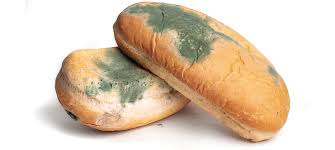
Mucor species that produce non-septate hyphae are prominent food spoilers. Similarly, Rhizopus spp. also produces non-septate hyphae but give rise to stolons and rhizoids. R. stolonifer is by far the most common species in foods and is also referred to as “bread mould.” Other important genera of moulds related to spoilage of foods are Neurospora, Thamnidium, Trichothecium, Penicillium, and Cladosporium.
Frequently Asked Questions (FAQs)
- What are the main microbial groups involved in food spoilage and foodborne diseases?
The main microbial groups involved in food spoilage and foodborne diseases are bacteria, yeasts, moulds, and viruses. Bacteria are the most significant due to their rapid growth and ubiquitous presence, while yeasts and moulds contribute to spoilage, and certain bacteria, moulds, and viruses can cause foodborne illnesses. - Which bacteria are most commonly associated with foodborne illnesses?
Bacteria such as Salmonella, Listeria monocytogenes, Clostridium botulinum, Clostridium perfringens, Campylobacter jejuni, Escherichia coli (especially E. coli O157:H7), and Staphylococcus aureus are commonly associated with foodborne illnesses, causing diseases like salmonellosis, listeriosis, botulism, and staphylococcal food poisoning. - How do yeasts and moulds contribute to food spoilage?
Yeasts and moulds cause food spoilage by growing in foods, leading to changes in texture, flavor, and appearance. For example, yeasts like Candida and moulds like Aspergillus and Rhizopus can cause off-flavors, rots, or slime formation in foods such as dairy products, fruits, and bread. - What makes Clostridium botulinum particularly dangerous in food?
Clostridium botulinum produces a highly potent neurotoxin that causes botulism, a rare but potentially fatal disease. Its spores are heat-resistant and can survive in under-processed low-acid foods, such as improperly canned goods, under anaerobic conditions. - How can the growth of spoilage and pathogenic microorganisms be controlled in foods?
Growth can be controlled by maintaining proper storage temperatures (e.g., refrigeration or freezing), using pasteurization, controlling pH (below 4.6 for some organisms), reducing water activity, using salt or preservatives, and ensuring proper cooking and processing techniques. - Why is Listeria monocytogenes a concern in ready-to-eat foods?
Listeria monocytogenes is a concern in ready-to-eat foods because it can grow at refrigeration temperatures, has a wide pH tolerance, and can survive moderate salt concentrations. It grows inside host cells, increasing its pathogenicity, and is found in foods like raw milk, pork, poultry, and vegetables. - What role do lactic acid bacteria like Lactococcus and Lactobacillus play in food production?
Lactic acid bacteria, such as Lactococcus and Lactobacillus, are used in the production of fermented dairy, plant, and meat products. They ferment sugars to produce lactic acid, lowering the pH to prevent spoilage and pathogenic bacterial growth while contributing to the flavor of products like cheese and sauerkraut. - How do prions differ from other microorganisms in food safety?
Prions are proteinaceous infectious particles, not living microorganisms, and are linked to transmissible spongiform encephalopathies (TSEs) in humans and animals. Their role in foodborne diseases is not fully understood, unlike bacteria, yeasts, moulds, and viruses, which have clearer impacts on food safety.
Do you have any questions, suggestions, or contributions? If so, please feel free to use the comment box below to share your thoughts. We also encourage you to kindly share this information with others who might benefit from it. Since we can’t reach everyone at once, we truly appreciate your help in spreading the word. Thank you so much for your support and for sharing!