



According to Lawrence, Benjamin, and John (2017), the primary responsibility of government is to protect the health and wellbeing of its citizens. This is achieved through passing and upholding laws intended to foster conditions necessary for citizens to live safe, healthy lives.
Meaning and Concept of Public Health Law
Public health is defined as “the science and art of avoiding disease, extending life, and promoting health through the coordinated efforts and conscious decisions of society, organizations, both public and private, communities, and individuals” (Gatseva and Argirova, 2011).
Winslow (1920) described public health as the way of avoiding diseases, extending life, and promoting health and effectiveness through coordinated community initiatives for environmental sanitation, infection control in the neighborhood, individual education, personal health, and, eventually, a decrease in mortality, the planning of health care and nursing services for early disease detection, prevention, and treatment, as well as the creation of the social infrastructure necessary to guarantee every member of the community a level of life conducive to the preservation or enhancement of health.
The American Public Health Association states that the goal of public health is to “promote and safeguard the health of individuals and the communities in which they reside, learn, work, and play.” The Public Health Association of Australia describes its function as:
Public health involves, but transcends, the care of people, including the promotion of health, support for people with disabilities, recovery and rehabilitation, and work on disease and disability prevention.
This framework gives the Association’s role specific meaning, focusing on the social, economic, and environmental determinants of health. The American Public Health Association defines public health as the practice of preventing illness and promoting good health across populations, ranging from small towns to entire nations.
The Centers for Disease Control and Prevention (CDC) refers to “public health systems” as all governmental, private, and nonprofit organizations that support the provision of essential public health services within a jurisdiction.
Public health law, conversely, is the study of the legal rights and responsibilities of the state, in cooperation with its partners (such as the health care industry, business, the community, the media, and academia), to ensure that people have access to the necessary conditions for good health (to identify, prevent, and reduce population health risks), as well as the restrictions on the state’s ability to limit, for the greater good, the autonomy, privacy, liberty, proprietary, and other legally protected interests of individuals.
In line with social justice principles, the main goal of public health law is to promote the population’s highest level of physical and mental health (www.content.ucpress.edu.com). According to Gostin (2008), public health law focuses on the government’s legal obligations and powers to “ensure the conditions for people to be healthy,” and how to balance these with “individual rights to autonomy, privacy, liberty, property, and other legally protected interests” (St. Paul, 2010).
Public health law covers extensive ground. Legal difficulties pertaining to public health can range from straightforward concerns of legal interpretation to intricate issues involving public health policy, social justice, and ethics.
Historical and contemporary advancements in public health, such as infectious disease control, food safety, occupational health, accident prevention, and emergency planning and response, have benefited greatly from legal tools, including statutes, regulations, and litigation.
For instance, state courts have upheld vaccine requirements, local governments have created clean indoor air legislation to address tobacco as a health risk, and federal authorities have developed vehicle performance crash criteria to advance vehicle safety (Moulton, Goodman, and Parmet, 2007).
Public health law, a type of public health policy, combines ideas from the legal, medical, healthcare, and public health fields. Certain legal public health actions are frequently included in public health law, which must be implemented, notably through governmental bodies, to ensure population-level health. It establishes the legal foundation for and limitations on the practice of public health professionals.
In recent decades, both regular lawyers and public health professionals have started to specialize in public health law. Legal competence in public health is required at national and international levels by international legislation, such as international health rules and public health treaties (Gostin, 2000).
The CDC’s Office for State, Tribal, Local and Territorial Support (OSTLTS) oversees the Public Health Law Program (PHLP). In state, tribal, local, and territorial (STLT) jurisdictions, the PHLP creates tools for the law and offers legal technical help to public health practitioners and policymakers.
The PHLP collaborates with partners, including state and territory health authorities, to:
- Define public health law priorities,
- Investigate legislation that affects public health,
- Analyze legal readiness for public health,
- Develop and disseminate public health law courses, recommendations, papers, studies, and toolkits,
- Conduct comparative assessments across jurisdictions.
Read Also: Record Keeping in Commercial Pig Farming
Public Health Laws in Nigeria

The following are examples of public health laws in Nigeria:
National Environmental Standards and Regulation Enforcement Agency Act
The Federal Ministry of Environment administers the National Environmental Standards and Regulation Enforcement Agency (NESREA) Act, 2007, which replaced the Federal Environmental Protection Agency (FEPA) Act of 1988, to safeguard and encourage the sustainable use of the environment and its natural resources (Hakeen, 2013).
Through monitoring and regulating measures, the law grants authority to ensure adherence to national and international regulations on environmental sanitation and pollution prevention and control.
The Agency is also empowered to create and revise laws on sanitary standards, dangerous substance control, effluent limitations, and other types of environmental degradation.
However, it is illegal to release dangerous compounds into the environment without a valid permit, according to the legislation. The law also establishes regulations, such as the National Environmental Protection (Pollution Abatement in Industries and Facilities Producing Waste) Regulation on the country’s environmental protection (Hakeen, 2013).
Read Also: How to Choose a Snail Farming System
Federal Solid and Hazardous Waste Management Regulations
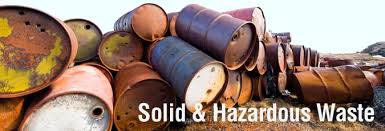
According to the Federal Solid and Hazardous Waste Management Regulations of 1991, industries are required to identify solid hazardous wastes that pose a risk to the environment and public health and to investigate the viability of recycling them (Hakeen, 2013).
1. Harmful Waste (Special Criminal Provisions) Act
According to Nigeria’s Harmful Waste (Special Criminal Provisions) Act of 1988, it is illegal to transport, deposit, or dump harmful waste in the country’s air, land, or water without a permit (Hakeen, 2013).
2. Solid Waste and Refuse Disposal Law
The solid waste and refuse disposal law governs the collection, handling, and disposal of all solid and hazardous garbage and waste from homes, businesses, and other sources.
Additionally, it entails maintaining the aesthetic appeal of residential areas, the environment by creating green spaces, insect and vector control, a reliable supply of water, drainage maintenance, and functional trash cans and gutters. This is permitted by Section 15 of the
Federal Environmental Protection Agency Decrees No. 58 of 1988 and 59 of 1992, which amended the original Decree, now an Act of the National Assembly.
The Pollution Abatement in Industries and Facilities Generating Waste of 1991 and the National Guidelines and Standards for Environmental Pollution Control in Nigeria, along with State Environmental Sanitation Legislation and various State Environmental Protection Agency laws, support this (Saka, 2019).
3. National Environmental (Waste Management and Sanitation) Regulations
There are sufficient provisions for waste control and environmental sanitation in the National Environmental (Sanitation and Waste Control) Regulation of 2009 (Hakeen, 2013).
4. Management of Hazardous and Solid Waste Regulations
The Management of Solid and Hazardous Waste Regulations establish rules for the collection, handling, and disposal of hazardous and solid waste from municipal and industrial sources. They also provide a detailed list of chemicals and chemical waste by toxicity categories (Hakeen, 2013).
5. National Environmental Policy
On November 27, 1989, the Federal Government of Nigeria announced the creation of the National Policy on Environment. The publications outline policies, procedures, and tactics for accomplishing the policy goal of sustainable development (Hakeen, 2013).
6. Disease Notification and Quarantine Service Laws
These represent another category of public health legislation. According to this law, all levels of government, including the international community, are required to inform the public when certain diseases, known as international notifiable diseases, are present.
Some diseases must be reported to the World Health Organization in accordance with the International Health Regulations of 1969 to support the organization’s role as a global watchdog and advisor. The regulations in effect as of 1969 are relatively simple and focus on reporting three major diseases: cholera, yellow fever, and plague.
The updated International Health Regulations 2005, effective from June 2007, expanded their scope to cover emerging diseases like Avian Influenza, SARS, and Ebola. Notification is no longer restricted to specific diseases like Ebola or Mad Cow Disease.
While it includes a number of particular diseases, it also establishes a constrained set of standards to determine whether an incident needs to be reported to WHO (WHO, 2005). Similarly, individuals afflicted with a disease require isolation, while those suspected of exposure and expected to contract it are quarantined to prevent disease spread to other members of the public (Wings et al., 2007).
Although the terms isolation and quarantine are sometimes used interchangeably, they have distinct meanings and processes. Isolation refers to keeping a patient known to have an illness with an infectious disease separate from others, while quarantine involves limiting a healthy person’s movement after potential exposure to a contagious illness to prevent disease spread (Saka, 2019).
7. Air Pollution Law
The law governing air pollution forbids the release of chemicals into the atmosphere that are harmful to human health and imposes limits on the amount of greenhouse gases and carbon dioxide emissions.
These pollutants not only impair human health but also destroy the ozone layer, causing acid rain, global warming, rising sea levels, deforestation, and desertification, estimated at 100,000 km² annually (Bell and McGillivray, 2006).
Laws controlling air pollution include the Factories Act, the 1990 Federal Environmental Protection Agency Act, Cap. 126 LFN, the 1987 Montreal Protocol, the 1985 Vienna Convention for the Protection of the Ozone Layer, and the 1992 Framework Convention on Climate Change (Saka, 2019).
8. Water Pollution Law
Water pollution laws include water pollution regulations that prohibit the disposal of hazardous waste that could endanger both human and marine life. Water pollution is prevalent because industries, particularly those exploring for oil in areas like the Nigerian Niger Delta, frequently discharge waste into water or unintentionally produce pollution.
Mercury is particularly highly dangerous for humans when consumed as a secondary consequence of eating seafood. The Minamata Bay pollution crisis in Japan in 1959 was the first significant instance of mercury poisoning linked to water contamination.
This led to the death of domestic animals like cats, fish, and humans due to pollution levels and mercury’s threat to marine life. This impact could persist for the next 1,000 years, demonstrating mercury’s harm when released into the sea. Several laws regulate water pollution, including the 1915 Water Workers Act, the 1917 Public Health Act, the 1917 Mineral Act, the 1969 Petroleum Act, the 1990 Oil in Navigational Water Act.
The 1990 River Basin Development Authority Act, the 1990 Sea Fisheries Act, the 1990 Exclusive Economic Zone Act, the 1982 Law of the Sea Convention, and the 1990 Federal Environmental Protection Act (Saka, 2019).
9. Noise Pollution Law
Public health laws also address noise pollution. Initially, these laws targeted factories to ensure that noise produced would not cause hearing issues for personnel.
However, the scope has broadened to include noise from businesses, houses, households, athletic venues, recreational facilities, generators, automobiles, and construction sites. The National Environmental Protection (Pollution Abatement Industries and Facilities Generating Waste) Regulation of 1991, particularly Section 2, is relevant here.
It is governed by the Factory Decree of 1987, the Federal Environmental Protection Agency Decree of 1992, and the aforementioned 1991 regulation. The law enables individuals, communities, and government agencies involved in environmental control to monitor compliance. It also mandates that businesses have pollution control monitoring units, install them, and, if possible, contract out these services to ensure compliance (Saka, 2019).
Regulation of Pharmaceuticals, Food, and Food Products
The legislation controlling the production, distribution, and sale of medications, food, and food-related goods is another crucial public health regulation. Food refers to items ready for consumption, such as yogurt, bean cakes, bread, and margarines.
Food products, conversely, are semi-finished goods requiring additional processing, like cow milk for yogurt, wheat for bread, or beans for bean cakes. According to the legislation, these goods must be healthy. It is illegal to expose food and food products intended for consumption on the street.
However, due to lax enforcement, food is frequently exposed with flies perched on it, and occasionally environmental health officers responsible for upholding the law purchase and consume such products without objection. Medications must also be manufactured to ensure conformity with established standards.
Do you have any questions, suggestions, or contributions? If so, please feel free to use the comment box below to share your thoughts. We also encourage you to kindly share this information with others who might benefit from it. Since we can’t reach everyone at once, we truly appreciate your help in spreading the word. Thank you so much for your support and for sharing!