


This article discusses the concept of the food and beverage industry, focusing on its types, composition, trends, and historical development within the context of agriculture. Food has been processed for nearly as long as it has been consumed.
In early times, humans dried or smoked meat and other foodstuffs to preserve them for extended periods. Salt preservation was also common, particularly in the diets of sailors and soldiers.
Food processing techniques remained largely unchanged until the 19th century, when canning was invented, revolutionizing agricultural food preservation.
Structure and Scope of the Food and Beverage Industry
The food and beverage industry encompasses all companies involved in processing raw agricultural materials, packaging, and distributing them. This includes fresh and prepared foods, packaged foods, and both alcoholic and non-alcoholic beverages.
Any product intended for human consumption, excluding pharmaceuticals, passes through this industry. The food industry is a complex, global network of diverse businesses that supply much of the food energy consumed worldwide.
Only subsistence farmers, who rely solely on what they grow, operate outside the scope of the modern food industry.
The food industry includes the following sectors:
1. Regulation: Local, regional, national, and international rules governing food production, quality, safety, and industry lobbying activities.
2. Education: Academic programs, vocational training, and consultancy services.
3. Research and Development: Advances in food technology.
4. Financial Services: Insurance and credit for agricultural and food businesses.
5. Manufacturing: Production of agrichemicals, seeds, farm machinery, and agricultural infrastructure.
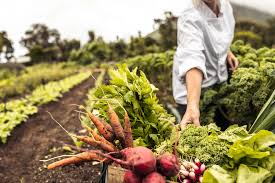
6. Agriculture: Cultivation of crops, livestock, and seafood.
7. Food Processing: Preparation of fresh products for market and manufacture of prepared food products.
8. Marketing: Promotion of generic and new products through advertising, packaging, and public relations.
9. Wholesale and Distribution: Warehousing, transportation, and logistics for food products.
Read Also : Vegetative Structure of Seed Plants: The Leaf
Composition of the Food and Beverage Industry in Agriculture
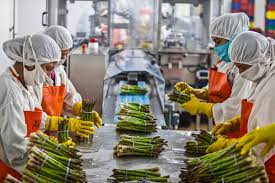
Derived from the agriculture industry, the food and beverage industry is divided into two major segments: production and distribution of edible goods. Production involves processing meats, cheeses, soft drinks, alcoholic beverages, packaged foods, and other modified foods.
This segment excludes foods directly produced through farming, as those fall under agriculture. Distribution focuses on transporting finished food products to customers, including retail outlets, restaurants, or directly to consumers.
The industry emphasizes technology and mechanical manipulation of raw agricultural materials to create value-added products, distinguishing it from traditional agriculture. Grocery stores are excluded, as they are considered retail.
Historical Evolution of the Food and Beverage Industry
Food processing has existed for centuries. Early methods included drying or smoking meat and other foodstuffs to extend shelf life. Salt preservation was prevalent among sailors and soldiers.
These methods remained largely unchanged until the 19th century, when Nicholas Appert’s invention of canning and Louis Pasteur’s pasteurization transformed food preservation. These innovations enabled longer-lasting canned or bottled products.
During wartime, food became a precious commodity, with prices regulated by availability and government controls. World War II rationing spurred innovations like food coloring, juice concentrates, artificial sweeteners, and advanced preservatives such as sodium benzoate, shaping the modern convenience food market, including frozen TV dinners and instant meals.
The food distribution segment emerged with the Industrial Revolution. Before this, consumers relied on regional markets, processing foods for travel.
Advances in transportation, such as railroads and barges, and technologies like canning made it feasible to transport food across regions. Today, enhanced transportation technologies, including airplanes, have further expanded this segment.
Read Also : Different Classes of Snail Feed Based on their Nutritional Requirements
Current Trends in the Food and Beverage Industry
Economic challenges have prompted consumers to save money by purchasing generic foods and cooking at home, reducing dining out. Food processing companies are innovating to lower costs, attract customers, and improve profit margins. Rising obesity rates have increased demand for healthier foods and transparent nutritional labeling.
Companies are promoting healthier brand images through initiatives like supporting youth sports. Proposals for taxing obesity-linked foods aim to curb consumption.
Rising commodity prices have forced price increases for final products, though recent declines in commodity costs suggest lower prices ahead. Food safety incidents have damaged consumer trust, with many switching brands for cost or safety reasons. Stricter government regulations have followed.
Future Outlook for the Food and Beverage Industry
Profit margins in the food and beverage industry have recently declined, but falling commodity costs are expected to improve them. As food is a necessity, the industry maintains an above-average outlook.
Brand reputation and corporate image are increasingly vital as competition grows and consumers prioritize value. Innovation will drive healthier products and lower production costs, boosting profitability.
Do you have any questions, suggestions, or contributions? If so, please feel free to use the comment box below to share your thoughts. We also encourage you to kindly share this information with others who might benefit from it. Since we can’t reach everyone at once, we truly appreciate your help in spreading the word. Thank you so much for your support and for sharing!