


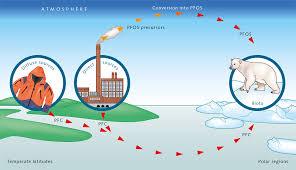
Persistent organic pollutants (POPs), sometimes known as “forever chemicals,” are organic compounds resistant to environmental degradation through chemical, biological, and photolytic processes. These toxic chemicals adversely affect human health and the environment worldwide. This article examines the effects of persistent organic pollutant pesticides on humans and their implications in agriculture.
Overview of Persistent Organic Pollutants in Agriculture
Persistent Organic Pollutants (POPs) are released into the environment through various human activities. Some POPs are manufactured for commercial use, including industrial chemicals like polychlorinated biphenyls (PCBs), used as coolants in electrical transformers, and pesticides such as Dichloro-Diphenyl-Trichloroethane (DDT) and toxaphene.
Other POPs, such as dioxins and furans, are unintentional by-products of combustion processes. POPs are persistent chemicals that bioaccumulate in the food web and may be hazardous to the environment and human health.
Human Exposure to POPs in Agricultural Systems
POPs tend to bioaccumulate in higher organisms and biomagnify in the food chain as levels increase from sea plankton through fish and up to humans. Humans are exposed to POPs primarily through their diet. The health effects of certain POPs are seen mostly in populations that consume large amounts of fish.
Read Also: Maggot Feeding: Can You Feed Fishes with Maggots?
Pesticides and Their Role in Agriculture
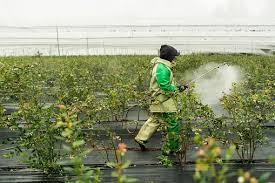
Pesticides are used to control pests to increase the quantity and quality of a harvest. They may also be applied to harvested food during transportation and/or storage to minimize spoilage and losses. Some pesticides belong to an older class called organochlorines, identified by the presence of chlorine in their structure.
They enter the environment through pesticide application, disposal of contaminated waste into landfills, and release from manufacturing plants. They adhere to soil or particles in the air and aquatic systems. Sediments adsorb organochlorines, which then bioaccumulate in fish and aquatic mammals.
They accumulate in the fatty tissues of animals and animal-derived foods such as fish or dairy products. Examples of organochlorine pesticides include DDT, aldrin, dieldrin, heptachlor, mirex, chlordane, toxaphene, and endrin.
1. Aldrin and Dieldrin in Agricultural Practices
Aldrin and dieldrin are pesticides used to control insects in crops and in domestic, forestry, and industrial settings. Aldrin is converted to dieldrin in the body and environment by bacteria and sunlight, making dieldrin concentrations in the environment higher than expected from dieldrin use alone. Dieldrin binds tightly to soil, where it is taken up by plants and breaks down slowly.
2. Aldrin and Dieldrin Exposure in Humans
Aldrin and dieldrin are absorbed by humans through consumption of contaminated foods or drinking contaminated water. Examples of foods known to contain aldrin or dieldrin include shellfish from contaminated lakes, root crops, dairy products, and meat.
Both aldrin and dieldrin are persistent chemicals that accumulate in human fatty tissue, causing certain health effects (see Table 1).
3. Endrin in Agricultural Environments
Endrin is a synthetic organochlorine pesticide found in small amounts in the air and fields where it was applied for agricultural purposes. It is also present in low levels in groundwater and surface water, clinging to bottom sediments of rivers, lakes, and other bodies of water. Endrin may break down at high temperatures. Its use has been banned.
i. Endrin Exposure in Humans: Humans are exposed to endrin through contaminated water, foods grown in contaminated soil, and hazardous waste. Endrin has also been detected in human breast milk and may be a route of exposure for nursing infants.
ii. Heptachlor in Agricultural Insect Control: Heptachlor is a man-made insecticide and termiticide used to kill termites in homes and buildings and other insects in seed grains and food crops. It is a white powder that smells like mothballs. Heptachlor epoxide binds to soil, where it remains for many years, evaporating slowly into the air.
iii. Heptachlor Exposure in Humans: Humans are exposed to heptachlor through consumption of contaminated foods such as fatty tissues from fish and animals, inhalation of vapors, contact with contaminated soil and water, or direct contact with residual heptachlor from pesticide application.
Leople whose homes have been treated with heptachlor may also be exposed. Since heptachlor can volatilize from soil, exposure may occur through inhalation.
4. Hexachlorobenzene in Agricultural and Industrial Uses
Hexachlorobenzene (HCB) was used as a pesticide to protect seeds of onions, sorghum, wheat, and other grains against fungi, and in the production of fireworks, ammunition, and synthetic rubber. HCB is a white crystalline solid, insoluble in water, limiting exposure through drinking water.
It forms as a by-product in waste streams of chloralkali and wood-preserving plants and during municipal waste burning. HCB is among the most persistent environmental contaminants due to its chemical stability and resistance to degradation.
Exposure may occur near industrial sites where HCB is produced as an unintentional by-product, near hazardous waste sites, or through incineration, landfill disposal, or emission to the atmosphere.
i. Hexachlorobenzene Exposure in Humans: Human exposure to HCB occurs through inhalation of contaminated air and consumption of animal-derived fatty foods such as milk, dairy products, meat, poultry, and fish. Infants may be exposed through breast milk.
5. Mirex in Agricultural Pest Management
Mirex is a man-made pesticide used mainly to control ants (especially fire ants) and termites in crops and stored grain. It is also used as a fire retardant in plastics, rubber, paint, paper, and electronics.
When released into the environment, mirex breaks down slowly, binding to soil and sediment particles, and persists for many years. Mirex has been detected in air, surface water, soil, sediment, and aquatic organisms. It does not dissolve in water.
i. Mirex Exposure in Humans: People living in areas where mirex was used or manufactured may have higher levels in their tissues. Exposure may occur through consumption of contaminated meat, game, and fish from contaminated water bodies.
Infants may also be exposed through breast milk. Most people are exposed to very low levels of mirex. Health effects of mirex exposure in humans are not well-known, although high levels may cause damage to the skin, liver, and nervous and reproductive systems.
6. Dichloro-Diphenyl-Trichloroethane (DDT) in Agriculture
Dichloro-Diphenyl-Trichloroethane (DDT) is a man-made pesticide used historically to control mosquitoes and vector-borne diseases. It travels long distances by air and water, is absorbed by plants and animals, and adheres strongly to soil, where it persists for a long time depending on soil type, temperature, and moisture.
DDT breaks down slowly by microorganisms into Dichloro-Diphenyl-Ethylene (DDE) and Dichloro-Diphenyl-Dichloroethane (DDD), by-products of DDT.
i. DDT Exposure in Humans: DDT exposure may occur through breathing contaminated air, drinking contaminated water (near waste sites and landfills), or consuming contaminated foods such as root and leafy vegetables, meat, fish, poultry, and dairy products.
7. Chlordane in Agricultural and Domestic Use
Chlordane is a persistent pesticide widely used on lawns, gardens, crops, forests, and for termite control in houses and wood products. It enters the environment and is transported long distances through the atmosphere, remaining in soil for extended periods and accumulating through the food chain.
Chlordane leaves soil by evaporation to the air, where it may be redistributed, contaminating areas far from its original application site.
i. Chlordane Exposure in Humans: Exposure to chlordane occurs through consumption of contaminated foods, such as meat (from birds and mammals), root crops grown in contaminated soil, and fish and shellfish from contaminated water. Exposure may also result from chlordane use in homes or workplaces for termite control.
The amount of chlordane entering the body depends on its concentration in air, food, or water and the duration of exposure. Most chlordane leaves the body within a few days, primarily through feces, with smaller amounts in urine.
High levels of chlordane affect the nervous and digestive systems and the liver. Inhalation or accidental ingestion of small amounts may cause headaches, irritability, confusion, weakness, vision problems, vomiting, stomach cramps, diarrhea, and jaundice. Large amounts taken by mouth can cause convulsions and death.
8. Toxaphene in Agricultural Insect Control
Toxaphene is a persistent pesticide widely used in the 1970s to control lice, ticks, mange, and scab mites. It is released into the environment primarily through agricultural insecticide use and is transported long distances.
Toxaphene is found in soils, surface water, sediments, rainwater, aquatic organisms, and food products such as root vegetables, meats, and grains.
i Toxaphene Exposure in Humans: Humans are exposed to toxaphene through consumption of contaminated foods, particularly fatty tissues of fish, shellfish, and marine mammals from contaminated water bodies.
Once it enters the body, toxaphene rapidly spreads to all organs, is quickly broken down, and excreted in urine and feces. Approximately 90% of toxaphene is eliminated within 24 to 36 hours.
High levels of toxaphene may cause damage to the lungs, nervous system, liver, and kidneys. Reversible respiratory failure has been reported from inhalation exposure.
Read Also: Agricultural Tillage Practices
Health Effects and Mitigation of POPs in Agriculture
| Persistent Organic Pollutants (POPs) | Source | Associated Foods for Animals | Associated Foods for Humans | Effects in Humans | Reducing Exposure |
|---|---|---|---|---|---|
| Aldrin & Dieldrin | Areas where pesticides have been used | Plants, roots, and crops grown in contaminated soils | Shellfish and fish from contaminated lakes, dairy products, contaminated meat from wildlife, plants, roots, or crops grown in areas where insecticide has been used | May cause: headaches, dizziness, irritability, vomiting, and uncontrolled muscle movements | Avoid consumption of fish and seafood from contaminated water bodies. Avoid consumption of foods/crops grown in areas where pesticides were used. Visible fat should be removed from animals prior to cooking. Cook meat and fish using methods that allow the fat to drain (e.g., broil, bake, boil, or grill the meat). Any excess fat should be drained after cooking. Follow Federal/Provincial/Territorial (F/P/T) advice on consumption of wild game and fish. |
| Endrin | Areas where insecticides have been used | Plants, roots, and crops grown in contaminated soils | Wildlife, fish, and plants, roots, or crops grown in areas where insecticide has been used | Acute exposure may cause: headaches, dizziness, nervousness, confusion, nausea, vomiting, convulsions, and death | Avoid consumption of fish and seafood from contaminated water bodies. Avoid consumption of foods/crops grown in areas where pesticides were used. Visible fat should be removed from animals prior to cooking. Cook meat and fish using methods that allow the fat to drain (e.g., broil, bake, boil, or grill the meat). Any excess fat should be drained after cooking. Follow Federal/Provincial/Territorial (F/P/T) advice on consumption of wild game and fish. |
| Heptachlor | Areas where insecticides have been used | Plants, roots, and crops grown in contaminated soils | Fish, dairy products, contaminated fatty meats, and plants, roots, or crops grown in areas where insecticide has been used | None known | Avoid consumption of fish and seafood from contaminated lakes. Avoid consumption of foods/crops grown in areas where pesticides were used. Visible fat should be removed from the animal prior to cooking. Cook meat and fish using methods that allow the fat to drain (e.g., broil, bake, boil, or grill meat). Any excess fat should be drained after cooking. Follow Federal/Provincial/Territorial (F/P/T) advice on consumption of wild game and fish. |
| Hexachlorobenzene | Areas where pesticides have been used | Plants and fish | Fish, milk, dairy products, and plants, roots, or crops grown in areas where insecticide has been used | May cause: liver disease causing red-colored urine, skin sores, change in skin color, arthritis, and problems of the stomach and nervous system | Avoid consumption of fish and seafood from contaminated lakes. Avoid consumption of foods/crops grown in areas where pesticides were used. Visible fat should be removed from the animal prior to cooking. Cook meat and fish using methods that allow the fat to drain (e.g., broil, bake, boil, or grill meat). Any excess fat should be drained after cooking. Follow Federal/Provincial/Territorial (F/P/T) advice on consumption of wild game and fish. |
| Mirex | Areas where insecticides have been used | Plants, fish, and crustaceans | Fish, game, and plants, roots, or crops grown in areas where insecticide has been used | High levels may cause damage to the skin, liver, and nervous and reproductive systems | Avoid consumption of fish and seafood from contaminated lakes. Avoid consumption of foods/crops grown in areas where pesticides were used. Visible fat should be removed from the animal prior to cooking. Cook meat and fish using methods that allow the fat to drain (e.g., broil, bake, boil, or grill meat). Any excess fat should be drained after cooking. Follow Federal/Provincial/Territorial (F/P/T) advice on consumption of wild game and fish. |
| DDT/DDE/DDD | Areas where pesticides have been used (e.g., homes treated for termites), food grown in contaminated soil, and waste sites or landfills | Root and leafy vegetables, fatty meat, fish, shellfish, birds, and crops grown in contaminated soil | Acute exposure may cause: excitability, tremors, and seizures. Chronic exposure may affect: the nervous system. In women, DDE can cause: reduction in lactation duration and increased risk for premature baby | Avoid consumption of fish and seafood from contaminated lakes. Avoid consumption of foods/crops grown in areas where pesticides were used. Visible fat should be removed from the animal prior to cooking. Cook meat and fish using methods that allow the fat to drain (e.g., broil, bake, boil, or grill meat). Any excess fat should be drained after cooking. Wash fruits and vegetables in clean water to remove most of the pesticide from the surface. Follow Federal/Provincial/Territorial (F/P/T) advice on consumption of wild game and fish. | |
| Chlordane | Pesticides used on crops | Contaminated plants | Food grown in contaminated soil (e.g., crops), fish and shellfish from contaminated water, birds, and mammals | May cause: headaches, nausea, vomiting, poor balance, tremors, and mental confusion | Eat smaller and younger fish. Cook meat and fish using methods that allow the fat to drain (e.g., broil, bake, boil, or grill the meat). Any excess fat should be drained after cooking. Wash fruits and vegetables in clean water to remove most of the pesticide from the surface. Follow Federal/Provincial/Territorial (F/P/T) advice on consumption of wild game and fish. |
| Toxaphene | Insecticide-contaminated soil and air | Toxaphene-contaminated food sources and water | Contaminated food products such as root vegetables, meat, grains, fish, and shellfish from contaminated water bodies, and beluga whales | Acute exposure may cause: damage to lungs, nervous system, and kidneys. In severe cases, may cause: death | Eat smaller and younger fish. Cook meat and fish using methods that allow the fat to drain (e.g., broil, bake, boil, or grill the meat). Any excess fat should be drained after cooking. Wash fruits and vegetables in clean water to remove most of the pesticide from the surface. Follow Federal/Provincial/Territorial (F/P/T) advice on consumption of wild game and fish. |
Bioaccumulation and Biomagnification in Agricultural Food Chains
POPs not only persist in the environment but also bioaccumulate in animals, increasing their concentration and toxicity. This increase in concentration, known as biomagnification, results in higher organisms in the food chain accumulating greater amounts of POPs.
This article examined the effects of persistent organic pollutant pesticides on humans and their bioaccumulation in agricultural systems.
Do you have any questions, suggestions, or contributions? If so, please feel free to use the comment box below to share your thoughts. We also encourage you to kindly share this information with others who might benefit from it. Since we can’t reach everyone at once, we truly appreciate your help in spreading the word. Thank you so much for your support and for sharing!