



Drinking garri soakings can actually be quite beneficial. It helps replenish electrolytes, supports digestion, and keeps you hydrated. Garri is a popular staple food made from fermented and roasted cassava tubers. It is widely consumed across West Africa, particularly in countries like Nigeria, Ghana, and Sierra Leone.
Known for its affordability and ease of preparation, garri is commonly eaten as a snack, as part of a meal, or even as a cereal. The versatility of garri makes it a go-to food for many, especially in rural areas where cassava is abundantly grown. Despite its simple nature, garri has played a significant role in the diets of many people, offering both sustenance and cultural significance.
Cassava, the root from which garri is derived, is a tuberous crop rich in carbohydrates. After being harvested, cassava is peeled, grated, fermented, and then roasted or fried into the grainy, white or yellowish product known as garri. The color depends on whether palm oil is added during the frying process.
White garri is made without palm oil, while yellow garri gets its color from the oil. The resulting product is dry and granular, with a slightly sour taste from the fermentation process, which helps to reduce the levels of naturally occurring toxins in cassava.
One of the most appealing aspects of garri is its long shelf life. When properly stored, garri can last for several months, making it an ideal food for people in regions with limited access to refrigeration or consistent food supplies. Its ease of storage and transport has contributed to its popularity as a reliable food source in many communities.
The health benefits of garri, while sometimes debated, are significant when it is consumed in moderation and properly prepared. As a carbohydrate-rich food, garri provides a quick source of energy, which is particularly useful for individuals engaged in physically demanding activities.
This is why it is often a staple food among farmers and laborers who require substantial energy throughout the day. The high carbohydrate content in garri ensures that it provides sustained energy, helping to keep people full and energized for long periods.
In addition to being a great source of energy, garri also contains dietary fiber, which aids in digestion. The fiber content in garri helps to regulate bowel movements and can prevent constipation, ensuring that the digestive system functions smoothly.
This is particularly beneficial for individuals who may not consume enough fiber in their diets from other sources. Fiber is also known to promote heart health by reducing cholesterol levels, further enhancing garri’s role as a valuable part of a balanced diet.
Despite these benefits, there are certain misconceptions and health concerns surrounding garri, especially regarding its potential to cause weight gain. Many people wonder, does garri make you fat? Well the answer depends on how much garri is consumed and how it is prepared.
Garri, like any carbohydrate-rich food, can contribute to weight gain if eaten in excess, particularly when combined with high-calorie additives like sugar and milk. However, when consumed in moderation and as part of a balanced diet, garri does not inherently cause weight gain. The key lies in portion control and ensuring that garri is consumed alongside other nutrient-dense foods.
Another question often raised is whether garri dries blood. This belief, while common in some parts of West Africa, is not supported by scientific evidence. Garri does not dry blood or have any adverse effects on blood health when consumed properly.
However, it is important to note that improperly processed cassava can contain harmful cyanide compounds. When cassava is not fermented or processed correctly, these compounds may remain in the garri, leading to potential health risks such as cyanide poisoning.
This can cause serious health issues, including damage to the nervous system and thyroid, but this risk is minimized when garri is prepared according to proper safety standards. As with weight gain, the impact of garri on weight loss depends on how it is consumed. Garri is low in fat and provides a filling meal due to its fiber content, which can help control hunger and reduce overall calorie intake.
However, because garri is high in carbohydrates, it is important for those seeking to lose weight to monitor their portion sizes and ensure that garri is consumed as part of a balanced, calorie-controlled diet. It is also advisable to pair garri with vegetables, lean proteins, and healthy fats to create a more balanced and nutritious meal that supports weight loss.
Some people enjoy drinking garri with milk, which enhances its nutritional value. Adding milk to garri provides a source of protein, calcium, and vitamins, turning it into a more balanced meal. This combination makes garri with milk a popular choice for breakfast or a quick snack.
However, adding milk also increases the calorie content, so it is important to be mindful of portion sizes, especially for those monitoring their caloric intake. It is often claimed that consuming too much garri can lead to vision problems.
This belief stems from the fact that cyanide, present in improperly processed cassava, can cause nerve damage, including damage to the optic nerve. However, properly processed garri, which has undergone thorough fermentation and roasting, contains safe levels of cyanide and does not pose a risk to eye health. Consuming garri from reputable sources and ensuring that it is made from well-processed cassava can eliminate this risk.
Read Also: The Complete Guide to Plantain Farming
When is the Best Time to Drink Garri?

The best time to drink garri depends on personal preferences, nutritional goals, and the potential benefits and drawbacks of garri consumption at different times of the day. Drinking garri is a common practice, particularly in Nigeria, where it is often enjoyed by soaking it in cold water, adding sugar, milk, groundnuts (peanuts), or other condiments to enhance its flavor.
Some people prefer drinking garri as a refreshing meal on hot afternoons or as a quick snack in the evening. Given its ease of preparation and energy-providing qualities, garri can be consumed at any time of the day, depending on individual needs.
For those who are highly active or have a busy schedule, drinking garri during the day, particularly in the afternoon, can serve as an energizing snack. Because garri is high in carbohydrates, it can provide a quick energy boost to keep you going.
For instance, when you have a physically demanding day or require a snack to keep hunger at bay until your next meal, drinking garri in the afternoon may be a good option. Its simplicity makes it convenient for those who don’t have the time or resources to prepare a more complex meal. On the other hand, many people also enjoy drinking garri in the evening, often as a light dinner or snack before bed.
For those who prefer a lighter meal at night, garri soaked in water and accompanied by groundnuts, milk, or sugar can be both filling and satisfying without being too heavy. However, it’s important to note that drinking garri in the evening may not be ideal for everyone, especially if you are looking to manage your weight or avoid consuming too many carbohydrates before bedtime.
Positive and Negative Effects of Drinking Garri
Positive Effects of Drinking Garri
Garri provides quick energy from carbohydrates, ideal for active individuals; it’s affordable and accessible; supports digestion with fiber to prevent constipation; aids hydration when soaked in cold water; can be nutritionally enhanced with additions like milk or peanuts for protein and fats.
Negative Effects of Drinking Garri
Risk of cyanide poisoning from improperly processed cassava; low in protein and essential nutrients, potentially leading to deficiencies if over-relied upon; can contribute to weight gain with excess intake or high-calorie additives; may cause blood sugar spikes; possible digestive issues like bloating/gas; dehydration if not enough water is consumed; rare links to vision or joint issues from residual toxins.
Read Also: How to Properly Dispose Yard Paper Waste Bags
Scientific Evidence and Case Studies on Drinking Garri
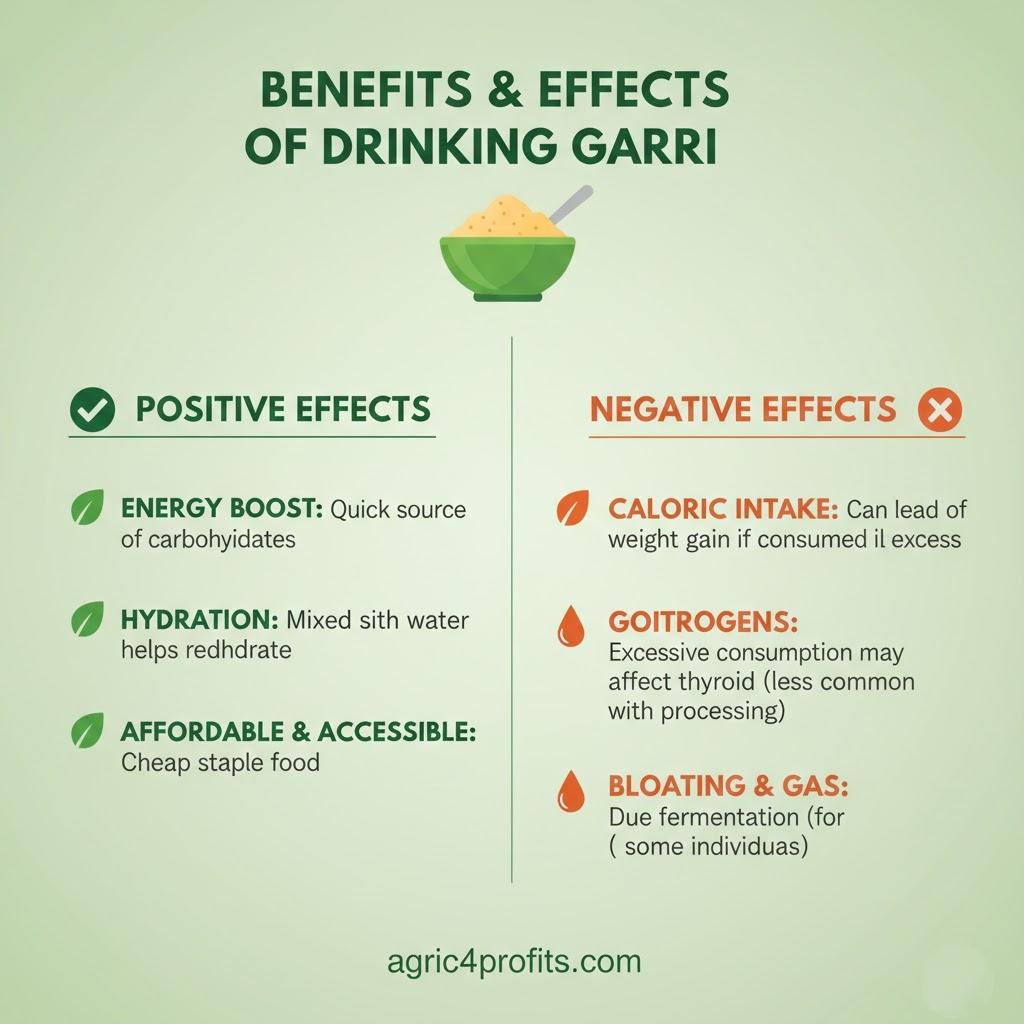
1. Energy provision: Garri’s high carbohydrate content supplies rapid and sustained energy, beneficial for physically active populations in West Africa.
2. Digestive support: Dietary fiber in garri promotes bowel regularity and prevents constipation, aiding overall gut health.
3. Hydration and electrolyte balance: Soaking garri in water provides hydration and helps replenish electrolytes, especially in hot climates.
4. Cyanide risk reduction: Proper fermentation and roasting significantly lowers cyanogenic glucosides in cassava, minimizing toxicity risks in processed garri.
5. Nutritional limitations: Studies note garri’s low protein and micronutrient levels, emphasizing the need for dietary diversity to avoid deficiencies.
Summary of Positive and Negative Effects of Drinking Garri
| Aspect | Key Points |
|---|---|
| Introduction | Garri, from fermented/roasted cassava, is a versatile, affordable West African staple providing energy, hydration, and cultural importance when soaked in water. |
| Preparation & Types | Soak in cold water; white (no palm oil) or yellow (with palm oil); long shelf life. |
| Health Benefits | Quick energy from carbs; fiber for digestion and heart health; hydration aid; affordable; enhanced with milk/peanuts for protein/fats. |
| Best Times to Drink | Afternoon for energy boost; evening as light meal; any time based on needs, but moderate for weight control. |
| Positive Effects | Energy replenishment; digestive support; affordability; hydration in hot weather; soothing for stomach. |
| Negative Effects | Cyanide risk if poorly processed; nutrient deficiencies (low protein/vitamins); weight gain potential; blood sugar spikes; bloating/gas; dehydration if insufficient water. |
| Common Myths | Does not “dry blood”; vision issues only from improper processing; not inherently fattening with moderation. |
| Recommendations | Consume in moderation; pair with proteins/veggies; ensure properly processed; balance diet to avoid over-reliance. |
Frequently Asked Questions
1. What are the positive effects of drinking garri?
Drinking garri provides quick energy from carbohydrates, supports digestion with fiber, aids hydration (especially in cold water), and is an affordable, accessible food source.
2. Does garri make you fat?
Garri can contribute to weight gain if consumed in large amounts or with high-calorie additions like sugar/milk due to its calorie-dense carbs, but moderation and balanced pairing prevent this.
3. Does garri dry blood?
No, this is a myth with no scientific support; properly processed garri has no adverse effects on blood health.
4. Is garri good for weight loss?
It can fit into weight loss if portion-controlled and paired with low-calorie, nutrient-rich foods, thanks to its fiber for satiety, but high carbs make excess intake counterproductive.
5. What are the dangers of drinking garri?
The primary danger is cyanide poisoning from improperly processed cassava, which can cause neurological issues; over-reliance may lead to nutrient deficiencies.
6. Does garri affect the eyes?
Only if made from poorly processed cassava with residual cyanide, potentially causing optic nerve damage over time; properly processed garri poses no risk.
7. What are the side effects of drinking garri every day?
Daily excess can lead to weight gain, nutritional imbalances, blood sugar spikes, bloating, dehydration, and rare toxin-related issues if processing is substandard.
8. What are the disadvantages of drinking garri?
Low in protein, vitamins, and minerals; potential for weight gain, digestive discomfort, and health risks from toxins in unprocessed forms.
9. Is drinking garri with milk healthy?
Yes, it adds protein, calcium, and vitamins for better balance, though it increases calories—ideal in moderation.
10. Can garri cause digestive issues?
While fiber aids digestion, excessive amounts may cause bloating, gas, or discomfort, especially in sensitive individuals.
Do you have any questions, suggestions, or contributions? If so, please feel free to use the comment box below to share your thoughts. We also encourage you to kindly share this information with others who might benefit from it. Since we can’t reach everyone at once, we truly appreciate your help in spreading the word. Thank you very much for your support and for sharing!
Disclaimer: This article is for educational and informational purposes only. The health benefits described are based on scientific research and traditional knowledge. They ayre not a substitute for professional medical advice, diagnosis, or treatment. Always consult a healthcare professional before using any herb or natural remedy for medical purposes.