


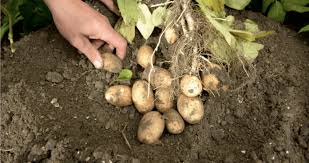
Potato cultivation is a vital agricultural practice requiring careful attention to propagation, soil preparation, planting, and fertilization. This guide provides detailed insights into effective potato farming techniques, ensuring high yields and quality tubers. Each section outlines essential practices to optimize crop growth and economic returns.
Propagation
Propagation is the foundation of successful potato cultivation. Using high-quality seed tubers ensures healthy crops and optimal yields. This section explores key considerations for selecting and preparing tubers for planting.
A. Seed Tuber Selection
1. Purity and Health: Choose disease-free tubers from pure cultivars to ensure a successful crop.
2. Tuber Specifications: Select tubers weighing 30 to 40 grams, well-sprouted, and 2-3 months post-harvest.
3. Cost Consideration: Seed tubers are the costliest input, making quality selection critical for cost-efficiency.
B. Warming Seed Tubers
1. Temperature Adjustment: Warm tubers to 10-15.6°C before handling to minimize bruising.
2. Storage Transition: Remove tubers from cold storage (4.4°C) 7-14 days before planting to avoid condensation.
3. Preventing Decay: Free moisture on tubers can lead to seed piece decay, especially in cut seed.
C. Seed Type and Size
1. Uncut Tubers: Small, whole tubers (43-85 grams) reduce disease spread and ensure better plant stands.
2. Cut Seed Risks: Cutting tubers under 85 grams results in small, less productive seed pieces.
3. Optimal Size: Seed pieces of 43-85 grams balance productivity, planter performance, and seed cost.
Read Also: How to Convert Potato Wastes in Ethanol
Soil Preparation

Proper soil preparation enhances potato growth by improving tilth and reducing erosion risks. This section details tillage methods and their seasonal applications for optimal soil conditions.
A. Autumn Tillage
1. Benefits: Autumn ploughing warms soil in spring, allowing earlier planting and better residue breakdown.
2. Erosion Risk: Exposed soil from autumn tillage, especially moldboard ploughing, increases erosion susceptibility.
3. Slope Management: Plough sloping lands in spring or use strip/contour ploughing to control erosion.
B. Spring Tillage
1. Field Preparation: Disk or harrow ploughed fields in spring before planting to ensure smooth soil.
2. Fertilizer Application: Broadcast fertilizer before spring tillage or after planting, before cultivation.
3. Bed Formation: Autumn bedding allows growers to prepare soil when time and labor are more available.
C. Irrigation and Water Management
1. Pre-Planting Irrigation: In arid areas, irrigate dry soils before planting to add necessary moisture.
2. Dammer-Diking: Use dammer-diking equipment to form catchment basins, preventing water runoff.
3. Uniform Infiltration: Catchment basins promote even water distribution between rows for healthy growth.
Read Also: Recommended Equipment‘s and Tools Needed in Snail Farming Business
Planting
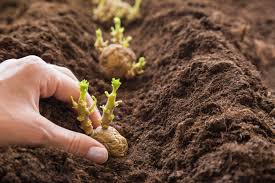
Planting practices significantly influence potato crop growth and yield. This section covers seed preparation, planting periods, depth, and spacing to maximize productivity.
A. Warming Seed Prior to Planting
1. Temperature Control: Warm tubers to 10-15.6°C to reduce bruising during handling and cutting.
2. Storage Timing: Move tubers from 4.4°C storage 7-14 days before planting to prevent condensation.
3. Decay Prevention: Avoid planting cold tubers directly, as moisture promotes seed piece decay.
B. Planting Period
1. Regional Variations: Planting occurs from November to June, depending on weather and market needs.
2. Soil Conditions: Plant when soil is 7-21°C and moist but not overly wet to avoid decay.
3. Early Planting Benefits: Early planting can increase yield and dry matter within reasonable limits.
C. Planting Depth
1. Deep Planting Advantages: Deeper planting reduces tuber greening and supports larger tuber growth.
2. Shallow Planting Risks: Shallow depths may lead to undersized, green, or exposed tubers.
3. Ridging Practices: Gradual hilling enhances stolon development and facilitates harvesting.
D. Spacing and Seeding Rate
1. Seed Piece Spacing: In-row spacing of 15-35 cm, typically 18-23 cm, affects tuber size.
2. Cultivar Considerations: Adjust spacing based on tuber set and maturity to optimize yield.
3. Seeding Rate: Use 1,200-2,000 kg of seed per hectare for effective planting.
Fertilization
Fertilization is crucial for tuber quality and plant health. Proper nutrient management prevents deficiencies and excesses that affect crop outcomes. This section outlines key fertilization practices.
A. Nutrient Balance
1. Phosphorus Deficiency: Low phosphorus reduces specific gravity, impacting tuber quality.
2. Nitrogen Management: Excess nitrogen delays tuberization and increases pathogen risks.
3. Potassium and Calcium: Deficiencies cause black spot bruising, darkened color, and internal brown spots.
B. Growth Disruptions
1. Nitrogen Fluctuations: Inconsistent nitrogen supply leads to misshapen tubers and hollow heart.
2. Potassium Issues: Low potassium increases bruising and storage problems at harvest.
3. Calcium Deficiency: Linked to internal brown spots, affecting tuber quality and marketability.
Frequently Asked Questions
1. What is the ideal weight for potato seed tubers?
Seed tubers should weigh 30-40 grams for optimal sprouting and crop success.
2. Why is autumn tillage beneficial for potato farming?
Autumn tillage warms soil, breaks down residues, and allows earlier spring planting.
3. How does planting depth affect potato yield?
Deeper planting reduces greening, supports larger tubers, and improves marketable yields.
4. What soil temperature is best for planting potatoes?
Soil temperatures between 7-21°C are ideal to prevent seed piece decay.
5. How does seed piece spacing impact tuber size?
Closer spacing reduces oversized tubers, while wider spacing increases average tuber size.
6. What are the risks of excess nitrogen in potato cultivation?
Excess nitrogen delays tuberization, slows skin development, and increases disease susceptibility.
7. Why is warming seed tubers important before planting?
Warming to 10-15.6°C prevents bruising and condensation, reducing seed piece decay.
8. What is the recommended seeding rate for potatoes?
Use 1,200-2,000 kg of seed per hectare for effective planting and yield.
Do you have any questions, suggestions, or contributions? If so, please feel free to use the comment box below to share your thoughts. We also encourage you to kindly share this information with others who might benefit from it. Since we can’t reach everyone at once, we truly appreciate your help in spreading the word. Thank you very much for your support and for sharing!