


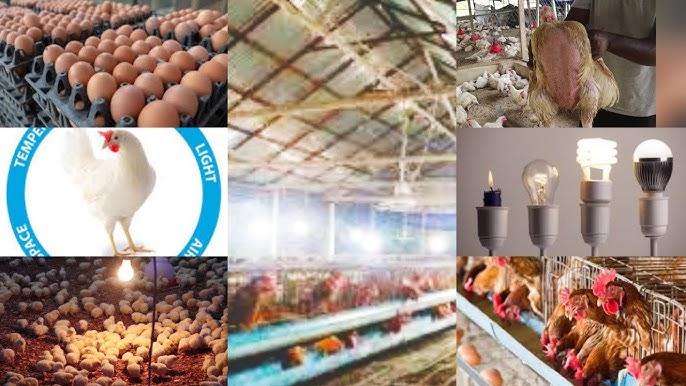
Poultry farming is sensitive to environmental conditions. The environment around your birds, whether hot, cold, wet, or poorly ventilated, directly affects how they grow, lay eggs, and stay healthy. When the environment goes beyond what birds can handle, stress sets in, and production suffers.
The environment can be simply defined as the external conditions that affect animals and humans. For poultry, maintaining a stable internal body temperature is one of the most critical physiological needs. Birds, like mammals, are homoeothermic. This means they maintain a relatively constant deep body temperature of about 41.7°C (107°F). To do this efficiently, the surrounding temperature needs to stay within a comfortable range, typically between 18 and 28°C. Beyond this range, birds struggle to regulate themselves.
The ideal temperature for optimum poultry production is between 65 and 75°F. This is called the thermo-neutral zone or zone of comfort. Within this range, birds use the least amount of metabolic energy to stay balanced, and they show no signs of discomfort. The upper lethal temperature for birds is around 47°C (116.8°F). Once temperatures climb past safe levels, the consequences are serious.
There are several types of stressors that affect poultry:
i. Climatic stress: This includes heat stress and cold stress, both of which directly affect bird performance.
ii. Management stress: Poor practices such as excess light exposure, wet litter, and poor ventilation can all cause stress in birds.
iii. Nutritional stress: Feeding birds with excess salt or inadequate nutrition puts their system under pressure.
iv. Physiological stress: Rapid growth rates and early sexual maturity can overwhelm a bird’s body.
v. Physical stress: Catching, injecting, immobilizing, or transporting birds can trigger stress responses.
vi. Social stress: Overcrowding and poor body weight distribution in a flock lead to competition and stress.
vii. Psychological stress: Harsh handling by caretakers or a generally hostile environment causes lasting stress in birds.
Among all these, environmental stress, especially heat, has the most adverse effect on commercial poultry production. Understanding how heat affects your birds and what to do about it is key to staying profitable in any season.
1. Effect of Heat on Poultry Chickens
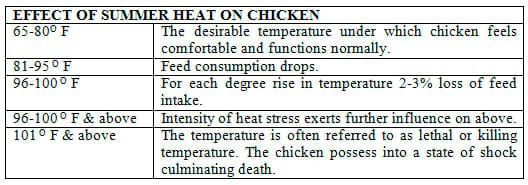
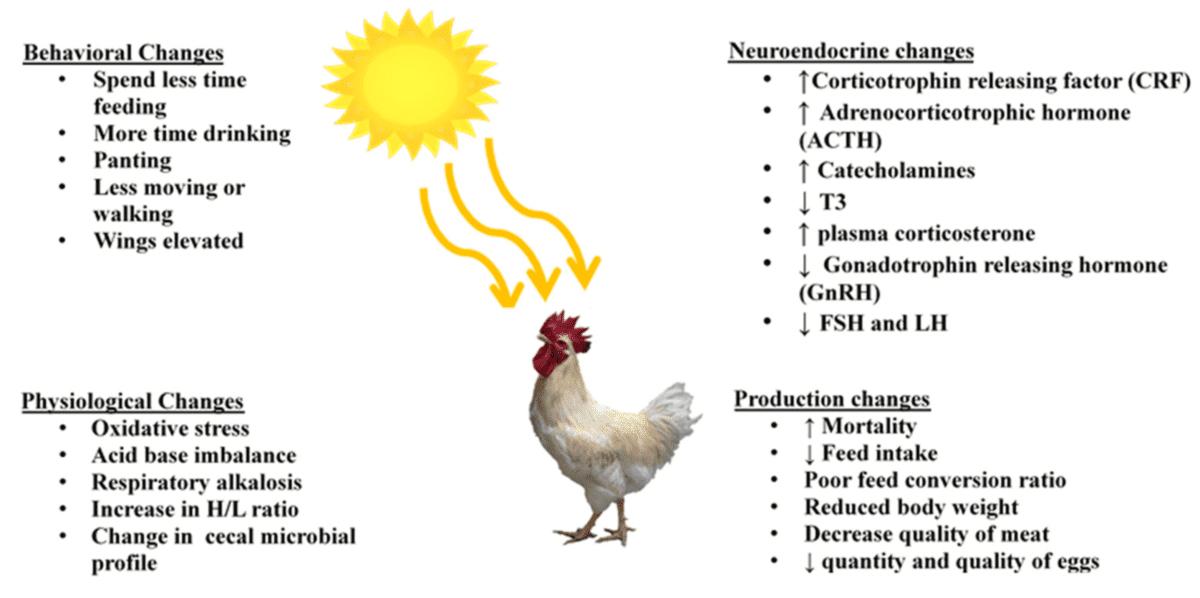
Heat stress weakens a bird’s immune system and makes it more susceptible to diseases like E. coli and Chronic Respiratory Disease (CRD). During summer, outbreaks of gout are also common in both broilers and layers.
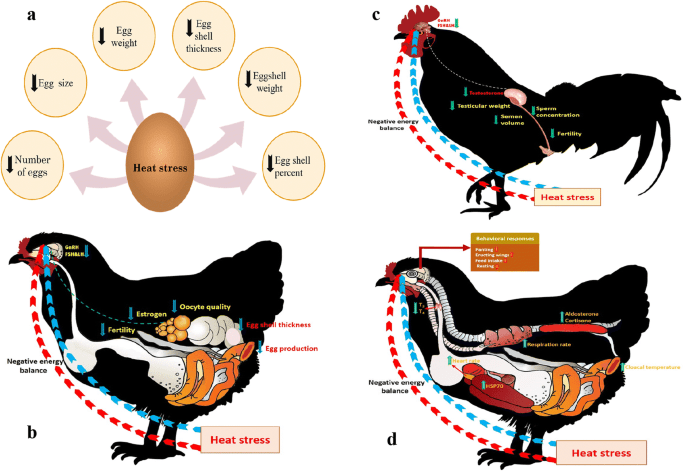
When birds are heat stressed, blood flow increases to the upper respiratory tract, skin, and abdominal muscles to help release heat. At the same time, blood flow to the intestinal tract drops. This reduces appetite and feed intake. Water intake goes up, which leads to fluid buildup in the intestines, causing diarrhea. Diarrhea then causes a loss of electrolytes needed to maintain the body’s acid-base balance. The entire cycle hurts performance across the board.
2. Clinical Signs or Symptoms
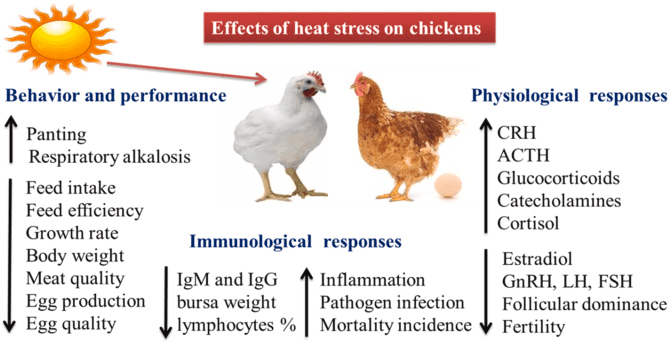
Watch out for these signs in heat stressed birds:
i. Panting and rapid respiration
ii. More water intake than usual
iii. Reduced appetite
iv. Drop in egg production
v. Poor egg shell quality
vi. Less body weight gain in broilers
vii. Reduced feed efficiency
viii. Rising body temperature
ix. Death in severe cases
3. Post-Mortem Lesions
If birds die from heat stress, the following signs are typically found during examination:
i. Dehydrated carcass
ii. Mucoid exudates in the mouth and nostrils
iii. Pale or cyanotic combs
iv. Pale breast muscles
v. Congestion in the liver, spleen, kidney, and lungs
vi. Fluid contents in the intestines
vii. Rapid decomposition of the carcass
4. Steps to Combat Heat Stress in Poultry Farming
The goal is not just to keep birds alive during hot seasons. You want them to still produce, whether that means good egg numbers from layers or solid body weight from broilers. Managing heat well makes that possible. Here are the key steps to follow:
A. Poultry Housing Management
Good housing is your first line of defense against heat stress. Here is what to do:
i. Orient the long axis of the poultry house in an east-west direction to reduce solar heating and limit direct sunlight exposure.
ii. In tropical regions, ensure the roof has good insulation. A false roof helps reduce heat conduction, especially when combined with foggers and cooler systems.
iii. For open-sided houses, keep the width between 24 and 32 feet. This helps with cross ventilation based on temperature, humidity, and wind conditions.
iv. Increase air movement over birds using cooler fans or exhaust fans. This creates a wind chill effect that cools birds even without lowering house temperature.
v. Design and construct sheds so direct sunlight never falls on the birds.
vi. Thatch the roof with paddy straw or sugarcane leaves to reduce internal shed temperature.
vii. Paint the roof with white wash to reflect sunlight and heat.
viii. Plant tall trees around the shed. Choose trees that are leafy in summer and bare in winter for best results throughout the year.
ix. Roof overhangs of 3 to 5 feet protect birds from strong sunrays.
Read Also: Vaccination Program for Poultry Chickens
B. Water Management
Water is the single most important management factor during summer. In hot weather, birds drink 3 to 4 times more water than usual. Even a slight shortage can lead to heat stroke and death. When temperatures go above 95°F, the normal feed-to-water ratio of 1:2 can jump to 1:4 or higher.
i. Always supply plenty of clean, cool water (60 to 70°F) during the summer months.
ii. Use good quality sanitizers in water to prevent waterborne infections.
iii. For day-old chicks arriving at the farm, give cool water and electrolytes before offering any feed. This prevents dehydration after transportation.
iv. Cover water tanks with wet gunny bags to block direct sun heat.
v. Increase the number of waterers by 25%.
vi. Water the flock more frequently throughout the day.
vii. For nipple drinkers, wrap the nipple pipe with wet gunny cloth to keep water cool.
viii. Add electrolytes at 1 to 2 grams per liter of water during the hottest hours of the day.
ix. Adding 0.25% salt to drinking water helps increase water consumption.
x. Adjust medication volumes to match increased water consumption during hot weather.
xi. Do not withhold water from the flock when giving vaccines through drinking water.
xii. Use quality sanitizers in water to control infection spread.
xiii. Cover water tanks with wet gunny bags to avoid sun exposure.
xiv. Increase watering frequency throughout the day.
C. Poultry Feed Management
During summer, feed intake drops significantly. This leads to poor body weight, reduced egg production, and weaker shell quality. Adjusting your feed management strategy is essential.
i. Feed your birds more frequently to make up for reduced intake per session.
ii. Do not offer feed to broilers during the heat of the day.
iii. Adjust feed formulations to meet the birds’ needs during heat stress.
iv. Increase nutrient density to compensate for lower feed intake.
v. Reduce feed energy slightly. Do not increase crude protein because heat generated by fat metabolism is significant.
vi. Add 20 to 30% extra vitamins and trace minerals to feed.
vii. Increase available phosphorus in the diet.
viii. Supplement Vitamin C at 200 to 500 grams per ton of feed. This helps maintain blood vessel integrity.
ix. Add Vitamin E at 50 grams per ton of feed for additional support.
x. Use pelleted feed where low-energy fiber diets are in use.
xi. Add soda-bicarbonate at 0.1% to improve shell quality in layers.
xii. Use antifungal agents consistently since hot, humid weather promotes mold and fungi growth in feed.
xiii. Balance the diet with limiting amino acids, methionine and lysine, for better performance.
xiv. Increase calcium levels from 3 to 3.5% in layer diets.
xv. Include Vitamin A at 8,000 IU and Vitamin E at 250 mg per kg of diet to improve performance and fight heat stress.
Read Also: Importance of Multivitamins in Poultry Production
D. General Management
i. Use fresh litter about 2 inches thick and rake or stir it 2 to 3 times daily during cooler hours.
ii. Provide 10% extra floor space per bird during summer to reduce crowding.
iii. Avoid overcrowding at all times.
iv. Carry out activities like shifting, transportation, debeaking, and vaccination during the night or the cooler parts of the day.
v. Birds severely affected by heat can be dipped in cold water for 2 to 3 minutes, keeping their neck and head above water.
vi. Ensure proper cross ventilation in all sheds.
vii. Install pedestal, ceiling, or exhaust fans in sheds as needed.
viii. Use foggers inside the shed. These can reduce shed temperature by 5 to 10°C depending on the quality of the system.
ix. Paint the shed with white lime or white paint to reduce temperature by up to 2°C.
x. Hang wet side curtains around the shed.
xi. Install 3 exhaust fans on one side and pad cooling on the other side (over 200 ft) to bring down temperature by up to 8°C.
xii. Use sprinklers on top of or inside the shed.
xiii. Plant tall trees around the house for natural shade.
xiv. Use a thatched roof in hot climate areas.
xv. Position the house away from other buildings to allow free air movement.
xvi. Build the roof at a height of 2.6 to 3.3 meters from the foundation for maximum ventilation.
xvii. Provide at least 1 meter of roof overhang to block direct sun and rain from entering the house.
Read Also: Bird Flu in the Poultry Farm and How to Tackle It
Summary on Poultry Farming and Adverse Seasons as a Stressor

| Topic | Key Points |
|---|---|
| Ideal Temperature | 65 to 75°F for optimum production |
| Thermo-neutral Zone | 18 to 28°C; birds are comfortable and use minimum energy |
| Upper Lethal Temperature | 47°C (116.8°F) |
| Types of Stressors | Climatic, Management, Nutritional, Physiological, Physical, Social, Psychological |
| Heat Effects | Reduced feed intake, diarrhea, electrolyte loss, immune weakness |
| Clinical Signs | Panting, high water intake, low egg production, weight loss, death |
| Post-mortem Findings | Dehydration, pale muscles, organ congestion, fluid in intestines |
| Housing Tips | East-west orientation, insulation, proper width, white roof, tree shading |
| Water Tips | Cool water supply, electrolytes, 25% more waterers, cover tanks |
| Feed Tips | Increase vitamins, adjust nutrients, add amino acids, use antifungals |
| General Tips | Extra space, night activities, fans, foggers, sprinklers, ventilation |
Frequently Asked Questions About Poultry Farming and Adverse Seasons as a Stressor
1. What is the ideal temperature for poultry production?
The ideal temperature range for optimum poultry production is between 65 and 75°F. Within this range, birds stay comfortable and perform at their best.
2. What is the thermo-neutral zone in poultry?
The thermo-neutral zone is the temperature range of 18 to 28°C where birds maintain their body temperature with minimum energy use. Outside this zone, stress begins.
3. What are the main types of stress in poultry?
The main types include climatic stress, management stress, nutritional stress, physiological stress, physical stress, social stress, and psychological stress.
4. How does heat stress affect egg production in layers?
Heat stress reduces feed intake, disrupts calcium metabolism, and lowers egg production. It also causes poor shell quality because the acid-base balance needed for shell formation is disrupted.
5. What are the signs of heat stress in poultry?
Common signs include panting, high water consumption, reduced appetite, drop in egg production, poor shell quality, lower body weight in broilers, and in severe cases, death.
6. How can I keep water cool for my birds during summer?
Cover water tanks with wet gunny bags, insulate nipple pipes with wet cloth, and supply cool water between 60 and 70°F. You can also increase watering frequency throughout the day.
7. What feed changes should I make during hot weather?
Increase feeding frequency, boost nutrient density, add extra vitamins and trace minerals, balance amino acids, and supplement Vitamin C and Vitamin E. Avoid offering feed to broilers during the hottest parts of the day.
8. How can I improve poultry house ventilation during summer?
Orient the house east to west, install exhaust fans, use foggers, plant trees for shade, paint the roof white, and ensure proper roof height and overhangs.
9. Is overcrowding a problem during hot seasons?
Yes. Overcrowding raises the heat load in the shed and increases competition for water and feed. Provide at least 10% extra floor space during summer and avoid overloading your shed.
10. What electrolytes help birds during heat stress?
Sodium, potassium, and chloride are the key electrolytes lost through diarrhea and panting. Adding electrolytes at 1 to 2 grams per liter of drinking water during peak heat hours helps restore balance and supports recovery.
Do you have any questions, suggestions, or contributions? If so, please feel free to use the comment box below to share your thoughts. We also encourage you to kindly share this information with others who might benefit from it. Since we can’t reach everyone at once, we truly appreciate your help in spreading the word. Thank you very much for your support and for sharing!
Read Also: Comprehensive Guide on How to Start Cockerel Farming