


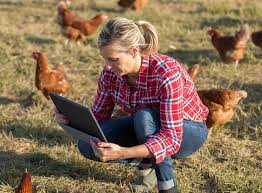
Running a successful poultry farm without keeping proper records is like trying to drive with your eyes closed. You might move forward for a while, but you’ll eventually crash. Records tell you where you’ve been, where you are now, and where you’re heading with your poultry business.
Most new poultry farmers ignore record keeping. They think it’s just extra paperwork that takes time away from actual farming. This couldn’t be more wrong. The difference between profitable poultry farms and those barely breaking even often comes down to one thing: how well they track and use their farm data.
Think about it. How do you know if your current batch of broilers is performing better than the last one if you didn’t write anything down? How can you tell which feed supplier gives you the best value? When the vet asks about your flock’s health history during a disease outbreak, can you provide accurate information?
Without records, you’re guessing. And guessing costs money.
Records serve multiple critical purposes on your farm. They show you exactly where your money goes each month. They help you catch disease problems early before they wipe out your entire flock. They prove to banks and investors that your business is real and viable when you need financing. They protect you during tax audits by documenting all your expenses and income.
But perhaps most importantly, records help you make better decisions. When you have data from previous batches, you can compare performance, identify what works, and avoid repeating past mistakes. You can spot trends that signal problems before they become disasters.
This guide covers everything you need to know about poultry record keeping and performance evaluation. You’ll learn which records every poultry farmer must keep, how to measure your flock’s productivity, and what performance standards you should aim for. By the end, you’ll understand exactly how to set up a simple but effective record system that actually helps your business grow.
1. Why Record Keeping Matters in Poultry Farming
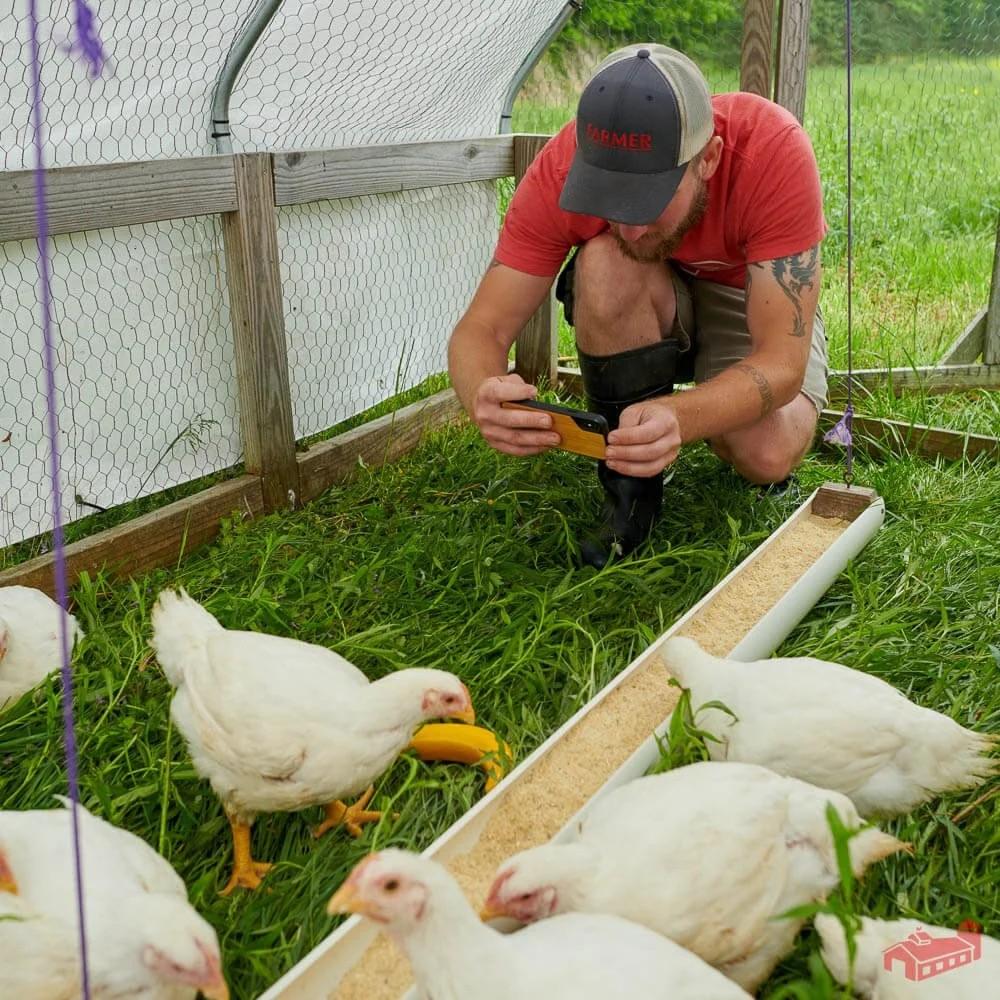
Records provide the health and health history of your flock. This information becomes critical when disease problems arise on your farm.
Veterinarians need background information to diagnose problems correctly. They need to know what vaccines you’ve given, what medications you’ve used, when symptoms first appeared, and how mortality has progressed. Without accurate records, you can’t provide this information. The vet has to guess, which reduces their effectiveness.
A. Records Help You Make Better Decisions
Every decision on your farm should be based on data, not feelings or assumptions.
Before you create a budget or make costly financial decisions, you need to analyze your records. What did you spend last month? Which expenses are rising? Where can you cut costs without hurting production?
When deciding on feed rations, records show you which feed types worked best in previous batches. You can calculate exactly how much feed each bird consumed and how well they converted that feed into eggs or meat.
For breeding decisions, past records tell you which birds performed well and which ones underperformed. This helps you select the best breeders to maintain or improve your flock quality.
B. Records Reveal Problems Early
The earlier you catch problems, the easier and cheaper they are to fix.
A sudden spike in mortality shows up immediately in daily records. You can call the vet right away instead of waiting until half your flock is dead. A gradual increase in feed consumption might signal parasites or poor feed quality. Without tracking feed usage, you wouldn’t notice until your profit margin disappeared.
Records also help you track productivity over time. If egg production drops below standard levels, you can investigate causes like poor nutrition, disease, or environmental stress before the problem gets worse.
C. Records Are Profit and Loss Indicators
Your records tell you if you’re making money or losing it.
You need to know your total expenses and total income for each batch. Only then can you calculate actual profit. Many farmers think they’re doing well because they’re selling products, but when they finally check their records, they discover they’ve been losing money for months.
Records help you identify which batches were most profitable and why. Maybe birds from a certain hatchery performed better. Maybe a specific feed brand gave better conversion rates. Maybe changing to a different vaccination schedule reduced mortality. You won’t know any of this without comparing data across batches.
Read Also: Poultry Breeders Proper Management Guide
2. Three Essential Records Every Poultry Farmer Must Keep
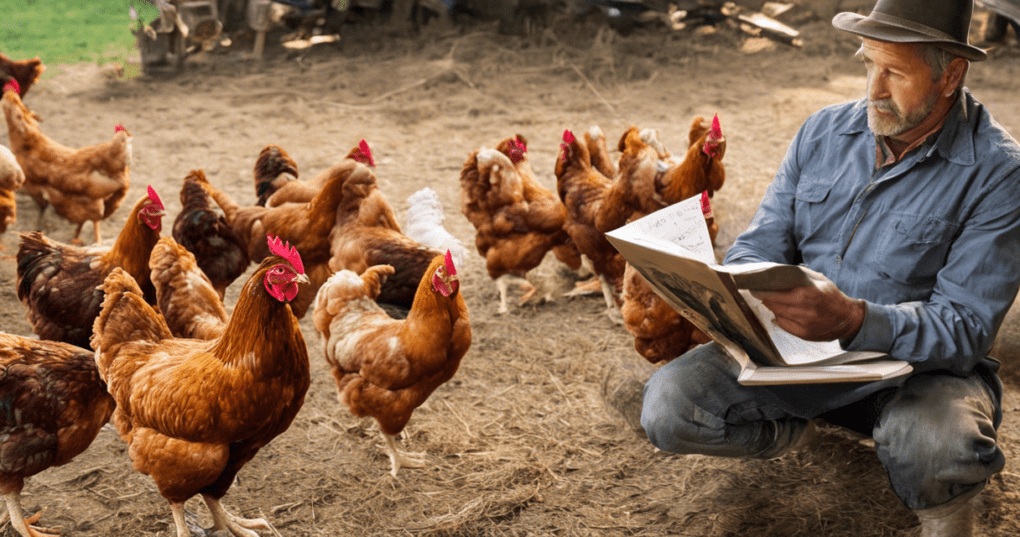
Every poultry farm, regardless of size or type, needs these three basic record systems.
A. Inventory Records
i. Equipment inventory: Keep a list of all equipment on your farm. This includes cages, feeders, waterers, incubators, brooders, generators, and any other tools or machinery. Record the purchase date, cost, and quantity of each item. Update this list whenever you buy new equipment or dispose of old items.
ii. Feed and medication inventory: Track all feeds, drugs, vaccines, and chemicals you purchase. Record the date of purchase, quantity, cost, and supplier. This helps you know when to reorder supplies before you run out. It also helps you calculate your actual feed costs per bird.
iii. Depreciation tracking: Equipment loses value over time. Calculate annual depreciation for major items and carry forward the depreciated value each year. This gives you an accurate picture of your farm’s actual worth.
B. Production Records
These records track the daily performance of your birds.
i. Daily production sheet: Create a daily sheet for each house or flock. Record the date, bird status, number of birds present, mortality (how many died), feed consumed, and egg production for layers. Keep a separate sheet for each batch from day one until you sell or dispose of all the birds.
ii. Mortality records: Note every bird that dies or gets culled each day. Record the date, number of deaths, and probable cause if known. This data helps you calculate mortality rates and identify disease patterns.
iii. Feed consumption: Track exactly how much feed you put in the feeders each day. Calculate feed per bird per day by dividing total feed by the number of birds. This reveals whether birds are eating normally or if something is wrong.
iv. Egg production records (for layers): Record total eggs collected daily. Calculate the percentage of birds laying eggs. Note any problems like broken eggs, soft shells, or blood spots. Track egg quality over time.
v. Vaccination and medication records: Write down every vaccination or treatment you give. Include the date, product name, dosage, route of administration (in water, injection, etc.), and which house or batch received it. This prevents accidental double dosing and ensures you don’t sell eggs or meat during withdrawal periods.
vi. Weekly and monthly summaries: Compile your daily records into weekly and monthly summaries. These summaries make it easier to spot trends and compare performance across different time periods.
C. Sales Records
Track everything you sell and all the money coming into your farm.
i. Product sales: Record all sales of chicks, broilers, spent hens, culls, and eggs. Note the date, quantity sold, price per unit, and total revenue. Keep receipts or sales invoices as backup documentation.
ii. Revenue tracking: Calculate total income from all sources. Don’t forget to include income from selling manure, feathers, or any other by-products.
iii. Separate record keepers: Use different people to maintain production records and sales records. This creates accountability and makes it harder for anyone to steal from you. Management should reconcile both sets of records regularly to ensure all products are accounted for.
3. Key Performance Parameters for Poultry Evaluation
You need to regularly review your records and compare them against established performance standards. This tells you how well your birds are growing or laying eggs.
The major parameters for measuring chicken productivity are weight gain, mortality, hen-day and hen-housed egg production rates, and feed utilization efficiency.
A. Mortality Rates
Every poultry keeper should aim to keep mortality as low as possible.
i. Broiler mortality standards: A mortality rate below 4% is considered normal for broilers. If you’re losing more than 4 out of every 100 broilers, something is wrong with your management, feed quality, or health program.
ii. Pullet mortality standards: From day one to point of lay (around 20 weeks), expect 5-6% mortality. This is normal when raising young birds through their vulnerable early weeks.
iii. Layer mortality standards: During the entire laying period, mortality should not exceed 10%. If you’re losing more than 10 birds out of every 100 layers, investigate the causes immediately.
iv. What high mortality means: An unusual spike in deaths is often the first sign of a major disease outbreak. Don’t ignore it. Call a veterinarian promptly for a thorough investigation. The faster you identify the problem, the more birds you can save.
B. Live Weight and Weight Gain
Tracking weight tells you if birds are developing properly.
i. Broiler weight gain: This is a critical parameter for meat production. Weigh a sample of broilers weekly and calculate average weight. Compare these weights against breed standards to see if birds are growing well.
If birds are underweight, the quality of feed is often the main problem. Other factors include disease, poor quality chicks, and bad management practices. Check all these areas when growth falls short.
ii. Pullet weight monitoring: Weight gain isn’t the primary goal for pullet production, but you still need to check weights periodically. Weigh pullets at four-week intervals to make sure they’re developing normally.
Commercial operations often control pullet growth rates deliberately. This produces uniform-sized pullets at point of lay and delays sexual maturity until birds reach proper body size.
iii. Feed quality matters: Better quality feed produces better weight gain and egg production. Feed efficiency measures how well birds convert feed into meat and eggs. Never compromise on feed quality to save money. You’ll lose more from poor bird performance than you save on cheaper feed.
C. Hen-Day and Hen-Housed Egg Production
These two metrics measure egg production differently. Understanding both helps you evaluate layer performance accurately.
i. Hen-day production: This calculates production based only on birds currently alive. You divide eggs produced by the number of living birds, then multiply by 100 to get a percentage.
For example, if you have 100 live birds and collect 85 eggs, your hen-day production is 85%. This tells you what percentage of your current flock is laying.
ii. Hen-housed production: This calculation includes all birds you started with, including those that died. You divide eggs produced by the original number of birds placed, then multiply by 100.
If you started with 120 birds but only 100 are alive, and you collect 85 eggs, your hen-housed production is about 71%. This gives a more realistic picture because it accounts for mortality.
iii. Which metric to use: Both have value. Hen-day shows current flock performance. Hen-housed shows overall efficiency of your operation including mortality losses. Commercial operations track both to get complete insight.
D. Feed Efficiency and Feed Conversion
Feed represents the biggest cost in poultry production. How efficiently your birds convert feed into products directly affects your profits.
i. Feed efficiency definition: This measures how well feed converts into meat or eggs. In broiler production, you can express this three different ways, but feed efficiency is always less than 1.
ii. Feed conversion ratio: This is the most common measurement in commercial production. You divide total feed consumed by total weight gain. A feed conversion of 2.0 means birds need 2 kilograms of feed to gain 1 kilogram of body weight.
iii. Target for broilers: A desirable goal for commercial broiler production is a feed conversion of 2.0 at market weight. Anything significantly higher means you’re wasting feed and losing money.
iv. Measuring efficiency in layers: For egg production, express feed efficiency as feed per dozen eggs or feed per kilogram of eggs. Track this over time to identify when efficiency drops and investigate causes.
4. Specific Records for Different Production Systems
Record keeping varies based on what type of poultry you raise and how you raise them.
A. Records for Different Species
Chicken records differ from turkey records, which differ from duck records. Each species has unique needs and performance standards.
Adapt your record forms to capture information relevant to your specific birds. A broiler farm needs different data than a layer operation. A hatchery needs different records than a grow-out farm.
B. Scale of Operation
Small backyard flocks can use simple notebooks. Large commercial operations need more sophisticated systems, often computerized.
But the basic principles remain the same regardless of size. Track your inputs (feed, medication, chicks), track your birds (mortality, weight, production), and track your outputs (eggs sold, birds marketed, revenue received).
C. System of Housing
Deep-litter systems, cage systems, and free-range operations each create different record-keeping needs.
Free-range operations need to track outdoor access, predator losses, and foraging behavior. Cage operations need detailed records of cage numbers, stocking density, and manure removal. Deep-litter systems need litter management records and ammonia level monitoring.
5. How to Compare Your Performance Against Standards
Having records is useless if you don’t analyze them. Set aside time each week or month to review your data.
A. Establish Your Baseline
When you start keeping records, your first few batches establish your baseline performance. Track everything carefully so you know what normal looks like for your farm.
Once you have baseline data, you can spot abnormal patterns quickly. If mortality suddenly jumps from 3% to 8%, you know something changed and you can investigate.
B. Compare Against Industry Standards
Industry standards give you targets to aim for. If breed standards say birds should weigh 2.5 kg at 42 days but yours only weigh 2.0 kg, you have a problem to solve.
Research standard performance data for your bird breeds. Feed companies and genetic suppliers publish this information. Use it to benchmark your operation.
C. Compare Your Own Batches
Your best comparison is often between your own batches. Did this batch perform better than the last one? Why or why not? What changed between batches?
Maybe you tried a new feed supplier. Maybe you hired a new worker. Maybe the weather was different. Maybe you changed vaccination timing. Your records will help you identify which changes helped and which ones hurt performance.
D. Calculate Key Metrics Regularly
Don’t just collect data. Actually calculate your performance metrics weekly or monthly.
Figure out your mortality rate, feed conversion ratio, average daily gain, and egg production percentage. Write these numbers down. Graph them over time. This reveals trends that raw data alone won’t show.
6. Using Records to Prevent and Manage Disease
One of the most valuable uses of farm records is disease management.
A. Disease History Tracking
When disease strikes, having a health history helps the vet make faster, more accurate diagnoses.
Your records should show what diseases you’ve had in the past, when they occurred, what treatments worked, and what vaccines you’ve given. This information is invaluable during outbreaks.
B. Early Detection
Unusual patterns in your daily records often signal disease before obvious symptoms appear.
A sudden drop in feed consumption warns you something is wrong. Birds that stop eating are often getting sick. Rising mortality, declining egg production, or changes in egg quality all show up in records before you might notice them just by observation.
C. Tracking Treatment Effectiveness
When you treat birds, record exactly what you used, the dosage, and how long you treated them. Then track whether the problem improved.
This tells you which treatments work on your farm and which ones don’t. Over time, you build knowledge specific to your location and birds.
7. Financial Records and Farm Economics
Production records are only half the picture. You also need financial records to understand profitability.
A. Income and Expense Tracking
Record every dollar that comes in and goes out.
Your expenses include feed, chicks, medication, utilities, labor, equipment repairs, and miscellaneous costs. Your income includes all product sales and any other revenue.
Calculate profit for each batch by subtracting total expenses from total income. This shows you which batches made money and which ones lost money.
B. Cost Per Bird or Cost Per Egg
Break down your costs to a per-unit level.
Divide total expenses for a batch by the number of birds sold. This gives you cost per bird. For layers, divide expenses by eggs produced to get cost per egg. Compare these numbers to your selling prices to ensure you’re actually profitable.
C. Budgeting and Planning
Use historical records to create realistic budgets for future batches.
If your records show it costs $8 to raise a broiler to market weight on average, budget accordingly for your next batch. Add a buffer for unexpected costs. This prevents you from running out of money mid-batch.
8. Modern Tools for Record Keeping
You don’t need fancy software to keep good records. Simple notebooks work fine for small operations.
A. Paper Records
Traditional paper records are still effective if you maintain them consistently.
Create simple forms for daily data entry. Use binders to organize forms by batch or by month. Make copies of important records and store them safely in case originals get lost or damaged.
The main advantage of paper is simplicity. No computers needed, no software to learn, no risk of data loss from computer crashes.
The disadvantage is that paper records are harder to analyze. Calculating trends and ratios requires manual math. Comparing batches means flipping through multiple binders.
B. Spreadsheet Programs
Programs like Microsoft Excel or Google Sheets offer a middle ground.
You can create templates for data entry. Formulas automatically calculate totals, averages, and percentages. Graphs visualize trends. You can easily compare data across different batches or time periods.
Most people already have access to spreadsheet software. The learning curve is manageable even for those not tech-savvy.
C. Specialized Poultry Software
Various companies offer software designed specifically for poultry farm management.
These programs often include modules for inventory, production, health records, sales, and financial analysis. Some connect to automated systems that record data directly from sensors in your houses.
The benefits are comprehensive data integration and powerful analysis tools. The drawbacks are cost and complexity. Small farms often don’t need this level of sophistication.
D. Mobile Apps
Smartphone apps let you record data in real-time as you work in the chicken house.
Instead of writing on paper and transferring to a computer later, you enter data once directly into the app. This saves time and reduces transcription errors.
Many apps sync with cloud storage, backing up your data automatically. You can access your records from anywhere.
9. Common Record-Keeping Mistakes to Avoid
Even farmers who keep records often make mistakes that reduce their usefulness.
A. Inconsistent Data Entry
Recording data some days but not others creates gaps that make analysis impossible.
Set a fixed routine. Enter data at the same time each day. Make it a non-negotiable task like feeding or watering. Consistency is more important than perfection.
B. Recording Too Much or Too Little
Some farmers try to track everything and get overwhelmed. Others track so little that records provide no useful insight.
Focus on the metrics that matter most: mortality, feed consumption, production (eggs or weight), and costs. You can add more detail later if needed.
C. Not Actually Using the Data
Collecting data but never analyzing it wastes your time.
Schedule regular review sessions. Weekly is ideal. Look at your numbers, calculate your metrics, compare to standards, and identify any problems or opportunities.
D. Poor Organization
Scattered papers, confusing filing systems, and missing records make data useless when you need it.
Create a clear organization system from day one. Label everything. File records where you can find them. Back up digital records regularly.
E. Not Keeping Records Long Enough
Some farmers throw away old records to save space.
Keep records for at least three years, preferably longer. Historical data becomes more valuable over time as you accumulate years of comparisons. Tax authorities may also require several years of financial records.
Read Also: Basics of Bio-Security in a Poultry Farm
10. Setting Up Your Record System
Starting a record system doesn’t have to be complicated.
A. Start Simple
Begin with the three essential record types: inventory, production, and sales.
Create basic forms for each. A simple table with columns for date, description, quantity, and cost works for inventory. Production sheets need columns for date, birds present, mortality, feed consumed, and production. Sales records need date, product sold, quantity, price, and revenue.
B. Choose Your Method
Decide whether you’ll use paper, spreadsheets, or software based on your comfort level and farm size.
Small farms with under 500 birds can easily manage with paper and a simple calculator. Medium farms with 500-5,000 birds benefit from spreadsheets. Large farms with over 5,000 birds should consider specialized software.
C. Train Everyone Involved
If you have employees, train them on what to record and how to record it.
Show them the forms, explain what goes in each column, and emphasize accuracy. Make it clear that record keeping is part of their job, not optional extra work.
D. Review and Adjust
After a few weeks, review your system. Is it capturing the information you need? Is it too complicated? Too simple?
Adjust as needed. Your record system should work for you, not against you. If something isn’t working, change it.
Legal and Tax Considerations
Good records protect you legally and financially.
1. Tax Requirements
Tax authorities require documentation of income and expenses.
Without proper records, you can’t claim legitimate business deductions. You also can’t defend yourself if questioned about your reported income. Keep all receipts, invoices, and financial records for at least the legally required period in your country.
2. Loan Applications
Banks require financial records before approving loans.
If you want to expand your operation and need financing, detailed records prove your business is viable. They show the bank you’re a responsible manager who runs a profitable operation.
3. Insurance Claims
If disaster strikes and you need to file an insurance claim, records document your losses.
Without records showing how many birds you had and their value, you can’t prove your loss. Keep inventory records current and store copies off-site.
4. Regulatory Compliance
Some locations require poultry farms to maintain certain records for food safety or animal welfare regulations.
Know your local requirements. Keep the required records in the required format. Non-compliance can result in fines or even forced closure.
The Bottom Line on Record Keeping
Record keeping isn’t glamorous. It takes time and discipline. But it’s absolutely essential for profitable poultry farming.
Think of it as your farm’s GPS and control panel combined. Records show you where you are, help you navigate to where you want to go, and warn you when you’re veering off course.
Successful farmers use records to make informed decisions, catch problems early, improve efficiency, and increase profits. Unsuccessful farmers operate blind, reacting to problems after it’s too late to prevent losses.
Start keeping records today if you haven’t already. Start simple with the three essential types. Record data consistently every single day. Review your numbers regularly. Compare your performance to standards and to your own previous batches.
Over time, your records will become one of your most valuable farm assets. They’ll tell you what works, what doesn’t, and exactly how to make your operation more profitable.
Summary on Poultry Record Keeping and Performance Evaluation
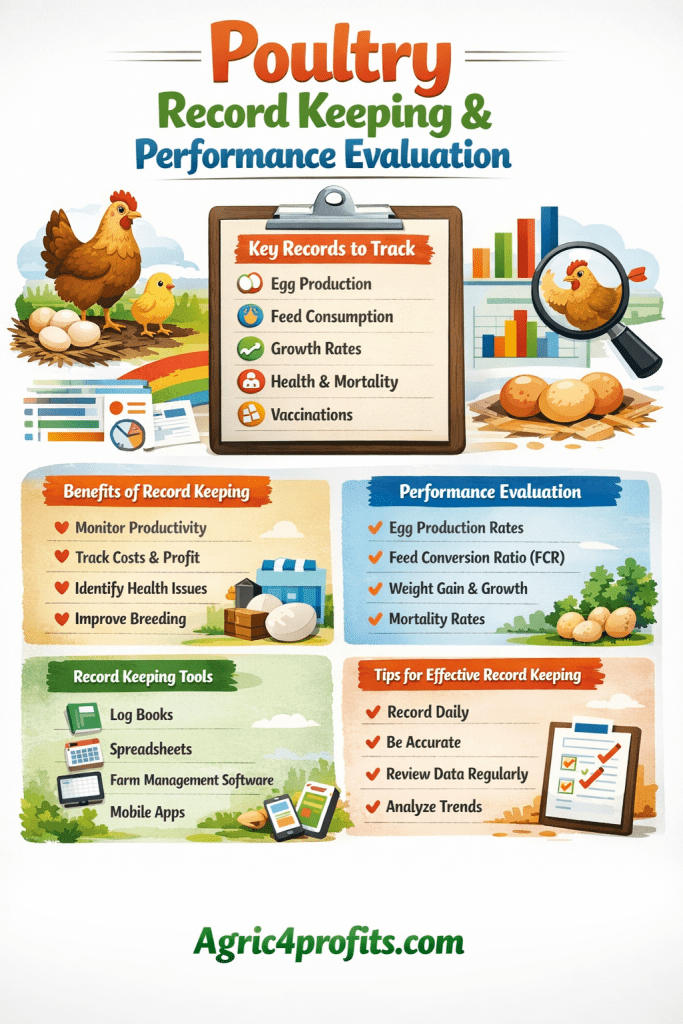
| Aspect | Details |
|---|---|
| Three Essential Records | Inventory, Production Records, Sales Records |
| Inventory Records Include | Equipment list, feed and medications, depreciation tracking |
| Production Records Include | Daily data on mortality, feed consumption, egg production, vaccinations, weight |
| Sales Records Include | All product sales (eggs, birds, culls), revenue tracking, separate record keeper |
| Normal Broiler Mortality | Less than 4% |
| Normal Pullet Mortality | 5-6% from day one to point of lay (20 weeks) |
| Normal Layer Mortality | Not more than 10% throughout laying period |
| Hen-Day Production | Eggs produced ÷ live birds × 100 |
| Hen-Housed Production | Eggs produced ÷ original number of birds × 100 |
| Target Broiler Feed Conversion | 2.0 at market weight (2 kg feed = 1 kg weight gain) |
| Feed Cost Percentage | 60-70% of total production costs |
| Layer Feed Efficiency | Measured as feed per dozen eggs or feed per kg eggs |
| Weight Monitoring for Pullets | Check every four weeks to ensure proper development |
| Record Review Frequency | Weekly or monthly minimum |
| Record Retention Period | At least 3 years, preferably longer |
| Key Performance Parameters | Weight gain, mortality, egg production rates, feed efficiency |
| Purpose of Health Records | Provide history for veterinary diagnosis and treatment |
| Signs of Disease in Records | Sudden mortality spike, feed consumption drop, egg production decline |
| Record Keepers | Use different people for production and sales records |
| Modern Record Tools | Paper, spreadsheets (Excel/Google Sheets), specialized software, mobile apps |
| Financial Metrics to Track | Cost per bird, cost per egg, profit per batch |
| Baseline Establishment | First few batches create your performance baseline |
Frequently Asked Questions About Poultry Record Keeping and Performance Evaluation
1. What are the three most important records every poultry farmer must keep?
Every poultry farmer must maintain inventory records, production records, and sales records. Inventory records track all equipment, feeds, drugs, and chemicals with purchase dates and costs. Production records document daily bird numbers, mortality, feed consumption, and egg production. Sales records show all product sales and revenue collected. These three record types form the foundation of effective farm management and financial tracking.
2. What is a normal mortality rate for broilers and layers?
For broilers, a normal mortality rate is less than 4% from placement to market. For pullets being raised from day one to point of lay (around 20 weeks), expect 5-6% mortality. For laying hens during their entire laying period, mortality should not exceed 10%. Any sudden spike above these levels indicates a potential disease outbreak that requires immediate veterinary investigation.
3. What is the difference between hen-day and hen-housed egg production?
Hen-day production calculates the percentage based only on birds currently alive (eggs produced ÷ live birds × 100). Hen-housed production includes all birds originally placed, including those that died (eggs produced ÷ original number of birds × 100). Hen-housed gives a more realistic picture of overall efficiency because it accounts for mortality losses, while hen-day shows current flock performance.
4. What is a good feed conversion ratio for broilers?
A desirable feed conversion ratio for commercial broiler production is 2.0 at market weight. This means birds need 2 kilograms of feed to gain 1 kilogram of body weight. Ratios significantly higher than 2.0 indicate you’re wasting feed and losing money. Feed quality, bird genetics, management practices, and health status all affect feed conversion efficiency.
5. How often should I review my poultry farm records?
You should review your records at least weekly, though daily review is even better for critical metrics like mortality. Weekly reviews let you spot problems early when they’re easier and cheaper to fix. Monthly reviews help you identify longer-term trends and compare batch performance. Annual reviews help with budgeting and long-term planning. The more frequently you review records, the faster you catch problems.
6. Can I keep records using just paper and pen?
Yes, paper records work perfectly fine, especially for small farms with under 500 birds. Create simple forms with columns for date, birds present, mortality, feed consumed, and production. Use binders to organize records by batch. The main advantage is simplicity with no computer needed. The disadvantage is that calculating trends and comparing batches requires more manual work than with digital systems.
7. Why should different people maintain production and sales records?
Using different people for production and sales records creates accountability and prevents theft. When one person handles both, they could potentially steal products and cover it up by falsifying records. Having separate record keepers makes it much harder to hide missing eggs or birds. Management should regularly reconcile both sets of records to ensure all products are accounted for.
8. How do records help with disease management?
Records provide the health history veterinarians need to diagnose problems quickly. They show what vaccines you’ve given, past medications, when symptoms started, and how mortality progressed. Records also help detect disease early through unusual patterns like sudden feed consumption drops or mortality spikes. Tracking treatment effectiveness over time tells you which medications work best on your farm.
9. What financial records do I need for tax purposes?
You need documentation of all income and expenses. Keep receipts and invoices for feed purchases, medication, equipment, utilities, and labor costs. Record all sales with dates, quantities, and prices. Track inventory at the beginning and end of each year. Most tax authorities require you to keep financial records for at least 3-5 years, so store them safely and organized by year.
10. How can I calculate if my poultry operation is profitable?
Calculate profit by subtracting total expenses from total income for each batch. Break this down to cost per bird (total expenses ÷ birds sold) or cost per egg (expenses ÷ eggs produced). Compare these costs to your selling prices. If your selling price is higher than your cost per unit, you’re profitable. Track this for multiple batches to identify which batches performed best and understand why.
Do you have any questions, suggestions, or contributions? If so, please feel free to use the comment box below to share your thoughts. We also encourage you to kindly share this information with others who might benefit from it. Since we can’t reach everyone at once, we truly appreciate your help in spreading the word. Thank you very much for your support and for sharing!
Read Also: Methods of Livestock Breeding in the Tropical Environment