


The foundation of tree crop production is the nursery practices and management. The performance of the orchard or the plantation depends on the quality of preparation and management of nursery and technique.
This article will take you through nursery techniques and practices of nursery husbandry Tree crop cultivation. We shall see the purpose of this unit as highlighted in the unit objectives that follow.
Nursery Site Selection
1. Factors to be considered in selecting a Nursery site
a. You must consider several factors as you select or choose the nursery site: You will want to minimize costs as you establish your nursery, therefore accessibility of the nursery to the permanent field site must be taken into consideration. It is of great advantage for the nursery sites to be situated very close to the planting site.
This will reduce to the barest minimum any damage to seedlings due to transportation. You should as much as possible transplant seedlings with a ball of earth to avoid much risk of loss of seedlings during and seedling failure after transportation.
The nearness of the nursery to the permanent field site will enable you to coordinate effectively uprooting seedlings from the nursery with transportation of seedlings and transplanting in the field.
b. Accessibility to water source: You should site your nursery where a reliable supply of good water is available. A lot of water is required daily, especially during the dry season months by the seedlings and nursery workers alike.
Water is needed also for the preparation of chemicals for spraying as may be required from time to time. This water should be cheap and clean so that waterborne diseases and pests can be eliminated from the nursery.
c. Location: It is of an advantage to you if you select a level land as your nursery site. This will minimize the risk of soil erosion and reduce the cost of maintenance. Easy movement of nursery machinery and tools will be allowed and facilitate the application of water by irrigation. If potting bags are to be used, even land will allow for stable arrangement of polythene bags, and uniform growth of seedlings will be ensured.
d. Type of soil: Nursery soil should be rich, physically and chemically suitable. You must ensure that there is good drainage whether seedlings are raised directly on nursery soil or in containers – seedboxes, polythene bags, trays, or pots – it is an advantage if the site is well drained. The absence of water pools and muddy spots in the nursery facilitates disease and pest control measures and general hygiene of the nursery.
e. Availability of labor, proximity of market, and accessibility to expertise services: Operations in the nursery are very labor intensive. It is an area where a dependable and regular supply of experience can be easily obtained.
The nearness of nursery sites to potential purchases is of importance to commercial nurseries which raise seedlings for sale to planters. Your nursery should be sited as close as possible to these planters.
You will certainly need the services of agricultural or horticultural experts from ministries of Agriculture, Universities, or Research Institutes. Nurseries should be located in areas where the services of these experts can be obtained easily.
You may wish to site your nurseries where good roads and railway stations which are necessary for transportation supplies, seedlings, and workers are available.
Read Also: Ideal Agricultural Nursery Management Practices
2. Preparation of Nursery Bed
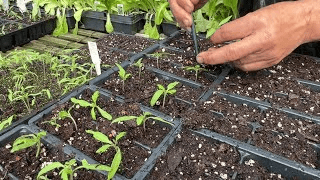
You must have cleared the site of the trash, laid out the nursery site according to plan, planted the windbreaks, and fenced the nursery. Erecting of permanent supports for shading materials, digging the nursery beds, or laying polythene bags must have been completed. Your nursery beds, in addition to providing an appropriate growing medium for seeds and seedlings, also help to conserve nursery soil from erosion.
Nursery seed beds are prepared to suit seasons of operation. You can prepare your seed beds to the size of your choice. The fact you must bear in mind is that you should be able to operate on the bed with your hands reaching the other end. The usual size is 1.5m in width, length as you may desire. There are two types of nursery beds.
a. Raised beds: These are designed for the wet or rainy season. The distinguishing characteristic is that the bed is raised about 10-15cm above the level of the pathway, purposely to allow for good drainage and prevent water-logged beds
b. Sunken beds: The distinguishing feature is that the beds are sunken 10 – 15cm below the level of the pathway purposely to conserve moisture and retain water during the dry season.
3. Application of Nematocide and Fertilizers
Three weeks before sowing the seeds, you must apply a nematocide, usually nemagon to destroy any nematodes in the nursery at the rate of 1gm per cm2. This is usually one matchbox of nemagon per cm2.
After this, you will now apply your fertilizers- superphosphate, and nitrogen at the rates of 50kg and 100kg per hectare respectively. You could broadcast your seed thinly but evenly on the bed, but you should make shallow channels of 2cm in between rows and 1 cm deep.
4. Sowing of Seed
You must have selected a seed of known history. Seed with:
- Good quality.
- High yield ability.
- Good growth and uniformity.
- Freedom from diseases and pests (viruses bacterial infections).
- High viability.
You can now sow your seed by drilling thinly about evenly in the channels, covering lightly with soil.
5. Mulching and Watering
The seedbed will now be covered with mulch to retain moisture. The sown seed needs sufficient moisture to enhance germination. You should supply water as required, more often during the dry season than the wet season. Too much water will make the seed go rotten while insufficient water will dry up the seed and germination will be adversely affected.
Read Also: Suckers as a Type of Propagating Material
Nursery Management
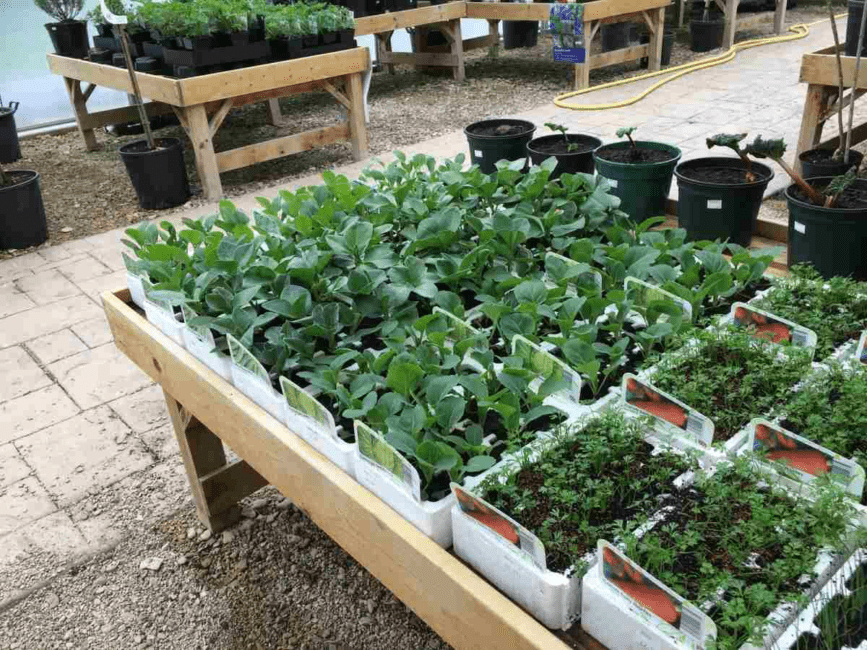
Many tree crop nurseries in Nigeria have collapsed because of poor management. You need to note some essential aspects of nursery management such as:
a. Routine hygiene: This will provide a healthy environment to workers and aid in minimizing pests and diseases. Cleanliness is established through regular weed control, removal of trash and other rubbish use of incinerator proper handling of nursery materials and tools.
b. Storage of nursery tools and equipment: You must clean nursery tools and equipment and store them securely each day after use. The tools shed must be properly organized and store items well labeled. You should keep a separate inventory for the nursery.
c. Labour management: You will realize that nursery labour is specialized and this makes it very important to ensure that laborers, attendants, and supervisors are carefully managed. You must provide adequate protection to workers by supplying uniforms (overalls) gloves, aprons, etc. for nursery workers. This is paramount to the success of your nursery.
d. First aid box: You must provide a first aid box in the nursery. The nursery staff force must include somebody who has former training in first aid management, especially in treating fresh wounds, snake and scorpion bites, and similar injuries.
Shade Management
Usually, the amount of light received by the unit leaf surface will be too high in young plants that have recently germinated and have not yet developed a large leaf area. You will discover that lead growth or leaf expansion would improve with some degree of Shade.
Shade is therefore recommended in the early stages for most of the tree crops such as mango, citrus, cocoa, oil palm, rubber, and in any other crop nurseries. A few crops such as coconut may not like shade.
Under hot drying conditions, some shade will reduce the loss of water and promote leaf expansion. Another reason for shading nursery plants and nursery materials occurs as a result of the operations involved in vegetative propagation. With cuttings for example you will discover that the material will be very sensitive to moisture stress before rooting has taken place.
It is therefore desirable to provide shade for young seedlings before they become very leafy and for cuttings and other vegetative propagated material. You will experience that after some time, however, young plants will grow larger and inter and intra-plant shading will occur so that it usually becomes necessary to remove the shade.
Germinating the Seed
The seeds of most tropical tree crops germinate readily when fresh, but they lose their viability on storage (e.g. cocoa, coffee, kola). With one important tree crop, however, viz, the oil palm, seed germination is very low when the seeds are fresh. You will discover that oil palm seeds require a period of heat treatment to increase germ inability and you must give it.
In summary, what you have learned in this article was a very important aspect of tree crop propagation; selection of functional nursery sites, preparation, and establishment of nursery seed beds, fumigation, and fertilizing the beds.
You can now manage a nursery effectively and successfully and you are now ready to know how to produce seedlings for transplanting through different methods of vegetative propagation.
Read Also: Improve Your Soil: Composting Facts to Create Nutrient-Dense Soil
Frequently Asked Questions
We will update this section soon.