


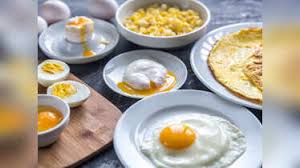
In article four, the focus was on how to buy, store, and cook fish. This article shall teach how to choose and store eggs and also how to make different egg dishes.
Eggs make a valuable contribution to a healthy, balanced diet. Eggs provide protein, vitamin A, riboflavin, and other vitamins and minerals. The yolk contains all the fat, saturated fat, and cholesterol in an egg.
Eggs are an excellent source of high-quality protein and are far less expensive than most other animal-protein foods. Although eggs contain a significant amount of cholesterol, they need not be excluded from the diet.
Egg Sizes and Varieties
Eggs are sold in a range of standard sizes, the most common being jumbo, extra large, large, and medium. Large eggs are used in most recipes. Chicken eggs are most commonly used.
In some areas, duck, goose, and quail eggs are also available. Shell colour—brown or white—is purely superficial; there is no difference in quality. Refrigerate in the carton for up to 5 weeks.
Proper Egg Storage
Eggs are a perishable food and need to be refrigerated. Keep eggs in the original carton in the coldest part of the refrigerator. Throw away any eggs that are cracked, broken, or leaking.
It is best not to wash eggs before storing or using them. Washing is a routine part of commercial egg processing and the eggs do not need to be rewashed.
- Fresh eggs in the shell: 3 to 4 weeks
- Fresh egg whites: 2 to 4 days
- Fresh egg yolks (unbroken and covered with water): 2 to 4 days
- Hard-cooked eggs: 1 week
- Deviled eggs: 2 to 3 days
- Leftover egg dishes: 3 to 4 days
Quality Points for Selecting Eggs
Egg shells should be clean, strong, well-shaped, and slightly rough.
When broken, there should be a high proportion of thick white to thin white. As an egg ages, the thick white gradually changes into thin white and water passes from the white into the yolk.
The yolks should be firm, round (not flattened), and of a good, even, fresh-looking colour. As an egg ages, the yolk loses strength and begins to flatten. Water evaporates from the egg and is replaced by air.
Read Also: Floribunda Rose Flowers: All You Need To Know About
Nutritional Benefits of Eggs

Eggs provide the energy, fat, minerals, and vitamins needed for the body to grow and repair itself. Hens can pass salmonella bacteria into their eggs, which could cause food poisoning. To reduce this risk, pasteurised eggs may be used where appropriate, e.g., in omelettes and scrambled eggs.
Testing Egg Freshness
Method 1: Water Test
Firstly, fill a deep bowl with water and carefully lower the egg into the water.
A very fresh egg will immediately sink to the bottom and lie flat on its side. This is because the air cell within the egg is very small. The egg should also feel quite heavy.
As the egg starts to lose its freshness and more air enters the egg, it will begin to float and stand upright. The smaller end will lie on the bottom of the bowl, whilst the broader end will point towards the surface. The egg will still be good enough to consume; however, if the egg fully floats in the water and does not touch the bottom of the bowl at all, it should be discarded, as it will most likely be bad.
Method 2: Plate Test
The second method to test the egg’s freshness is by breaking the egg onto a flat plate, not into a bowl.
The yolk of a very fresh egg will have a round and compact appearance, and it will sit positioned quite high up in the middle of the egg. The white that surrounds it will be thick and stays close to the yolk.
A less fresh egg will contain a flatter yolk, that may break easily, and a thinner white that spreads quite far over the plate.
Egg Recipes for Various Dishes
1. Poached Eggs
Method 1: Traditional Poaching
The egg is cracked into a bowl of any size, and then gently slid into a pan of simmering water and cooked until the egg white has mostly solidified, but the yolk remains soft. It is quite common for a small pat of butter or margarine to be added to the container for the egg, to prevent the egg sticking to its container. The ‘perfect’ poached egg has a runny yolk, with a hardening crust and no raw white remaining.
Fresh eggs will yield the best results. Broken into simmering water, the white will cling to the yolk, resulting in cooked albumen and runny yolk.
To prevent dispersion of the white of the egg, a small amount of vinegar may be added to the boiling water. Stirring the water vigorously to create a vortex may reduce dispersion. Special pans, with several small cups, allow a number of eggs to be poached at the same time. Other methods of producing poached eggs, such as using cling film to keep the egg perfectly formed, have been documented.
If the eggs are at room temperature, the cooking time is 2 minutes 30 seconds to 2 minutes 40 seconds. If the eggs are taken from a refrigerator, then a longer time of about 3 minutes is required, though the exact time depends on the size of the egg, and other factors such as altitude and the design of the poaching apparatus. Dipping the eggs into cold water for a few seconds immediately after taking them out of the boiling water helps prevent over-cooking.
Method 2: Egg Poacher Pan
The term is also applied to a method whereby the egg is placed in a cup, suspended over simmering water, using a special pan called an “egg-poacher”. This is usually a wide-bottomed pan with an inner lid, with holes containing a number of circular cups that each holds one egg, with an additional lid over the top.
To cook, the pan is filled with water and brought to a simmer, or a gentle boil. The outer lid holds in the steam, ensuring that the heat surrounds the egg completely. The cups are often lubricated with butter in order to effect easy removal of the cooked egg, although non-stick egg poachers are also available.
The result is very similar to the traditional coddled egg, although these steamed eggs are often cooked for longer, and hence are firmer. Eggs so prepared are often served on buttered toast.
Poached eggs are used in Eggs Benedict and Eggs Florentine.
Poached eggs are the basis for many dishes in Louisiana Creole cuisine, such as Eggs Sardou, Eggs Portuguese, Eggs Hussarde, and Eggs St. Charles. Creole poached egg dishes are typically served for brunches.
Several cuisines include eggs poached in soup or broth and served in the soup. In parts of central Colombia, for instance, a popular breakfast item is eggs poached in a scallion/coriander broth with milk, known as changua or simply caldo de huevo (“egg soup”).
The Libyan dish Shakshouka consists of eggs poached in a spicy tomato sauce.
In Italy, poached eggs are typically seasoned with grated Parmigiano Reggiano and butter (or olive oil).
Read Also: Mimosa Flowers (Mimosa Pudica): Complete Growing and Care Guide
2. Scrambled Eggs
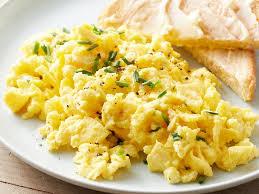
The reason for removing the eggs from the heat when they are only lightly cooked is because after the pan is removed from the stove, it will still be hot, and the eggs will continue cooking. Cooking scrambled eggs is a delicate task, and they can easily be overcooked and spoiled.
i. Ingredients
- 4 portions:
- Eggs (medium or large): 6–8
- Salt: use sparingly
- Milk (optional): 2 tbsp
- Butter, margarine, or oil: 50g
- 10 portions:
- Eggs (medium or large): 15–20
- Salt: use sparingly
- Milk (optional): 5 tbsp
- Butter, margarine, or oil: 125g
ii. Cooking
Break the eggs into a basin, lightly season with salt, and thoroughly mix using a whisk, adding the milk if using.
In a thick-bottomed pan, melt half of the fat.
Add the eggs and cook over a gentle heat, stirring continuously with a heat-proof spatula or wooden spoon until the egg is lightly cooked.
Remove from the heat, taste, and correct the seasoning.
Mix the remaining fat in.
3. Fried Eggs
A fried egg is a cooked dish commonly made using a fresh hen’s egg fried whole with minimal accompaniment. They are traditionally eaten for breakfast in Western countries but may be eaten at other times of the day.
i. Ingredients
- Butter, margarine, or oil: 25g per egg
- Eggs: allow one or two eggs per portion
Only fresh, top-quality eggs should be used for frying. For the best flavour, use butter or sunflower oil.
ii. Cooking
Melt the butter, margarine, or oil in a small non-stick frying pan.
Remove the eggs from their shells and add them carefully and gently to the pan, without breaking the yolks.
Cook slowly over a moderate heat and serve on a warm plate.
4. Soft-Boiled Eggs
Place the eggs in a saucepan, cover with cold water, and bring to the boil.
Simmer for 2–2 minutes.
Remove from the water and serve in egg cups.
5. Medium-Soft Eggs
Place the eggs carefully into a pan of boiling water.
Re-boil, simmer for 4–5 minutes, and remove.
6. Hard-Boiled Eggs
Place the eggs carefully into a pan of boiling water.
Re-boil and simmer for 8–10 minutes.
Refresh until cold under running water.
7. Omelette
i. Ingredients
- 2–3 eggs per portion
- Small pinch of salt
- Butter, margarine, or oil
There are many variations that can be made by adding other ingredients to the eggs when mixed, such as:
- Chopped soft herbs: parsley, chives, chervil
- Mushrooms: sliced and cooked in butter
- Cheese: grated and added to the omelette before it is folded.
ii. Cooking
Break the eggs into a basin and season lightly with salt.
Mix thoroughly with a fork or whisk until yolks are thoroughly combined and no streaks of white can be seen.
Heat a non-stick omelette pan and wipe thoroughly clean with a dry cloth.
Add the butter, and then turn up the heat to maximum until the butter is foaming but not brown.
Add the eggs and cook quickly, stirring continuously with a fork or heat-proof spatula until lightly set. Remove from the heat.
Using the fork, carefully fold the mixture in half at a right angle to the handle of the pan.
Pointing the pan slightly downwards, sharply tap the pan handle with the other hand to bring the edge of the omelette up to the bottom of the pan.
Carefully, using the fork, bring up the opposite edge of the omelette as near to the first edge as possible.
Take a warm plate in one hand and, holding the pan under the handle, carefully tip the folded omelette onto the plate.
Neaten the shape if necessary, using a clean tea cloth, and serve immediately.
8. Steamed Eggs with Chicken and Spring Onions
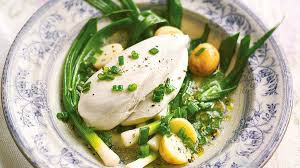
Cook and shred the chicken.
Lightly beat the eggs.
Peel the shallots, slice them thinly, and fry until crispy.
Chop the garlic and spring onion.
i. Ingredients
- 4 portions:
- Whole eggs, lightly beaten: 400ml
- Chicken or fish stock: 400ml
- Salt and pepper to taste
- Chicken breast, cooked and shredded: 100g
- Shallots, thinly sliced and fried until crispy: 4
- Garlic, chopped: 2 cloves
- Light soy sauce: 10 ml
- Sesame oil: 1 tsp
- Spring onions, chopped: 2
- 10 portions:
- Whole eggs, lightly beaten: 1 litre
- Chicken or fish stock: 1 litre
- Salt and pepper to taste
- Chicken breast, cooked and shredded: 250g
- Shallots, thinly sliced and fried until crispy: 10
- Garlic, chopped: 5 cloves
- Light soy sauce: 25 ml
- Sesame oil: 2 tsp
- Spring onions, chopped: 5
ii. Cooking
Combine the eggs, salt, ground pepper, and chicken/fish stock.
Using a fork, gently stir the mixture, slowly breaking the yolks. Mix well without creating too many air bubbles.
Pass the mixture through a fine strainer.
Stir in the cooked chicken.
Pour the mixture into small ramekins and steam on a medium heat for 20 minutes or until set.
iii. Serving Suggestion
Remove the contents from the ramekins (or serve them in the ramekins) and drizzle with light soy sauce and sesame oil, then sprinkle with fried shallots, garlic, and chopped spring onions.
Do you have any questions, suggestions, or contributions? If so, please feel free to use the comment box below to share your thoughts. We also encourage you to kindly share this information with others who might benefit from it. Since we can’t reach everyone at once, we truly appreciate your help in spreading the word. Thank you so much for your support and for sharing!