


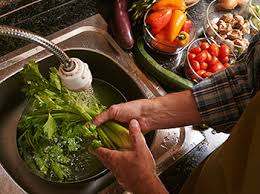
Safe handling of food products in any food service establishment is critical. Failure by food handlers to understand the practices and principles of handling food can lead to deterioration of food products and cause food poisoning.
These principles and practices help identify and evaluate hazards crucial to food safety. This article explains these principles and practices in detail to ensure all food products produced in an establishment are safe for human consumption.
Read Also: Record Keeping in Commercial Pig Farming
Understanding Hazard Analysis and Critical Control Point (HACCP)
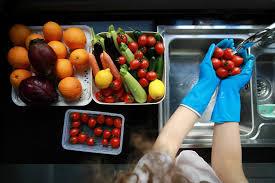
HACCP is an internationally approved technique for food management practices, according to Stephen and Carolyn (2020). It is a method that identifies, evaluates, and manages hazards critical to food safety, as stated in the Hygiene and Sanitation Handbook (2018).
Hazard analysis examines all aspects that could cause injury to the customer, including ingredients, stages in the food manufacturing process, environmental conditions, and human factors that could lead to dangerous food being served, according to David and Patricia (2011).
HACCP is a systematic means of examining potential risks in a food operation, identifying points where hazards may arise, and deciding which are crucial to customer safety, per Robert (2007).
It is a science-based approach that systematically identifies, evaluates, and controls significant food safety hazards, according to the Handbook for Gambian Youths Entrepreneurs (nd).
As these definitions illustrate, HACCP is a technique to examine food, determine when hazards may develop, and assess if the food is safe or harmful for human consumption.
It is a common-sense technique to control food safety hazards, serving as a preventive system rather than a reactive one. Food establishments can use it to ensure safer food products for consumers.
It is not a zero-risk system but is designed to minimize the risk of food safety hazards. The success of a HACCP program depends on both people and facilities. Management and employees must be properly motivated and trained for a HACCP program to successfully reduce the risk of food-borne illness.
Education and training in food safety principles and management commitment to implementing a HACCP system are critical and must be continuously reinforced (2002).
Key Factors to Implement Before Establishing HACCP
According to David et al. (2011), the following should be in place before implementing HACCP in any establishment:
1. Suppliers
The establishment should specify the quantity desired in advertisements. The finest quotation should be chosen from all submissions.
2. Traceability
It is critical to establish a method to monitor suppliers and know exactly where all supplied food originates. This aids in producing high-quality goods.
3. Location, Structure, and Equipment
The establishment must ensure the entire environment is well-maintained by providing necessary amenities for cleanliness. The workflow should be structured to avoid interfering with service delivery. All equipment must be kept in good working order to prevent rusting, which can lead to food poisoning.
4. Storage and Inventory Management
Food items in the store should be kept at a reasonable temperature. The practice of First-In, First-Out (FIFO) must be maintained. Management should implement an effective stock control system, achievable if the storekeeper is well-trained in inventory control, stock rotation, and stock balance.
5. Employee Hygiene
Staff cleanliness is crucial due to their role in handling food products. The employer must ensure employees maintain appropriate personal hygiene to avoid contaminating food. Paul (2007) supports this, stating that personal hygiene ensures individuals who come into direct or indirect contact with food do not contaminate it.
This can be achieved by washing hands after using the restroom, touching raw meat, or touching the nose, as well as washing and ironing uniforms, trimming nails, and training and retraining employees.
6. Pest Control
Pest control procedures must be carried out carefully to avoid contaminating food products. The establishment can enlist expert help for pest management, ensuring a well-written pest control policy.
7. Cleaning, Disinfection, and Waste Management
Management must have a documented system specifying how cleaning and garbage removal schedules are controlled. This ensures the safety of food and the people working in and patronizing the establishment.
8. Staff Training
Management must ensure employees are properly trained. A thorough list of employee names and training dates is required to allow staff to prepare accordingly.
Steps for Implementing the HACCP System
When implementing a HACCP system, seven steps should be followed (David and Patricia, 2011; Paul, 2002):
1. Perform a Hazard Analysis: Understand the operation and determine likely hazards. Create a conversational flow diagram depicting the product flow from receipt to completion. The manager must identify potential dangers and mitigation methods at each stage. This involves understanding how people, equipment, methods, and foods interact.
2. Identify Critical Control Points (CCPs): Determine points where hazards can be prevented, eliminated, or reduced to an acceptable level. The team identifies points ensuring product safety when risks are minimized.
3. Define Critical Limits: Each CCP must have boundaries defining safety, typically found in the Food Code. Critical limits, such as temperature, duration, speed, pH, and moisture content, must be set for all control measures related to each CCP.
4. Establish CCP Monitoring System: After identifying critical steps and setting limits, monitor CCPs in the food flow. Decide how, where, and when monitoring occurs and how findings are recorded.
5. Determine Corrective Actions: Ensure deviations are remedied if a CCP is out of control, such as properly disposing of affected products created during the deviation.
6. Develop Verification Procedures: Design verification processes, including periodic audits, random sampling, analysis, and HACCP system reviews, to ensure the plan’s effectiveness.
7. Document and Record Procedures: Prepare and execute procedures and work instructions for each control measure, including hygiene maintenance. Documentation is required to demonstrate food safety management.
Read Also: How to Choose a Snail Farming System
Importance of Good Hygiene Practices (GHP)

Practicing good hygiene in the foodservice industry is essential, as food can be contaminated during preparation, processing, or cooking. Contamination can also occur on the farm or during animal slaughter.
Food handlers must understand chemical, physical, and microbiological hazards and the best ways to prevent or control them. Good hygiene practices ensure food is free from hazards and safe for consumption. This article details GHP and the procedures to achieve it.
Understanding Good Hygiene Practices (GHP)
The Codex Alimentarius Commission defines GHP as fundamental measures and conditions applied at any step in the food chain to provide safe and suitable food. Sreelekhak et al. (nd) state that GHP includes all practices ensuring food safety from primary production to the final stage.
Steps for Implementing Good Hygiene Practices (GHP)
According to the Codex Alimentarius Commission and Sreelekhak et al. (nd), GHP should be implemented in the following areas:
1. Primary Production
Ensure food hazards are reduced during primary production. Sreelekhak et al. (nd) note that hygienic practices should minimize the likelihood of introducing hazards difficult to control later. Food must be prepared in an unpolluted environment, free from offensive odors that could contaminate it.
Hygienic production, handling, storage, and transport should encourage food safety. Cleaning and maintaining equipment and ensuring food handlers maintain personal hygiene are necessary to prevent contamination.
2. Establishment Design and Facilities
Design premises, equipment, surfaces, and facilities to minimize contamination, ensure ease of cleaning, provide ventilation, and protect against pest infestation.
Consider location, equipment, and facilities, ensuring the area is free from flooding with proper drainage. Install equipment for easy cleaning.
3. Establishment Maintenance Practices
Maintain good housekeeping by keeping the premises and surroundings clean. Clean walls, remove dust from roofs, and control pests by closing access points for rodents, disposing of refuse frequently, and using insecticides or rat killers.
Manage water to ensure it is uncontaminated and sourced reliably. Construct windows and internal surfaces for easy cleaning and smooth floors, ceilings, and drainage systems to prevent contamination.
4. Control of Food Hazards Through HACCP
Control food hazards by ensuring incoming food is uncontaminated, monitoring time, temperature, and humidity, separating potential contaminants, and verifying treatment and cleaning effectiveness. Reassess hazard analysis when changes occur.
5. Establishment Maintenance and Sanitation
Ensure equipment and tools are maintained in good condition, checked regularly, and cleaned after use to prevent rust. Maintain sanitation by cleaning, sweeping, dusting, mopping, and controlling grass.
Prevent contamination by removing debris, chemicals, pests, and dust. Cleaning procedures include removing gross debris, applying detergent, rinsing with water, disinfecting where necessary, and dry cleaning.
6. Transportation
Take adequate measures during transportation to protect food from contamination, ensuring it remains suitable for consumption. Provide an environment that controls pathogen growth or toxin production.
7. Product Information and Consumer Awareness
Consumers must be aware of product details through labeling, including usage instructions and precautions. Educate consumers on preventing contamination and pathogen growth by storing, preparing, and using products correctly.
8. Training
Training and retraining programs are essential to teach food preservation and contamination prevention. Provide refresher training on GHP, covering safety and suitability requirements.
Expose staff to food safety codes, enabling them to adapt practices to specific conditions and include critical practices in the HACCP plan.
Understanding Good Manufacturing Practice (GMP)
GMP refers to Good Manufacturing Practice regulations promulgated by the US Food and Drug Administration under the Federal Food, Drug, and Cosmetic Act (Chapter IV for food; Chapter V, Subchapters A, B, C, D, and E for drugs and devices).
GMP ensures products are consistently produced and controlled to quality standards appropriate for their intended use, as required by marketing authorization (Shukla, 2017; www.ispe.org).
These regulations require manufacturers, processors, and packagers of food, drugs, medical devices, and blood to take proactive steps to ensure product safety, purity, and effectiveness.
GMP regulations describe methods, equipment, facilities, and controls for producing human and veterinary products, medical devices, and processed food (Shukla, 2017).
They require a quality approach to manufacturing to minimize contamination, mix-ups, and errors, protecting consumers from ineffective or dangerous products. Non-compliance can lead to recalls, seizures, fines, or jail time (www.ispe.org).
GMP addresses record-keeping, personnel qualifications, sanitation, cleanliness, equipment verification, process validation, and complaint handling. Requirements are general and open-ended, allowing manufacturers flexibility to interpret and implement controls sensibly for their business (www.ispe.org; Shukla, 2017).
Do you have any questions, suggestions, or contributions? If so, please feel free to use the comment box below to share your thoughts. We also encourage you to kindly share this information with others who might benefit from it. Since we can’t reach everyone at once, we truly appreciate your help in spreading the word. Thank you so much for your support and for sharing!