


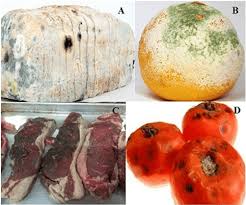
Spoilage of food refers to any visible or invisible change which can make food or product derived from food unacceptable for human consumption. Spoilage of food not only causes health hazard to the consumer but also cause large economic losses. Spoilage not only leads to loss of nutrients from food but also causes change in original flavour and texture.
It is estimated that about 25% of total food produced is spoilt due to microbial activities only despite range of preservation methods available. Hence, the spoilage of food is not only a health hazard but also carry lot of economic significance too.
In all, the food spoilage is considered a complex phenomenon whereby a combination of microbial and biochemical activities take place leading to the production of various types of metabolites which aid in spoilage.
All foods undergo varying degrees of deterioration after harvest and during storage, leading to losses in nutritional value, safety, and esthetic appeal (colour, texture, flavour). Fruit, vegetables and root crops are very perishable and, if care is not taken in their harvesting, handling and transport, they will soon decay and become unfit for human consumption.
Estimates of production losses in developing countries are hard to judge, but some authorities put losses of sweet potatoes, plantain, tomatoes, bananas and citrus fruit as high as 50 percent of what is grown. Reduction in these losses, particularly if they can be avoided economically, would be of great significance to growers and consumers alike.
All fruits, vegetables and root crops are living plant parts containing 65 to 95 percent water and they continue their life processes after harvest. The post-harvest life of produce depends on the rate at which stored food reserves are used up and the rate of water loss. The changes that occur not only lead to reduced quality but can also make the product more susceptible to contamination with microorganisms.
Read Also: Options for Genetic Improvement in Tropical Livestock
Factors Influencing Food Deterioration
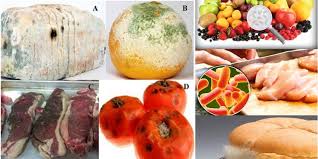
Food by nature is subject to deterioration either by chemical or microbial means. The shelf-life will be influenced by factors such as:
Nature of the product (nutritional composition)
Packaging
Temperature
In order to optimize the storage quality and extend shelf-life of fresh and value-added products, a clear understanding of the role of the following factors in food spoilage is important:
Chemical components in the food
Environmental conditions
Initial microbial load
Nature and types of microorganisms present
Deterioration, or undesirable quality changes, may be the result of biological, microbiological, biochemical/physiological or physical changes in the product. Factors identified as causes of deterioration usually encourage the conditions that lead to quality losses.
These factors are usually the result of inadequate training of product handlers, inadequate or non-existent storage structures, unsuitable or inadequate technologies for handling and storing product, ineffective quality control, and adverse/extreme environmental conditions. In addition, time is an important factor in the spoilage of produce.
Classification and Causes of Food Spoilage
Foods are often classified on the basis of their stability as: non-perishable, semi-perishable and perishable.
Non-perishable foods: Hermetically sealed and heat processed (canned) foods are generally regarded as non-perishable. However, they may become perishable under certain circumstances when an opportunity for recontamination is afforded following processing.
Such an opportunity may arise if the cans are faulty, or if there is excessive corrosion resulting in internal gas formation and eventual bursting of the can. Spoilage may also take place when the canned food is stored at unusually high temperatures: thermophilic spore-forming bacteria may multiply, causing undesirable changes such as flat sour spoilage.
Semi-perishable foods: Low moisture content foods such as dried fruit and vegetables are classified as semi-perishable. Frozen foods, though basically perishable, may be classified as semi-perishable provided that they are properly stored at freezer temperatures.
Perishable foods: The majority of foods such as meat and fish, milk, eggs and most fresh fruits and vegetables are classified as perishable unless they have been processed in some way.
Chemical Factors Contributing to Spoilage
Deterioration may result from chemical reactions (via endogenous enzymes) or through interactions involving one or more of the macronutrients present in food and food products. Enzymes are proteins that occur naturally in plant tissues and catalyze a number of important biochemical reactions. Some enzyme-catalyzed reactions are beneficial while others result in quality deterioration. Examples of reactions involving endogenous enzymes include:
- The post-harvest spoilage of fruit and vegetables
- Oxidation of phenolic substances in plant tissues by phenolase
- Sugar – starch conversion in plant tissues by amylases
- Post-harvest demethylation of pectic substances in plant tissues (leading to softening of plant tissues during ripening, and firming of plant tissues during processing.
- Development of off-flavours through the breakdown of lipid components; and loss of color and undesirable browning.
- Catalyze fermentation of sugars, breakdown of ascorbic acid, and many other deterioration reactions. Bruising, ripening, cutting, temperature, and presence of co- factors (sFe and Mg) increase the rate of degradative enzyme activity.
Read Also: Options for Genetic Improvement in Tropical Livestock
Physical Factors Leading to Food Deterioration

One major undesirable physical change in food powders is the absorption of moisture as a consequence of an inadequate barrier provided by the package; this results in caking. It can occur either as a result of a poor selection of packaging material in the first place, or failure of the package integrity during storage. In general, moisture absorption is associated with increased cohesiveness.
Anti-caking agents are very fine powders of an inert chemical substance that are added to powders with much larger particle size in order to inhibit caking and improve flow-ability. At higher activities, however, (aw > 0.45) the observed time to caking is inversely proportional to water activity, and at these levels anti-caking agents are completely ineffective.
It appears that while they reduce inter-particle attraction and interfere with the continuity of liquid bridges; they are unable to cover moisture sorption sites.
Role of Microorganisms in Food Spoilage
Microorganisms can make both desirable and undesirable changes to the quality of foods depending on whether or not they are introduced as an essential part of the food preservation process or arise unintentionally and subsequently grow to produce food spoilage.
Bacteria and fungi (yeasts and moulds) are the two major groups of microorganisms found in foods. Bacteria are generally the fastest growing and outgrow fungi in conditions favourable to both. Spoilage microorganisms including bacteria, fungi, and viruses are major causes of food deterioration.
These organisms may cause softening, off-colour, and off-flavour in foods. Disease causing microorganisms (pathogens) will result in illness of those consuming the food if present in sufficient quantity.
Fruits and vegetables offer considerable resistance to microbial activity, however, the softening that usually accompanies aging of products and mechanical injuries increase the susceptibility of produce to microorganisms.
The species of microorganisms which cause the spoilage of particular foods are influenced by two factors:
- The nature of the foods
- Their surroundings/environment.
These factors are referred to as intrinsic and extrinsic parameters. The intrinsic parameters are an inherent part of the food and include pH, water activity, nutrient content, antimicrobial constituents and biological structures.
The extrinsic parameters of foods are those properties of the storage environment that affect both the foods and their microorganisms. The growth rate of the microorganisms responsible for spoilage primarily depends on these extrinsic parameters: temperature, relative humidity and gas compositions of the surrounding atmosphere.
Impact of Deterioration on Sensory Quality of Food
Chemical, physical and biological changes which occur during handling, processing and storage of foods lead to deterioration in sensory and nutritional quality of foods.
- Sensory Quality
- Lipid Oxidation
Lipid oxidation rate is influenced by light, local oxygen concentration, high temperature, the presence of catalysts (transition metals such as iron and copper) and water activity. Control of these factors can significantly reduce the extent of lipid oxidation in foods.
Non-enzymatic browning
Non-enzymatic browning is one of the major causes of deterioration which occurs during storage of dried and concentrated foods. The non-enzymatic browning or Maillard reaction can be divided into three stages:
Early Maillard reactions which are chemically well-defined steps without browning.
Advanced Maillard reactions which lead to the formation of volatile or soluble substances
Final Maillard reactions leading to insoluble brown polymers.
Colour changes
- Chlorophylls: Almost any type of food processing or storage causes some deterioration of the chlorophyll pigments. Phenophytinisation is the major change and it is acid catalyzed reaction accelerated by heat. Dehydrated products such as green peas and beans packed in clear glass containers can undergo photo-oxidation and loss of desirable colour.
- Anthocyanins: These are a group of more than 150 reddish water- soluble pigments that are very widespread in the plant kingdom. The rate of anthocyanin destruction is pH dependent, being greater at higher pH values. Of interest from a packaging point of view is the ability of some anthocyanins to form complexes with metals such as Al, Fe, Cu and Sn.
These complexes result in an undesirable change in the colour of the pigment (red sour cherries react with tin to form a purple complex). Since metal packaging materials such as cans could be sources of these metals, they are usually coated with special organic linings to avoid these undesirable reactions.
- Carotenoids: The carotenoids are a group of mainly lipid soluble compounds responsible for most of the yellow and red colours of plant and animal products. The main cause of carotenoid degradation in foods is oxidation. The pigments may auto-oxidize by reaction with atmospheric oxygen at rates dependent on light, heat and the presence of antioxidants.
Enzymatically generated compounds derived from long-chain fatty acids play an extremely important role in the formation of characteristic flavours. In addition, these types of reactions can lead to significant off-flavours.
Enzyme-induced oxidative breakdown of unsaturated fatty acids occurs extensively in plant tissues and these yield characteristic aromas associated with some ripening fruits and disrupted tissues.
The permeability of packaging materials is of importance in retaining desirable volatile components within packages, or in permitting undesirable components to permeate through the package from the ambient atmosphere.
Read Also: All You Need To Know About Animal Shelters
Effects of Deterioration on Nutritional Quality

The four major factors that affect nutrient degradation to varying extents are light, oxygen concentration, temperature, and water activity. However, due to the diverse nature of the various nutrients, chemical heterogeneity within each class of compounds and complex interactions of the above variables, generalizations about nutrient degradation in foods will inevitably be broad ones.
Ascorbic acid (Vitamin C) is the most sensitive vitamin in foods and its stability vary markedly as a function of environmental conditions such as pH and the concentration of trace metal ions and oxygen.
The nature of the packaging material can significantly affect the stability of ascorbic acid in foods. The effectiveness of the material as a barrier to moisture and oxygen as well as the chemical nature of the surface exposed to the food are important factors.
For example, problems of ascorbic acid instability in aseptically packaged fruit juices have been encountered because of oxygen permeability of the package and the oxygen dependence of the ascorbic acid degradation reaction.
Also, because of the preferential oxidation of metallic tin, citrus juices packaged in cans with a tin contact surface exhibit greater stability of ascorbic acid than those in enamelled cans or glass containers.
The aerobic and anaerobic degradation reactions of ascorbic acid in reduced moisture foods have been shown to be highly sensitive to water activity, the reaction rate increasing in an exponential fashion over the water activity range of 0.1-0.8.
Frequently Asked Questions
- What is food spoilage?
Food spoilage refers to any visible or invisible change that makes food or food-derived products unacceptable for human consumption, leading to health hazards, economic losses, and changes in flavor, texture, and nutrients. - Why is food spoilage economically significant?
Food spoilage causes large economic losses, with estimates indicating that about 25% of total food produced is spoiled due to microbial activities, despite available preservation methods. - What factors influence the shelf-life of food?
The shelf-life of food is influenced by the nature of the product (nutritional composition), packaging, and temperature. - How are foods classified based on stability?
Foods are classified as non-perishable (e.g., canned foods), semi-perishable (e.g., dried fruits, frozen foods), and perishable (e.g., fresh meat, fish, fruits, and vegetables). - What role do enzymes play in food deterioration?
Enzymes catalyze biochemical reactions, some beneficial and others leading to quality deterioration, such as post-harvest spoilage, oxidation, sugar-starch conversion, and development of off-flavors. - How do microorganisms contribute to food spoilage?
Microorganisms like bacteria, yeasts, moulds, and viruses cause undesirable changes, leading to softening, off-colors, and off-flavors, influenced by intrinsic (e.g., pH, water activity) and extrinsic (e.g., temperature, humidity) parameters. - What are the effects of lipid oxidation on food quality?
Lipid oxidation, influenced by light, oxygen, temperature, catalysts, and water activity, leads to deterioration in sensory quality, particularly off-flavors and rancidity. - How does packaging affect nutrient stability?
Packaging affects nutrient stability, such as ascorbic acid (Vitamin C), by acting as a barrier to moisture and oxygen; for example, oxygen-permeable packages can accelerate degradation in fruit juices.
Do you have any questions, suggestions, or contributions? If so, please feel free to use the comment box below to share your thoughts. We also encourage you to kindly share this information with others who might benefit from it. Since we can’t reach everyone at once, we truly appreciate your help in spreading the word. Thank you so much for your support and for sharing!