


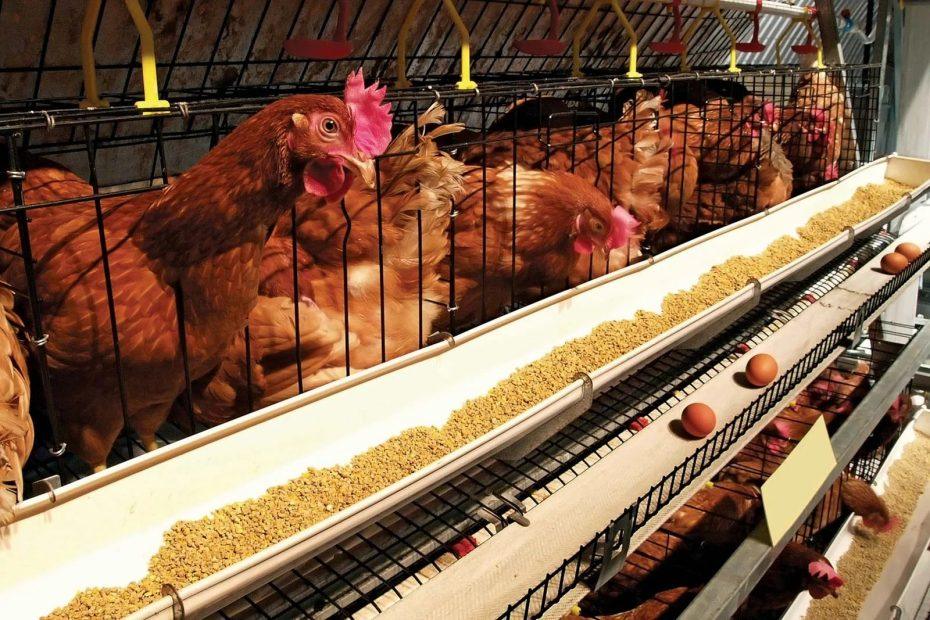
Poultry farming has become one of the most practical ways to produce high-quality protein for families and communities. When we talk about poultry, we mean birds like chickens, ducks, turkeys, guinea fowl, quails, and even ostriches. These birds are raised mainly for their meat and eggs.
What makes poultry farming attractive? The birds are small, which means you don’t need huge amounts of space to get started. The cost of raising them is relatively low compared to larger livestock. They produce excellent protein that helps improve nutrition in households and communities. Birds are also efficient at converting feed into meat and eggs. Another advantage is that poultry farming doesn’t face the same cultural or religious restrictions that other types of livestock might encounter in different regions.
But poultry farming isn’t without challenges. Feed ingredients can be expensive because they compete with human food sources. Housing requirements need careful planning. Diseases and parasites can wipe out flocks if you’re not careful. Many farmers also struggle with understanding the exact nutritional needs of their birds. These problems can turn what should be a profitable venture into a losing one.
This guide looks at the main challenges facing poultry farmers and offers practical steps to improve production. Whether you’re just starting or looking to get better results from your existing operation, these insights can help you raise healthier birds and run a more successful farm. The key is understanding what birds need and creating systems that deliver those requirements consistently.
There are many chicken breeds available, and most can be raised commercially if you match the breed to your specific goals and local conditions.
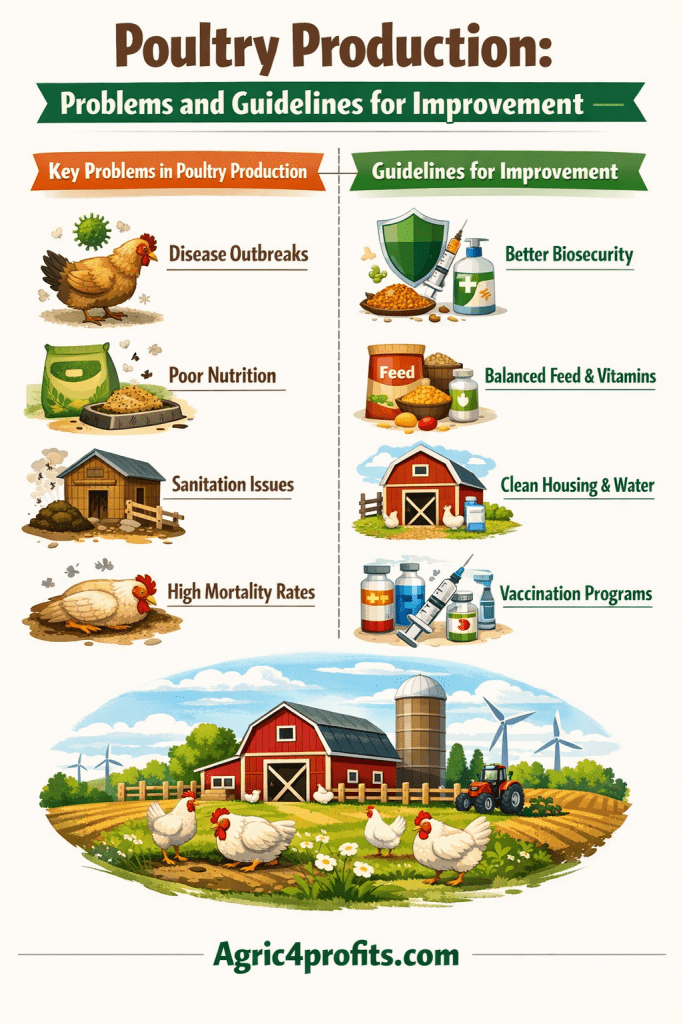
1. Problems or Constraints of Poultry Production
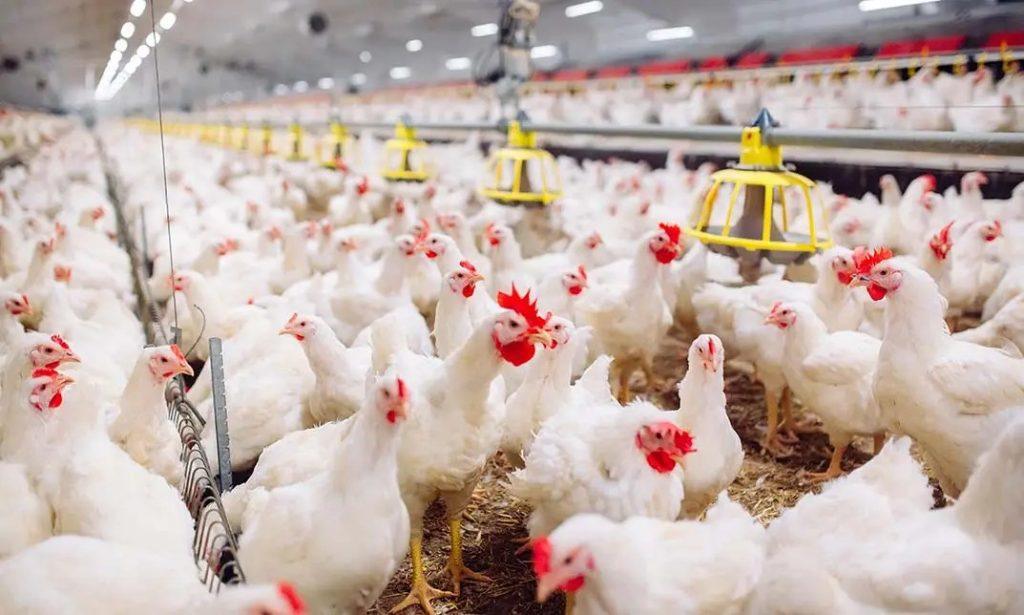
Running a successful poultry farm means dealing with several ongoing challenges. Some of these problems are financial, while others are technical or environmental. Here are the main issues that affect poultry farmers:
i. Feed costs are high: Because feed ingredients compete with human food needs, prices stay elevated. This directly impacts your profit margins.
ii. Housing challenges: Building proper poultry houses requires investment and knowledge. Poor housing leads to stressed birds and lower production.
iii. Disease and parasite problems: Infections can spread quickly through a flock. Without proper prevention and treatment, you can lose birds fast.
iv. Limited knowledge of feed composition: Many farmers don’t fully understand what nutrients are in the feed ingredients they can access locally.
v. Unclear nutritional requirements: The exact nutrient needs for different stages of bird development aren’t always well known or documented for local conditions.
vi. Shortage of suitable breeds: Finding egg-laying hens or broiler chickens that adapt well to local climates and conditions can be difficult.
Read Also: Meaning, Taxonomy, Advantages, and Disadvantages of Poultry
2. Guidelines to Improve Poultry Production

The good news is that most of these challenges have practical solutions. By focusing on a few key areas, you can significantly improve your results. Here’s what works:
i. Provide balanced nutrition: Your birds need the right mix of proteins, carbohydrates, vitamins, and minerals. A balanced diet supports growth, egg production, and overall health.
ii. Follow good management practices: This means maintaining clean housing, ensuring proper ventilation, managing temperature and humidity, and keeping accurate records of your flock’s performance.
iii. Implement vaccination programs: Work with a veterinarian to establish a vaccination schedule. Prevention is cheaper and more effective than treating sick birds.
iv. Use effective disease control: Beyond vaccination, practice biosecurity. Limit visitor access to your birds, disinfect equipment regularly, and isolate sick birds immediately.
v. Refresh your stock regularly: Don’t keep the same birds for too long. Bring in new stock to maintain genetic diversity and productivity levels.
vi. Choose productive breeds: Imported breeds often perform better than local varieties. They’ve been selectively bred for higher egg production or faster growth rates.
A. Housing Design Matters
In tropical climates, your poultry house design must account for heat and humidity. The goal is to keep birds comfortable throughout the year. This means proper roof insulation, adequate ventilation systems, and orientation that minimizes direct sun exposure during the hottest parts of the day.
Your housing should also be durable and cost-effective. Use materials that can withstand local weather conditions without requiring constant repairs. Strong construction prevents predators from getting in and keeps your birds safe.
B. Feed Management Is Critical
Feed costs typically represent 60-70% of your total production expenses. Small improvements in feed efficiency make a big difference to your bottom line. Don’t overfill food troughs because birds will spill and waste feed. Adjust tube feeders so they’re not opened too wide.
The design of your feeding equipment matters. Well-designed troughs can reduce spillage by up to 20%. That saved feed goes directly to your profit. What seems like a small amount of waste each day adds up quickly over weeks and months. Poor feed management can turn a profitable farm into one that loses money.
Read Also: A Sick Bay as part of the Poultry House
C. Maintain Optimal Environmental Conditions
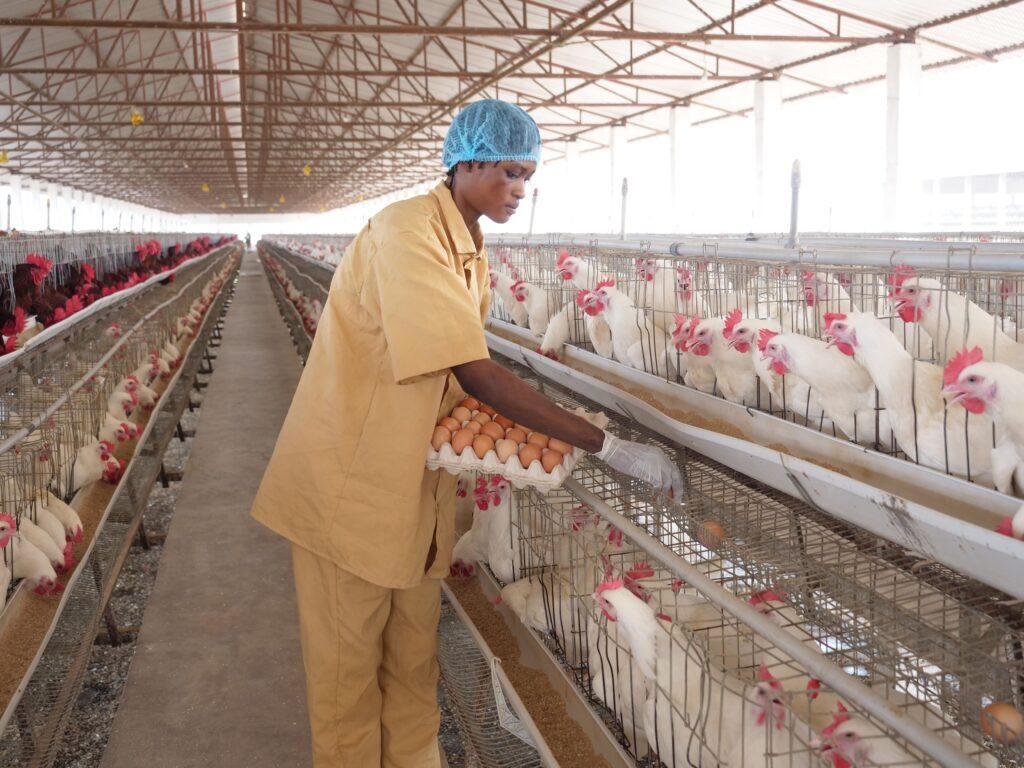
Birds perform best when their environment stays within specific ranges for temperature, humidity, ventilation, and lighting. These factors work together to support health and productivity. If any one factor is off, your birds will show it through reduced growth, fewer eggs, or increased illness.
Monitor these conditions daily. Make adjustments as needed based on the season and the age of your birds. Young chicks need warmer temperatures than mature layers. Understanding these differences and acting on them separates successful farmers from struggling ones.
Poultry farming offers real opportunities for farmers across different climates and production systems. These birds adapt well to various environments and management approaches. This flexibility means you can start small and grow as you learn and gain resources.
Your choice of production system depends on your available capital, your skills, and what your market needs. There’s no single right answer. Some farmers succeed with intensive systems using imported breeds and controlled environments. Others do well with semi-intensive or free-range systems using locally adapted birds.
The key is matching your approach to your circumstances while following core principles. Keep birds productive throughout their lives by providing optimal temperature, humidity, ventilation, and lighting. Build housing that’s structurally sound, durable, and cost-effective. Manage feed carefully to avoid waste. Follow proven health protocols.
These fundamentals work whether you’re raising 50 birds or 5,000. Focus on getting them right before expanding or trying complex techniques.
Summary on Poultry Production Guidelines
| Aspect | Key Points |
|---|---|
| What is Poultry | Domesticated birds raised for food including chickens, ducks, turkeys, guinea fowl, quails, and ostriches |
| Main Advantages | Small body size, low production costs, high-quality protein, feed efficiency, no cultural taboos, short generation interval |
| Common Problems | High feed costs, housing challenges, diseases, parasites, limited nutritional knowledge, shortage of suitable breeds |
| Improvement Strategies | Balanced nutrition, sound management, vaccination programs, disease control, regular stock renewal, productive breeds |
| Housing Requirements | Climate-appropriate design, proper ventilation, temperature control, humidity management, adequate lighting, structural durability |
| Feed Management | Avoid overfeeding, use proper trough design to reduce spillage by up to 20%, manage feed waste carefully as it can eliminate profits |
Frequently Asked Questions About Poultry Production
1. What types of birds are considered poultry?
Poultry includes any domesticated birds raised primarily for food. The most common are chickens, ducks, turkeys, and guinea fowl. Other poultry birds include quails, pheasants, ostriches, pigeons, and doves.
2. Why are feed costs so high in poultry production?
Feed ingredients like corn, soybeans, and grains compete with human food needs. This competition drives up prices. Since feed represents 60-70% of total production costs, these high prices significantly impact profitability.
3. How can I reduce feed waste in my poultry operation?
Use well-designed feeding troughs that minimize spillage. Don’t overfill feeders. Adjust tube feeders so the opening isn’t too wide. Good feeding equipment can reduce waste by up to 20%, which goes directly to your profit.
4. What’s the difference between local and imported chicken breeds?
Imported breeds have been selectively bred over many generations for specific traits like high egg production or fast growth. They typically outperform local varieties in productivity. However, local breeds may be better adapted to regional diseases and climate conditions.
5. What environmental conditions do chickens need to be productive?
Chickens need optimal temperature (varies by age), proper humidity levels, good ventilation, and appropriate lighting. These factors work together. If one is off, you’ll see reduced growth, fewer eggs, or increased illness. Monitor daily and adjust as needed.
6. How important is vaccination in poultry farming?
Vaccination is critical. Prevention through vaccination is far cheaper and more effective than treating sick birds. Work with a veterinarian to establish a proper vaccination schedule based on diseases common in your area.
7. What should I consider when designing a poultry house in a tropical climate?
Focus on ventilation and heat management. Use proper roof insulation. Orient the building to minimize direct sun during the hottest times. Ensure good airflow. The house should also be structurally strong, durable, and cost-effective while keeping birds comfortable year-round.
8. Why should I renew my poultry stock regularly?
Regular stock renewal maintains genetic diversity and productivity levels. Older birds produce fewer eggs or grow more slowly. Bringing in new birds keeps your flock performing at optimal levels and reduces the risk of genetic problems from inbreeding.
9. What are the most common diseases affecting poultry?
Common diseases include Newcastle disease, infectious bronchitis, avian influenza, coccidiosis, and fowl pox. Parasites like mites, lice, and worms are also frequent problems. Good biosecurity, vaccination programs, and prompt treatment of sick birds help control these issues.
10. Can small-scale farmers succeed in poultry production?
Yes. Poultry farming is suitable for different scales of operation. You can start small with limited capital and grow as you gain experience and resources. The key is matching your production system to your available resources while following sound management practices. Many successful commercial operations started small.
Do you have any questions, suggestions, or contributions? If so, please feel free to use the comment box below to share your thoughts. We also encourage you to kindly share this information with others who might benefit from it. Since we can’t reach everyone at once, we truly appreciate your help in spreading the word. Thank you very much for your support and for sharing!
Read Also: Methods of Livestock Breeding in the Tropical Environment