


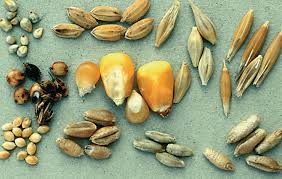
Cereal processing represents an important part of the food production chain, but the contribution of cereals to the nonfood sector should not be overlooked.
Milling represents the principal procedure in the cereal industry and is classified into two categories: dry and wet, each with its own characteristics. Dry milling separates the outer fibrous materials and germ, which are considered by-products, from the grain endosperm.
Overview and Definition of Cereals
The term “cereals” refers to members of the Gramineae family and includes nine species: wheat (Triticum), rye (Secale), barley (Hordeum), oat (Avena), rice (Oryza), millet (Pennisetum), corn (Zea), sorghum (Sorghum), and triticale, a hybrid of wheat and rye.
Cereal processing represents an important part of the food production chain, but the contribution of cereals to the nonfood sector should not be overlooked. Milling represents the principal procedure in the cereal industry and is classified into two categories: dry and wet, each with its own characteristics.
Read Also: How to Grow Paw-Paw (papayas): Beginners Business Guide
Pre-Milling Operations for Cereals
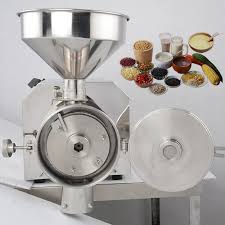
Dry milling of cereals is one of the oldest methods of the milling industry to provide milled fractions of cereal grains. Cleaning and conditioning of grains precede milling.
Cleaning is important because grain received in bulk generally contains grain impurities that depend on the type of cereal. The main grain impurities, following formal definition, are shriveled grains, other cereals, grains damaged by pests, grains in which the germ is discolored, sprouted grains, and miscellaneous impurities such as extraneous seeds, damaged grains, extraneous matter, husks, ergots, decayed grains, dead insects, and other undesirable material.
Cleaning employs equipment such as a magnetic separator that removes ferrous metal particles, disc or sieve separators that remove almost anything too big or too small to be the desired grain (e.g., straw), an aspirator to remove lighter impurities (e.g., dust), a destoner that separates materials with different density (e.g., stones) but of the same size as the desired grain, color sorters, and others.
1. Conditioning or Tempering of Cereal Grains
This is the process during which the kernels are moistened with controlled addition of water for the inner endosperm to become softer and the bran harder. This process aims to prevent breakup of bran, helps gradual separation during milling, and also improves sieving efficiency.
Generally, the soaking time and temperature of grain kernels can vary depending on the type of grain, the variety, and the initial moisture level. Corn kernels may need up to three stages of moistening to reach the desired final moisture (18%–27%) followed by resting time in tempering chambers.
The size and shape of the grain, the way outer layers stick to endosperm, and hardness are grain characteristics of great importance in milling. Dry milling consists of two processes: grinding and sifting.
Dry Milling Process of Corn
Degermination represents an extra process step (dry or wet) that takes place on corn whenever low-fat and high-purity finished products are needed. It aims to efficiently separate germ and pericarp. Following the degermination process, kernels are dehydrated to a moisture content of approximately 14%, and then most of the remaining pericarp and germ are separated by air aspiration and gravity separators, respectively.
Next is the rolling and sifting step. The remaining corn kernel without the germ and a great part of the pericarp is milled to fine particles by roller mills. During rolling, in addition to endosperm pieces, small pericarp and germ species and tip caps that are still present after degermination are gradually released.
These pieces are separated from the endosperm fraction through sifting, aspirating, and roller milling using a specific gravity table or purifiers. From the refined endosperm, flours of different particle sizes are obtained and are widely used to produce brewer’s grits, snack food grits, and corn flour.
Dry Milling Process of Rice (Oryza sativa L.)
1. Husking and Paddy Separation
Before further processing, grains are cleaned and graded according to size. Winnowing machines can be used to separate out the chaff, soil, and dirt. Some machines have integral sieves that combine cleaning with grading. Several grains have an unpalatable husk or shell that needs to be removed by a decorticator.
A range of specialized machines are available for this task. A range of small rice hullers (both manual and powered) is available. Less rice is broken during hulling if the rice is parboiled first. Rice polishers are available for removing the rice bran after hulling. The brown rice is then separated from the rough paddy rice using paddy separators.
Brown rice is polished by a series of operations that removes the bran layers, producing rice grains that are whiter in color and translucent. The removed bran is collected by aspirators, whereas the polished rice is graded since it contains different-sized broken rice pieces, bran, and dust.
White rice may further be ground to produce rice flour that could be used in baking gluten-free bread, making infant cereals, breakfast cereals, and other products. The physical factors affecting the degree of milling are hardness, size and shape, and surface ridge on the grain.
Paddy rice → Cleaning → Cleaned paddy → Parboiling → Dehusking/dehulling → Brown rice → Polishing → White rice → Grinding → Rice flour
Dry Milling Process of Wheat (Triticum sp.)
After conditioning, the wheat kernels are first passed through an abrasive machine that eliminates impurities present on the pericarp and break-damaged kernels. Two types of roller mills, break and reduction roller mills, are involved in the milling of wheat kernels.
First, break rollers break the wheat kernel and remove the endosperm and germ from the pericarp. The separation of milled wheat kernels is usually performed with sifters and purifiers. Second, the reduction rolls further reduce the sizings and middlings into flour.
Wheat → Cleaning → Conditioning → Breaking → Sieving → Reducing → Sieving → Grinding → Flours
Read Also: How To Grow Apple Trees
Wet Milling Process of Cereals
1. Definition of Wet Milling
In contrast to dry milling, wet milling consists of grinding the soaked grain and then separating the grain’s chemical compounds (starch, proteins, fiber, and oil). Wet milling of mainly corn aims to extract the maximum possible amount of native or undamaged starch granules.
The wet milling process involves different physical, chemical, biochemical, and mechanical operations. This process is used industrially primarily for corn and secondarily for wheat, but it could also be successfully applied to other cereals such as sorghum, barley, and oats, if appropriate modification of the equipment or processing is made.
2. Steeping in Wet Milling
Steeping of corn usually lasts from 30 to 48 hours. Steeping is performed by soaking the kernels in warm water containing sulfur dioxide, which is used as a reducing agent to soften the corn endosperm structure. The final moisture content during this step reaches around 48%–50% of the kernel weight.
3. Corn Grinding and Sifting in Wet Milling
After steeping comes the first milling step, where the moistened corn kernels are wet milled in plate or disc attrition mills into large pieces so that the germ is released, then dewatered and dehydrated to be used for oil extraction. During the second milling step, the denser endosperm pieces that may also contain pericarp tissues are milled to release the pericarp in flakes.
Pericarp pieces are separated in a metal sieve, whereas the endosperm particles are milled into fine slurry to release the starch granules from the protein matrix. Wet milling aims to release starch granules with minimal mechanical damage. Next, proteins are separated from starch granules by centrifugation and further purification.
The resulting refined starch and proteins are dehydrated, respectively. The starch has great industrial application; it is used to manufacture alcohol and food sweeteners by either acid or enzymatic hydrolysis. The germ is used for oil extraction.
4. Rice Grinding and Sifting in Wet Milling
Following the steeping procedure, rice is passed to mills and allowed to rest for up to 24 hours. The fiber is then removed by screening, whereas the starch, the main wet milling product of rice, is first recuperated by centrifugation and then washed with water to remove excess alkali and finally dried to a final moisture content of 10%. Centrifugation wastes contain proteins that could be recovered following the same procedure for the recovery of proteins in the steeping water.
Traditional and Industrial Products from Cereals
1. Traditional Cereal Products
Pap, tuwo, dankwo, kokoro, popcorn, and others.
2. Bakery Food Products
Bread, toasts, buns, sweet rolls, biscuits, cookies, cakes, chin chin, and others.
3. Nutraceutical and Industrial Food Products
Diabetic flour, high-fiber food products, starch, beer, weaning foods, fortified food products, syrups, alcohol/ethanol, and others.
Do you have any questions, suggestions, or contributions? If so, please feel free to use the comment box below to share your thoughts. We also encourage you to kindly share this information with others who might benefit from it. Since we can’t reach everyone at once, we truly appreciate your help in spreading the word. Thank you so much for your support and for sharing!