


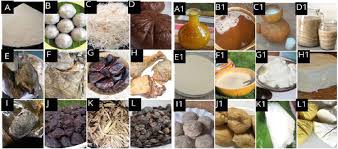
Fermented foods are products of edible or inedible raw materials that have undergone desirable physicochemical and biochemical modifications through the activities of microorganisms and/or their metabolites, but in which the weight of the microorganism (relative to substrate) in the food is small. A distinct group of fermented foods is the traditional alkaline fermented products often used as food condiments/seasoning agents.
As several people across the world gravitate back to “eating natural,” there is a new emphasis on fermented foods and seasoning agents, which are also critical cultural foods in countries and societies where they are important.
In this article, the production processes of different indigenous fermented condiments are explored.
Production Process of Dawadawa
Dawadawa is probably the most popular and commercially successful traditional seasoning agent in West and Central African Savannah, where it is known by different ethnic names. Dawadawa is processed from the solid substrate fermentation of cotyledons of locust bean (Parkia biglobosa). It is widely consumed as a food seasoning in Northern and some parts of Southern Nigeria. The traditional process may vary slightly depending on the processor and locality.
The flow diagram for its production is shown in the figure below.
Flow chart for the traditional method of producing dawadawa.
Read Also: Fish Products as Food Ingredients
Production Process of Okpeye
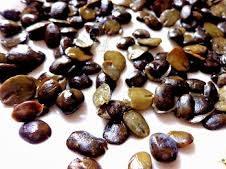
Okpeye, much like dawadawa, is a traditional seasoning produced by solid substrate alkaline fermentation of Prosopis africana (African mesquite) seeds. P. africana is mostly used as a source of seasoning in the middle belt and parts of Southeastern Nigeria. The process involves the following:
- Boiling: Boiling of the mesquite seeds for 12–24 hours to cook the seeds, soften the seed coat, and ease the de-hulling process.
- De-hulling: De-hulling in a very laborious manual process. The cotyledons are washed thoroughly, drained, and reheated (dry heat) in a pot lined with the leaves of Alchornea cordifolia, popularly known as akwukwo okpeye by the native people. Other leaves, such as banana leaves, may be used when the conventional leaves are unavailable.
- Fermentation Preparation: The cotyledons are spread to a few cm depth in a shallow raffia basket already lined with leaves of Alchornea cordifolia, covered with more leaves, and weighted with pebbles.
- Fermentation: Fermentation proceeds for 4 days at uncontrolled temperature. At the end of this stage, the fermented cotyledons are now dark brown in color with a strong ammonia-like smell.
- Grinding and Molding: The fermented cotyledons are ground into a smooth paste and molded into different shapes and sizes.
- Drying: The condiment is now sun-dried for a variable length of time, at the end of which the product becomes hard and black with a more mellow and preferable aroma.
The dried condiment is resistant to spoilage by microorganisms and has a very long shelf life with occasional re-drying under the sun.
The flow chart for okpeye production is shown below.
Traditional process for the production of okpeye.
Steps in the traditional fermentation of P. africana seeds to produce okpeye:
(A) Seeds before boiling; (B) boiled seeds; (C) de-hulled seeds before fermentation; (D) de-hulled cotyledons spread on leaf-lined basket; (E) fermentation taking place outside under the sun; (F) fermented cotyledons; (G) ground paste; (H) molded seasoning undergoing drying under the sun; (I) dried okpeye seasoning.
Read Also: Economic Importance, Uses, and By-Products of Mushroom Gills
Production Processes of Ugba and Ogiri
Ugba Production
Ugba is a Nigerian-based condiment prepared by the solid-state alkaline fermentation of seeds of the African oil bean (Pentaclethra macrophylla). It is also known as ukpaka by the Igbos in the Southeastern part of Nigeria, where it is most popular. Ugba is consumed as a delicacy, appetizer, or used as a flavoring agent in various traditional dishes. Prepared in different ways, ugba is an important food product for various traditional ceremonies.
The basic procedures involve:
- Boiling: Boiling of oil bean seeds for 12 hours or more.
- De-hulling and Slicing: Removing the seed coat and slicing the cotyledons into thin slices.
- Soaking: The slices are then soaked in water overnight, washed thoroughly, and wrapped with fresh leaves.
- Fermentation: Fermentation is usually done at ambient temperature, and the duration varies depending on the intended use. Fermentation can last as short as 3 days or up to 5 days.
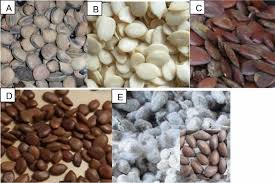
The figures below show the processing steps, African oil bean seeds, fermented slices of oil bean cotyledons, and fermented product (ugba) packaged in different ways.
Flow chart for the traditional production of ugba.
African oil bean seeds (A), fermented slices of oil bean cotyledons (B), and fermented oil seeds cotyledons (ugba) packaged in polythene bags or wrapped with local leaves.
Ogiri Production
Ogiri is a popular African fermented seasoning, traditionally prepared by the solid-state alkaline fermentation of castor oil seeds (Ricinus communis). Depending on locality, season, and availability, it may also be obtained by fermenting melon seeds (Citrullus vulgaris) or fluted pumpkin seeds (Telfairia occidentalis). Ogiri is used in flavoring many traditional soups. In fact, it is regarded as an indispensable seasoning in the preparation of specialized soups, which are highly cherished and extensively consumed by the Igbo ethnic group in Southeastern Nigeria.
The flow chart for ogiri production is shown below.
Flow chart for the traditional production of ogiri.
Fermented castor oil seed (ogiri) condiment (A) and fermented castor oil seeds (ogiri) condiment wrapped with local leaves (B).
Less Common Legume-Based Alkaline Fermented Seasoning Agents
Aisa Production
Aisa is a Nigerian seasoning agent processed from the solid-state alkaline fermentation of Albizia saman (Jacq) F. Mull, popularly known as monkey pod, rain tree, or saman tree. Albizia saman is one of the uncommon and under-exploited legumes in the sub-Saharan regions. Like other traditional fermented seasonings, aisa is used to flavor various traditional dishes and soups. The production process is similar to dawadawa. The basic method involves:
- Boiling: Boiling of the saman seeds until tender, followed by manual de-hulling.
- Washing and Re-boiling: The cotyledons are washed and boiled again for 1–2 hours, then washed in water.
- Fermentation Preparation: The cotyledons are wrapped in clean fresh leaves (banana or paw-paw) in bundles.
- Fermentation: The wrapped bundles are placed in calabashes and allowed to ferment for 1–7 days at ambient temperature. At the end of fermentation, the product is a dark brown, sticky mash covered with a mucilaginous coat and possessing a strong ammoniacal smell.
Owoh Production
Owoh is another African fermented seasoning whose substrate is under-utilized. It is made by the solid-state alkaline fermentation of cotton seeds (Gossypium hirsutum). Owoh is mainly used as a seasoning in mid-Western Nigeria. The raw seeds are toxic and inedible. The traditional process involves:
- Boiling: Boiling of cotton seeds until they are properly cooked and become tender.
- De-hulling: The seed coats are removed manually.
- Re-boiling: The cotyledons are then washed, wrapped in banana leaves, and boiled again for 1–2 hours.
- Fermentation: The wraps are removed from water and placed in calabashes or earthen pots, then covered with jute sacks and placed in a warm location (often beside the fireplace) to ferment. Fermentation is done at ambient temperature for 2–3 days.
- Grinding and Molding: At the end of the fermentation, the mash is ground and molded into balls.
- Drying: The product may be used at this point, but preferably it is sun-dried to extend the shelf life and also to develop a more desirable aroma.
Packaging and Storage of Fermented Condiments
The traditional condiments are usually packaged with leaves and stored at ambient temperatures above fireplaces.
Inadequate packaging and poor presentation of products are among the challenges mitigating the global development and consumer appeal of fermented products in Africa and other developing regions. Unlike modern food industries that use attractive and aesthetic packaging that increases consumer appeal, the traditional condiments are usually packaged with leaves. On account of this, indigenous fermented foods are often considered as food for the poor. The adoption of modern aesthetic packaging and adequate presentation are crucial steps to overcome the challenges of kitchen technology and also for commercialization and industrialization of fermented foods and condiments. These will help to minimize the problems of post-process contamination and increase consumer confidence.
The use of modern storage facilities like refrigeration and freezing could extend the quality and shelf life of these products.
Do you have any questions, suggestions, or contributions? If so, please feel free to use the comment box below to share your thoughts. We also encourage you to kindly share this information with others who might benefit from it. Since we can’t reach everyone at once, we truly appreciate your help in spreading the word. Thank you so much for your support and for sharing!