


Poultry farming is one of the most profitable agricultural businesses you can start today. Whether you want to raise chickens for eggs, meat, or breeding, understanding the different types of poultry enterprises is essential for success. This guide breaks down the main types of poultry farming operations and what each one involves.
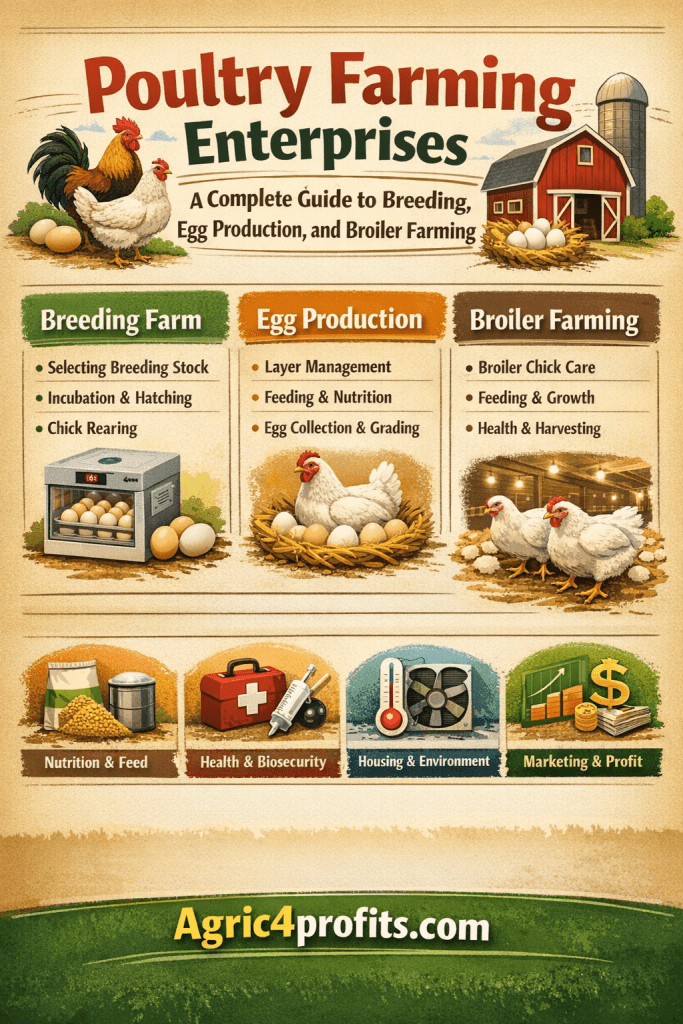
The poultry industry has three main business areas. First is breeding and running hatcheries, second is raising chickens for egg production, and third is broiler production for meat. Beyond these core operations, there are specialized farms that breed pure genetic lines, grandparent stock, and parent stock. Feed mills and processing facilities also play important roles in getting poultry products to market.
Each enterprise connects to the others. Feed production supports all types of farms. Processing plants handle the final products. And breeding operations supply the chicks that egg and broiler farms need. Some large operations combine several of these enterprises under one roof, which we call integration. This approach gives farmers better control over their supply chain and product quality.
The success of any poultry business depends on understanding which enterprise fits your resources, location, and market. Some operations give faster returns than others. Some need more technical knowledge or bigger investments upfront. We’ll walk through each type so you can see what works best for your situation.
1. Breeding and Hatching Commercial Day-Old Chicks
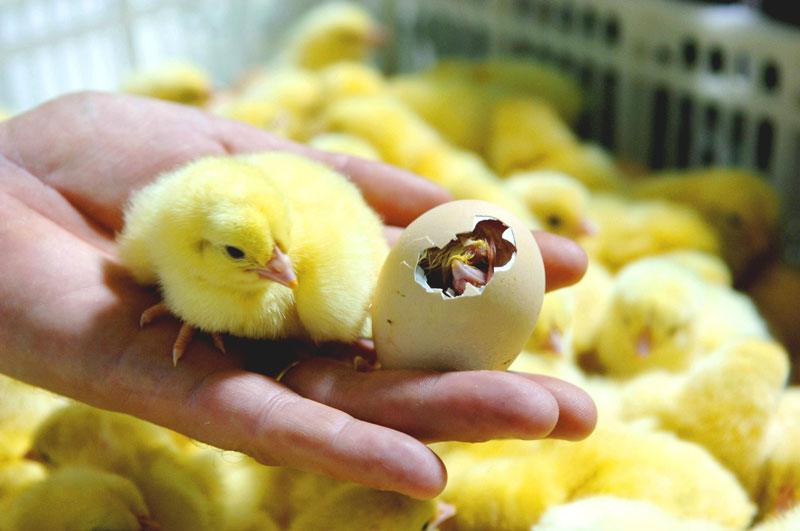
This type of operation focuses on producing baby chicks that other farmers buy to raise for eggs or meat. The process starts with parent stock, which are adult chickens kept specifically for breeding.
I. How the Breeding Process Works: Farmers maintain flocks of hens and roosters in the right ratios to ensure eggs get fertilized. These fertile eggs go into incubators, which provide the exact temperature and humidity needed for chicks to develop. After about 21 days, the eggs hatch in specialized hatchers. The newborn chicks are then sorted, vaccinated, and sold to other poultry farmers within a day or two.
The main product here is day-old chicks. But breeders also sell eggs that don’t meet hatching standards and older breeding birds when their productive years end. These secondary products add extra income to the operation.
ii. Types of Breeding Flocks: Breeding operations can focus on egg-laying breeds or meat breeds. Each type requires different genetic lines and management practices. Egg-type breeders produce chicks that grow into good layers. Meat-type breeders produce chicks that grow fast and develop good muscle mass.
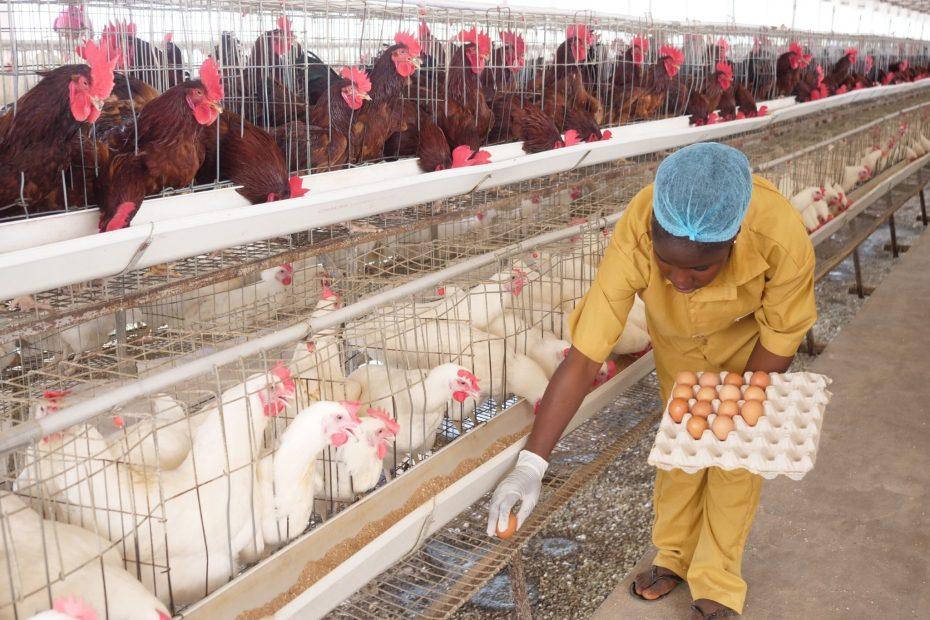
iii. Table Egg Production: When farmers want to produce eggs for people to eat, they buy female chicks (pullets) from a hatchery. These pullets need special care for about five months before they start laying. The hatchery separates male and female chicks before sale since roosters aren’t needed for egg production.
Once the pullets mature, they lay eggs for about a year. These eggs go straight to market for consumption. After the laying cycle ends, farmers sell the hens as spent layers, usually for processing into products like chicken soup or pet food.
iv. Broiler Production: Raising broilers gives the fastest payback of any poultry business. Farmers buy day-old broiler chicks and raise them for just seven to ten weeks. At that age, the birds weigh between 1.6 and 2 kilograms and are ready for market.
Broilers can be sold live to buyers who want to slaughter them fresh. Or farmers can process the birds themselves and sell them as fresh or frozen chicken. Processing adds value but requires more equipment and handling.
v. Integration Projects: Large farms often combine breeding, egg production, and broiler raising in one location. These integrated operations might also include feed mills and processing facilities.
The big advantage of integration is control. When you make your own feed and raise your own chicks, you don’t depend on outside suppliers. Quality stays consistent because you oversee every step. If one part of the operation has a problem, other parts can adjust to compensate.
vi. Feed Milling: Feed costs make up 60 to 80 percent of what it takes to produce eggs and meat. That’s why quality control matters so much. Most large poultry producers make their own feed rather than buy it ready-made.
Feed milling starts with buying ingredients like corn, soybeans, vitamins, and minerals. These ingredients get ground to the right size, mixed in precise ratios, and bagged for storage. Having your own mill means you can adjust formulas based on bird age, weather, and production goals.
vii. Line Breeding and Grandparent Stock Production: Creating pure genetic lines and developing different types of parent stock takes specialized knowledge. This work happens at the foundation level of the poultry industry.
Professional breeders select birds with the best traits and breed them over many generations. They look for qualities like egg production, growth rate, disease resistance, and feed efficiency. Without this ongoing breeding work, the whole commercial poultry industry would eventually decline. The genetic improvements made at this level flow down to commercial farms through grandparent stock, parent stock, and finally to the chicks that produce eggs and meat.
Read Also: Production Practices for Poultry Operations
2. Brooding Management
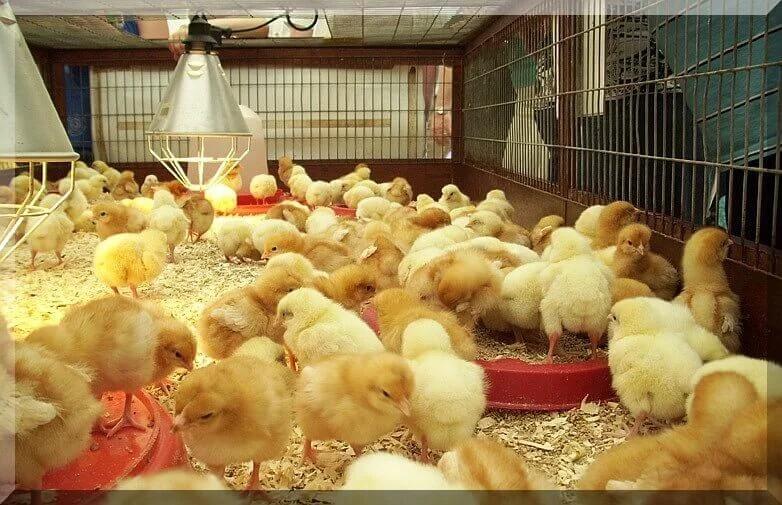
Brooding means taking care of baby chicks after they hatch. Young chicks can’t regulate their body temperature well, so they need help staying warm. Good brooding also means providing the right amount of light, proper humidity, fresh air, quality feed, clean water, and protection from disease.
In Nigeria and other tropical countries, the weather usually provides enough humidity. Proper housing design gives adequate ventilation. But chicks still need extra heat, especially at night or during cool weather. They also need constant access to feed and water.
I. The Brooding Period: For the first six weeks of life, chicks need supplementary heat to stay comfortable. This timeframe is the brooding period. How you provide that heat and manage other factors determines how many chicks survive and how fast they grow.
There are two basic approaches to brooding.
A. Natural Brooding
1. Natural Brooding: This method uses a mother hen to care for her chicks. A broody hen will hatch eggs and then keep the chicks warm, teach them to eat and drink, and protect them from danger. You can also give purchased day-old chicks to a broody hen, and she will usually adopt them.
Local chicken breeds work well for natural brooding. Some Rhode Island Red hens also make good mothers, though not all of them. A typical-sized broody hen can handle about 12 chicks in cool weather. In hot weather, she can manage up to 15 chicks.
Natural brooding works fine for small-scale operations or backyard flocks. But it’s not practical for commercial farms that need to raise hundreds or thousands of chicks at once. You would need too many broody hens, and timing would be hard to control.
B. Artificial Brooding
1. Artificial Brooding: This approach replaces the mother hen with equipment. Brooders provide the warmth chicks need. Housing protects them from the weather and predators. Feeders and waterers give them food and water. Farmers manage temperature, lighting, and all other factors directly.
Artificial brooding is the standard for commercial operations. The equipment costs money upfront, but you can raise many more chicks and have better control over results.
2. Starting Small: If you’re new to poultry farming, start by brooding a small batch of chicks. Aim for less than four percent mortality by eight weeks of age. That’s a good benchmark for success. Once you can consistently hit that target, you’re ready to scale up to larger numbers.
Good brooding sets the foundation for healthy, productive birds. Poor brooding leads to losses, slow growth, and ongoing health problems. Taking time to learn proper techniques pays off throughout the birds’ lives.
Read Also: Principles of Poultry Production and Types or Stains of Poultry
Summary on Poultry Farming Enterprises
| Topic | Key Points |
|---|---|
| Main Enterprises | Breeding and hatchery, commercial egg production, broiler production |
| Support Services | Pure line breeding, grandparent stock, feed milling, processing, and marketing |
| Breeding Operations | Raise parent stock to produce fertile eggs, hatch day-old chicks for sale |
| Egg Production | Buy pullets, raise for 5 months, collect eggs for 1 year, sell spent hens |
| Broiler Production | Fastest return, 7-10 weeks from chick to market, 1.6-2kg live weight |
| Integration | Combines multiple enterprises, ensures supply reliability and quality control |
| Feed Milling | Accounts for 60-80% of costs, large farms produce their own feed |
| Line Breeding | Specialized work creating genetic improvements for commercial production |
| Natural Brooding | Uses mother hen, works for 12-15 chicks, suitable for small scale only |
| Artificial Brooding | Uses equipment to provide heat and care, necessary for commercial scale |
| Brooding Period | First 6 weeks of life, requires supplementary heat and close management |
| Success Benchmark | Less than 4% mortality by 8 weeks shows good brooding practices |
Frequently Asked Questions About Poultry Farming Enterprises
1. What is the most profitable type of poultry farming?
Broiler production typically gives the fastest return since birds reach market weight in just 7-10 weeks. However, egg production provides a steady income over a longer period. The best choice depends on your capital, market access, and management ability.
2. How much capital do I need to start a poultry farm?
Capital needs vary widely based on scale and enterprise type. A small broiler operation with 500 birds might need $2,000-5,000 for housing, chicks, feed, and equipment. Larger operations or integrated farms require significantly more investment.
3. What is the difference between parent stock and commercial chicks?
Parent stock are breeding birds kept to produce fertile eggs. These eggs hatch into commercial chicks, which farmers buy to raise for either egg or meat production. Parent stock comes from grandparent stock, which comes from pure genetic lines.
4. How long does it take for pullets to start laying eggs?
Pullets typically start laying at about 5 months (20-22 weeks) of age. They reach peak production around 6-7 months and maintain good production for about one year before being sold as spent layers.
5. Is it better to make your own feed or buy it ready-made?
Making your own feed gives better quality control and usually costs less, especially at larger scales. However, it requires knowledge of nutrition, proper equipment, and reliable ingredient suppliers. Small farms often buy ready-made feed until they grow large enough to justify a feed mill.
6. What causes high mortality in young chicks?
Common causes include incorrect brooding temperature, poor ventilation, contaminated feed or water, disease, and overcrowding. Maintaining less than 4% mortality requires careful attention to all these factors during the first 8 weeks.
7. Can I raise both layers and broilers on the same farm?
Yes, but they need separate housing and management. Layers and broilers have different nutritional needs, growth rates, and production cycles. Keeping them separate prevents disease spread and allows proper management for each type.
8. How do integrated poultry farms work?
Integrated farms combine multiple enterprises like breeding, feed production, growing, and processing. This gives control over the entire supply chain, ensures consistent quality, and can reduce costs by eliminating middlemen.
9. What equipment do I need for artificial brooding?
Basic equipment includes brooders for heat, feeders, waterers, thermometers, and proper housing with ventilation. You might also need backup heating sources, lighting systems, and equipment for cleaning and disinfection.
10. How much space do chickens need?
Space requirements depend on the production system. Broilers in intensive systems need about 0.5-1 square foot per bird. Layers need slightly more room. Free range systems require much more space, typically 2-4 square feet indoors plus outdoor access.
Do you have any questions, suggestions, or contributions? If so, please feel free to use the comment box below to share your thoughts. We also encourage you to kindly share this information with others who might benefit from it. Since we can’t reach everyone at once, we truly appreciate your help in spreading the word. Thank you very much for your support and for sharing!
Read Also: The Ultimate Step-by-Step Guide to Vegetable Gardening