


Poultry chickens, while hardy and resilient, are not immune to the challenges posed by heat stress. Imagine a scorching summer day when the sun beats down relentlessly. These conditions can be particularly taxing for our feathered friends. Heat stress in poultry is a serious concern that impacts their well-being and overall productivity, and it happens more often than most farmers realize.
Summer heat causes numerous deleterious effects on poultry birds like broilers and layers, which ultimately reduces profitability. Heat stress has been a serious concern for poultry producers because it directly leads to financial losses through impaired poultry performance. The losses aren’t just from reduced production. They also come from increased mortality, higher veterinary costs, and lower quality products that fetch reduced prices.
When temperatures soar, chickens, much like humans, struggle to regulate their body temperature. This leads to a range of issues including reduced feed intake, decreased egg production, and even mortality in extreme cases. Understanding the signs of heat stress is crucial for any poultry farmer who wants to maintain production and protect their investment during hot weather.
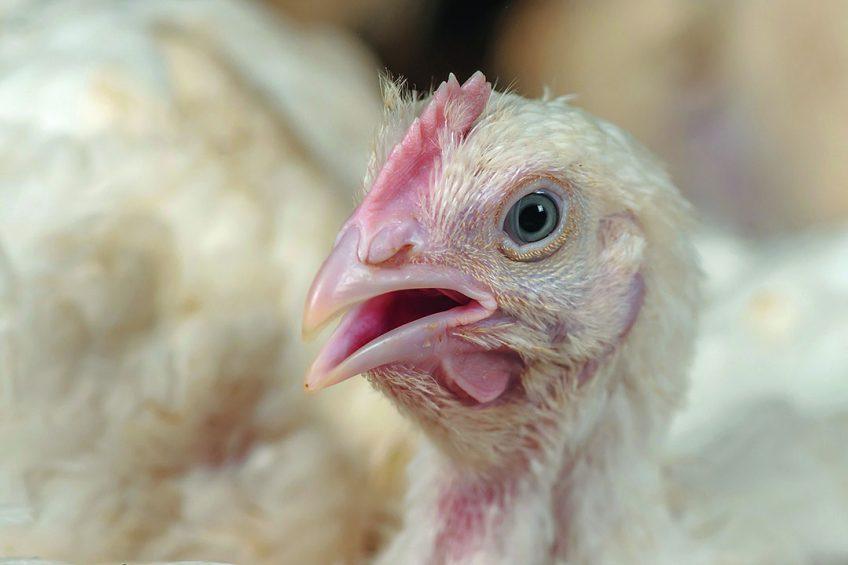
Watch out for telltale signs such as increased panting, wing spreading, and lethargy among your flock. Additionally, a drop in egg production and quality may indicate heat-related challenges. These symptoms don’t appear suddenly at some magic temperature threshold. Rather, they develop gradually as heat stress intensifies, giving observant farmers time to intervene before serious damage occurs.
Prevention and management are key to ensuring the welfare of your chickens during heatwaves. Waiting until birds show obvious distress is too late. Proactive measures implemented before heat becomes severe protect both bird health and your bottom line. The strategies aren’t complicated or expensive, but they require planning and consistent execution.
Providing adequate shade is a fundamental strategy. Create cool zones within the poultry housing, utilizing natural shade or installing artificial covers. Adequate ventilation is equally important. Proper air circulation helps dissipate heat and maintain a comfortable environment for the birds. Moving air feels cooler even at the same temperature, which provides significant relief.
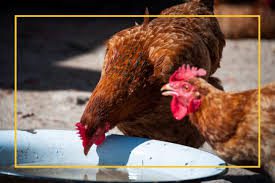
Hydration plays a pivotal role in combating heat stress. Make sure fresh, cool water is readily available at all times. Consider adding electrolytes to their water supply to replenish essential minerals lost during heat-induced stress. Additionally, adjusting feeding schedules to cooler parts of the day can stimulate better appetite and nutrient intake.
Innovative cooling solutions, such as misting systems or evaporative cooling, can be effective in reducing ambient temperatures within poultry houses. These technologies offer a refreshing respite for chickens and contribute to a more conducive environment. While they require upfront investment, the protection they provide during extreme heat often justifies the cost.
This guide covers the physiological mechanisms of heat stress, its effects on bird health and production, clinical signs to watch for, and practical management strategies that work.
Read Also: Poultry Farming and Adverse Season as a Stressor
1. What Exactly Happens to Poultry Chickens in Heat Stress?
Poultry birds become heat stressed when they have difficulty achieving balance between body heat loss and body heat production. The normal body temperature of poultry is 41°C (approximately 106°F), which is significantly higher than human body temperature.
A. Temperature Thresholds
When environmental temperature exceeds 35°C (95°F), birds are likely to experience heat stress. This threshold varies somewhat depending on humidity levels, air movement, and bird age, but 35°C serves as a general warning point where problems begin.
B. Non-Evaporative Cooling
In an effort to maintain body temperature, birds first rely on losing heat from blood vessels near the surface of skin through a process called non-evaporative cooling. Blood vessels in the skin, comb, and wattles dilate, bringing warm blood closer to the surface where heat can radiate away.
However, this mechanism is only effective when ambient temperature is lower than the bird’s body temperature. As ambient temperature increases beyond the bird’s thermoneutral zone (around 18 to 24°C or 65 to 75°F), non-evaporative cooling becomes ineffective. You can’t cool something by exposing it to air that’s nearly as hot as it is.
C. Evaporative Cooling Through Panting
At these higher temperatures, birds rely on panting and evaporative cooling as their mechanism for controlling body temperature. Birds don’t sweat like humans. Instead, they pant to evaporate moisture from their respiratory tract.
Panting is an effective but energy-expensive way for birds to control body temperature. It typically results in lower feed intake and growth as well as reduced feed efficiency. Between 20 and 30°C, feed intake is reduced by 1 to 1.5% for each 1°C rise in temperature. Above 32°C (90°F), feed intake drops by 5% for each additional degree.
This reduced feed intake increases water intake to offset water loss, but the situation is complicated by the fact that the body’s ability to retain water is reduced as the evaporative cooling process escalates.
D. Respiratory Alkalosis
During high ambient temperatures, birds increase panting up to 10 times from a normal rate of 25 breaths per minute to 250 breaths per minute. This leads to excessive loss of carbon dioxide, resulting in raised blood plasma bicarbonate levels and increased pH. The body attempts to compensate by excreting bicarbonates via urine.
Bicarbonates are negatively charged ions that must be coupled with positively charged ions such as potassium to be excreted in urine. However, potassium is important in maintaining intracellular water balance. A loss of potassium ions via urine reduces the ability to maintain this water balance.
Consequently, while birds do compensate for water losses associated with panting by consuming more water, its retention in body cells is limited by simultaneous loss of electrolytes such as potassium in urine. This creates a vicious cycle where birds drink more but can’t retain the water they need.
2. Effects of Heat on Poultry Birds
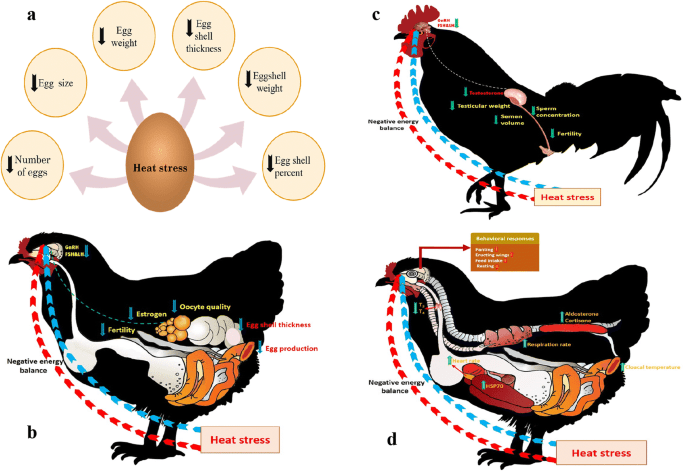
The most important effect of heat stress is decreased body resistance and more susceptibility to E. coli, chronic respiratory disease (CRD), and other infections. In summer, outbreaks of gout may be seen in broilers and layers as kidney function becomes compromised.
A. Blood Flow Redistribution
In heat-stressed birds, blood flow increases to the upper respiratory tract, skin, and abdominal muscles for relieving heat. However, blood flow to the intestinal tract is decreased. This redistribution prioritizes cooling over digestion.
As a result, there is reduction in appetite leading to lower feed intake. Birds simply don’t feel hungry when they’re heat stressed, and their digestive system isn’t receiving adequate blood flow to process food efficiently anyway.
B. Intestinal Function Changes
Concurrently, water intake increases, resulting in fluid contents in the intestinal tract. This further causes diarrhea that results in loss of electrolytes needed to maintain acid-base balance. The wet droppings you see during hot weather aren’t just from increased water consumption. They’re also from poor intestinal absorption due to reduced blood flow.
Read Also: Vaccination Program for Poultry Chickens
3. Clinical Signs and Symptoms
The following clinical signs will be observed in heat-stressed birds:
i. Panting and rapid respiration: This is usually the first and most obvious sign. Birds breathe rapidly with open beaks, sometimes extending their necks.
ii. Increased water intake: Birds drink far more than normal, sometimes spending much of their time near drinkers.
iii. Reduced appetite: Feed consumption drops noticeably during hot periods, particularly during the hottest parts of the day.
iv. Reduction in egg production: Layers produce fewer eggs during heat stress. The drop can be dramatic, sometimes 20 to 30% or more.
v. Poor eggshell quality: The eggs that are produced often have thin shells, rough texture, or other quality defects.
vi. Less body weight gain in broilers: Growth rates slow substantially during heat stress periods. Broilers may take significantly longer to reach market weight.
vii. Reduced feed efficiency: Birds convert feed to meat or eggs less efficiently during heat stress, wasting feed and reducing profitability.
viii. Increased body temperature: Rectal temperature rises above normal 41°C. In severe cases, temperatures may reach 43 to 45°C, which is often fatal.
4. Post-Mortem Lesions
Birds that die from heat stress show characteristic post-mortem findings:
i. Dehydrated carcass: The body is noticeably dehydrated with reduced muscle mass and sunken eyes.
ii. Mucoid exudates in mouth and nostrils: Sticky secretions are present in the respiratory passages.
iii. Pale or cyanotic combs: The comb and wattles may be pale (indicating poor blood flow) or bluish (indicating oxygen deprivation).
iv. Pale breast muscles: Muscle tissue appears lighter in color than normal due to reduced blood flow.
v. Congestion of liver, spleen, kidney, and lungs: Internal organs appear dark and swollen with blood.
vi. Fluid contents in intestines: The intestinal tract contains excessive watery fluid rather than normal digesta.
vii. Rapid decomposition of carcass: Heat-stressed birds decompose very quickly after death, much faster than birds that died from other causes.
In conclusion, heat stress poses serious challenges to poultry health and productivity. Understanding the physiological mechanisms, recognizing clinical signs early, and implementing proactive management strategies are essential for protecting your flock during hot weather. Focus on providing adequate ventilation, shade, cool fresh water, and adjusted feeding schedules to minimize heat stress impact.
Summary on Heat Stress Management in Poultry

| Aspect | Key Points |
|---|---|
| Normal Body Temperature | 41°C (106°F) for poultry birds |
| Heat Stress Threshold | Environmental temperature above 35°C (95°F) |
| Cooling Mechanisms | Non-evaporative cooling first; panting/evaporative cooling when that fails |
| Panting Rate | Increases from 25 breaths/min to 250 breaths/min during severe stress |
| Feed Intake Impact | Reduces 1-1.5% per 1°C rise between 20-30°C; 5% per degree above 32°C |
| Main Clinical Signs | Panting, wing spreading, increased water intake, reduced feed intake |
| Production Effects | Reduced egg production, poor shell quality, slower broiler growth |
| Disease Susceptibility | Increased vulnerability to E. coli, CRD, gout outbreaks |
| Electrolyte Loss | Potassium and bicarbonate lost through urine during panting |
| Water Retention Issue | Birds drink more but can’t retain water due to electrolyte loss |
Frequently Asked Questions About Heat Stress in Poultry
1. At what temperature should I start implementing heat stress prevention measures?
Start implementing cooling measures when temperatures consistently reach 80°F (27°C) or higher. Don’t wait for extreme heat. Birds begin experiencing stress well before temperatures reach dangerous levels. Having systems in place early prevents problems before they start.
2. How much more water will chickens drink during hot weather?
Water consumption can double or even triple during hot weather compared to moderate temperatures. A laying hen that normally drinks 250 ml per day may consume 500 to 750 ml when temperatures exceed 32°C (90°F). Ensure adequate drinker space and water supply to meet this increased demand.
3. Why do my hens stop laying eggs during heat waves?
Heat stress diverts energy from egg production to cooling. Additionally, reduced feed intake means hens aren’t consuming enough calcium and other nutrients needed for egg formation. Eggshell formation is particularly sensitive to heat stress because it requires significant calcium and metabolic effort that heat-stressed birds can’t spare.
4. Can I add electrolytes to drinking water daily during summer?
Yes, adding electrolytes during hot weather helps replace minerals lost through panting and increased urination. Use commercial poultry electrolyte products at recommended rates. However, don’t use electrolytes continuously for weeks on end as this can create mineral imbalances. Use them during heat waves, then return to plain water during cooler periods.
5. Should I reduce protein in feed during hot weather?
Some nutritionists recommend slightly reducing protein during extreme heat because protein metabolism generates heat. However, don’t reduce it too much or production will suffer even more. A better approach is increasing energy density by adding fat or oil, which generates less metabolic heat than protein or carbohydrates.
6. Is it better to feed during the coolest part of the day?
Yes, feeding during early morning and evening when temperatures are lower encourages better feed intake. Some farmers remove feed during the hottest afternoon hours and offer it again in the evening. This strategy helps birds consume adequate nutrition without generating excess metabolic heat during the day’s peak temperature.
7. How effective are misting systems for cooling poultry houses?
Misting systems can reduce temperature by 10 to 15°F (5 to 8°C) through evaporative cooling. They’re most effective in dry climates and less effective in humid areas where evaporation is slower. Ensure misters create fine droplets that evaporate before reaching birds. Large droplets that wet the litter create humidity and ammonia problems.
8. Will my chickens recover fully after a heat stress episode?
Recovery depends on severity and duration. Mild heat stress with proper intervention allows full recovery within a few days. Severe heat stress can cause permanent damage including reduced lifetime egg production in layers and organ damage in broilers. Some birds may never return to full productivity, which is why prevention is far better than treatment.
Do you have any questions, suggestions, or contributions? If so, please feel free to use the comment box below to share your thoughts. We also encourage you to kindly share this information with others who might benefit from it. Since we can’t reach everyone at once, we truly appreciate your help in spreading the word. Thank you very much for your support and for sharing!
Read Also: Comprehensive Guide on How to start Cockerel Farming Business