


When you’re setting up a poultry farm, one of the first questions that comes up is: how tall should the pen be? It’s a fair question. Get it wrong and you’ll deal with poor ventilation, heat stress, or worse, a building that can’t handle the weather. The answer depends on the housing system you choose.
The basic idea is simple. Your poultry house needs to be high enough for good air flow and to keep temperatures down. But it shouldn’t be so tall that strong winds can damage it. For a deep litter system, the sweet spot is usually around 12 feet. This height gives you enough space for air to move while keeping the structure stable.
Battery cage systems are different. Since you’re stacking cages inside the building, you need more vertical space. The height can go above 12 feet, depending on how many tiers of cages you plan to use. More tiers mean you need a taller building.
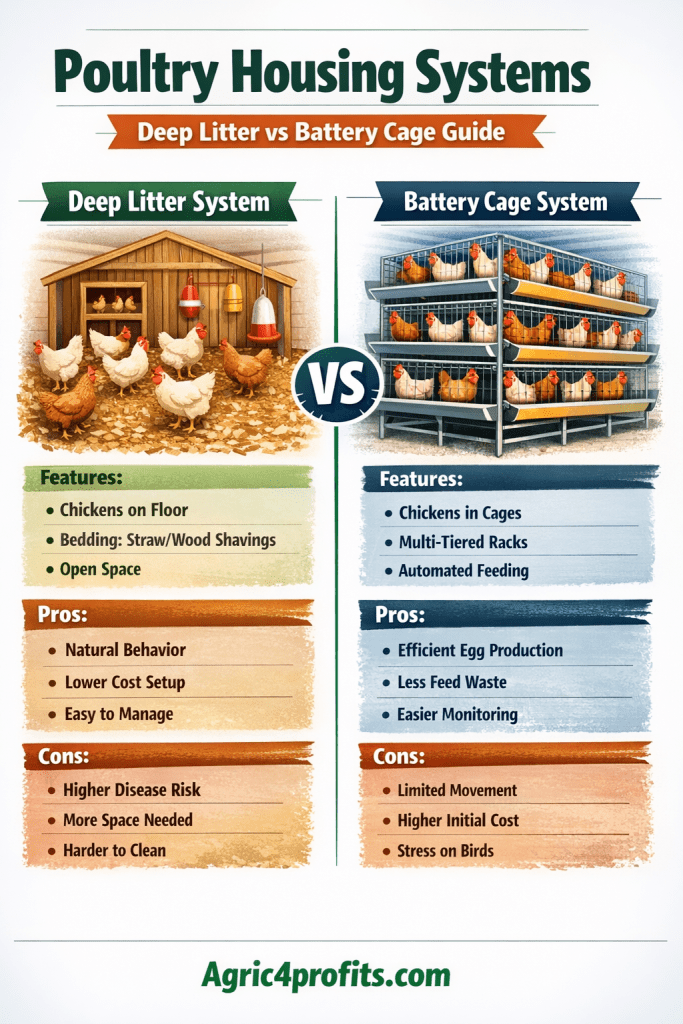
Both systems have their place in poultry farming. The deep litter system is popular because it’s cost-effective and gives birds a more natural environment. The battery cage system, on the other hand, lets you pack more birds into the same floor space and makes it easier to track production.
This guide breaks down everything you need to know about these two systems. We’ll cover what makes each one work, what the benefits are, and what challenges you might face. Whether you’re starting fresh or looking to improve your setup, you’ll find practical information here.
Let’s start with the deep litter system and see why so many farmers choose it.
1. Poultry Deep Litter System
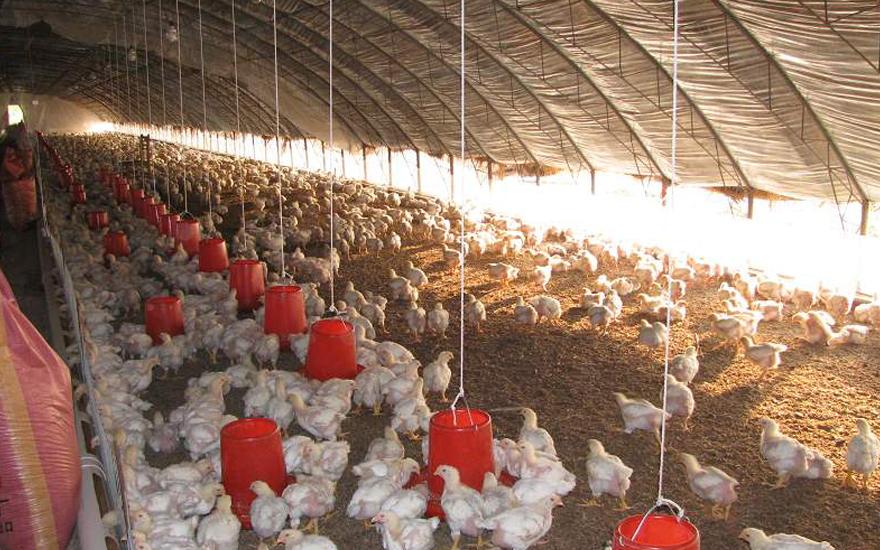
The deep litter system is a housing method where you spread bedding material on the floor and keep adding to it over time. You start with a base layer of straw, sawdust, or wood shavings. As birds use it and drop waste on it, you add fresh material on top. Over weeks and months, this builds up into a deep layer that can reach 1 to 2 meters.
Here’s how it works. You begin with about 4 inches of fine litter material. As it gets soiled, you add another 1 to 2 inches. You don’t remove the old litter right away. Instead, you keep the depth between 6 and 12 inches by taking out some of the older material from time to time.
What makes this system interesting is what happens beneath the surface. Microorganisms in the litter break down the bird waste naturally. This creates a composting effect that reduces odors and produces heat. It’s a biological process that farmers have used for decades, and it works without chemicals or complex machinery.
Read Also: Poultry Housing Management: Poultry Pen/House Construction Guide
2. Advantages of the Deep Litter System
This system has several strong points that explain why it remains popular. First, it costs less to set up and run compared to cage systems. You don’t need expensive equipment or complicated installations.
The environment is better for the birds too. They can move around freely, scratch in the litter, and behave more naturally. This reduces stress and keeps them healthier. The litter itself provides something valuable that many people overlook.
As the litter builds up and composts, it develops nutrients like vitamin B12 and riboflavin. Birds pick at the litter and get these nutrients naturally. You’ll see fewer disease problems and less aggressive behavior like pecking or cannibalism.
Production efficiency tends to be good with this system. The combination of lower stress, better nutrition from the litter, and comfortable housing conditions helps birds produce consistently.
You also have flexibility with materials. Depending on what’s available in your area, you can use paddy husks, sawdust, dried leaves, chopped straw, or groundnut kernels. This makes it easier to source what you need locally and keep costs down.
A. Points to Consider When Using Deep Litter
Getting good results with deep litter means paying attention to a few key things. The system only works well when you manage it properly.
i. Keep the litter dry: Wet litter creates problems. It smells bad, attracts flies, and makes birds sick. Check it regularly and replace any damp spots right away with fresh, dry material.
ii. Don’t overcrowd: Only house the right number of birds for your space. Too many birds in one area means the litter gets soiled faster than it can compost properly.
iii. Provide good ventilation: Air needs to move through the house to carry away moisture and ammonia. Poor ventilation leads to respiratory problems and ruins the litter.
iv. Stir the litter weekly: Mix it up at least once a week. This helps it compost evenly and prevents it from becoming compacted or caked.
v. Start during dry season: Begin your deep litter system when the weather is dry. This gives the bacterial action at least two months to establish before wet weather arrives.
vi. Place waterers carefully: Think about where you put water containers. Spills and splashes are your enemy when you’re trying to keep litter dry.
vii. Feed a balanced ration: Birds need proper nutrition to stay healthy and produce well. Make sure their feed has everything they need.
3. Poultry Battery Cage System
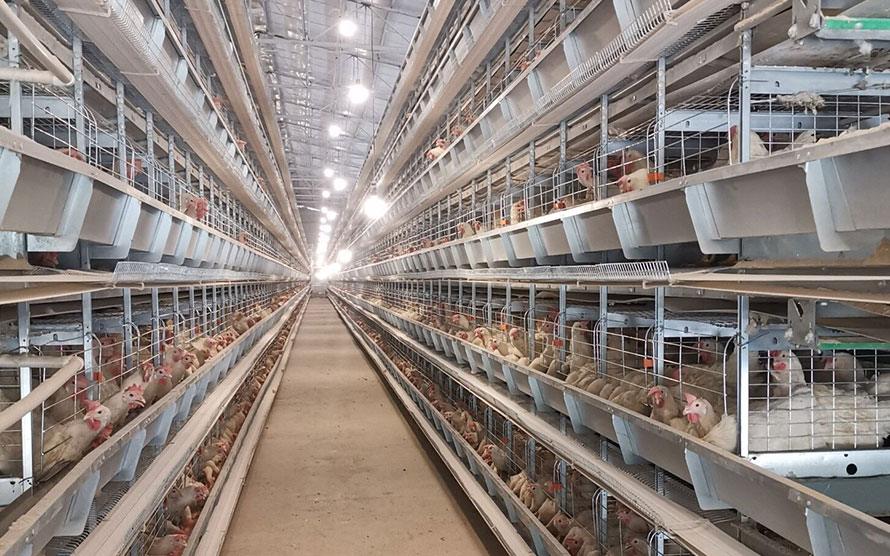
Battery cages are the go-to choice when you’re focused on egg production. The system uses rows and columns of identical cages arranged together like an artillery battery, which is where the name comes from. Each cage holds a small number of birds, and the whole setup is designed for efficiency.
Modern cage systems come with built-in features that make daily work easier. Water delivery is automated, so birds always have access to clean water. The feeding system is designed to minimize waste. Droppings fall through the cage floor, which keeps eggs cleaner and reduces disease risk.
You’ll find different types of cages on the market. They vary by where they’re made, how many tiers they have, how many birds they hold, and what materials they use. Some use PVC feeding troughs while others use aluminum. The mesh wire might be fully galvanized or only partially galvanized. These differences affect price and durability.
Cage systems come in different configurations. You can get 2-tier, 3-tier, or 4-tier setups. Capacity ranges from 60 birds per unit up to 128. You can buy imported cages or locally fabricated ones. Each option has trade-offs between cost and quality.
A. Advantages of Battery Cages
The cage system shines when it comes to maximizing space and production. Here’s what makes it appealing to many commercial operations.
i. Higher bird density: You can raise more birds per square foot of floor space. This matters when land is expensive or limited.
ii. Better record keeping: Each cage is a separate unit. You can track production by cage, which makes it easier to spot problems and maintain accurate records.
iii. Easy culling: Poor producers stand out quickly when birds are in individual cages. You can remove them without disturbing the whole flock.
iv. Reduced bad behavior: Cannibalism and egg eating become less common because birds have limited contact with each other.
v. Cleaner eggs: Eggs roll away from the birds as soon as they’re laid. They don’t sit in litter or manure, so they stay clean.
vi. Less stress variation: Each bird has its own space. There’s no fighting for food or water, which creates a more stable environment.
vii. Disease control: Parasitic diseases like coccidiosis and worm infestations are easier to control. Birds aren’t in contact with their droppings.
viii. Feed efficiency: The feeding system design helps prevent waste. You’ll use less feed per dozen eggs produced.
ix. Climate control: The system works best in moderate climates where temperatures don’t swing too high or too low.
x. Higher production: Studies show caged layers often produce more eggs than birds in deep litter systems.
xi. Better feed conversion: Caged birds typically show better feed efficiency and produce larger eggs compared to birds in floor systems.
B. Disadvantages of Battery Cages
No system is perfect. Battery cages come with challenges you need to know about before committing.
i. Ventilation challenges: When you pack a lot of birds into a small space, especially in summer, keeping air moving properly gets difficult. Poor ventilation in high-density setups can cause health problems.
ii. Health issues: Leg problems show up more often in caged birds. Cage layer fatigue is a real concern. Fatty liver syndrome becomes more common. Flies and ammonia buildup can get out of hand if you’re not careful with manure management.
iii. Stress reactions: Some birds develop hysteria in cages. The confined space and lack of normal behavior outlets can trigger anxiety responses.
Summary on Poultry Housing Systems
| Aspect | Key Points |
|---|---|
| Ideal Height | 12 feet for deep litter; above 12 feet for battery cages based on tiers |
| Deep Litter Definition | Bedding system using straw or sawdust, building up to 1-2 meters depth |
| Deep Litter Advantages | Economical, comfortable for birds, provides vitamins, controls disease, flexible materials |
| Deep Litter Management | Keep dry, avoid overcrowding, ventilate well, stir weekly, start in dry season |
| Battery Cage Definition | Rows and columns of identical cages with automated feeding and watering |
| Battery Cage Types | 2-4 tiers, 60-128 bird capacity, imported or local, various wire finishes |
| Battery Cage Advantages | Higher density, better records, clean eggs, disease control, higher production |
| Battery Cage Disadvantages | Ventilation challenges, leg problems, cage fatigue, flies, hysteria |
| Best Use Case | Deep litter for lower cost and better welfare; battery cages for maximum production |
Frequently Asked Questions About Poultry Housing Systems
1. What is the best height for a poultry house?
For deep litter systems, 12 feet is ideal. This height allows good ventilation while keeping the structure stable. For battery cage systems, you might need more height depending on how many tiers you plan to stack. A 4-tier system needs more vertical space than a 2-tier setup.
2. How thick should the litter be in a deep litter system?
Start with 4 inches of fine litter material. Add 1 to 2 inches as needed when it gets soiled. Keep the overall depth between 6 and 12 inches. Remove some of the older material from time to time to maintain this range. Over time, the litter can build up to 1 or 2 meters if managed properly.
3. Which system is more economical to start?
Deep litter systems cost less to set up. You don’t need expensive cages or automated equipment. Basic housing with proper ventilation and some bedding material is enough to get started. Battery cages require more upfront investment in the cages themselves, feeding systems, and watering lines.
4. Do caged birds really produce more eggs?
Research shows that caged layers often outproduce birds in floor systems. They also show better feed efficiency and lay larger eggs on average. The controlled environment and reduced stress from competition seem to make a difference. But these benefits only show up when you manage the cages properly.
5. What materials can I use for deep litter?
You have several options depending on what’s available in your area. Paddy husks work well. So do sawdust, wood shavings, dried leaves, chopped straw, and groundnut kernels. The key is that the material should be absorbent, dry, and fine enough to compost properly. Local availability and cost usually determine what you choose.
6. How often should I stir the litter?
At least once a week. Stirring helps the litter compost evenly and prevents it from becoming packed down or caked. It also helps moisture distribute better and keeps ammonia levels down. Some farmers stir more often during hot weather or when humidity is high.
7. What are the main health problems with battery cages?
Leg problems are common because birds don’t exercise much. Cage layer fatigue can develop, especially in high-producing birds. Fatty liver syndrome shows up more in caged birds. You’ll also need to watch for fly problems and ammonia buildup from manure. Some birds develop hysteria from the confined space.
8. Can I switch from deep litter to battery cages later?
Yes, but you’ll need to make changes to your building. Battery cages need more height if you’re stacking multiple tiers. You’ll also need to install the cage framework, feeding systems, and watering lines. The switch requires significant investment. Plan it carefully and consider whether the increased production will justify the cost.
9. Which system is better for bird welfare?
Deep litter systems give birds more natural behavior. They can scratch, dust bathe, and move around freely. This reduces stress and allows them to act like chickens normally would. Battery cages restrict movement and prevent most natural behaviors. The welfare difference is significant and something you should consider based on your values and market requirements.
10. When is the best time to start a deep litter system?
Start during the dry season. This gives the bacterial composting action time to establish before wet weather arrives. You need at least two months of dry conditions for the system to develop properly. Starting in the wet season almost guarantees problems with damp litter, odors, and disease.
Do you have any questions, suggestions, or contributions? If so, please feel free to use the comment box below to share your thoughts. We also encourage you to kindly share this information with others who might benefit from it. Since we can’t reach everyone at once, we truly appreciate your help in spreading the word. Thank you very much for your support and for sharing!
Related: How to Graft an Avocado Tree to Produce Avocado Fruit