


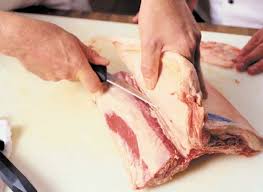
Persons involved in meat handling must adhere to specific regulations to prevent meat contamination and mitigate the negative consequences of improper practices.
Prohibited Meats in Handling and Sale
Regulations prohibit any person from possessing, for the purpose of sale or preparation for sale:
- Any meat removed from a slaughterhouse deemed unfit for human consumption;
- Any meat removed from a knacker’s yard; or
- Any meat unfit for human consumption from an animal that died or was slaughtered at a place other than a slaughterhouse or knacker’s yard, or was brought to such a place after death or slaughter, unless that meat has been sterilized.
Exemptions from this prohibition apply to meat in possession of a person:
- While in transit under a movement permit to a destination specified in the regulations and, where required, stained;
- At premises listed in the regulations for purposes outlined in the provisions, or for removal in accordance with provisions related to closure, breakdown, or trade disputes, or while in transit from such premises per those provisions.
A defense exists for any person charged with contravening this provision if they can prove:
- Lack of knowledge, and inability with reasonable diligence to ascertain, that the meat was unfit for human consumption or from a knacker’s yard; or
- That meat removed from a slaughterhouse became unfit only after removal.
Regulations further prohibit selling, offering, or exposing for sale by retail any meat unfit for human consumption or knacker meat, unless sterilized. For this prohibition, retail sales do not include direct sales from a slaughterhouse or knacker’s yard to a destination specified in the regulations.
A defense is available if the person proves lack of knowledge and inability with reasonable diligence to ascertain that the meat was prohibited.
Read Also:Economic Importance, Uses, and By-Products of Watermelon Shoots
Prohibition on Storing Unfit Meat

No person may store unsterilized meat unfit or not intended for human consumption in the same room as meat fit for human consumption, unless:
- The meat is stored in an arrangement approved by the local authority, ensuring adequate separation from fit meat;
- Containers, wrappers, or packaging bear a conspicuous, legible, and unambiguous notice stating the meat is not for human consumption, including the packer’s name and address.
Unsterilized and unstained meat unfit for human consumption or knacker meat may be removed from a slaughterhouse or knacker’s yard not equipped for sterilization if:
- Destinations specified in regulation 17(1) cannot receive the meat due to permanent or temporary closure, machinery breakdown, or trade disputes;
- The meat is transported in a locked or sealed vehicle or impervious container bearing a conspicuous, legible notice stating it is not for human consumption;
- Removal occurs under a written arrangement supervised by an authorized officer of the local authority where the slaughterhouse or knacker’s yard is located, to a place for burial or destruction.
Carcass meat or specified offal unfit for human consumption may be removed unsterilized and unstained from a slaughterhouse or knacker’s yard with exhausted staining fluid supplies, under a supervised written arrangement with an authorized officer. Such removals exempt the occupier from sterilization or staining requirements.
Meat Transportation Requirements
The nature and destination of meat significantly influence its handling. Vehicles for transporting meat and carcasses serve as an extension of refrigerated storage, maintaining meat temperature at or near 0°C.
Meat must be chilled to 0°C before loading and hung on rails, not placed on the floor. Clean stockinets, if used, are required. Meat trucks must exclusively carry meat.
Refrigeration is typically achieved by injecting liquid nitrogen or carbon dioxide (CO₂) or blowing air over CO₂ chunks (dry ice). Temperature controls minimize rises and prevent condensation on meat surfaces.
Insulated vans without refrigeration may use dry ice, though temperature control is limited. Un-insulated vans or open trucks are unsuitable, especially in hot climates, due to temperature abuse, condensation risks, and insect exposure. Loading and unloading must be swift, with dry-ice blocks used for delays in partly filled vans.
The 1982 regulations impose requirements on destinations and transport modes, limiting activities at destinations and requiring movement permits. Meat unfit or not intended for human consumption, or knacker meat, may be removed under a movement permit to specified destinations, transported in a locked or sealed vehicle or container bearing a conspicuous notice stating it is not for human consumption.
Once at a specified destination, such meat cannot be further removed unless:
- It has been sterilized;
- It is removed to another destination listed in the regulations under a movement permit; or
- It cannot be disposed of due to closure, machinery breakdown, or trade disputes, and is removed under a supervised written arrangement to another listed destination or a place for burial or destruction.
Movement Permit Procedures
Regulation 19 outlines procedures for meat removal from specified premises. The occupier or meat owner must apply to the local authority, providing:
- Intended removal date;
- Meat description;
- Address and description of the delivery premises;
- Expected arrival date.
The local authority must verify that the destination premises can process or dispose of the meat. If the premises are in another district, the authority must notify and consider information from that district’s authority. For regular deliveries of unsterilized meat, the local authority may issue multiple movement permits in advance, specifying meat description and destination.
Movement permits follow a specified form (parts I to V). The local authority completes part I and issues the original and three copies to the applicant. The occupier completes part II, gives the original and two copies to the driver, and retains one copy for two years.
The driver delivers the permit to the destination premises’ occupier, who completes part III, signs the original and two copies, and sends the original and one copy to the local authority within seven days, retaining the other for two years.
If delivery fails, the driver must inform the issuing or destination local authority, which authorizes delivery to another listed destination or requires return, burial, or destruction under supervision.
The destination occupier or supervising authority receives the permit, completes part IV, and follows the same acknowledgment and retention process. Local authorities complete part V, send the original to the issuing authority, and retain the copy for two years. All required documents must be available for inspection by an authorized officer.
Read Also: Guide On How To Increase Goats Milk
Alternative Meat Handling Methods

Where refrigeration is unavailable due to financial or technical constraints, meat shelf-life is reduced to days or hours. Slaughter and dressing must occur near the point of sale, quickly and cleanly. Well-insulated rooms with dry-ice blocks can lower temperatures. Hot boning is recommended, as boneless cuts chill more easily than whole carcasses.
Careful handling prevents high-pH meat, which spoils quickly. Slaughter and handling rooms must be clean, ventilated, out of direct sunlight, dust-free, and vermin-free.
Hot water (82°C) must be available for cleaning equipment and surfaces, and personnel must maintain strict hygiene. Blood must be collected in sealed containers, with separate skips for hooves, skins, offal, and trimmings.
Dressing on a vertical hoist minimizes contamination. Nothing should fall on the floor, only into skips. Spills or gut contents on meat must be trimmed. Dressed carcasses and red offal should hang on rails or hooks. Offal processing must occur separately. Intestines for consumption require thorough cleaning.
Meat must be sold within a day of slaughter. If held, it should hang in a clean, well-lit, ventilated hall, free from insects, rodents, birds, and dust. Offal trays must be on shelves, not the floor.
Barrows are preferable to shoulder-carrying, as they can be cleaned frequently. Staff must wear clean clothing and observe strict hygiene. Non-refrigerated meat transport is hazardous, requiring clean stockinets and sacks, with meat on rails for journeys not exceeding one day.
Meat Sterilization and Staining Regulations
The 1982 Regulations were amended by the Meat (Sterilization and Staining) (Amendment) Regulation 1984, redefining “specified offal” as hearts, kidneys, livers, and lungs from animals rejected as unfit for human consumption due to diseases or conditions other than ascariasis, fascioliasis, telangiectasis, or changes from stunning, slaughter, or dressing.
A regulation exempted meat removed under a veterinary surgeon’s authority for examination. A prohibition was introduced against bringing meat unfit for human consumption into England and Wales from Scotland or Northern Ireland, with exemptions requiring a consignment note or permit.
The driver must provide the note or permit copy to the destination occupier, who retains it for two years and sends a copy to the local authority within seven days, available for inspection.
The local authority notifies the exporting authority (Scotland) or the Department of Agriculture (Northern Ireland) of the consignment’s arrival.
The 1984 Regulations amended destinations for unfit meat under movement permits, adding “pharmaceutical extract supplier” for gland and extract collection. Removal to zoos, menageries, fur farms, maggot farms, or greyhound kennels was prohibited for meat rejected due to tuberculosis.
Removal to a manufacturing chemist was disallowed, but further removal to processors or specified destinations (or for burial/destruction) was permitted under supervised arrangements.
Do you have any questions, suggestions, or contributions? If so, please feel free to use the comment box below to share your thoughts. We also encourage you to kindly share this information with others who might benefit from it. Since we can’t reach everyone at once, we truly appreciate your help in spreading the word. Thank you so much for your support and for sharing!