


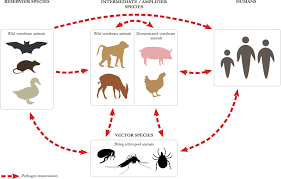
Infectious agents significantly impact human lives by contributing to the rise of infectious diseases. These agents reside in humans, animals, and the environment. Understanding the habitats of infectious agents and their transmission methods is crucial in this article.
After studying this article, readers will gain knowledge about the concept of reservoirs of infectious diseases, their types, and specific examples.
Read Also: Cold Weather Poultry Diseases and How to Manage them
Definition of Reservoirs of Infectious Diseases
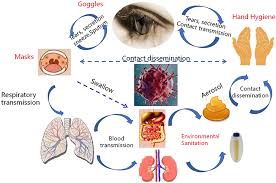
According to the CDC (1992), the habitat in which infectious agents generally reside, mature, and reproduce is known as the reservoir of an infectious agent. Jim (2007) describes the reservoir as the normal area or host where disease-causing agents live and multiply.
Haydon, Sara, Louise, and Laurenson (2002) state that a reservoir of infectious diseases consists of one or more epidemiologically related populations or habitats where pathogens can be persistently maintained and transmitted to a specific target population.
The habitat where an infectious agent generally lives, matures, and multiplies is termed the reservoir. Humans, animals, and the environment all serve as reservoirs.
The reservoir may or may not be the source of an agent’s transmission to a host. For example, soil is the reservoir for Clostridium botulinum, yet inadequately canned food containing C. botulinum spores is the source of most botulism cases (Centre for Disease Control, 1992).
These definitions highlight that a reservoir of infectious diseases is a place or area where infectious disease agents reside.
Read Also: Layers or Broilers which One is More Profitable in Poultry Farming? Find Out!
Types of Reservoirs of Infectious Diseases
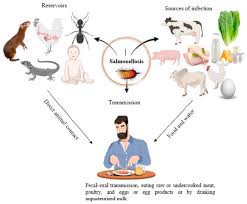
The following are the types of reservoirs of infectious disease agents:
1. Human Reservoirs of Infectious Diseases
Human reservoirs are areas within humans where the majority of infectious illnesses thrive (CDC, 1992). Jim (2007) explains that a human reservoir occurs when a person becomes a host for infectious diseases. Food-borne infections can enter the gastrointestinal tract through the mouth, according to the author.
However, pathogens can be carried by humans and animals without causing illness, and the nose and throat are organs where these pathogens can reside for a long time (Jim, 2007; CDC, 1992).
Sagar (2022) notes that a case is a person in the population identified as having the disease, health disorder, or condition under investigation, whereas a carrier is an infected person or animal that harbors infectious agents in the absence of clinical disease and serves as a potential source of infection for others.
Humans can be passive carriers, incubatory carriers, convalescent carriers, or chronic carriers, according to the CDC (1992). Passive or healthy carriers are persons who, although infected, have no symptoms. Incubatory carriers can transmit the agent during the incubation period.
Chronic carriers, for example, are people who continue to carry a pathogen such as the hepatitis B virus or Salmonella Typhi. Carriers frequently transmit disease because they are unaware of their infection and thus take no additional care to prevent transmission.
Symptomatic people aware of their illness, however, may be less likely to spread infection because they are either too sick to go out, take precautions to prevent transmission, or are receiving therapy that reduces disease transmission.
2. Animal Reservoirs of Infectious Diseases
Animals, such as pests, domestic, and wild animals, serve as hosts for disease-causing agents to thrive and multiply. Almost all diseases spread by polluted water or food can also be transferred through animals, according to Jim (2007).
Most pathogens can contaminate crops as a result of food-borne infectious agents discharged in animal feces. Jim (2007) states that germs can survive in raw meat and milk after animal slaughter. The majority of bacteria had access to the meats that caused food poisoning. Clostridium perfringens, Toxoplasma gondii, and Escherichia coli are pathogens found in red meat, chicken meat, and eggs, respectively.
Zoonotic diseases are diseases transmitted from animals to humans, according to Streikauskas et al. (2010). The CDC (1992) defines zoonotic diseases as infectious diseases naturally transmitted from vertebrate animals to humans.
Rabies, transmitted from a rabid animal to a human, and Lyme disease are two well-known zoonotic diseases, according to Streikauskas et al. (2010).
Examples of long-established zoonotic illnesses include brucellosis (cows and pigs), anthrax (sheep), plague (rodents), trichinellosis/trichinosis (swine), tularemia (rabbits), and rabies (bats, raccoons), according to the CDC (1992).
3. Environmental Reservoirs of Infectious Diseases
Some infectious agents reside in the environment’s plants, soil, and water. In the soil, many fungal agents, including those that cause histoplasmosis, survive and grow.
Legionnaires’ disease outbreaks are frequently linked to water supplies in cooling towers and evaporative condensers, which serve as reservoirs for the pathogenic bacteria Legionella pneumophila (CDC, 1992).
Do you have any questions, suggestions, or contributions? If so, please feel free to use the comment box below to share your thoughts. We also encourage you to kindly share this information with others who might benefit from it. Since we can’t reach everyone at once, we truly appreciate your help in spreading the word. Thank you so much for your support and for sharing!