



A restaurant is a retail establishment that serves prepared food to customers. Service is generally for eating on premises, though the term has been used to include take-out establishments and food delivery services.
The term covers many types of venues and a diversity of styles of cuisine and service. Restaurants are sometimes a feature of a larger complex, typically a hotel, where the dining amenities are provided for the convenience of the residents and, of course, for the hotel with a singular objective to maximize their potential revenue. Such restaurants are often also open to non-residents.
Restaurants range from unpretentious lunching or dining places catering to people working nearby, with simple food and fixed menus served in simple settings at low prices, to expensive establishments serving expensive specialty food and wines in a formal setting.
In the former case, customers usually wear casual clothing. In the latter case, depending on culture and local traditions, customers might wear semi-casual, semi-formal, or even in rare cases formal wear.
Typically, customers sit at tables, their orders are taken by a waiter, who brings the food when it is ready, and the customers pay the bill before leaving.
In class or posh restaurants, there will be a host or hostess or even a maître d’hôtel to welcome customers and to seat them. Other staff waiting on customers include busboys and sommeliers.
Historical Evolution of Restaurants in Food Service
The term restaurant (from the French word restaurer, to restore) first appeared in the 16th century, meaning “a food which restores,” and referred specifically to a rich, highly flavored soup. The modern sense of the word was born around 1765 when a Parisian soup-seller named Boulanger opened his establishment.
Whilst inns and taverns were known from antiquity, these were establishments aimed at travelers, and in general, locals would rarely eat there.
The modern formal style of dining, where customers are given a plate with the food already arranged on it, is known as service à la russe, as it is said to have been introduced to France by the Russian Prince Kurakin in the 1810s, from where it spread rapidly to England and beyond.
Read Also: The Nutritional Requirements and Deficiency Symptoms for Poultry Chickens
Classification of Restaurants in Agricultural Food Supply
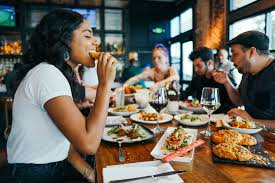
Restaurants can be classified by whether they provide places to sit, whether they are served by wait-staff, the quality of the service, the formal atmosphere, and the price range. Restaurants are generally classified into three groups:
i. Quick Service: Also known as fast-food restaurants. They offer limited menus that are prepared quickly. They usually have drive-thru windows and take-out. They may also be self-service outfits.
ii. Mid-Scale: They offer full meals at a medium price that customers perceive as “good value.” They can be of full service, buffets, or limited service with customers ordering at the counter and having their food brought to them or self-service.
iii. Upscale: Offer high-quality cuisine at a high-end price. They offer full service and have a high quality of ambiance.
Types of Restaurants Supporting Agricultural Diversity
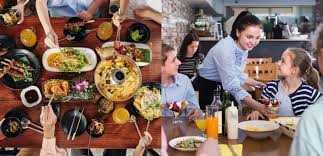
Restaurants often specialize in certain types of food or present a certain unifying, and often entertaining, theme. For example, seafood restaurants, vegetarian restaurants, or ethnic restaurants exist.
Generally speaking, restaurants selling “local” food are simply called restaurants, while restaurants selling food of foreign origin are called accordingly, for example, a Chinese restaurant or a French restaurant.
Depending on local customs and the policy of the establishment, restaurants may or may not serve alcoholic beverages.
Restaurants are often prohibited from selling alcohol without a meal according to alcohol sale laws; such sale is considered to be activity for bars, which are meant to have more severe restrictions. Some restaurants are licensed to serve alcohol (“fully licensed”), and/or permit customers to “bring your own” alcohol.
1. Cafeterias in Agricultural Food Service
A cafeteria is a restaurant serving mostly cooked (ready-to-eat) food arranged behind a food-serving counter. There is little or no table service. Typically, a patron takes a tray and pushes it along a track in front of the counter.
Depending on the establishment, servings may be ordered from attendants, selected as ready-made portions already on plates, or self-serve of food of their own choice. In some establishments, a few items such as steaks may be ordered specially prepared rare, medium, or well-done from the attendants.
The patron waits for those items to be prepared or is given a number, and they are brought to the table. Beverages may be filled from self-service dispensers or ordered from the attendants. At the end of the line, a cashier rings up the purchases.
At some self-service cafeterias, purchases are priced by weight, rather than by individual item. The trays filled with selected items of food are taken to a table to eat. Institutional cafeterias may have common tables, but upscale cafeterias provide individual tables as in sit-down restaurants.
Upscale cafeterias have traditional cutlery and crockery, and some have servers to carry the trays from the line to the patrons’ tables, and/or bus the empty trays and used dishes.
Cafeterias have a wider variety of prepared foods. For example, it may have a variety of roasts (beef, ham, turkey) ready for carving by a server, as well as other cooked entrées, rather than simply an offering of hamburgers or fried chicken.
2. Fast-Food Restaurants and Agricultural Supply Chains
Fast-food restaurants emphasize speed of service and low cost over all other considerations. A common feature of newer fast-food restaurants that distinguishes them from traditional cafeterias is a lack of cutlery or crockery; the customer is expected to eat the food directly from the disposable container it was served in using their fingers. There are various types of fast-food restaurants:
- One collects food from a counter and pays, then sits down and starts eating (as in a self-service restaurant or cafeteria). Sub-varieties include:
- One collects ready portions.
- One serves oneself from containers.
- One is served at the counter.
- A special procedure is that one first pays at the cash desk, collects a coupon, and then goes to the food counter, where one gets the food in exchange for the coupon.
- One orders at the counter; after preparation, the food is brought to one’s table; paying may be on ordering or after eating.
- A drive-through is a type of fast-food restaurant without seating; diners receive their food in their cars and drive away to eat.
Most fast-food restaurants offer take-out: ready-to-eat hot food in disposable packaging for the customer to eat off-site.
3. Casual Dining Restaurants and Local Agriculture
A casual dining restaurant is a restaurant that serves moderately priced food in a casual atmosphere. Except for buffet-style restaurants, casual dining restaurants typically provide table service. Casual dining comprises a market segment between fast-food establishments and fine dining restaurants.
4. Fast Casual-Dining Restaurants and Sustainable Agriculture
A fast casual restaurant is similar to a fast-food restaurant in that it does not offer full table service, but promises a somewhat higher quality of food and atmosphere. Average prices charged are higher than fast-food prices, and non-disposable plates and cutlery are usually offered.
This category is a growing concept that fills the space between fast food and casual dining. Counter service accompanied by handmade food (often visible via an open kitchen) is typical.
Alcohol may be served. Dishes like steak, which require experience on the part of the cook to get it right, may be offered. The menu is usually limited to an extended over-counter display, and options in the way the food is prepared are emphasized.
Many fast casual-dining restaurants are marketed as health-conscious: healthful items may have a larger number of items than a normal portion of the menu, and high-quality ingredients such as free-range chicken and freshly made vegetables may be advertised.
Overall, the quality of the food is presented as a much higher class than conventional factory-made fast food. An obvious ethnic theme may or may not be present in the menu.
5. Other Restaurant Types Supporting Agricultural Markets
Most of these establishments can be considered subtypes of fast casual-dining restaurants or casual-dining restaurants.
i. Cafés in Agricultural Food Systems
Cafés and coffee shops are informal restaurants offering a range of hot meals and made-to-order sandwiches. Cafés offer table service. Many cafés are open for breakfast and serve full hot breakfasts. In some areas, cafés offer outdoor seating.
ii. Coffeehouses and Agricultural Beverage Supply
Coffeehouses are casual restaurants without table service that emphasize coffee and other beverages; typically, a limited selection of cold foods such as pastries and perhaps sandwiches are offered as well.
Their distinguishing feature is that they allow patrons to relax and socialize on their premises for long periods of time without pressure to leave promptly after eating.
iii. Pubs and Agricultural Food Offerings
A pub (short for public house) is a bar that serves simple food fare. Traditionally, pubs are primarily drinking establishments with food in a decidedly secondary position, whereas the modern pub business relies on food as well, to the point where gastropubs are known for their high-quality pub food. A typical pub has a large selection of beers and ales on tap.
iv. Bistros and Brasseries in Agricultural Dining
A brasserie is a café doubling as a restaurant and serving single dishes and other meals in a relaxed setting. A bistro is a familiar name for a café serving moderately priced simple meals in an unpretentious setting.
Especially in Paris, bistros have become increasingly popular with tourists. When used in English, the term bistro usually indicates either a fast casual-dining restaurant with a European-influenced menu or a café with a larger menu of food.
v. Family-Style Restaurants and Agricultural Traditions
“Family-style restaurants” are restaurants that have a fixed menu and fixed price, usually with diners seated at a communal table such as on bench seats. More common in the 19th and early 20th century, they can still be found in rural communities, or as theme restaurants, or in vacation lodges.
There is no menu to choose from; rather, food is brought out in courses, usually with communal serving dishes, like at a family meal.
Typical examples can include crab houses, German-style beer halls, BBQ restaurants, hunting lodges, etc. Some normal restaurants will mix elements of family style, such as a table salad or bread bowl that is included as part of the meal.
vi. BYO Restaurants and Agricultural Beverage Pairings
BYO is from the phrase Bring Your Own, while BYOB is an abbreviation of Bring Your Own Booze/Beer/Bottle. They are restaurants and bistros which do not have a liquor license but expect the patrons to bring theirs.
vii. Delicatessen Restaurants and Agricultural Products
Restaurants offering foods intended for immediate consumption. The main product line is normally luncheon meats and cheeses.
They may offer sandwiches, soups, and salads as well. Most foods are precooked prior to delivery. Preparation of food products is generally simple and only involves one or two steps.
viii. Ethnic Restaurants and Global Agricultural Cuisines
They range from quick-service to upscale. Their menus usually include ethnic dishes and/or authentic ethnic foods. They specialize in a particular multicultural cuisine not specifically accommodated by any other listed category. Example: Asian Cuisine, Chinese cuisine, Indian Cuisine, American Cuisine, etc.
ix. Destination Restaurants and Agricultural Tourism
A destination restaurant is one that has a strong enough appeal to draw customers from beyond its community. Example: Michelin Guide 3-star restaurant in Europe, which according to the restaurant guides is “worthy of a journey.”
Read Also: How to Make Good Money from Africa’s love of Poultry Chicken and Eggs
The Role of the Restaurant Manager in Agricultural Food Service
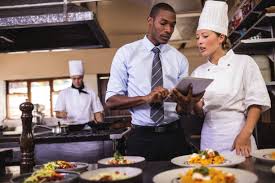
The restaurant manager is responsible for directing and supervising all activities pertaining to employee relations, food production, sanitation, guest service, and operating profits. The restaurant manager is either the coffee shop manager, bar manager, or the specialist restaurant manager.
The restaurant manager reports directly to the food and beverage manager and has overall responsibility for the organization and administration of a particular outlet or a section of the food and beverage service department. The restaurant manager’s job includes:
- Setting and monitoring the standards of service in the outlets.
- Administrative duties such as setting duty charts, granting leave, monitoring staff positions, recommending staff promotions, and handling issues relating to discipline.
- Training the staff by conducting a daily briefing in the outlet.
- Playing a vital role in public relations, meeting guests in the outlets, and attending to guest complaints, if any.
- Formulating the sales and expenditure budget for the outlet.
- Planning food festivals to increase the revenue and organizing advertisement campaigns of the outlet along with the chef and the food and beverage manager.
With the ever-growing food and beverage industry, people who receive formal training stand a good chance of moving up to better-paid jobs in larger and more formal food establishments. There are also opportunities for others who could earn a living by taking up part-time positions.
Do you have any questions, suggestions, or contributions? If so, please feel free to use the comment box below to share your thoughts. We also encourage you to kindly share this information with others who might benefit from it. Since we can’t reach everyone at once, we truly appreciate your help in spreading the word. Thank you so much for your support and for sharing!