


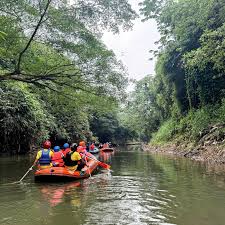
Rivers are an important component of freshwater ecosystems. They comprise the main streams and tributaries. A flowing river passes through three main stages upper, middle, and lower each with distinct characteristics and supporting different living organisms. Two major ecosystems in rivers are rhithron and potamon, while three types of springs exist: rheocrene, limnocrene, and helocrene.
Characteristics of Rivers
A river system consists of the main stream and many tributaries. The primary fluvial processes are erosion, transportation, and sedimentation. In the upper area of a drainage basin, current velocity is high, erosion predominates, and valleys composed of channels and slopes are formed.
The materials swept downstream form a sediment load, produced mainly by weathering of the rocks that make up slopes. Sediment load is deposited to form an alluvial plain, and channel patterns such as braided, meandering, or straight can form in these plains. The river’s morphology is shaped by various factors including discharge, water velocity, slope, channel depth and width, and riverbed geology.
The current speed, riverbed geology, granulometry, flow rate, and flooding, along with the amount of allochthonous materials (materials sourced from outside the river) carried by rivers, affect the nature and functioning of the biological components.
Current speed is a key factor for organisms living in the river and partially controls environmental parameters such as temperature, oxygen, substrate type, and resource availability. Current speed decreases from upstream to downstream.
Read Also: Home-made Catfish Feed Vs Bagged Feed, Find out the Best
Temperature and Oxygen of Rivers

Near the source, stream waters are turbulent, with low and constant temperatures. As the river flows downstream, the water temperature becomes increasingly dependent on air temperature.
The turbulence in rivers allows air-water exchange, ensuring oxygen concentration in running waters is close to saturation. In rivers with slow currents, reduced turbulence limits water oxygenation by reducing contact between water and atmosphere. Oxygen concentration becomes more dependent on organisms’ metabolism in such conditions.
For example, photosynthesis can cause oversaturation during the day, but respiration causes oxygen deficiency at night, particularly at the bottom of the river, where high microbial decomposition of organic matter occurs.
Transport of Materials by Rivers
Flowing river water carries large amounts of materials from the surrounding environment. Autochthonous production is minimal in rivers, and more than 90% of energy input comes from allochthonous plant material, which makes heterotrophic metabolism dominant.
During transport by rivers, organic matter is broken into fragments by fungi, bacteria, and protozoa. Invertebrates, such as insect larvae, filter out smaller fragments. The sizes of organic particles decrease along the flow of the river. Downstream, the allochthonous supply tends to decrease, while macrophytes, benthic algae, and phytoplankton reduce the importance of heterotrophic contributions.
Near the source, the riverbed is irregular and offers a variety of shelters for organisms. There is an abundance of diverse diets and good oxygenation. The sandy bottoms of rivers contain low organic matter and are unstable, but the silt-clay bottom is more stable because it incorporates small-sized particles that act as ligands (colloidal organic matter). River fauna include many organisms that penetrate the fine sediments, which are poorly oxygenated and unstable.
Ecological Zonation of Rivers
The flowing water course may be referred to as a brook, stream, creek, or river, depending on its average width. Rivers can be classified based on the morphological, physical, and ecological conditions along the river’s length. Two major ecosystems in rivers are rhithron and potamon.
1. Rhithron: This ecosystem has a monthly average temperature never less than 20°C, high oxygen content, and very turbulent waters. The riverbed consists of boulders, pebbles, and gravel, which may alternate with sand or mud. The organisms in rhithron adapt to life in turbulent, cold, and well-oxygenated waters. Plankton is rare or absent.
2. Potamon: This ecosystem has a monthly average temperature greater than 20°C and may suffer from oxygen deficiency. The current is slow, with a laminar flow and a sandy or muddy bottom. Organisms can withstand large temperature changes, tolerate weak oxygen concentrations, and prefer calm waters. Plankton can be abundant in potamon waters.
Within these two categories, three zones can be distinguished, taking into account the invertebrates, particularly insects, living at the river bottom. Vannote et al. (1980) developed the River Continuum Concept (RCC), a classification model for flowing water, in addition to the classification of individual sections of rivers based on the occurrence of indicator organisms.
The model is based on the concept of dynamic equilibrium, where stream forms balance between physical parameters (width, depth, velocity, and sediment transport), while also considering biological factors.
Springs and Upper River

Springs are areas where groundwater reaches the surface, emerging from the soil or the interface between groundwater and surface water. Springs generally occur when impermeable layers, above which rainwater absorbed by the soil flows, approach the surface. Spring waters are characterized by stable temperatures, low oxygen, and low organic matter content.
These stable environmental conditions support only organisms with strict ecological requirements, such as planaria worms. The springs also host interstitial fauna, consisting of small animals living in groundwater and subsurface cavities. Among them are copepods, blind cyclopids adapted to darkness, and other small crustaceans.
Springs can be classified into three types based on how water emerges from the ground:
1. Rheocrene Springs: Formed on steep slopes, these springs originate small streams. Few organisms colonize rheocrene springs immediately after their emergence. Sessile algae (periphyton) cover the stones. Mosses are important in alpine and subalpine regions, and grasses and sedges flank mountain springs. The fauna includes many benthic herbivores or detritivores, and in mountain areas, the larvae of Ephemeroptera and Chironomidae are the most common.
2. Limnocrene Springs: These springs emerge at the bottom of ponds and lakes, and their biological communities are those of the surrounding lacustrine environments.
3. Helocrene Springs: Found in wetlands, ponds, and bogs, these springs offer highly variable conditions, particularly in terms of temperature. Amphibians and insect larvae adapted to weak currents inhabit this ecosystem.
The upper river has a fast current, turbulent flow, intense erosion, and low temperatures. Water turbulence limits vegetation development, but mosses and algae form dense mats on stones, hosting invertebrate herbivores. The abundance of allochthonous organic matter provides energy for the development of detritivorous organisms.
Good oxygenation allows predator invertebrates with high energy requirements to thrive. The coarse river bottom shelters many organisms from direct exposure to strong currents. Other invertebrates include crustaceans, mollusks, and worms. The upper river is dominated by salmonids, which are adapted to cold (5-10°C) and well-oxygenated waters. These fish require oxygen concentrations of 8-12 ml/L.
Read Also: The Best Fish Feeds for Catfish and Formulation Guide
Middle and Lower River

At the bottom of the valley, the river loses power, and its bed becomes a mix of coarse sand, gravel, and finer substrates covered with vegetation. Mosses, filamentous algae, and higher plants rooted in the riverbed dominate these areas. In periphyton-rich zones, grazer organisms such as larvae of mayflies and dipterans thrive.
In summer, the temperatures of slowly flowing waters can exceed 20°C. The river carries a significant load of suspended particles, reducing water transparency and limiting light penetration, which restricts the growth of macrophytes and periphyton. Autotrophic production occurs mainly through phytoplankton and macrophytes in stagnant waters. Anoxia is common at the sediment-water interface, especially in summer.
The benthic fauna includes organisms resistant to low oxygen concentrations, such as oligochaetes (especially tubificids), dipteran, and chironomid larvae. While grazer organisms are abundant in the middle section of the river, detritivores and filter feeders dominate.
Along riverbanks, the invertebrate community includes Odonata, Coleoptera, crustaceans, leeches, snails (Lymnaea, Planorbis), bivalves, and mollusks. The zooplankton fauna is dominated by rotifers, while microcrustaceans (copepods and cladocerans), which are important in lakes, are mostly benthic in rivers.
At the river mouth, freshwater mixes with marine water following the tides, creating a brackish zone. Migratory anadromous fish, swimming upriver to spawn, are often found in this brackish water zone.
A flowing river has three main stages with distinct characteristics, formations, and living organisms. The river flows into the sea, and mixing occurs at the estuaries, producing a brackish water environment.
River flow is highly variable over time, depending on the climate and drainage patterns. Thorough vertical mixing is achieved due to currents and turbulence, while lateral mixing may take place only over considerable distances downstream of major confluences.
Do you have any questions, suggestions, or contributions? If so, please feel free to use the comment box below to share your thoughts. We also encourage you to kindly share this information with others who might benefit from it. Since we can’t reach everyone at once, we truly appreciate your help in spreading the word. Thank you so much for your support and for sharing!
Read Also: Adaptive Means of Animals Coping with the Environment
Frequently Asked Questions
We will update this section soon.