


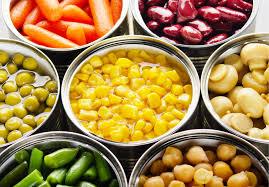
Food additives have evolved significantly since their invention and widespread use over the past century. Today, food additives ensure that food can be delivered globally without losses in an increasingly competitive market.
Their role grows more critical with the rising consumption of highly processed foods, driven by changing lifestyles in modern society. Despite improvements in legislation and the production of safer additives, many issues remain unresolved, leading to ongoing controversy and a constant demand for better alternatives.
Currently, more than 2,500 additives are intentionally added to food to maintain specific properties or extend shelf life, while many others have been banned over the years, some globally and others in specific countries.
Read Also: Sheep gene insights could help farmers breed healthier animals
Definition and Purpose of Food Additives
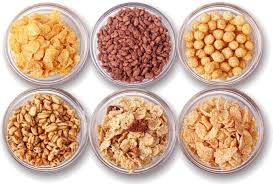
A food additive is any substance not normally consumed as a food by itself or used as a typical food ingredient, whether or not it has nutritive value. Its intentional addition to food serves a technological purpose (including organoleptic) during manufacture, processing, preparation, treatment, packing, packaging, transport, or storage.
This addition results, or may reasonably be expected to result, directly or indirectly, in the substance or its by-products becoming a component of or affecting the characteristics of the food.
In simpler terms, food additives are substances added by manufacturers to facilitate processing or to enhance appearance, texture, flavor, and keeping quality. The term excludes chance contaminants that might unknowingly enter food or substances added to maintain or improve nutritional qualities.
Food additives are classified as antimicrobial agents, antioxidants, artificial colors, artificial flavors and flavor enhancers, chelating agents, and thickening and stabilizing agents.
Technological Uses of Food Additives
Food additives are incorporated into food for several technological reasons:
- To increase shelf life and facilitate processing.
- To improve eating characteristics or consumer appeal.
- To retard spoilage.
- To enhance food flavors.
- To replace nutrients lost during processing and enhance visual appeal.
Antimicrobial agents, such as salt, vinegar, sorbic acid, and calcium propionate, are used in products like salad dressings, baked goods, margarine, cheese, and pickled foods.
Antioxidants, including vitamins C and E, BHT, and BHA, are used in foods with high fat content. Chelating agents, such as malic acid, citric acid, and tartaric acid, prevent flavor changes, discoloration, and rancidity in foods.
Advantages and Disadvantages of Food Additives
1. Advantages of Using Food Additives
i. Some additives improve or maintain the food’s nutritive value.
ii. Extend food shelf life.
iii. Keep food fresh for longer periods.
iv. Make seasonal crops and fruits available year-round.
v. Save time in food preparation.
vi. Reduce costs, as food loss is more expensive.
vii. Enhance nutritional value, e.g., adding vitamin C to bread.
viii. Can be lower in calories, e.g., using sweeteners instead of sugar.
2. Disadvantages of Food Additives
i. Some individuals, especially children, may experience allergic reactions.
ii. Potential links to cancer, though unproven.
iii. Associations with asthma.
iv. Some additives may have toxic effects at high doses.
v. Can contribute to high blood pressure.
vi. May reduce nutritional value compared to natural ingredients.
vii. Some additives may be higher in calories.
Read Also: 17 Medicinal Health Benefits Of Mucuna pruriens (Monkey Tamarind)
Types and Functions of Food Additives
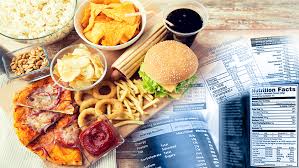
1. Food Colors
According to the US FDA, a color additive is any dye, pigment, or substance that, when added or applied to food, drugs, cosmetics, or the human body, imparts color, either alone or through reactions with other substances. Food colors are used primarily to enhance sensory appeal, particularly appearance.
2. Reasons for Adding Food Colors
i. To compensate for color loss due to processing and storage conditions.
ii. To correct variations in natural food colors for uniformity.
iii. To enhance the natural color of food.
iv. To add color to colorless food items.
3. Types of Food Colors
i. Natural Colors: Examples include curcumin, riboflavin, cochineal (a red dye from the cochineal insect, Dactylopius coccus), betanin (from beets), turmeric, saffron, and paprika.
ii. Synthetic Colors: Examples include Fast Green (bluish-green shade), Allura Red AC (red shade), Erythrosine (pink shade), Tartrazine (yellow shade), and Sunset Yellow (orange shade).
4. Food Preservatives
Food preservatives are indispensable in the food industry, hindering deterioration caused by microbes, enzymes, or chemical reactions.
5. Types of Food Preservatives
i. Natural Preservatives: Examples include essential oils like clove essential oil, eugenol (from cloves), limonene (from citrus fruits), and cinnamon essential oil.
ii. Artificial Preservatives: Examples include sorbic acid, potassium sorbate, calcium sorbate, benzoic acid, sodium benzoate, potassium benzoate, sulfur dioxide, sodium sulfite, sodium metabisulfite, potassium nitrite, sodium nitrite, and sodium nitrate.
Many artificial preservatives may have negative health effects at high doses; for instance, in vitro studies suggest sodium benzoate and potassium benzoate exhibit genotoxic effects. Adhering to acceptable daily intake (ADI) values mitigates these risks.
Antioxidants
Antioxidants, a subgroup of preservatives, extend the shelf life of foodstuffs by preventing molecular oxidation. They donate a hydrogen atom or electron, becoming reduced in their radical form, which is stable and prevents further reactions, preserving the food’s status quo. Food antioxidants extend shelf life and prevent decay without adding taste, odor, or altering appearance.
1. Examples of Antioxidants
i. Natural Antioxidants: Vitamin C and vitamin E.
ii. Chemical Antioxidants: Butylated hydroxyanisole (BHA), butylated hydroxytoluene (BHT), propyl gallate (PG), ethoxyquin, and tert-butylhydroquinone (TBHQ), used to inhibit lipid peroxidation and rancidification.
Sweeteners
1. Types of Sweeteners
Sucrose is the most commonly used sweetener in the food industry due to its availability, and other sweeteners are often compared to it. Glucose is also widely used, particularly in confectionery manufacturing. However, substitutes for common sugars, whether natural or artificial, are in high demand due to:
i. The prevalence of diabetes mellitus worldwide.
ii. Weight loss goals.
iii. Prevention of dental caries.
iv. Cost-effectiveness, as sugar substitutes are often significantly sweeter than sucrose (sometimes 100 or 1,000 times sweeter).
2. List of Common Sweeteners
Sorbitol, sorbitol syrup, mannitol, acesulfame K, aspartame, cyclamic acid and its Na and Ca salts, isomalt, saccharin and its Na, K, and Ca salts, sucralose, thaumatin, neohesperidine DC, steviol glycoside, neotame (as a flavor enhancer), aspartame-acesulfame salt, maltitol, maltitol syrup, lactitol, xylitol, erythritol.
3. Common Artificial Sweeteners
i. Acesulfame K: A zero-calorie sweetener, 130–200 times sweeter than sucrose. It is not metabolized by the body and has an aftertaste when used in large quantities. It is heat-resistant, enhances flavors, and is used in fruit preserves, dairy products, and beverages to reduce calories.
ii. Aspartame: A low-calorie sweetener, about 200% sweeter than sugar. It breaks down into aspartic acid, phenylalanine, and methanol during digestion. Its taste is similar to sugar but sweeter and is used in foods, beverages, and medicines. It occurs naturally in protein-rich foods.
iii. Cyclamate: A calorie-free sweetener, 30–50 times sweeter than sugar. It is metabolized in the gut by some individuals but generally excreted unchanged. Often used with other sweeteners, it has a pleasant taste, is stable at high temperatures, and is economical.
iv. Saccharin: One of the earliest low-calorie sweeteners, 300–500 times sweeter than sugar. It is not metabolized, is slowly absorbed, and is excreted unchanged. Widely used, it was previously banned in some countries but is now common.
Other sweeteners include stevioside, alitame, thaumatin, sucralose, neohesperidine DC, and aspartame-acesulfame salt. All artificial sweeteners are approved by the U.S. Food and Drug Administration (FDA) and are considered harmless in limited quantities.
Despite food safety concerns regarding the use of food additives in processing, their benefits far outweigh their disadvantages when used within recommended levels.
Do you have any questions, suggestions, or contributions? If so, please feel free to use the comment box below to share your thoughts. We also encourage you to kindly share this information with others who might benefit from it. Since we can’t reach everyone at once, we truly appreciate your help in spreading the word. Thank you so much for your support and for sharing!