


All living organisms consist of cells. These cells form tissues at tissues constitute the plant organs. The various parts of plants are linked together and synchronically function to produce its output which is considered as final yield.
Plant organs include the roots, stems, leaves, and plant reproductive structures (flowers, fruits and seeds).
Each organ performs a specialized task in the life of the plant. Roots, leaves, and stems are all vegetative structures. Flowers, seeds, and fruits make up reproductive structures. The roots support the plant and supply it with water and nutrients.
Stems connect the roots and leaves. Leaves capture energy from sunlight and use it to manufacture carbohydrates for the plant.
Plants have specialized organs that help them survive and reproduce in a great diversity of habitats. As earlier mentioned, all living organisms consist of cells. It is the cells that make the tissues which later become organs like roots, stems, leaves, flowers, fruits and seeds.
Principal Parts of a Vascular Plant (Plant Organs)
🌿 Go Organic on Your Farm: Instead of harmful chemical pesticides and fertilisers, try our organic farming products — including neem oil spray, bio-pesticides, natural plant treatments, organic seeds and seedlings, suckers, and many more organic products that are safe for your health, your family, your soil and your harvest. Shop Now →
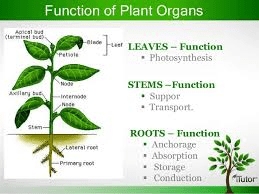
1. The Plant Root
The root is the first plant structure to emerge from a seed during germination. Roots are mostly found below the soil surface. They represent about 50% of a plant’s weight.
The first root to emerge from a seed is the primary root, or radicle. There are two basic types of root systems in plants: taproot systems and fibrous root systems.
🔧 Free Farm Tool Available: Use our free Agric4Profits Farm Tools to calculate your farm profits, formulate feeds, identify pests and diseases on both your crops and animal farms, plan your planting and harvesting season, including many more farm tasks to get free expert advice and recommendations — completely free, no registration required. Access Free Tools →
Taproot systems feature a single, thick primary root, called the taproot, with smaller secondary roots growing out from the sides. The taproot may penetrate as many as 60 meters (almost 200 feet) below the ground surface.
It can plumb very deep water sources and store a lot of food to help the plant survive drought and other environmental extremes. The taproot also anchors the plant very securely in the ground.
Fibrous root systems have many small branching roots, called fibrous roots, but no large primary root. The huge number of threadlike roots increases the surface area for absorption of water and minerals, but fibrous roots anchor the plant less securely.
Read Also : Guide to Identify the Disease Affecting your Ruminant Animals
Although most plant roots do not spread more than one to two meters into the ground, the taproots of many trees grow deeply into the soil and can often reach water far below the soil surface.
💬 Have a Farming Question? Join thousands of farmers across Africa on the Agric4Profits Community — ask questions, share experiences and connect with agricultural experts. It is completely free. Ask Your Question Now →
The primary functions of roots are to absorb water and nutrients from the soil and to support the plant in an upright position. Roots also distribute the food energy produced in the leaves to the rapidly growing areas found at the root tips. Some plants also use their roots as specialized food storage reserves.
2. The Plant Stem
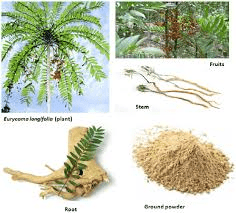
Plant stems connect the roots with the leaves. Plant stems are important because they transport water and nutrients from the roots to the leaves. They also transport food energy from the leaves to the roots.
Stems function as supportive structures. They hold a plant’s leaves up toward the sun so they can capture energy from sunlight. Tall, strong stems give a plant a competitive advantage by holding the leaves above those of other plants, increasing their exposure to sunlight.
Young, green stems help leaves collect sunlight for photosynthesis. Stems also support flowers and reproductive structures that allow for the perpetuation of the plant species.
3. The Plant Leaf
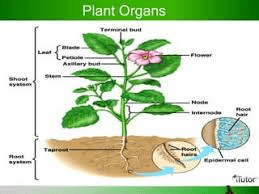
Leaves are the keys not only to plant life but to all terrestrial life. The primary function of leaves is to capture sunlight for manufacturing food reserves. This process is called photosynthesis.
📖 Want to Go Deeper on This Topic?
Our expert agricultural ebooks cover poultry, fish farming, different crops production, snail farming, organic farming, mushrooms, sheep, cattle, flowers, pig farming, goat farming, agribusiness, etc. in practical step-by-step detail — written by agricultural professionals for African farmers.
Browse All Farming Ebooks →Photosynthesis occurs within specialized cells found in leaves or modified stems such as cladophylls. During photosynthesis, water and carbon dioxide chemically combine in the presence of sunlight to make plant sugars, oxygen, and water.
Many of the external structures of leaves are designed to help the plant photosynthesise so it can manufacture sugar food reserves. In addition to capturing sunlight for photosynthesis, leaves are also important in the process of gas exchange.
Photosynthesis requires carbon dioxide and produces oxygen. To maintain a supply of carbon dioxide, the plant opens tiny pores called stomata located on the undersides of leaves.
The opened stomata allow carbon dioxide to enter a leaf. Oxygen produced by photosynthesis also escapes through the stomata.
Read Also: Yield Components of Plant Productivity and Limiting Factors
At the same time, tiny droplets of water vapor escape from the humid environment inside the leaf into the dry air around the plant. This process of water evaporation from the surface of the plant is called transpiration. Plant leaves therefore aid the process of transpiration.
4. The Plant Flower
Flowers are the reproductive structures of angiosperms (flowering plants). Reproductive structures play an important part in the life cycle of plants because they promote sexual reproduction and produce seeds and fruits that aid the dispersal of the plant species.
Flowers, like any other part of the plant, vary in structure, size, and composition. Some flowers resemble stems, whereas others resemble leaves. Flowers develop from buds, as do shoots. Therefore, they are considered to be specialised branches of a plant.
5. The Plant Fruits
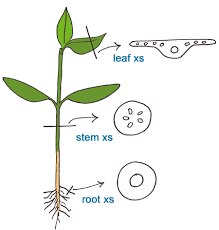
A fruit is a ripened ovary. Fruits are the fleshy substances that usually surround seeds. Fruit is an organ that contains seeds, protecting these as they develop and often aiding in their dispersal e.g. coconut nuts float in water and are thus transported to distant places, Fruits ripen as the seeds mature within.
Fruits help to distribute seeds rather than protect them. When man and animals eat fruits, they are channels for the dispersal of the seeds.
6. The Plant Seed
In flowering plants seeds are the structures containing the embryo plant for the next generation.
Each seed consists of an embryo, food source, and protective outer coat. Seeds are surrounded by a seed coat and contain the embryo axis and the cotyledons.
They contain either one cotyledon (monocotyledonous plants) or two (dicotyledonous plants). Cotyledons contain stored food. It can lie dormant for some time before germinating when environmental conditions are right.
In summary, all living organisms consist of cells. These cells form tissues. Tissues form organs. Plant organs include their roots, stems, leaves, and reproductive structures.
The various parts are linked together and synchronically function to produce its output which is considered as final yield.
Plants have specialized organs that help them survive and reproduce in a great diversity of habitats. As earlier mentioned, all living organisms consist of cells.
It is the cells that make the tissues which later become organs like roots, stems, leaves, flowers, fruits and seeds. These organs have specialized roles to play in the life of the plant.
Read Also : Strategies for Carrying out Waste Recycling
Frequently Asked Questions
We will update this section soon.
🌱 Take Your Farming Further With Agric4Profits
Based on what you just read, here are free resources and products from Agric4Profits that can help your farm right now:
- 🛒 Visit Our Marketplace — Organic neem oil, bio-pesticides, seeds and farming products
- 📚 Read Premium Content — Advanced guides for serious and profitable farming
- 🎓 Join Our Free Academy — Structured free training for farmers across Africa
- 🔧 Use Our Free Farm Tools — Profit calculators, feed formulation, pest identifier and more
- 💬 Join Our Farming Community — Connect with farmers across all 54 African countries
- ❓ Ask a Farming Question — Get answers from experienced farmers and agricultural experts
Please cite this content in academic work, research, or publications.