


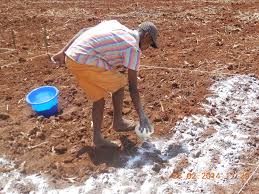
An acid is a substance that releases hydrogen ions (H+) to another substance. A soil is deemed acidic when its pH falls below 7.0. Acidity varies depending on the soil pH and is categorized as:
- Extremely acidic: pH (1.0 – 2.0)
- Very strongly acidic: pH (3.0 – 4.0)
- Strongly acidic: pH (4.1 – 5.0)
- Moderately acidic: pH (5.5 – 6.0) (satisfactory for most crops)
- Slightly acidic: pH (6.1 – 6.9) (ideal for most crops)
In the laboratory, buffers or buffer systems, such as acetic acid (CH3COOH) and sodium acetate (CH3COONa), are used to maintain the desired pH level of a solution. Buffering is the resistance to a change in pH.
The pH of soil, along with other properties, affects the availability of plant nutrients and, consequently, soil productivity. To correct soil acidity, liming materials are applied to raise the soil pH.
Understanding soil acidity is essential for effective soil management to optimize pH and enhance soil and crop productivity. In Nigeria, two types of acid soils impact crop production.
Ferrallitic soil (pH 4.5) in high-rainfall areas of the South and drained acid sulphate soils (pH 3.5) in the Delta areas and marshy coasts. Crops such as maize and cowpea, which perform poorly in these areas, are affected by these acidic conditions.
Read Also: Apple Maggot: Description, Damages Caused, Control and Preventive Measures
Definition of Soil Acidity in Agriculture
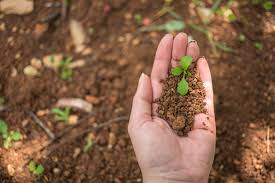
A soil is acidic when its pH falls below 7.0, with the degree of acidity varying based on the soil’s pH reaction.
Sources of Soil Acidity in Agricultural Systems
Soil acidity may result from organic matter, clay minerals, Fe and Al oxides (iron and aluminium oxides), exchangeable Al3+, soluble salts, and the amount of CO2 present in the soil.
Organic Matter and Soil Acidity
Soil organic matter, also called humus, contains carboxylic and phenolic compounds that act as weak acids. These dissociate, release H+, and decrease soil pH, resulting in acidity. As organic matter content varies with the environment, vegetation cover, and soil type, its contribution to soil acidity also varies.
Clay Minerals and pH Buffering
Common clay minerals, such as kaolinite (1:1) and montmorillonite (2:1), release H+ from their broken edges, including Al and Fe oxides and organic matter. This H+ contributes to buffering soil pH.
Soils with high clay and organic matter content have greater buffering capacity compared to those with poor textures (low clay) and low organic matter.
Soluble Salts and pH Reduction
Acid or basic salts in the soil solution originate from mineral weathering, organic matter decomposition, or the addition of fertilizers and manures.
Cations from these salts displace Al3+ in acid soils, decreasing the pH of the soil solution. Divalent cations (e.g., Ca2+, Mg2+) have a greater lowering effect compared to monovalent cations (e.g., K+, Na+). Band application of fertilizer causes a decrease in soil pH through aluminium hydrolysis.
Carbon Dioxide (CO2) and Soil Acidity
In high-calcium soils, pH is affected by the partial pressure of CO2 in the soil. Plant root respiration and organic matter decomposition increase soil CO2, which combines with soil water to release H+, lowering soil pH and causing acidity.
Causes of Soil Acidity in Crop Production
A soil becomes acidic when basic cations (e.g., Ca2+, Mg2+, K+) are replaced by H+ and Al3+ ions, resulting in the loss of these cations through:
- Leaching due to high rainfall
- Removal of basic cations by crops
- Erosion of the topsoil
- Use of acidifying fertilizers (e.g., urea, ammonium sulphate)
Factors Influencing Soil Acidity in Agriculture
Soil acidity in crop production is affected by:
- Use of fertilizers
- Removal of cations
- Leaching of cations
- Organic residue decomposition
- Heavy rainfall, as rain has a pH of 5.7 or less depending on pollutants like SO2 and NO2 (sulphur dioxide and nitrogen dioxide).
Impact of Fertilizers on Soil Acidity
Nitrogen fertilizers with basic cations, such as nitrate (NO3-) sources, have less acidifying effect compared to ammonium (NH4+) sources. For phosphorus fertilizers, phosphoric acid released from TSP (Triple Super Phosphate).
A monocalcium phosphate, and MAP (Mono Ammonium Phosphate) acidifies the soil area temporarily. TSP reduces pH to 1.5, while MAP reduces pH to 3.5, though the H+ released is small and has no long-term effect.
DAP (Diammonium Phosphate) increases pH to 8. The acidity or basicity of fertilizers is determined by:
- The acid-forming effect of fertilizers is caused by all S and Cl-, ⅓ of P, and ½ of nitrogen.
- Basic cations (Ca, Mg, K, Na) increase or have no effect on soil pH.
- Half of nitrogen fertilizers are taken up as NO3-, while the other half as NH4+ (in association with H+ or exchanged for HCO3- from plant roots). Soil acidity develops under long-term, continuous application of nitrogen fertilizers. Acidity does not develop in one or two years, though it varies across soil types.
Read Also: Proper Layers Management Practices for Better Performance
Effects of Soil Acidity on Crops and Soil Health
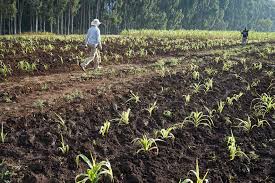
Strongly acidic soils cause problems for many crops, including:
- Decreased crop yield due to manganese (Mn) and aluminium (Al) toxicity, regardless of available nutrient supply, impairing plant function. The solution is to increase soil pH by adding liming materials.
- Shortage of essential cations, resulting in poor growth and development. Banding of cations may provide adequate fertility by saturating the exchange complex site.
Some nutrients become available at low pH, while others decrease, causing toxicity or deficiency issues simultaneously. For instance, Mn may cause toxicity at low pH, while molybdenum insolubility results in deficiency.
- Soil acidity causes soil degradation, affecting land quality.
- Soil acidity leads to food chain contamination, threatening human and animal health.
- Soil acidity affects the availability of essential plant nutrients required for crop growth, reducing yield, increasing food prices, and contributing to malnutrition due to high food costs.
Correction of Soil Acidity for Improved Productivity
Soil acidity can be corrected using liming materials such as limestone, hydrated lime, wood ash, quicklime, marl, and slags.
Do you have any questions, suggestions, or contributions? If so, please feel free to use the comment box below to share your thoughts. We also encourage you to kindly share this information with others who might benefit from it. Since we can’t reach everyone at once, we truly appreciate your help in spreading the word. Thank you so much for your support and for sharing!