


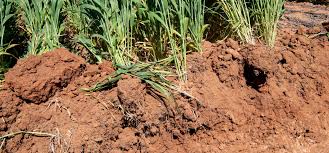
Soluble salts accumulation poses a significant long-term challenge to crop production in dry regions, requiring urgent and specialized attention.
Acid soils are primarily found in humid regions, presenting agricultural and environmental issues. In contrast, arid and semi-arid regions predominantly have alkaline soils with a pH greater than 7.0. Some soils also accumulate soluble salts (saline soils), sodium ions (sodic soils), or both.
Chemical reactions associated with alkalinity, salinity, and sodicity negatively impact soil fertility and physical properties. Certain plants and animals native to deserts and rangelands have adapted to these conditions, except in cases of severe alkalinity, salinity, or sodicity.
Definition of Alkaline Soils and Alkalinity in Agriculture
The terms alkaline and alkalinity are often used interchangeably to describe soils with high levels of soluble salts or sodium. Alkaline soils have a pH above 7, while alkalinity refers to the concentration of OH- ions, analogous to acidity with H+ ions.
Read Also: The Nutritional Requirements and Deficiency Symptoms for Poultry Chickens
Causes of Soil Alkalinity in Arid Regions
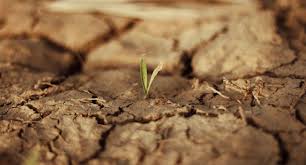
Soil alkalinity typically occurs in semi-arid and arid regions where precipitation is less than potential evapotranspiration, with rainfall amounts below 500mm (20 inches).
Cations released during mineral weathering accumulate due to insufficient rainfall to leach them away, causing the pH to rise above 7. Thus, high soil pH is the primary cause of alkalinity.
Sources of Soil Alkalinity in Crop Production
Minimal leaching in arid and semi-arid environments reduces soil acidification, allowing Ca2+, Mg2+, K+, and Na+ ions to dominate the exchange complex and soil solution. These cations do not produce H+ or OH- ions in reaction with water, unlike Al3+ and Fe3+, and are considered non-hydrolysing and neutral, except in the presence of certain anions.
The main anions producing OH- ions are carbonate (CO32-) and bicarbonate (HCO3-), sourced from calcite (CaCO3) and carbonic acid (H2CO3) when dissociated or dissolved in water. Carbonate and bicarbonate act as bases, reacting with water to form OH- ions (hydroxyl), which increase soil pH.
Factors Influencing Soil Alkalinity in Agriculture
Influence of Carbon Dioxide (CO2) and Carbonates on Alkalinity
The direction of chemical reactions determines whether OH- ions are consumed or produced, controlled by the precipitation or dissolution of calcite and the production or loss (volatilization to the atmosphere) of carbon dioxide.
Soil air CO2 concentrations can reach 0.5% due to root respiration and microbial activity, which lowers soil pH. Precipitation of CaCO3 in soils saturated with Ca2+ ions removes calcium from the soil solution, reducing pH.
CaCO3 precipitates at pH 7–8, depending on CO2 concentration increased by microbial activity. In soils with more soluble carbonate minerals like sodium carbonate (Na2CO3), pH increases.
Calcareous soils with calcite have pH 7–8.4 (tolerable for most plants), while sodic soils (sodium carbonate-dominated) have pH 8.5–10.5 (toxic to most plants).
Role of Na+ and Ca2+ Cations in Soil pH
Cations associated with carbonate and bicarbonate anions influence soil pH. Calcium (Ca) and sodium (Na) are the primary cations. When Na+ dominates the exchange complex and soil solution, more OH- ions are produced, increasing pH, as Na2CO3 and sodium bicarbonate are more water-soluble than calcium carbonate (CaCO3).
High carbonate ion (CO32-) levels can elevate pH to 10 or higher. Dominance of Ca2+ and Na+ ions is advantageous for soil conditions.
Effect of Soluble Salt Levels on Alkalinity
High levels of neutral salts in the soil solution, such as calcium sulphate (CaSO4), sodium sulphate (Na2SO4), sodium chloride (NaCl), and calcium chloride (CaCl2), lower pH by moderating alkalinizing reactions.
Increased Ca2+ or Na+ concentrations result in a common ion effect, shifting equilibrium by adding ions already part of the reaction.
For example, Ca2+ and Na+ from non-carbonate sources reduce carbonate dissolution, decreasing CO32- and HCO3- ions in solution, thus lowering pH compared to lower salt conditions.
Impact of Soil Physical Properties on Alkalinity
High soluble salt levels increase the total ionic strength in the soil solution, enhancing soil physical conditions by promoting clay aggregation.
Read Also: Layers or Broilers which One is More Profitable in Poultry Farming? Find Out!
Characteristics and Challenges of Alkaline Soils in Agriculture
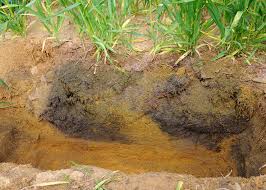
Alkaline soils, high in pH and rich in carbonate, exhibit distinct characteristics and challenges compared to acid soils.
Nutrient Deficiencies in Alkaline Soils
1. Micronutrient Elements: Nutrient availability is pH-dependent. Micronutrients (Zn, Cu, Fe, Mn) are readily available in acid soils, with Fe and Mn potentially reaching toxic levels.
In alkaline soils (pH above 7), these nutrients are less soluble, causing deficiencies that affect plant growth. Plants and microorganisms rely on mechanisms to access these micronutrients.
Adding chemical fertilizers containing Fe and other micronutrients to alkaline soils may not resolve deficiencies, as these elements are adsorbed and become insoluble.
Chelate additions or foliar applications are recommended, along with acid-forming chemicals like sulphur to adjust pH.
2. Boron and Molybdenum: Boron availability is limited in alkaline soils due to complex formation on Fe, Al oxides, and silicate clays, with adsorption increasing up to pH 9. Clay soils adsorb more boron than sandy soils, which lose boron through leaching, leading to deficiencies.
Molybdenum (Mo) availability is high in alkaline soils, potentially reaching toxic levels, problematic for plants and grazing animals. Irrigation water high in Mo can exacerbate toxicity.
3. Phosphorus: Phosphorus, a critical macronutrient, is often deficient in alkaline soils due to fixation with Ca2+ and Mg2+ ions. Fertilizers like single superphosphate (SSP) are soluble but form insoluble Ca-P compounds, which acids can attack.
4. Cation Exchange Capacity (CEC): Alkaline soils have higher CEC than acid soils due to 2:1 clay types (e.g., montmorillonite) with high permanent charge and high pH-dependent charges on soil colloids like humus.
5. Calcium-Rich Layers: Low-rainfall alkaline soils accumulate CaCO3 in the soil profile, causing micronutrient and P deficiencies in plants not adapted to calcareous conditions.
Calcareous soils contain free carbonates, and petrocalcic or duripans form cemented, concrete-like horizons, some rich in gypsum (calcium sulphate), which is more soluble than CaCO3. Aridisols and Entisols are common soil oxides in alkaline soils.
6. Soil Water Supply: Subsoils in low-rainfall alkaline regions are dry unless groundwater is near the surface. Low moisture and plant competition for water influence natural vegetation and animal support capacity.
In arid regions, grasses and shrubs form spaced clumps, leaving bare soil patches or areas covered by fungal-algal crusts or pebble layers, which conserve water. However, rangeland soils are prone to degradation from overgrazing.
Do you have any questions, suggestions, or contributions? If so, please feel free to use the comment box below to share your thoughts. We also encourage you to kindly share this information with others who might benefit from it. Since we can’t reach everyone at once, we truly appreciate your help in spreading the word. Thank you so much for your support and for sharing!