


Soil classification deals with the systematic categorization of soils based on distinguishing characteristics as well as criteria that dictate choices in agricultural use.
Understanding Soil Classification Systems
Soil classification is a dynamic subject, from the structure of the system itself, to the definitions of classes, and finally in the application in the field. It can be approached from both the perspective of pedogenesis and from soil morphology.
Differing concepts of pedogenesis, and differences in the significance of morphological features to various land uses can affect the classification approach.
Despite these differences, in a well-constructed system, classification criteria group similar concepts so that interpretations do not vary widely.
Soil is classified into categories in order to understand relationships between different soils and to determine the usefulness of a soil for a particular agricultural use.
One of the first classification systems was developed by the Russian scientist Dokuchaev around 1880. It was modified a number of times by American and European researchers and developed into the system commonly used until the 1960s.
It was based on the idea that soils have a particular morphology based on the materials and factors that form them. In the 1960s, a different classification system began to emerge, that focused on soil morphology instead of parent materials and soil-forming factors. Since then, it has undergone further modifications.
Read Also : Vegetative Structure of Seed Plants: The Leaf
Hierarchy of Soil Classification
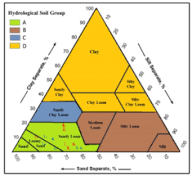
The first article of classification is the order. All soils fit into one of ten orders. Each order is broken down into a suborder, which is broken down into great groups, then subgroups, and then families.
Soil Orders in Agricultural Contexts
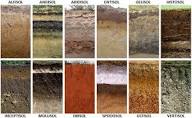
Orders are the highest category of soil classification. Order types end in the letters sol. In the US classification system, there are 10 orders:
1. Entisol: recently formed soils that lack well-developed horizons. Commonly found on unconsolidated sediments like sand, some have an A horizon on top of bedrock.
2. Vertisol: inverted soils. They tend to swell when wet and shrink upon drying, often forming deep cracks that surface layers can fall into.
3. Inceptisol: young soils. They have subsurface horizon formation but show little eluviation and illuviation.
4. Aridisol: dry soils forming under desert conditions. They include nearly 20% of soils on Earth. Soil formation is slow, and accumulated organic matter is scarce.
They may have a subsurface zone (calcic horizons) where calcium carbonates have accumulated from percolating water. Many aridisol soils have well-developed Bt horizons showing clay movement from past periods of more moisture.
5. Mollisol: soft soils.
6. Spodosol: – soils produced by podsolization. They are typical soils of coniferous and deciduous forests in cooler climates.
7. Alfisol: soils with aluminum and iron. They have horizons where clay accumulates, and form where there is enough moisture and warmth for at least three months of plant growth.
8. Ultisol: soils that are heavily leached.
9. Oxisol: soil with heavy oxide content.
10. Histosol: organic soils.
Other order schemes may include:
1. Andisols volcanic soils, which tend to be high in glass content.
2. Gelisols permafrost soils.
Read Also : Different Classes of Snail Feed Based on their Nutritional Requirements
Natural System Approach to Soil Classification
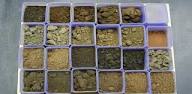
For soil resources, experience has shown that a natural system approach to classification, i.e., grouping soils by their intrinsic property (soil morphology), behavior, or genesis, results in classes that can be interpreted for many diverse agricultural uses.
Differing concepts of pedogenesis and differences in the significance of morphological features to various land uses can affect the classification approach.
Despite these differences, in a well-constructed system, classification criteria group similar concepts so that interpretations do not vary widely.
This is in contrast to a technical system approach to soil classification, where soils are grouped according to their fitness for a specific agricultural use and their edaphic characteristics.
Soil classification means that one finds categories of soils that are based on general characteristics as well as criteria that decide about the agricultural use that is possible.
Do you have any questions, suggestions, or contributions? If so, please feel free to use the comment box below to share your thoughts. We also encourage you to kindly share this information with others who might benefit from it. Since we can’t reach everyone at once, we truly appreciate your help in spreading the word. Thank you so much for your support and for sharing!