


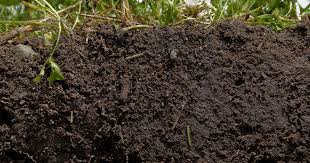
Soils are that portion of the earth’s crust in which land plants can grow, provided water and temperature are adequate, at least the minimum nutrients are available, and toxic substances are in low concentration.
Some soils are very shallow (a few centimeters deep), while others are a few meters deep. All soils develop from weathered rock, volcanic ash deposits, or accumulated plant residues.
Most soils are formed from weathered rocks and minerals, including quartz, feldspars, micas, hornblende, calcite, and gypsum. Combinations of minerals into solid masses are called rocks.
Read Also: Ruminant Animals: A Comprehensive Guide
Mechanisms of Soil Formation in Agricultural Systems

Heat and cold are key agents in soil formation. Hot bodies shrink or contract upon cooling. Early rocks were hot, and as their outer shell cooled from exposure to air and moisture, it contracted. This shrinkage of the rigid rim broke many rocks and created cracks or fissures.
Water collected in these fissures and froze, and since freezing water expands with irresistible power, this expansion further broke the rocks into pieces. These smaller pieces were similarly acted upon by frost and ice, causing further crumbling.
This process remains a vital mechanism of soil formation. Running water also serves as a significant soil-forming agent. After a heavy rain, a sparkling stream becomes discolored by mud washed in from surrounding hills.
As the waters encounter low banks, they spread into shallows and deposit some of the mud. In quiet pools, they deposit more. At the stream’s mouth, in still water, the last of the mud load is left behind, often forming small, three-sided islands called deltas. Mighty rivers like the Amazon, Mississippi, and Hudson, when swollen by rain, carry vast quantities of soil to the seas.
Some soil is scattered over lowlands as they flow seaward, while the rest is deposited in deltas at their mouths. It is estimated that the Mississippi carries enough soil to the ocean each year to cover a square mile of surface to a depth of two hundred and sixty-eight feet.
Early brooks and rivers, instead of carrying mud, transported ground stone worn from rocks by ceaseless fretting or stones dislodged by other forces.
Large pieces were whirled from side to side, beaten against one another or against bedrock, and ground into smaller pieces. Rivers distributed this rock soil in the same manner as later rivers distribute muddy soil. For ages, moving waters ground against rocks, producing vast results over vast periods.
Glaciers, another soil-producing agent, are streams frozen and moving slowly but irresistibly down well-defined valleys, grinding and pulverizing detached rock masses through their force and weight.
Types of Soil in Agriculture
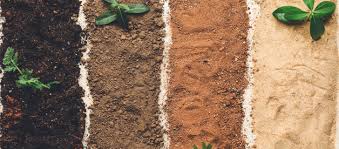
Sand, silt, and clay are the basic types of soil. Most soils are a combination of these three. The texture of the soil, its appearance and feel, depends on the proportion of each component. Soil types vary across the planet and can even differ within a single backyard.
Key Factors Influencing Soil Formation in Agriculture
Even if all soils undergo similar weathering processes, differences arise due to other influences. Five primary soil-forming factors are responsible for the characteristics of developed soil:
- Parent material
- Climate (primarily temperature and precipitation)
- Biota (living organisms and organic residues)
- Topography (slope, aspect, and elevation)
- Time
Parent Materials and Their Role in Agricultural Soil Formation
Parent materials influence soil formation through their varying rates of weathering, the nutrients they provide for plant use, and their particle sizes (sandstones = sandy; conglomerates = rocky; shales = clayey).
In less developed soils, the parent material has a greater effect on soil properties. However, even well-developed soils are significantly influenced by their parent material. Clay formation is favored by a high percentage of decomposable dark minerals and less quartz.
The effects of leaching, translocations, and transformations caused by water movement in soil remain evident even in well-developed soils. At the lowest category of soil classification (series), soils are placed into separate series if their parent materials differ.
Climate’s Impact on Soil Formation for Farming
Climate becomes an increasingly dominant factor in soil formation over time, primarily due to precipitation and temperature. Some direct effects of climate on soil formation include:
- A shallow accumulation or retention of lime (carbonates) in areas with low rainfall occurs because calcium bicarbonates (from dissolving carbon dioxide, minerals, and lime) are not leached without sufficient water. Such soils are usually alkaline.
- Acidic soils form in humid areas due to intense weathering and leaching of basic cations (calcium, sodium, magnesium, potassium).
- Erosion on sloping lands constantly removes developing soil layers.
- Deposition of soil materials downslope covers developing soils.
- Weathering, leaching, and erosion are more intense and prolonged in warm, humid regions, such as Hawaii, where soil does not freeze. The reverse occurs in cold climates, such as Alaska.
Read Also: Methods of Castration in Sheep and Goat
Biota’s Contribution to Soil Development in Agriculture

The activity of living plants and animals and the decomposition of their organic wastes and residues (the biota) significantly influence soil development. Differences in soils resulting from vegetation are particularly noticeable where trees and grasses meet.
In Nigeria, for example, soil differences closely follow variations in vegetation types: as vegetation becomes sparser, soils become shallower and contain less organic matter.
Soils beneath humid forest vegetation may develop many horizons, are leached in the surface layers, and have slowly decomposing organic matter layers on the surface.
In contrast, some grassland soils near forest transition zones are rich in well-decomposed organic matter, often extending to depths of 30 cm or more (1 ft or more) into the mineral soil.
Burrowing animals, such as rats, earthworms, ants, and termites, play a crucial role in soil formation when present in large numbers. Soils with many burrowing animals have fewer but deeper horizons due to constant mixing, which counteracts the downward movement of organic colloids and clay.
Microorganisms aid soil development by slowly decomposing organic matter and forming weak acids that dissolve minerals faster than pure water.
Crust-like lichens, a beneficial (symbiotic) combination of algae and fungi, are among the first plants to grow on weathering rocks. Human activities, such as tillage, bush burning, and construction, also modify soils and contribute to soil formation.
Topography’s Influence on Soil Formation for Agricultural Use
The earth’s surface contour, known as topography (or relief), influences soil formation primarily through its effects on water and temperature relations. Soils in the same climatic area, developing from similar parent material on steep hillsides, typically have thin A and B horizons due to rapid surface runoff and erosion, which limit downward water movement.
On gently sloping hillsides, more water passes vertically through the soil, resulting in deeper profiles, more luxuriant vegetation, and higher organic matter levels compared to steeper slopes.
Do you have any questions, suggestions, or contributions? If so, please feel free to use the comment box below to share your thoughts. We also encourage you to kindly share this information with others who might benefit from it. Since we can’t reach everyone at once, we truly appreciate your help in spreading the word. Thank you so much for your support and for sharing!