


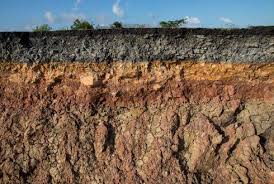
Although many overlook the ground beneath or the soil walked on daily, soil remains a critical resource. Processes spanning thousands of years create small amounts of soil material. Unfortunately, the most valuable soil is often used for building or left unprotected, leading to erosion.
To safeguard this vital natural resource and sustain the world’s growing housing and food demands, understanding soil, its formation, and the natural reactions that support healthy plant growth and water purification is essential.
Soil is crucial for the livelihood of plants, animals, and humans. However, human activity and soil misuse adversely affect soil quality and quantity.
Significance of Soil in Agricultural Systems
Certain soils are ideal for growing crops consumed by humans and animals or for constructing airports, cities, and roads. Other soils have limitations that prevent building and must remain undisturbed.
These soils often provide habitats for creatures living in or on the soil. For example, soils supporting lakes, rivers, streams, and wetlands are not typically used for human homes but serve as habitats for fish, waterfowl, and surrounding wildlife.
Diversity of Soil Formation in Agriculture
Natural processes on Earth’s surface, combined with alterations to earth material over long periods, form thousands of different soil types. In the United States alone, over 50,000 distinct soils exist. Specific factors influence soil formation, varying worldwide and creating diverse soil combinations and properties.
Read Also: 16 Medicinal Health Benefits Of Scleromitrion diffusum (Spreading Diamond Flower)
Soil Formation from Rocks and Minerals

Soil formation occurs over extended periods, often exceeding 1,000 years. Soil forms from the weathering of rocks and minerals, which break into smaller pieces and mix with moss and organic matter, creating a thin soil layer.
Plants contribute to soil development by attracting animals, whose decaying bodies enrich the soil. This process continues until the soil is fully formed, supporting a variety of plants.
Key Soil-Forming Factors in Agriculture
1. Parent Material: The primary material from which soil forms, such as bedrock, organic material, old soil surfaces, or deposits from water, wind, glaciers, volcanoes, or slope movement.
2. Climate: Weathering forces like heat, rain, ice, snow, wind, and sunshine break down parent material, influencing the speed of soil formation processes.
3. Organisms: Plants, animals, microorganisms, and humans living in or on the soil affect formation. Plants influence water and nutrient needs, while human land use and animal activity impact decomposition and soil material movement.
4. Topography: Soil location on a landscape affects climatic impacts. Soils at hill bottoms receive more water than those on slopes, and sun-facing slopes are drier than shaded ones. Topography also influences mineral accumulations, plant nutrients, vegetation type, growth, erosion, and water drainage.
5. Time: Soil-forming factors act over hundreds or thousands of years, with soil profiles evolving from weakly to well-developed states.
Read Also: 12 Medicinal Health Benefits Of Renealmia alpinia (Pink cone ginger)
Parent Materials in Soil Formation for Agriculture

Soil forms from various parent materials, with bedrock being a primary source. Exposed rocks erode and chemically alter at Earth’s surface. The type of soil formed depends on available rocks, their minerals, and reactions to temperature, pressure, and erosive forces.
Within the Earth, high temperatures melt rock (lithosphere), which moves via tectonic forces, cools, and hardens, forming igneous rocks like granite, pumice, and obsidian through mineral crystallization.
Sedimentary rocks form when older rocks are broken by plant roots, ice wedges, or earth movements and transported by glaciers, waves, currents, or wind. These particles bind together as secondary minerals grow, creating solid sedimentary rocks like sandstone (quartz sand), limestone (lime), and shale (clay).
Metamorphic/crystalline rocks form under intense pressure and temperature below Earth’s surface, altering the chemical composition of sedimentary and igneous rocks. Quartzite, marble, and slate, originally quartz sandstone, limestone, and shale, respectively, are examples.
Other parent materials, termed Recent Cover Deposits, include alluvium, colluvium, eolian deposits, glacial deposits, lacustrine (lake) deposits, loess deposits, marine deposits, and volcanic ash deposits.
Soil is vital for the livelihood of plants, animals, and humans. However, human activity and misuse adversely affect soil quality and quantity.