


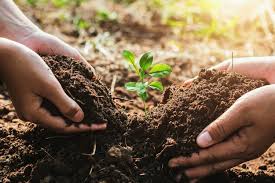
Soil management strategies, also referred to as conservation tillage, involve seedbed preparation methods that retain residue mulch and increase surface roughness. These practices range from minimum to zero tillage depending on climate, soil properties, crop type, and socio-economic conditions.
Conservation tillage helps in maintaining soil structure, enhancing infiltration, and reducing erosion, making it vital for sustainable agricultural production.
Minimum Tillage Practice in Soil Conservation
Minimum tillage involves reducing soil preparation to the bare minimum required for crop production, ensuring that 15% to 25% of crop residues remain on the soil surface.
This method helps in conserving soil moisture, reducing erosion, and maintaining organic matter content, thereby promoting sustainable soil productivity.
Read Also: How to Grow, Use and Care for Woolly Cupgrass (Eriochloa villosa)
No-Till Practice and Its Role in Agricultural Soil Conservation

No-till or zero tillage eliminates all forms of mechanical seedbed preparation except for opening a narrow strip or hole for seed placement. Crop residue mulch or killed sod is used to cover the soil surface.This system minimizes soil disturbance, preserves soil structure, and maintains biological activity within the soil.
No-till and mulch farming are particularly suitable for the humid and sub-humid tropics, while rough plowing, tied ridging, and mulching are more appropriate for semi-arid areas.
Reduced and zero-tillage systems preserve soil pores formed by roots and fauna activities, enhancing infiltration and reducing susceptibility to erosion.
Read Also: How to Grow, Use and Care for Woolly Sedge Grass (Carex pellita)
Ridge Tillage and Ridge Tying in Soil Management

Ridge tillage involves planting crops in rows on the tops, sides, or furrows between ridges, which are reshaped every cropping season.
Tied ridging (also called furrow diking) includes creating cross-ties between ridges to form small basins that capture and retain rainwater.
In Nigeria, smallholder farmers commonly prepare soil manually using hoes, while larger farms use tractor-drawn plows and harrows. As a result, ridging is widespread across the country.
Tied ridging, however, is mainly practiced in the semi-arid northern regions to conserve both soil and water within individual basins.
Effects of Tillage on Infiltration and Soil Structure
Tillage operations influence infiltration capacity and hydraulic conductivity, thereby affecting runoff and soil loss. Reduced and no-tillage practices improve soil conditions by:
- Enhancing moisture retention and temperature balance
- Boosting the activity of soil fauna such as earthworms
- Reducing compaction and crusting
- Forming macropores and stable aggregates
These benefits improve rainwater infiltration and reduce soil erodibility. Conservation tillage also helps maintain or increase soil organic matter, which is crucial for soil fertility and system stability.
Do you have any questions, suggestions, or contributions? If so, please feel free to use the comment box below to share your thoughts. We also encourage you to kindly share this information with others who might benefit from it. Since we can’t reach everyone at once, we truly appreciate your help in spreading the word. Thank you so much for your support and for sharing!