


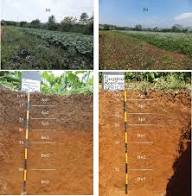
Soils are structural and functional elements of terrestrial ecosystems, which are formed in a historical process of development through the interaction of geological, climatic, and biotic factors at the respective site. Soil is the fundamental source of life for all living beings.
As the physical and chemical properties of soils exert great influence in the distribution and development of vegetation, it needs to be studied and evaluated from time to time. The soil-forming process is very slow and time-consuming. It takes normally thousands of years for soil formation.
Therefore, we are studying the past activities while analysing the soil profile at present. The parent material, topography, geological processes, climatic conditions, vegetation, and human interferences play major roles in the formation and development of soil profiles in a particular area. Similarly, our activities at present will certainly influence the soil profiles in the far future.
Read Also: The Nutritional Requirements and Deficiency Symptoms for Poultry Chickens
Detailed Soil Profile Description in Nigerian Agriculture
Nigeria can be divided into seven major ecological regions (Fig. 1):
- The Coastal Swamp Region, which includes the coastal forest, mangroves, and deltaic swamp forest
- The Moist Lowland Region
- The Southern Guinea Savanna Region
- The Montane Region
- The Northern Guinea Savanna Region
- The Sudan Savanna Region
- The Sahel Savanna Region
The location and extent of most of the regions coincide with the vegetation zones of the country as described by Keay (1953), Areola (1978), and Areola et al. (1982). The 12 reference soils (NG 15 to NG 29) are located in the southern part of the country in the Coastal Swamp (Region 1), the Moist Lowland (Region 2), and the
Soil Characteristics of the Coastal Swamp Region
The Coastal Swamp Region includes creeks, lagoons, the Niger Delta, and the coastal plain. The mean altitude of the creeks and lagoons area is about 40 m a.s.l., while along the coastal plain, the elevation is about 160 m a.s.l. Total annual precipitation ranges from 429 mm at Bonny in the east to 1755 mm at Lagos in the west.
The rainy season lasts for about 10 months. The soils are mainly hydromorphic and derived from marine and lacustrine parent materials. The vegetation consists of coastal forest, mangroves, and deltaic swamp forest.
The mangrove forest is dominated by varieties of red mangrove (Rhizophera racemosa), and the swamp forest consists solely of slender trees. Reference Soils NG 19 and NG 20 are found in this region and described in Soil Brief Nigeria.
Read Also: Layers or Broilers which One is More Profitable in Poultry Farming? Find Out!
Soil Characteristics of the Moist Lowland Region
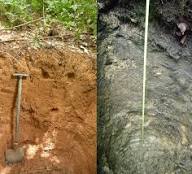
The Moist Lowland Region is underlain by rocks of the System. The landscape is undulating and marked by numerous domed or sugar-loaf hills and by occasional flat-topped ridges. The summits of the hills range between 300 and 600 m a.s.l.
Temperature is high throughout the year with an annual average between 28°C and 32°C. The rainy season lasts for 8 months, and total annual rainfall is higher than 1100 mm. The region is covered with lowland forest consisting of evergreen hydrophytic plants with a large diversity.
The forest is characteristically stratified. At the forest margins or in areas disturbed by man, woody lianas form an almost impenetrable tangle. The original or high forest is no longer as extensive as it used to be and is now restricted to a few forest reserves in Ondo, Benin, and in the Cross River Basin along the border with Cameroon.
Influence of Environmental Factors on Nigerian Soil Profiles
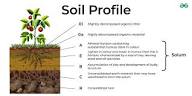
Soil profiles look different in different areas of the world. They are affected by climate, vegetation, and other factors.
Do you have any questions, suggestions, or contributions? If so, please feel free to use the comment box below to share your thoughts. We also encourage you to kindly share this information with others who might benefit from it. Since we can’t reach everyone at once, we truly appreciate your help in spreading the word. Thank you so much for your support and for sharing!